


Classical Figure Candlesticks
These classical figure candlesticks bring sculptural bronze, gilt metal and marble into a room, offering the light of past centuries.
Classical Figure Candlesticks
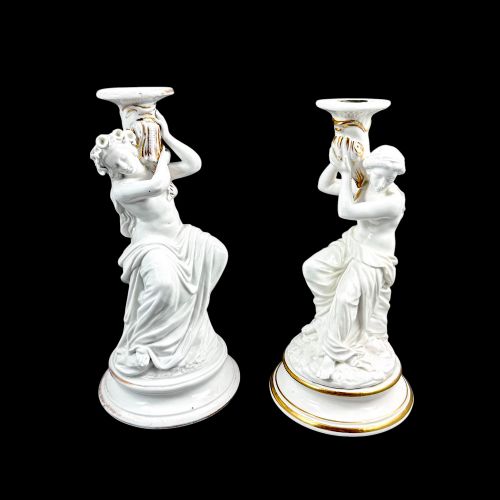
Classical figure candlesticks take the form of human or mythological figures supporting candle holders, combining functional lighting with sculptural presence. Buyers seeking classical figure candlesticks will encounter French Empire, Regency, and Victorian interpretations shaped from bronze, ormolu, marble, and porcelain.
The materials range from patinated bronze and fire-gilded ormolu to carved wood, jasperware, and polished marble bases. Many surviving examples originate from nineteenth-century workshops in France, England, and Sweden, reflecting enduring neoclassical tastes.
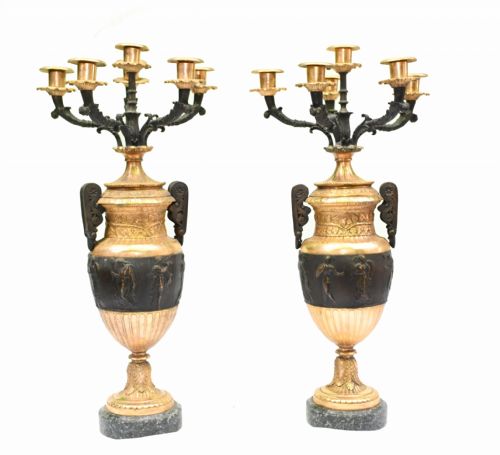
Forms extend from single candlesticks to elaborate multi-light candelabra incorporating caryatids, putti, and allegorical representations of the seasons. These pieces frequently stand upon socle plinths or square marble bases, elevating the figure above the table surface.
What varies in quality
The refinement of the casting and the depth of the subsequent hand-chasing distinguish superior figures from simpler production wares. Crisp details in hair, fingers, and drapery indicate skilled work by the founder and metalworker.
Material selection and combination determine the standing of a piece, with heavy fire-gilded ormolu, patinated bronze, and solid marble outperforming lighter base metals and gilt substitutes. The integration of distinct components, such as bronze figures fitted securely to stone bases, shows thoughtful construction.
Listings feature items from the eighteenth, nineteenth, and early twentieth centuries, spanning French Empire, Regency, and Victorian neoclassical styles.
The Classical Figure Candlesticks Glossary
- Ormolu
- Finely chopped leaf gold amalgamated with mercury and applied to bronze through heat, creating a rich golden surface layer. This technique was widely practiced by French metalworkers during the eighteenth and nineteenth centuries.
- Caryatid
- A sculpted female figure serving as an architectural support or pillar in place of a column. They frequently appear as the central shafts of figural candlesticks and candelabra.
- Patinated bronze
- Bronze treated with chemical solutions to produce a controlled dark brown or greenish surface coloration. This finish provides contrast against bright ormolu mountings.
- Socle
- A short plain plinth or pedestal supporting a figure, bust, or candlestick base. It elevates the primary subject and adds visual stability.
- Jasperware
- A type of fine stoneware developed by Josiah Wedgwood, characterised by contrasting white raised reliefs against a coloured matte background. It appears in neoclassical decorative arts and figural wares.
Classical Figure Candlesticks: Frequently Asked Questions
How do I clean bronze candlesticks?
Dust surfaces gently with a soft dry brush to protect patinated and gilded finishes. Avoid chemical polishes that strip historical patination from bronze and ormolu.
Keep pieces away from direct moisture and sources of heat. A microcrystalline wax can protect metal surfaces when applied very sparingly.
Were these made for candles or electricity?
Original nineteenth-century examples were designed exclusively for wax candles or oil combustion. Many retain their original sockets and drip pans.
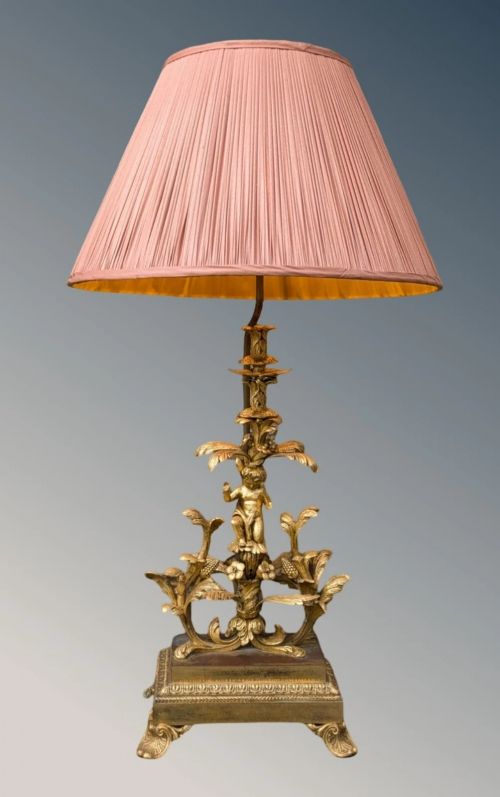
Later conversions often adapted these figures into table lamps while retaining the antique base structure. Reversible wiring methods help preserve the underlying metalwork.
What is the difference between an ormolu and a gilt metal candlestick?
Ormolu denotes a mercury-gilded bronze process where gold is chemically bonded to the metal substrate through heat. This creates a deep, warm lustre characteristic of high-end French and English production.
Gilt metal typically relies on electroplating or surface lacquering applied to brass or base alloys, resulting in a lighter and more uniform appearance.
How do I identify a Regency period candlestick?
Regency pieces draw heavily on ancient Roman, Greek, and Egyptian motifs popular during the early nineteenth century. They frequently pair dark patinated bronze figures with bright ormolu details and classical plinths.
Proportions are architectural and restrained, reflecting the neoclassical tastes of the era.