


Classical Figure Candelabrum
A classical figure candelabrum brings sculptural presence and dignified illumination to a room, cast in bronze and marble through enduring historical designs.
Classical Figure Candelabrum
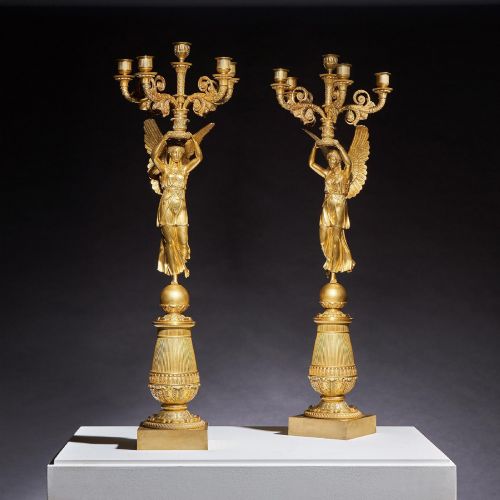
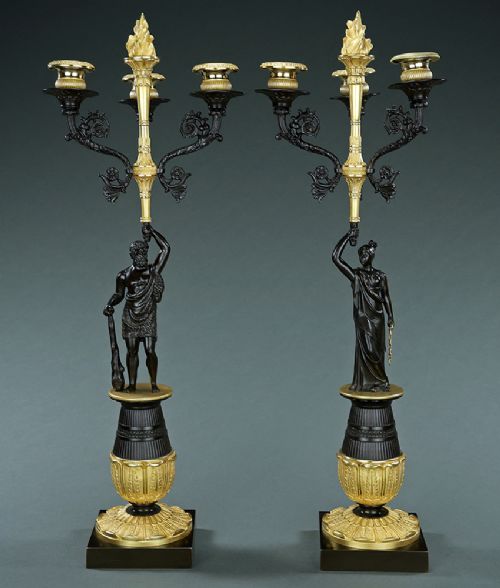
A classical figure candelabrum combines figurative sculpture with functional candle branches, drawing on historical motifs from the Regency and French Empire periods. These works frequently depict mythological figures or puttis integrated into the overall structural design.
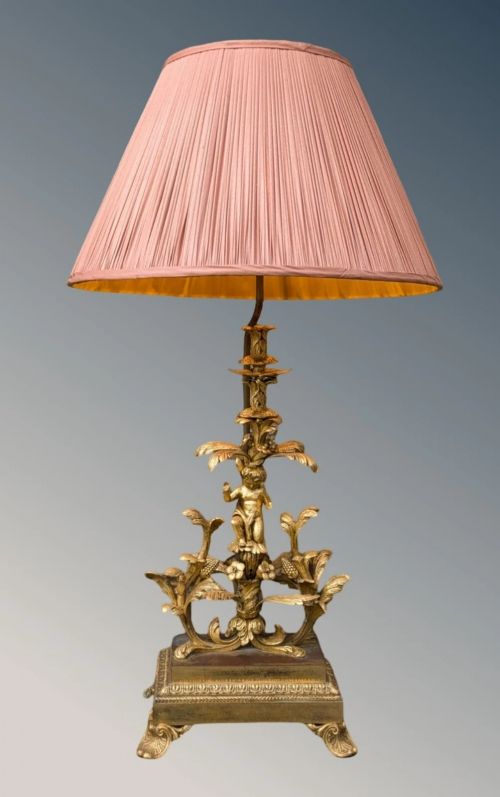
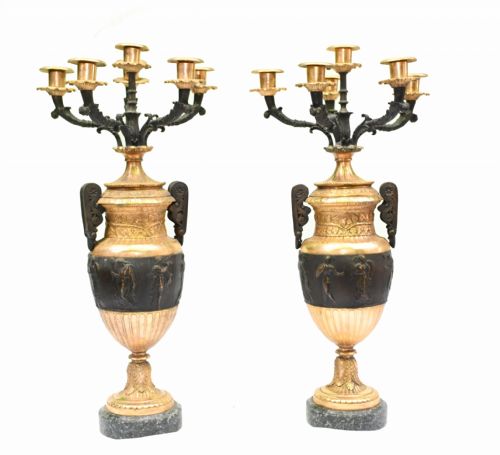
The versions most commonly met on this page span the nineteenth century, including French Empire, Regency, and Swedish Empire styles. They often appear as matched pairs, sometimes accompanied by matching clock garniture sets or adapted as table lamps.
Materials range from patinated bronze and gilt bronze to ormolu, marble, onyx, and slate. These varied substances create distinct tonal contrasts between the dark figures and the bright metal mounts.
How They Were Made
Foundry workers utilised traditional bronze casting methods to shape figurative elements and branch components. These metal sections received patination or fine gilding with ormolu to achieve contrasting surface textures.
Masons shaped marble, onyx, and slate bases to support the heavy metalwork, securing the components with internal fixings. Enamel and glass details occasionally complemented the primary metal and stone structures.
Current listings feature pieces from the nineteenth century utilising bronze, marble, ormolu, and glass across French Empire and Regency styles.
What Varies in Quality
The refinement of the cast figural work distinguishes the standard of execution across these pieces. Crisp chiselling on bronze surfaces and smooth finishing on marble bases indicate skilled workshop production.
The integration of the candle branches with the central figure dictates the overall balance of the design. Heavier gilding and more substantial stone plinths generally separate the finer examples from simpler workshop output.
Pierre Philippe Thomire·Thomas Hope·Humphrey Hopper·Deniere Paris
The Classical Figure Candelabrum Glossary
- Ormolu
- Finely ground high-carat gold applied to a bronze base through a mercury amalgamation process. This technique produces a durable, luminous golden finish characteristic of French Empire metalwork.
- Patinated bronze
- Metal treated with chemical solutions to darken the surface tone. This process highlights the modelled details of figurative sculptures by creating contrast against gilded elements.
- Garniture set
- A matched decorative grouping consisting of a mantel clock accompanied by flanking candelabra or urns. Such sets were designed to display symmetrically on a fireplace mantel.
- Torchere
- A tall stand or candlestick designed to elevate a light source. In this context, the form often incorporates classical figural motifs to support the upper candle holders.
- Regency
- A British design period spanning the early nineteenth century. Works from this era draw heavily on classical Greek and Roman archaeological sources.
Classical Figure Candelabrum: Frequently Asked Questions
How were classical figure candelabra used?
These pieces served as both functional lighting and decorative sculptural objects in nineteenth-century interiors. Placed upon mantelpieces or side tables, they held candles to illuminate formal rooms.
Over time, many examples were converted to electricity to function as table lamps while retaining their original sculptural bases and figural details.
How do I identify French Empire style?
French Empire pieces reflect the neoclassical aesthetic popular during the early nineteenth century, drawing inspiration from ancient Roman and Greek art. They typically feature strict symmetry and disciplined bronze casting.
Figurative elements often include mythological subjects paired with architectural marble or slate plinths and rich ormolu highlights.
What is a clock garniture set?
A clock garniture set comprises a central mantel clock displayed alongside a matching pair of candelabra or vases. These matched suites provided a unified decorative scheme for nineteenth-century rooms.
Materials and motifs are consistent across all pieces in the set, frequently combining bronze figures with marble or onyx bases.
How should I clean marble and bronze?
Bronze surfaces benefit from gentle dusting with a soft cloth to preserve the original patina and gilding. Avoid using abrasive cleaners that might damage the metal finish.
Marble and onyx bases require a damp cloth followed by immediate drying. Protect the stone from acidic substances and harsh chemical solvents.