

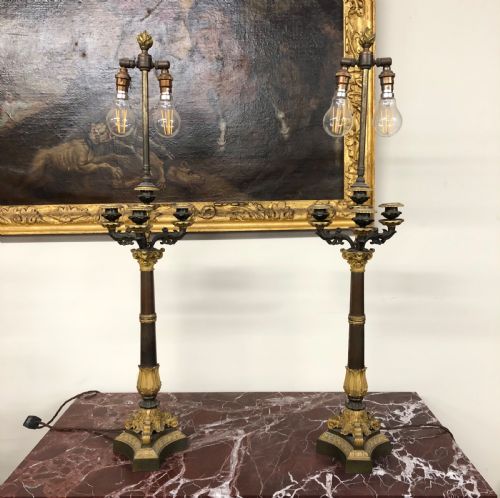
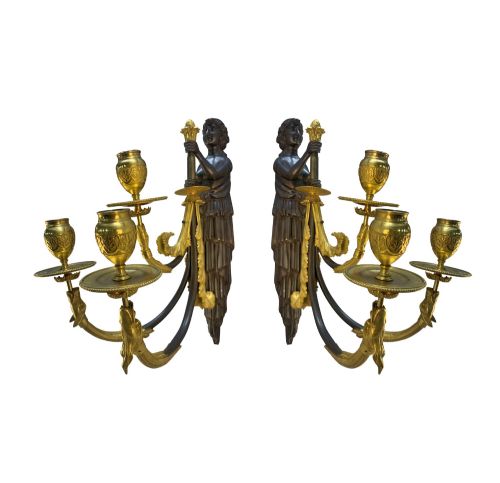
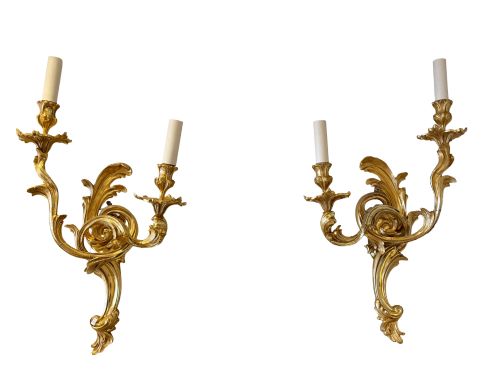
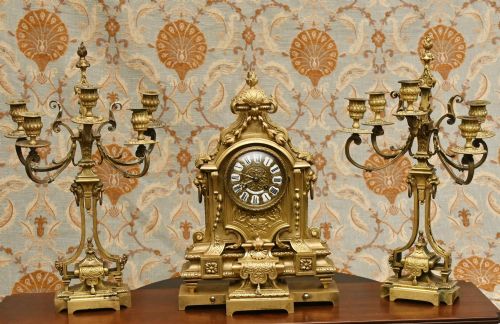

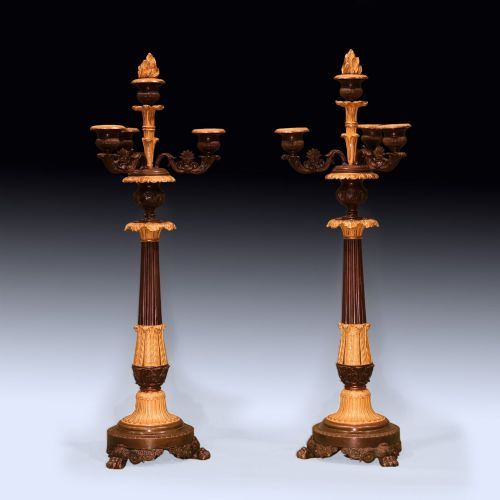
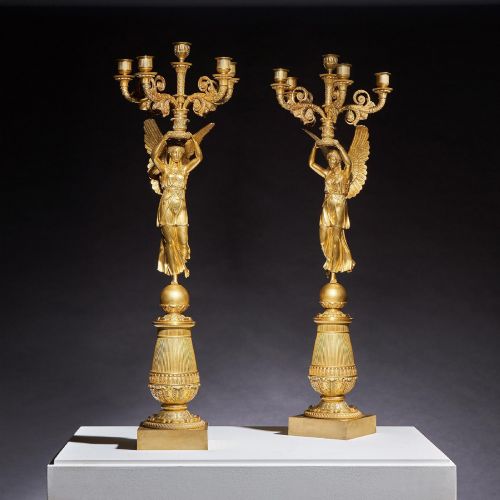
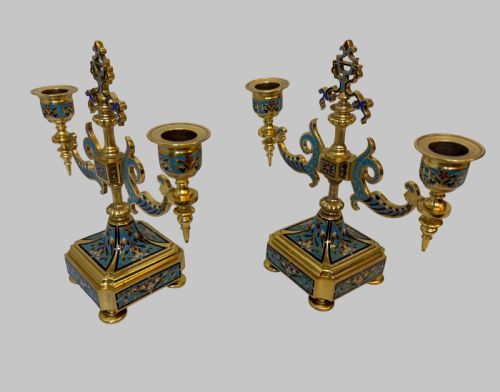
Pair of Ormolu Candelabra
These pieces illuminate rooms with the warm glow of gilded metal, combining utility and sculpture into a pair of ormolu candelabra.
Pair of Ormolu Candelabra
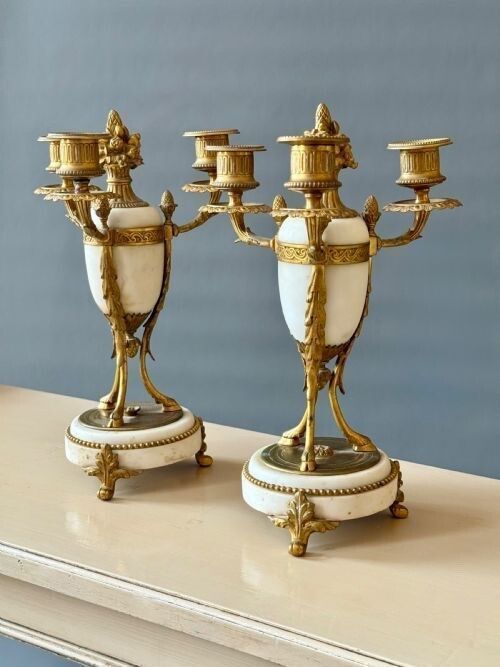
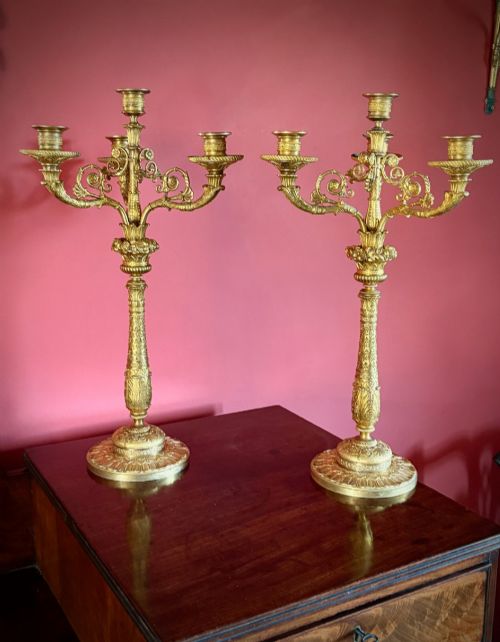
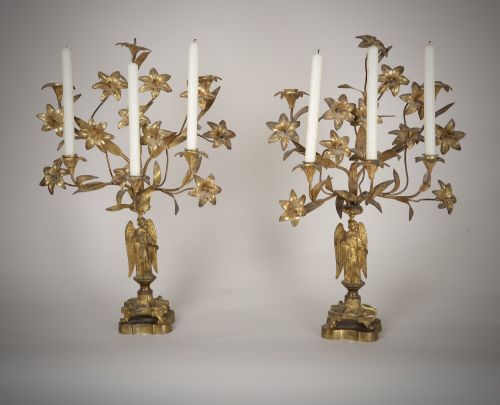
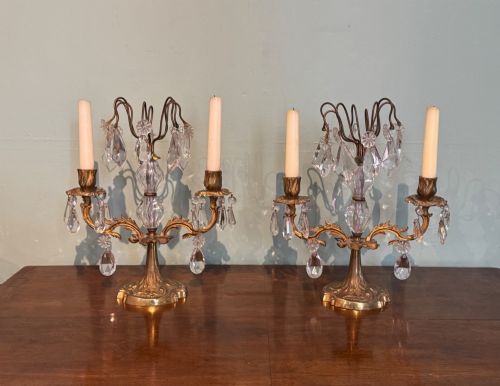
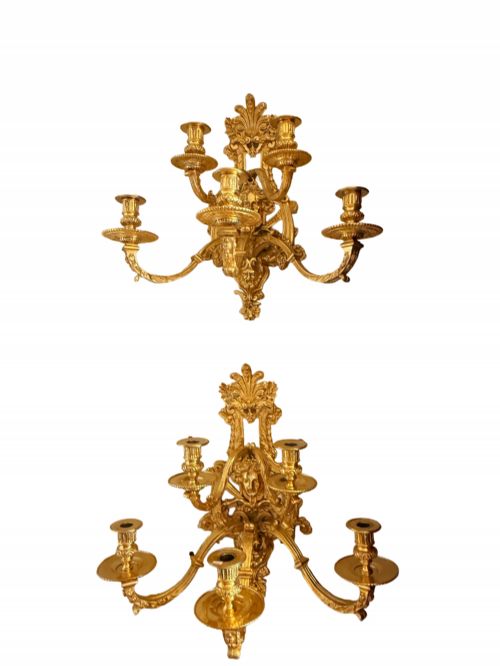
When searching for a pair of ormolu candelabra, a buyer encounters multi-branch lighting fixtures designed to sit on mantelpieces, tables or sideboards. The selection spans the nineteenth century, featuring French Rococo revival, Louis XVI style, and Empire designs.
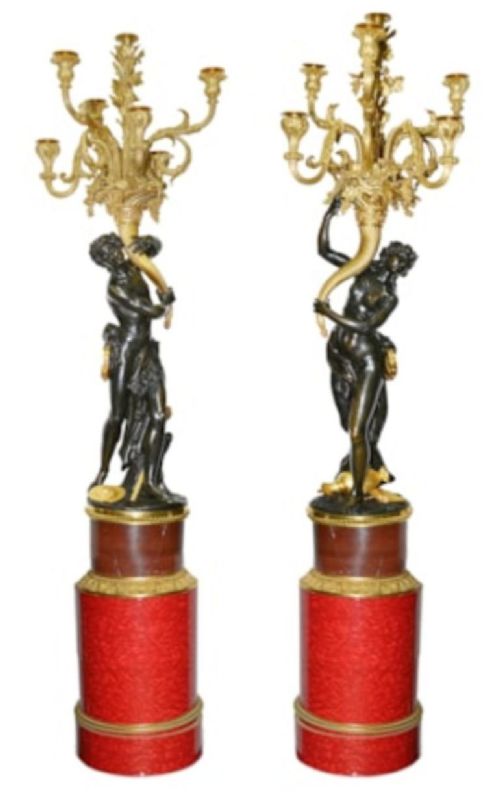
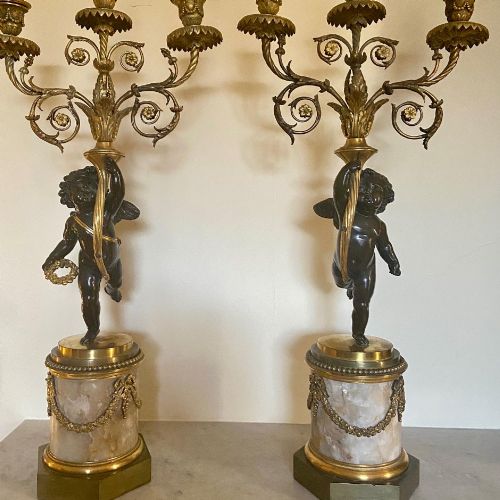
Most examples combine cast bronze elements finished in gilt with contrasting materials such as white marble, patinated bronze, or porcelain. Forms range from simple two-branch candlesticks to elaborate figural compositions incorporating putti, cherubs, and mythological figures.
Originating largely from French and English workshops, these items served both decorative and functional purposes in grand nineteenth-century interiors. Surviving pieces often retain their original multi-light configurations, housing two to five candle branches.
Materials and construction
The manufacture of these objects relies on metal casting, specifically utilising bronze, brass, and gilt bronze. Artisans shaped intricate floral scrolls, figures, and structural arms through lost-wax or sand-casting methods.
Gilding was achieved through mercury amalgamation or chemical application, depositing a thin layer of gold onto the bronze base to create the characteristic ormolu finish. Secondary materials like white marble bases and cut glass crystals were then integrated with pinned or threaded brass fittings.
Pair of Ormolu Candelabra Retail Price Guide 2026
Typical asking prices for pair of ormolu candelabra among the pieces listed under this phrase on Sellingantiques today, from the lower quarter to the upper quarter. They describe what is for sale here now, not the wider market.
Listings feature 19th Century, 1880, 1860, 1890, 18th Century, 1920, 1870, and 1930 periods alongside marble, gilt bronze, and porcelain materials.
Factors influencing quality
Quality rests upon the crispness of the bronze chasing and the depth of the mercury gilding. Superior examples exhibit hand-chiseled surface details that bring out individual feathers, hair, and acanthus leaves after casting.
The weight and selection of constituent materials also dictate standard, where dense marble plinths, substantial bronze thickness, and well-balanced multi-branch arms separate masterwork productions from simpler commercial outputs.
Barbedienne·Francois Redmond·Pierre Philippe Thomire·Rabiat·Thomas Hope
The Pair of Ormolu Candelabra Glossary
- Ormolu
- A golden surface finish applied to bronze objects using a mercury-gilding technique, characteristic of decorative arts from the eighteenth and nineteenth centuries.
- Patinated bronze
- Bronze that has been chemically treated to achieve a dark brown or green surface colour, often contrasting with bright ormolu highlights on figures and mounts.
- Candelabra
- A branched lighting fixture designed to hold multiple candles simultaneously across two or more arms.
- Champleve
- An enamelling technique where troughs are carved into a metal surface and filled with vitreous enamel before firing.
- Garniture
- A set of matching decorative objects, typically comprising a central clock flanked by a pair of matching candelabra or vases.
Pair of Ormolu Candelabra: Frequently Asked Questions
Were these electrified later?
Many nineteenth-century examples underwent conversion to electricity during the twentieth century to suit modern domestic lighting needs. Some conversions preserve the original wiring channels, while others required minor drilling through the central stem.
Buyers frequently encounter both unmodified candle-holding pairs and electrified versions operating as table lamps. Reverting an electrified pair back to hold candles is often possible if original sockets remain uncompromised.
How do I distinguish Empire from Rococo style?
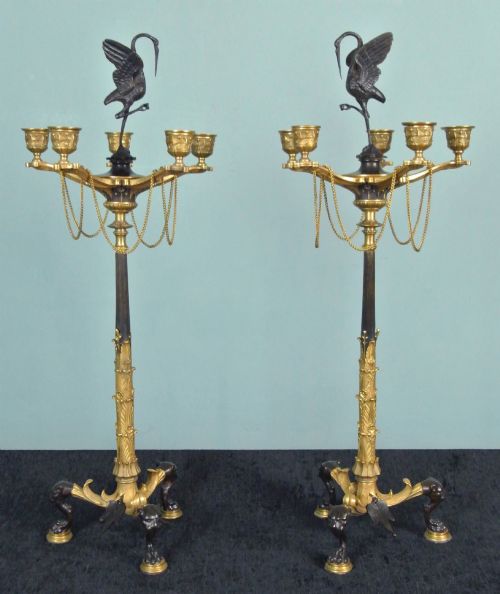
Empire style pieces display neoclassical symmetry, military motifs, and references to ancient Rome, Greece, or Egypt. They often feature patinated bronze figures contrasted sharply against bright ormolu mounts.
In contrast, Rococo revival items embrace asymmetry, flowing curves, naturalistic foliage, and shell motifs. The overall aesthetic feels more fluid and organic compared to the rigid geometry of Empire designs.
Can I burn real candles in them?
Burning wax candles is physically possible on unaltered antique examples equipped with standard drip pans. However, modern users often choose faux wax candles to protect the historic metal surfaces from dripping wax and heat damage.
If lighting actual candles, ensure the pair sits on a stable, level surface away from drafts. Clean any residual wax promptly using warm water rather than scraping tools.