


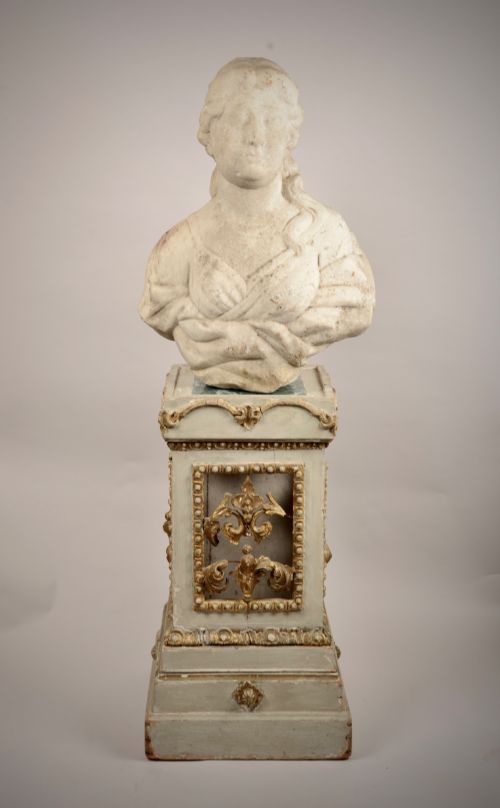


Classical Female Portrait Bust
A classical female portrait bust captures idealized grace in stone or metal, bringing historic presence and refined sculptural form into any room.
Classical Female Portrait Bust
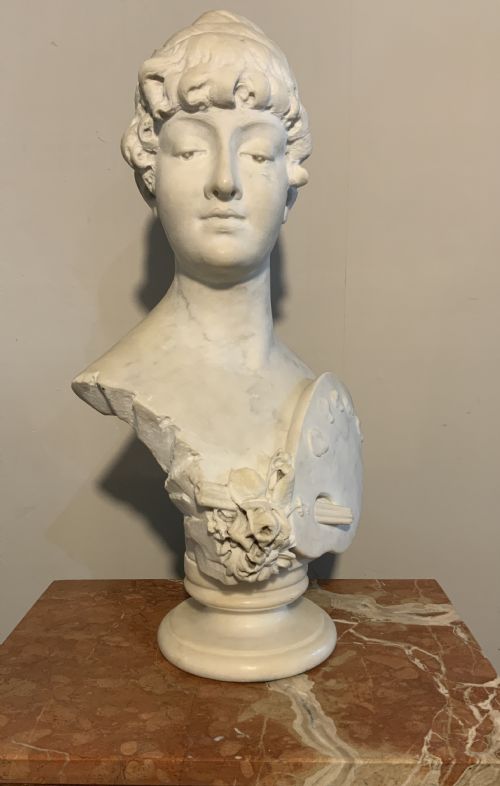
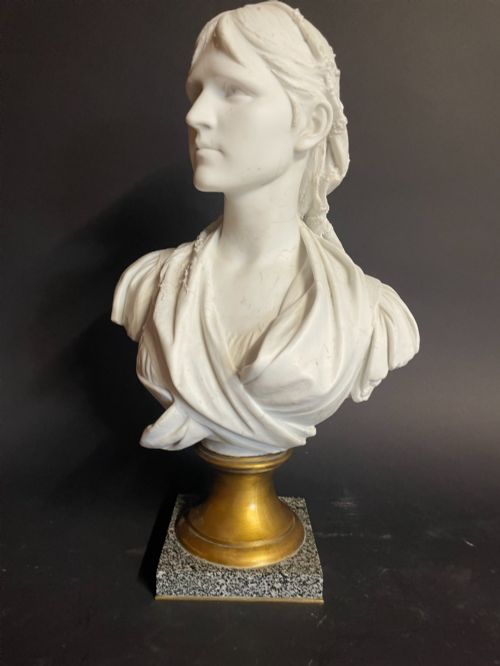
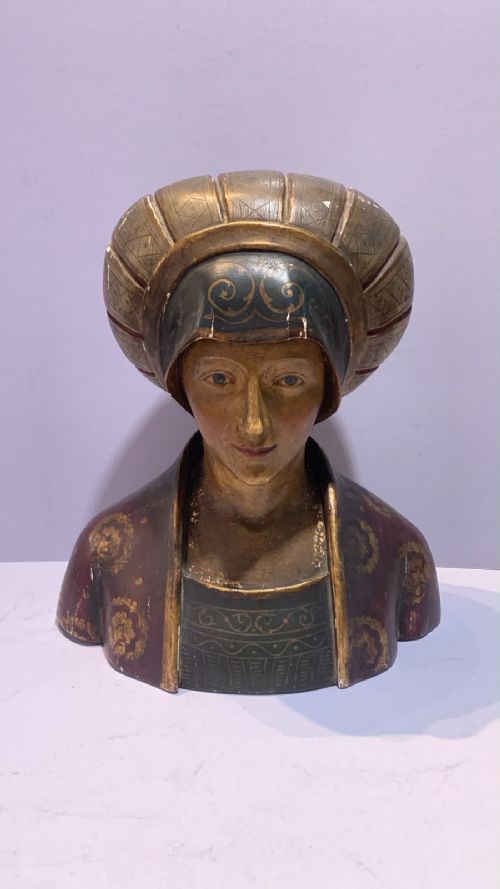
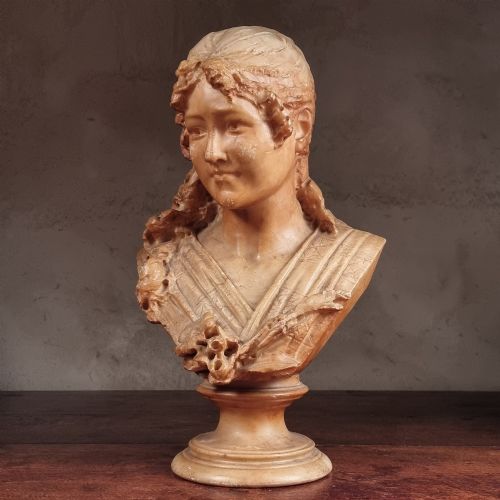
A classical female portrait bust is a sculptural representation of a woman, drawing on historical figures, mythic muses, or idealized types. When searching this phrase, a buyer encounters works spanning the seventeenth century through to the early twentieth century, with nineteenth-century interpretations appearing most frequently.
The forms range from compact cabinet pieces to substantial table sculptures. Subjects include specific historical figures, literary heroines, allegorical representations like seasons, and anonymous young women modelled in the antique manner.
Origins stretch across European workshops, with French and Italian pieces strongly represented alongside English and Russian examples. Materials vary from fine white stone to cast metals and moulded ceramics.
How They Were Made
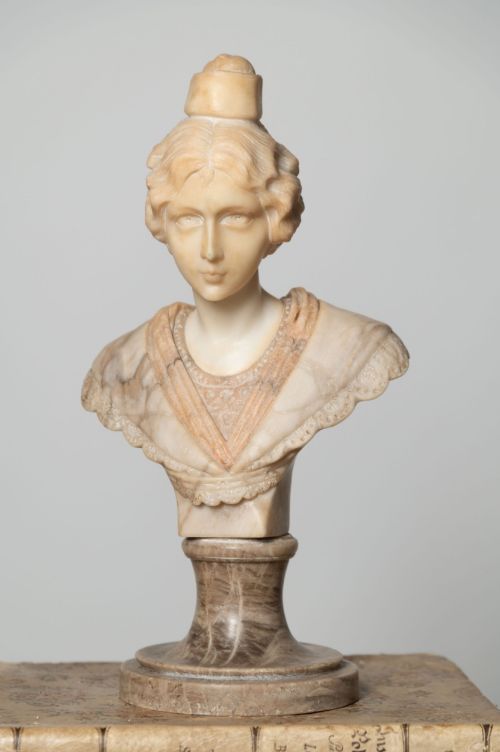
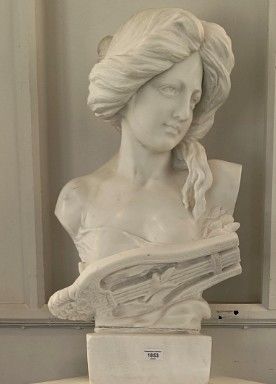
Carved pieces rely on direct manual reduction of blocks of marble, alabaster, or wood, using chisels and rasps to achieve soft drapery and lifelike facial contours. Carrara marble and pale alabaster provide a smooth, luminous ground that mimics human skin.
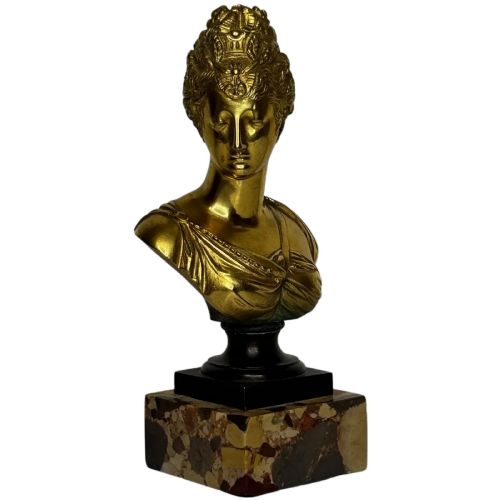
Metal sculptures utilise the lost-wax casting technique or sand casting in bronze, brass, or cast iron, frequently finished with chemical patination to create dark brown or green surface tones. Bisque porcelain, terracotta, and plaster offer modelled alternatives that capture fine detail through moulds before firing or setting.
Listings feature periods from the seventeenth century through the 1930s, utilising marble, bronze, alabaster, terracotta, wood, brass, and porcelain.
What Varies in Quality
Quality rests primarily in the sensitivity of the carving or casting. Superior pieces display subtle transitions in facial expression, delicate rendering of hair strands, and convincing folds in garments.
The choice and preparation of the material also dictate standard. Dense, unblemished marble and crisp, detailed bronze casts with deliberate patination sit distinctly apart from softer, indistinct moulded plasters or coarse terracotta castings.
Emmanuel Villanis·Georges-Charles Coudray·Hans Müller·Eutrope Bouret
The Classical Female Portrait Bust Glossary
- Carrara Marble
- A type of white or blue-grey marble from the city of Carrara in Italy, prized for its fine grain and consistent texture.
- Patinated Bronze
- A bronze sculpture treated with chemical solutions to produce a specific surface coloration and sheen.
- Terracotta
- Fired clay used for sculptural models and finished figures, often left unglazed to show the porous reddish-brown material.
- Parian Ware
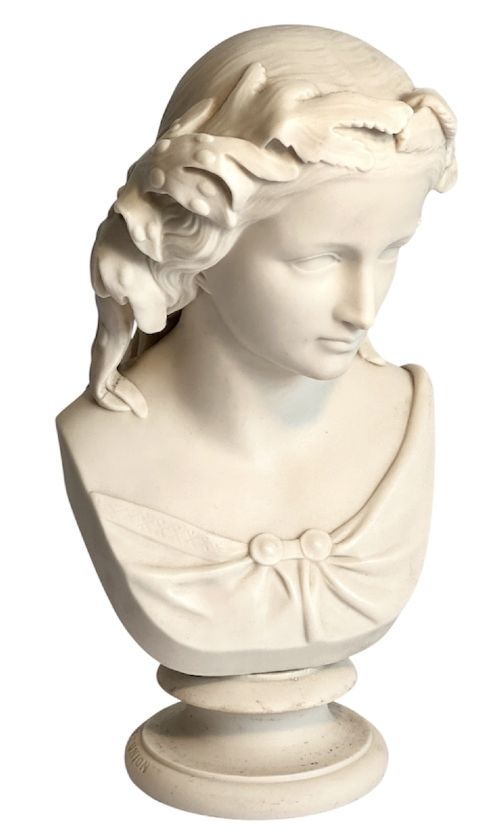
- A type of fine biscuit porcelain developed in the nineteenth century to imitate white marble, frequently used for literary and classical busts.
- Grand Tour
- A traditional trip through Europe undertaken by upper-class Europeans, which often resulted in the acquisition of small-scale classical sculptures.
Classical Female Portrait Bust: Frequently Asked Questions
How do I display a portrait bust?
These sculptures require a stable, sturdy surface such as a heavy console table, pedestal, or strong mantelpiece where their weight is safely supported.
Position them at or slightly below eye level to maintain the intended perspective of the carved or cast gaze.
What materials are most common?
Marble and bronze appear frequently across the selection, offering durability and traditional weight. Alabaster, terracotta, plaster, and bisque porcelain also provide distinct tactile surfaces.
Each material brings a different texture and colour palette, from bright white stone to dark patinated metal.
How do I distinguish nineteenth-century pieces?
Nineteenth-century works often reflect revivals of neoclassical, Renaissance, or art nouveau styles, combined with mechanical sawing marks or foundry stamps specific to the period.
Examining the underside and mounting hardware provides further clues to the manufacturing era.
Were these made as portraits of real people?
Some pieces depict named historical figures, literary characters, or mythological entities like Diana and Juno. Others represent idealized types, allegories of abstract concepts, or anonymous young women modelled after antique sculpture.
Inscribed titles or signatures on the base usually clarify the intended subject.