



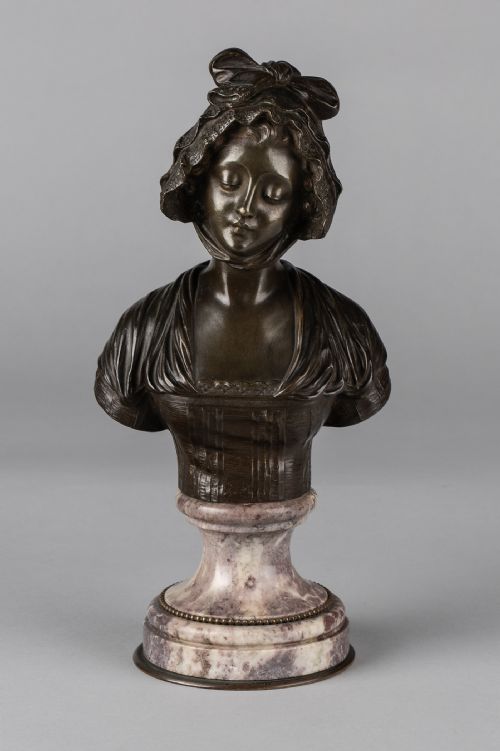

Antique Classical Woman Bust
These antique classical woman bust pieces bring dignified sculpture into a room, carved from marble or cast in bronze.
Antique Classical Woman Bust
An antique classical woman bust represents female figures in sculptural form, drawing on neoclassical and academic traditions. When searching for an antique classical woman bust, collectors encounter works originating mostly across the nineteenth century and into the Edwardian era.
The selections on this page span carved marble, terracotta, alabaster, plaster, and bronze. Sculptures range from life-size veiled ladies to smaller portrait studies of young women.
Originating largely from French and Italian studios, these pieces capture academic portraiture and classical idealism. Buyers frequently find subjects rendered as Italian figures or French female studies mounted on stone bases.
Materials and methods
Carved marble and alabaster require skilled handwork using chisels and rasps to achieve smooth flesh tones and intricate drapery. Sculptors select fine stone such as Carrara marble or variegated varieties for bases.
Bronze and terracotta pieces involve casting techniques, utilising molten metal poured into moulds or fired clay finished with paint or bronzed patination. Cast iron and plaster offer alternative sculptural mediums employed during the nineteenth and early twentieth centuries.
Listings feature works spanning the nineteenth century up to the Edwardian period, utilising marble, alabaster, bronze, and terracotta.
Qualities that set pieces apart
Quality rests in the precision of the carving and the subtlety of the expression. Master carvers render hair strands, delicate veils, and musculaturer with distinct realism.
The choice of materials also elevates a piece, particularly when artists combine fine Carrara marble with contrasting coloured bases like Vert de Mer. Signed works by documented sculptors carry greater distinction.
E. Laurent·Henri Plé·Eugene Laurent·GREUZE
The Antique Classical Woman Bust Glossary
- Neoclassical
- A style reviving classical Greek and Roman aesthetic principles, focusing on proportion, symmetry, and classical subjects. It dominates much nineteenth-century sculpture.
- Terracotta
- Fired clay used for sculptural models and finished works, often painted or given a patinated surface. It allows for expressive modelling before hardening.
- Alabaster
- A soft, translucent stone favoured for sculptural portraits due to its ability to diffuse light and mimic human skin. It is softer than marble and carved with finer tools.
- Patination
- The surface finish or colour applied to metal or terracotta through chemical treatment, age, or paint. It defines the visual depth of bronze and cast metal works.
Antique Classical Woman Bust: Frequently Asked Questions
What materials are these busts made from?
The pieces utilise a range of sculptural materials including carved marble, alabaster, terracotta, plaster, bronze, and cast iron. Some examples incorporate mixed media such as painted surfaces or contrasting stone bases.
Artists selected these mediums depending on whether they intended a polished stone finish or a cast metal portrait.
How do I date a classical bust?
Dating relies on stylistic markers, costume details, materials, and signatures associated with nineteenth-century and Edwardian workshops. The clothing, hairstyle, and base construction often provide clear chronological clues.
Studying the specific type of marble and foundry marks helps narrow down the period of creation.
Where were these sculptures made?
Many of these works originate from French and Italian academic sculpting traditions of the nineteenth century. Workshops in these regions produced both carved stone portraits and bronze castings for international collectors.
Italian studios frequently focused on carved alabaster and Carrara marble subjects.
How should I display a heavy marble bust?
Due to the substantial weight of marble, alabaster, and bronze, these sculptures require sturdy furniture such as a strong console table, pedestal, or firm cabinet top. Ensuring the supporting surface is level protects both the stone and the base.
Positioning the piece away from direct heat sources prevents damage to painted or patinated surfaces.