

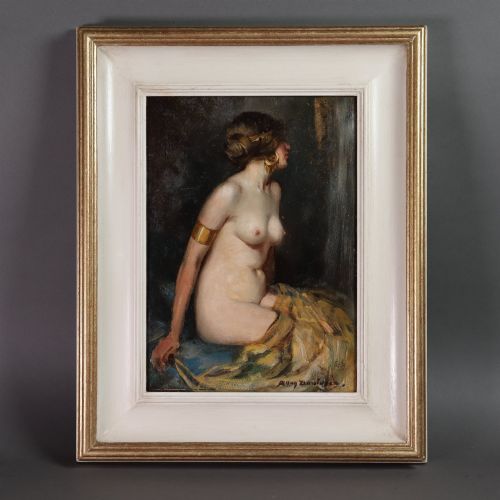


![Pen and Ink Sketch - Female Nudes by William Edward Frost [1810-1877]](https://www.sellingantiques.co.uk/photosnew/dealer_kendallhouse/dealer_kendallhouse_full_1758970795762-8493507346.jpg)


Classical Female Nude Art
Classical female nude art brings sculptural figures and painted studies into rooms through bronze, marble, oil on canvas and pencil.
Classical Female Nude Art
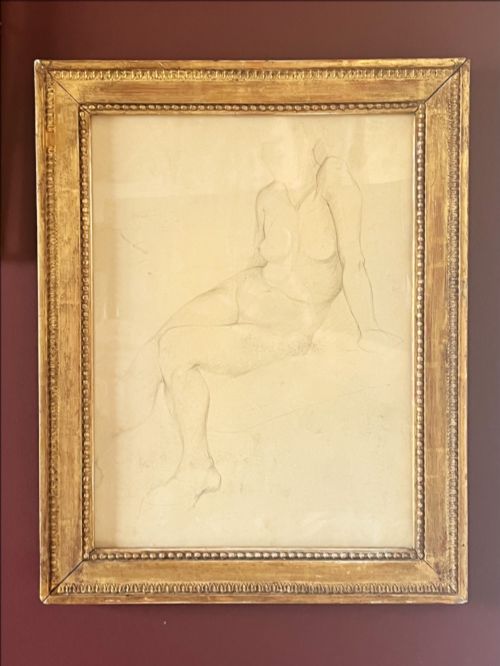
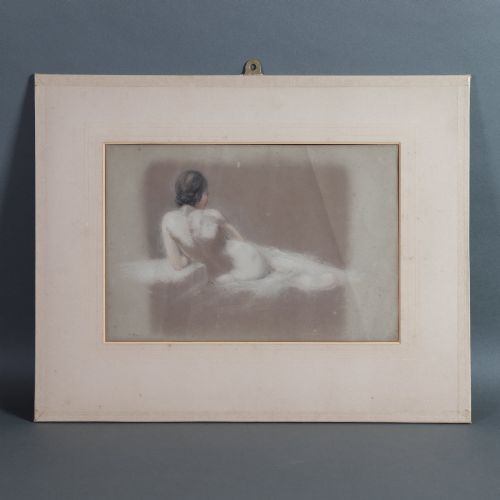
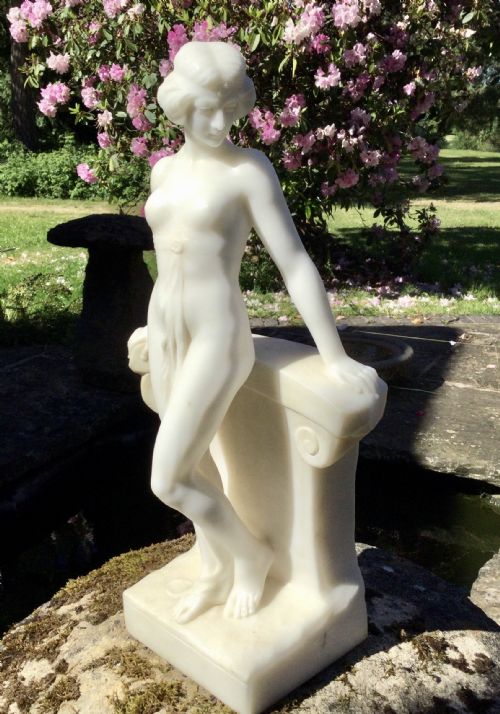
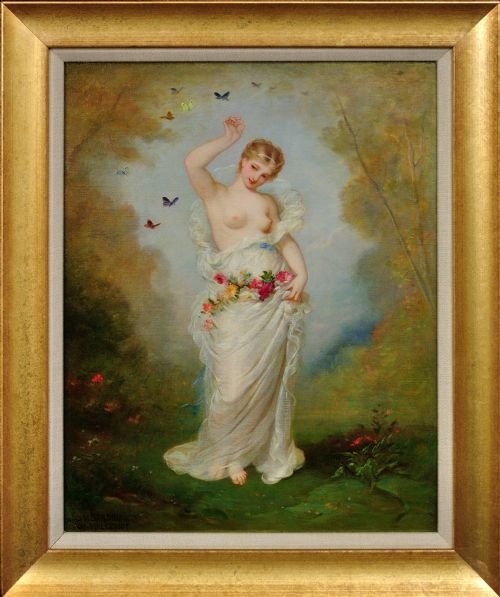
Classical female nude art encompasses sculptures, framed artworks, oil paintings and drawings created across the nineteenth and twentieth centuries. These works draw upon academic traditions, romanticism, art nouveau and art deco styles to render the human form.
Buyers encounter French academic paintings, carved alabaster reclining figures and patinated bronze groups. Materials range from traditional marble and bronze to limewood, glass, chalk, charcoal and oil on board.
Originating largely from European studios, these pieces reflect academic training, mythological themes and decorative movements. The selection balances nineteenth-century realism with twentieth-century stylisation.
Determinants of quality
Quality rests upon the precision of anatomical rendering, the expressive handling of the medium and the crispness of casting or carving detail. Superior bronzes preserve subtle surface textures and facial expressions without obscuring them in heavy patination.
In paintings and drawings, draughtsmanship and brushwork control determine the depth of the finished study. The integration of supporting elements, such as fitted marble bases for bronzes or period gilt frames for works on paper, influences the overall integrity of the piece.
The listings span from the 1860s to the 1960s, uniting bronze, marble, limewood, oil on canvas, pencil and chalk.
William Etty·André Charles Voillemot·Allan Douglas Davidson·Pierre-Paul Prud'hon·Fritz Kochendorfer·Hector Lemaire·Aristide Maillol·Hans Müller·William Edward Frost·Fernand Jean Barbier·Eugène Désiré Piron·Auguste Renoir·Mario Korbel
The Classical Female Nude Art Glossary
- Patinated bronze
- A metal sculpture treated with chemical solutions to produce a specific surface colour and tone. This process protects the metal while enhancing the visual depth of the modelled form.
- Academic realismi
- A style of painting and sculpture governed by the standards of nineteenth-century European art academies. It emphasises precise draughtsmanship, mythological subjects and lifelike anatomical proportions.
- Alabaster
- A fine-grained, translucent stone used extensively for carved figures and sculptural reliefs. Its soft texture allows for smooth transitions of light across reclining forms.
- Mixed media
- An artwork combining two or more distinct artistic materials and techniques on a single support. This approach appears frequently in preparatory studies and modern works.
- Recumbent
- Lying down or reclining in a horizontal or semi-recumbent posture. This position is common in nineteenth-century marble and bronze figures of bather subjects.
Classical Female Nude Art: Frequently Asked Questions
What periods do these pieces span?
The available selection spans from the mid-nineteenth century through the 1930s and into the mid-twentieth century. Works reflect shifting aesthetics from academic realism to art nouveau and art deco.
Collectors encounter nineteenth-century French bronzes alongside early twentieth-century oil paintings and carved alabaster figures.
How were bronze figures displayed originally?
Bronze sculptures were typically cast as freestanding table centrepieces or mounted on heavy marble bases to provide stability and visual contrast. Many pieces from the early twentieth century integrate marble plinths directly into the design.
Smaller figures and miniature paintings were intended for intimate domestic display in drawing rooms and studies.
How do I distinguish academic styles?
French academic and neoclassical works rely on strict anatomical study, smooth surfaces and classical mythological themes such as naiads and bather scenes. Later art deco and modernist interpretations simplify these lines into stylised geometric forms.
Examining the treatment of hair, drapery and posture helps separate nineteenth-century romantic realism from twentieth-century abstraction.
What is the difference between oil paintings and works on paper?
Oil paintings on canvas and board utilise layered pigments to build depth, colour and luminosity in flesh tones. Works on paper employ pencil, charcoal, chalk or ink to capture immediate gestural studies and preparatory sketches.
Drawings and miniature paintings require protection under glass and framing to preserve the delicate media.