


![Pen and Ink Sketch - Female Nudes by William Edward Frost [1810-1877]](https://www.sellingantiques.co.uk/photosnew/dealer_kendallhouse/dealer_kendallhouse_full_1758970795762-8493507346.jpg)


Framed Female Figure Drawing
A framed female figure drawing brings the intimacy of the studio straight to the wall through charcoal, chalk, or pencil on paper.
Framed Female Figure Drawing
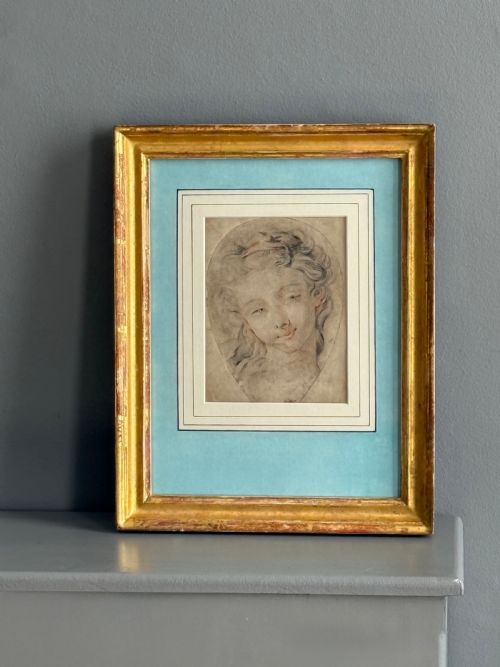
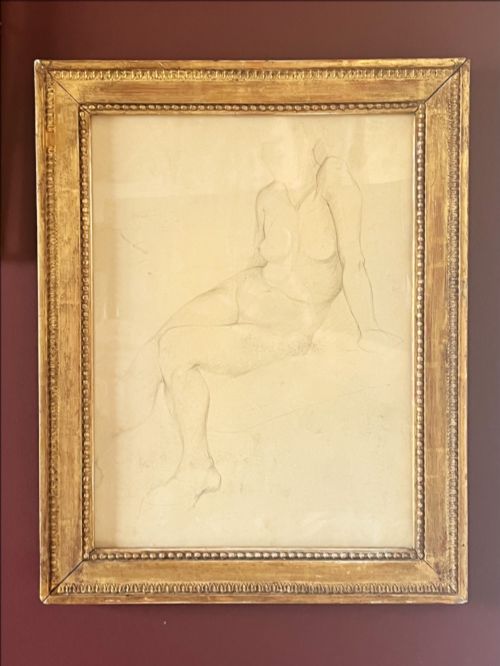
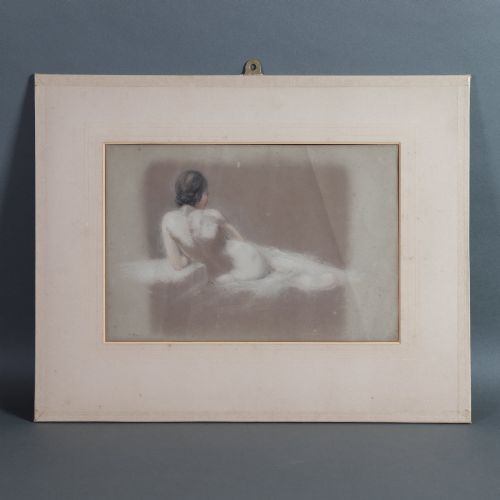
When you search for a framed female figure drawing, you encounter works ranging from academic life studies to rapid sketches in pencil, chalk, and charcoal. These pieces capture the human form through the direct hand of the artist, often preserved behind glass in period wooden or gilt frames.
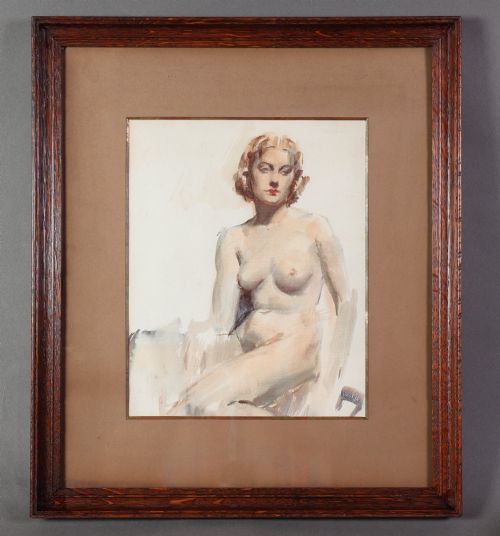
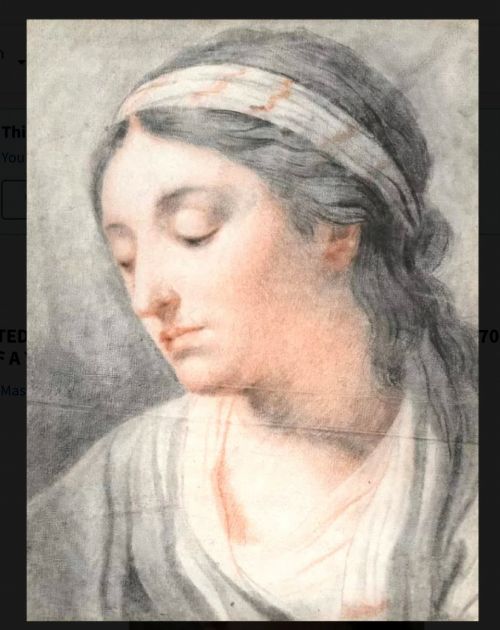
The selections span several centuries, moving from French Neoclassical head studies and 19th-century portraits to 20th-century Modern British and Art Deco life drawings. You will frequently meet works executed on paper that record the posture, drapery, or anatomy of a female sitter.
Many of these drawings function as preparatory studies or finished life class exercises, offering insight into the working methods of artists across the decades. The presence of a period frame often anchors the drawing firmly to its era of origin.
How they were made
The primary vehicle for these works is paper, upon which artists applied graphite, charcoal, chalk, pastel, or pen and ink. These dry and fluid media allowed for both rapid gestural sketching and careful tonal modelling of the female form.
Frames play a structural role in the survival of these works, utilising wood and gilt wood to protect the fragile paper surface beneath glass. The combination of mount boards and wooden frames helps preserve the charcoal and pastel particles from disturbance.
One French Art Deco drawing captures a lady specifically noted for her flaming locks of auburn hair.
What varies in quality
Quality rests upon the sureness of the draughtsmanship and the economy of line used to define the pose and volume of the figure. A confident handling of shadow and light gives the subject a convincing three-dimensional presence on the sheet.
The integrity of the materials also distinguishes the works, particularly the preservation of the paper free from heavy foxing and the harmony between the drawing and its period frame.
William Etty·Augustus John·Lucien Gibert·William Edward Frost·Winifred Eugene Ballard·Frank Dobson·Gaston Bouy·Cecil CP Lawson
The Framed Female Figure Drawing Glossary
- Life study
- A drawing or painting executed directly from a live model, often undertaken in an art school or studio setting to master human anatomy.
- Charcoal
- A dry drawing medium made from burnt organic material, capable of producing deep blacks and soft smudged tonal gradations on paper.
- Gilt wood
- Wood that has been coated with a thin layer of gold leaf or metallic gilt, commonly used for traditional picture frames.
- Academic realism
- An artistic style stemming from the European academies that emphasises precise anatomical accuracy, polished surface detail, and classical proportions.
Framed Female Figure Drawing: Frequently Asked Questions
How should I hang a framed paper drawing?
Keep drawings out of direct sunlight to prevent the fading of charcoal, chalk, and pastel pigments on the paper.
Ensure the room maintains a stable humidity level so the paper and wooden frame do not warp or degrade behind the glass.
What is the difference between a study and a portrait?
A study generally focuses on capturing a specific pose, anatomical detail, or compositional element, often during a life drawing session.
A portrait usually concentrates on depicting the likeness and identity of a specific individual sitter.
Are these drawings original works of art?
The pieces encountered here are hand-drawn or painted unique works executed directly by the artist rather than mass-produced reproductions.
Each sheet bears the distinct touch of graphite, ink, pastel, or charcoal left by the creator's hand.
How do I identify the period of the frame?
Gilt wood frames often display construction methods, corner joinery, and patination characteristic of specific centuries like the nineteenth or twentieth.
Examining the backboards, fixings, and materials provides further clues to whether the frame is original to the drawing.