


Female Figure Life Study
A female figure life study captures the human form directly from the model, offering an intimate record of draftsmanship and observation.
Female Figure Life Study
A female figure life study brings direct observation of the human form into domestic spaces through framed drawings, paintings, and mixed media works. These pieces range from Academic Realism and Romanticism to Art Deco, Modern British, and Mid-Century Modern styles, reflecting shifting artistic approaches across the twentieth century.
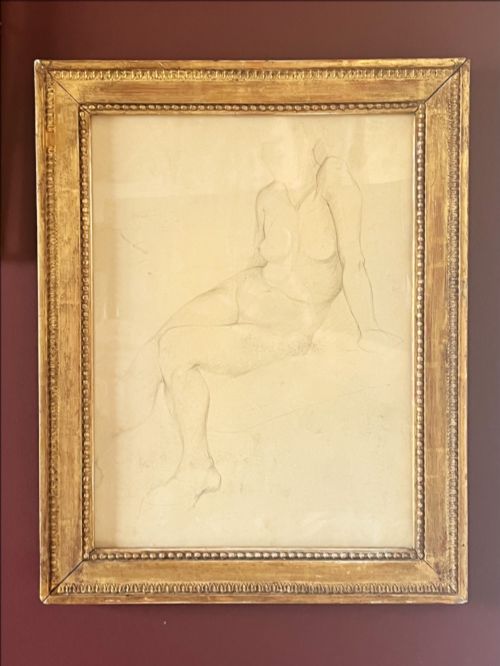
Buyers most frequently encounter charcoal, chalk, pastel, and pencil drawings on paper, alongside oil and mixed media paintings on wood or canvas. Many works are housed in period frames, including antique gilt wood surrounds that complement the paper and glass compositions.
Materials and Technique
Artists record the living model using dry media such as charcoal, soft chalk, pastel, and graphite on paper. These materials allow rapid capture of tone, shadow, and contour during timed studio sessions.
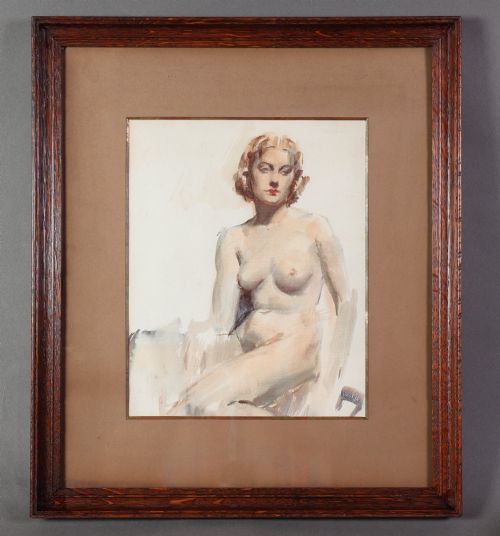
Painted works utilise oil and mixed media on canvas or wood panels, sometimes combined with preparatory underdrawing. Finished pieces are preserved beneath glass within timber and gilt wood frames.
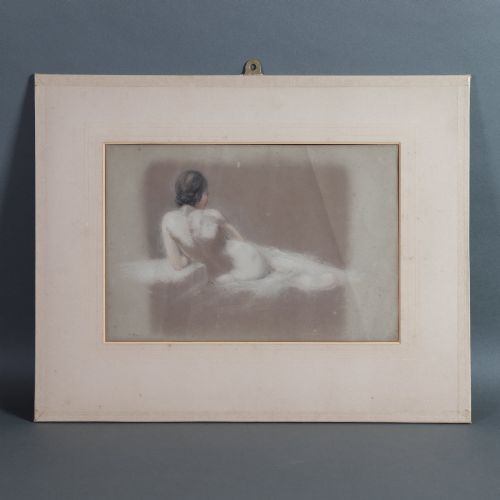
Models occasionally left behind their flaming auburn hair immortalised in French art deco charcoal.
Assessing Quality
Quality rests upon the sureness of the hand and the accuracy of proportion in capturing the live model. A master draughtsman conveys volume, weight, and tension in the muscles with economical lines rather than laboured shading.
The choice of framing and the preservation of the delicate paper surface influence the overall presentation. Strong works demonstrate confident handling of negative space and light across the seated or recumbent figure.
William Etty·Augustus John·Lucien Gibert·Peter Jackson·Winifred Eugene Ballard·Frank Dobson
The Female Figure Life Study Glossary
- Life study
- A drawing or painting executed directly from a live model to train or demonstrate observational skill. These works capture the immediate posture and anatomy of the sitter.
- Academic realism
- An artistic style governed by the rules of traditional academies, emphasising precise anatomical accuracy and polished rendering. It forms the foundation of rigorous life drawing.
- Recumbent
- Lying down or reclining in a horizontal position. In figurative art, this pose tests the artist's command of foreshortening and bodily weight.
- Mixed media
- An artwork combining two or more distinct artistic materials, such as pastel used alongside charcoal and ink. This approach builds layered texture and varied tonal depth.
Female Figure Life Study: Frequently Asked Questions
How do I display a paper life study safely?
Keep drawings behind glass away from direct sunlight to prevent the charcoal, pastel, or chalk from fading or shifting over time. Stable indoor humidity protects both the paper support and any antique wooden frame.
Mount the artwork using acid-free materials so the paper remains undamaged by direct contact with backing boards. Professional framing preserves the delicate surface of twentieth-century works on paper.
What is the difference between academic and modernist studies?
Academic studies prioritise precise anatomical proportion and smooth tonal shading to mirror physical reality closely. Modernist interpretations focus on expressive line, simplified form, and emotional resonance over strict realism.
Both approaches stem from live studio sessions but serve different aesthetic aims. Collectors choose between the rigorous detail of traditional training and the expressive freedom of mid-century art.
Why do these works often feature charcoal and pastel?
Charcoal and pastel allow artists to capture rapid changes in light and shadow during live modelling sessions. These dry media respond immediately to pressure, enabling expressive line work and soft tonal blending.
Artists working in art schools and private studios relied on these accessible materials for quick sketches and finished exhibition pieces alike.
How can I tell the period of a drawing?
Dating relies on the framing style, paper type, and artistic movement visible in the handling of the subject. Pieces from the early twentieth century often show Academic Realism or Romantic influences, while mid-century examples lean towards abstraction or expressive modernism.
Signatures, artist biographies, and framing materials provide further clues to confirm whether a work originates from the nineteen-thirties or the nineteen-fifties.