





![Pen and Ink Sketch - Female Nudes by William Edward Frost [1810-1877]](https://www.sellingantiques.co.uk/photosnew/dealer_kendallhouse/dealer_kendallhouse_full_1758970795762-8493507346.jpg)

Academic Nude Figure Drawing
An academic nude figure drawing captures the human form through rigorous study, offering collectors a direct link to historic atelier training and traditional draughtsmanship.
Academic Nude Figure Drawing
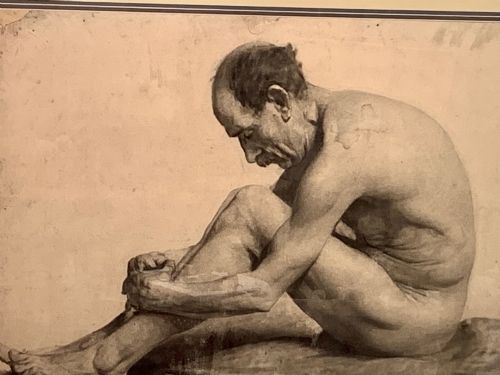
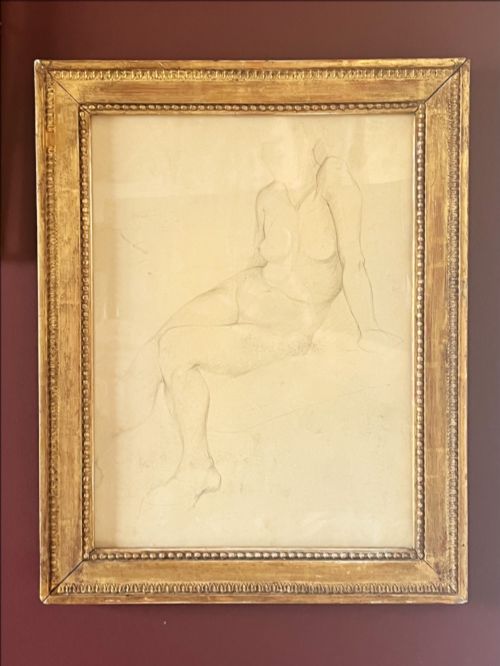
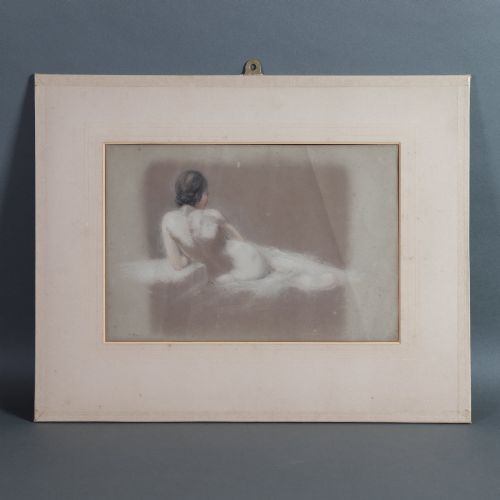
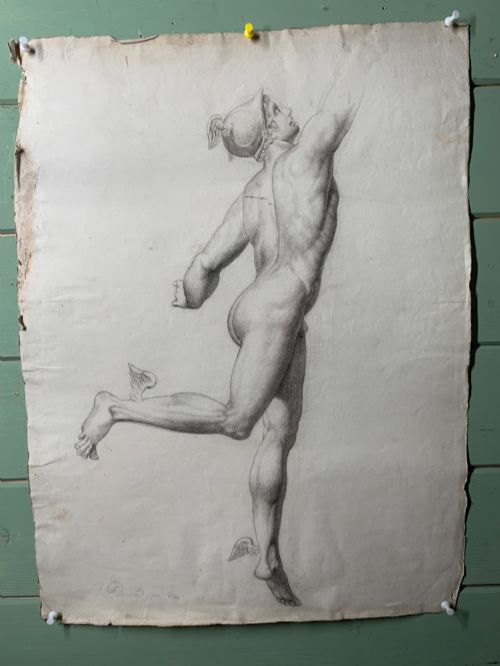
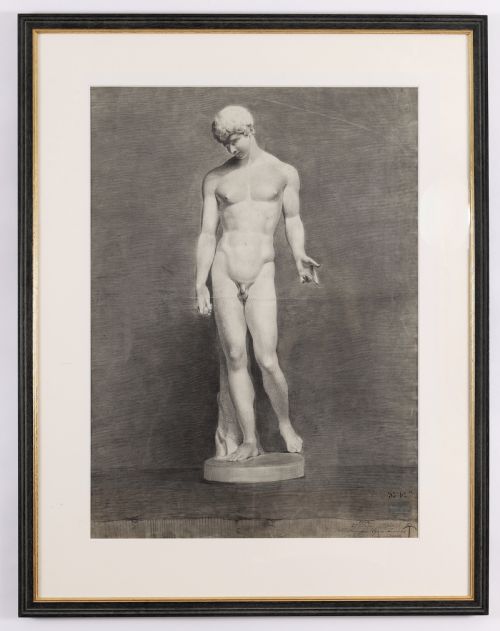
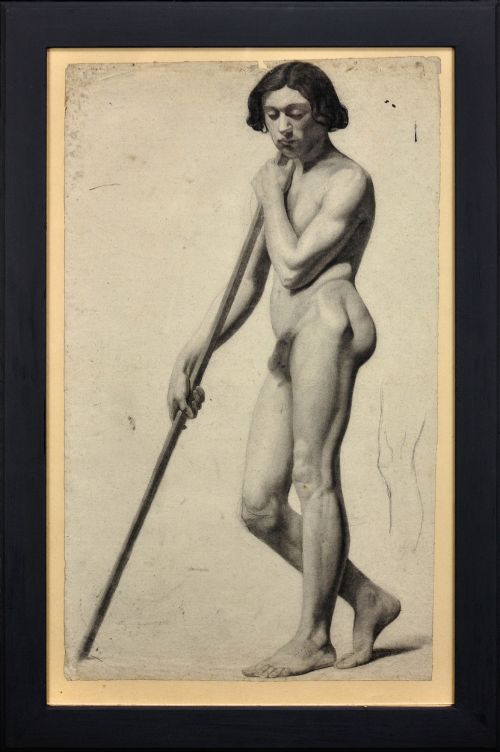
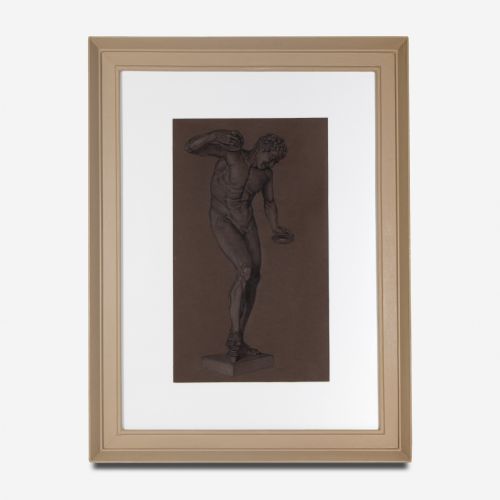
An academic nude figure drawing represents a core exercise in traditional art education, focusing on anatomical precision and observational skill through depictions of the human body. These works capture live models in classical poses, often rendered in response to antique sculpture or classical masters.
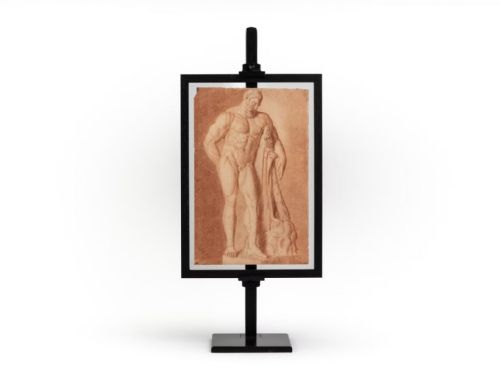
The selections available here span multiple centuries, ranging from eighteenth-century Italian school studies to twentieth-century life drawings. Collectors encounter framed artworks created with mediums such as graphite, charcoal, and red chalk on paper, often housed in period frames.
Originating from structured school training and academy submissions, these drawings reflect the prevailing aesthetic of their era, shifting from neoclassical proportions to later academic realism and modern interpretations. Each piece records the hand of the student or master working closely from the model.
Materials and Technique
Artists executed these studies on paper, including toned paper surfaces, utilising dry mediums such as graphite, charcoal, chalk, and red chalk to build tone and shadow. Pen and ink occasionally form the basis of linear sketches, while mixed media combinations capture nuanced highlights and depth on the page.
Draughtsmen worked from live models or plaster casts of classical statuary like the Capitoline Antinous or the Farnese Hercules, applying precise shading and contouring to demonstrate mastery of human anatomy. Framing in wood or gilt wood frequently accompanies the finished sheet, preserving the delicate paper surfaces from environmental exposure.
Listings feature works executed in charcoal, graphite, chalk, and red chalk on paper.
Evaluating Quality
The strength of a drawing rests upon the confidence of the line and the accurate rendering of anatomical structure, muscle tone, and light source. Superior works display a sophisticated understanding of proportion and volume, whereas lesser examples rely on stiff outlines without convincing depth.
Provenance and attribution elevate certain pieces, particularly those associated with documented artists, academic prizes such as the Grand Prix de Rome, or identifiable schools of draughtsmanship. The condition of the paper and the integrity of the framing also influence the overall character of the surviving work.
William Etty·Augustus John·Henry Arthur Roberts·William Edward Frost·Winifred Eugene Ballard
The Academic Nude Figure Drawing Glossary
- Academic Art
- A style of painting and drawing produced under the influence of European academies of art, emphasising traditional techniques and classical subjects.
- Recto and Verso
- Terms designating the front and the back of a sheet of paper, where drawings sometimes appear on both sides from periods of paper scarcity.
- Life Study
- A drawing or painting executed directly from a live nude model, serving as a fundamental exercise in artistic training.
- Charcoal
- A dry drawing medium made from organic carbonaceous material, utilised for creating deep blacks and broad tonal gradations on paper.
Academic Nude Figure Drawing: Frequently Asked Questions
What is an academic life study?
An academic life study is a detailed drawing of a human model produced within a formal training environment. These works record the rigorous observation required in historical art schools.
Students drew from live subjects to master proportion, shadow, and anatomy, creating foundational pieces that informed larger painted compositions.
How do I identify the period of a drawing?
Dating relies on stylistic markers, paper characteristics, framing materials, and inscriptions left by the artist or subsequent collectors. Neoclassical and nineteenth-century works often show distinct anatomical emphasis compared to twentieth-century examples.
Examining the reverse of the paper and any archival labels provides additional contextual clues regarding the exact origin of the sheet.
Why are some drawings double-sided?
Paper was historically an expensive commodity, leading art students and draughtsmen to utilise both sides of a single sheet for practice. This resulted in drawings on both the recto and verso.
Collectors appreciate these dual-sided sheets as they reveal multiple stages of an artist's study or different exercises performed during training.
How should I frame and display these works on paper?
Works on paper require conservation-grade framing with UV-protective glazing to prevent fading from light exposure. Keeping pieces away from direct sunlight preserves the charcoal, chalk, and graphite mediums.
Displaying them in stable indoor environments protects the antique paper from humidity fluctuations and physical degradation over time.