





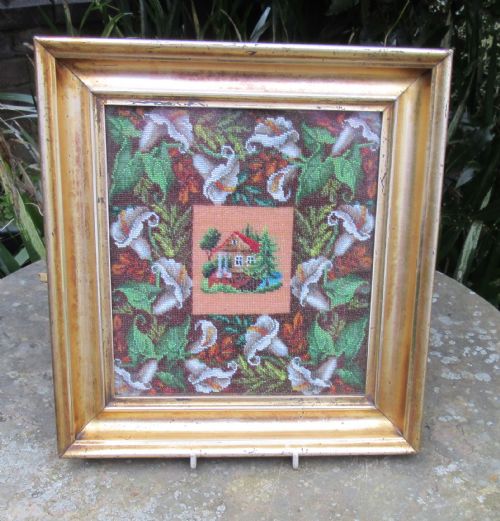

Beaded Gilt Framed Picture
A beaded gilt framed picture brings together delicate textile art or fine works on paper and luminous metallic surrounds that catch the light.
Beaded Gilt Framed Picture
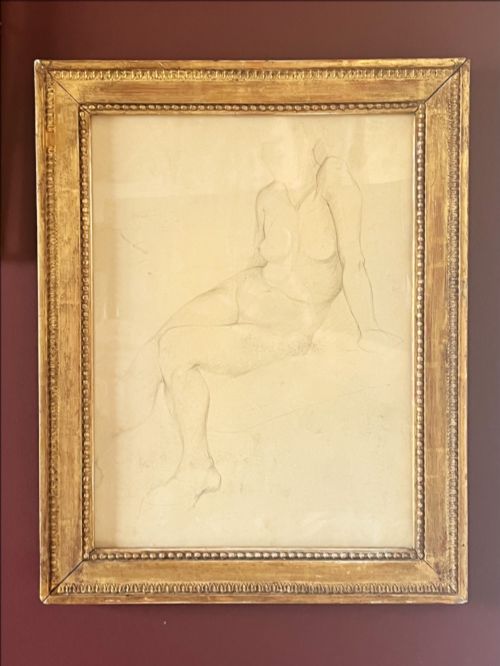
A beaded gilt framed picture encompasses framed beadwork fragments, miniature needleworks, watercolour portraits, and butterfly prints housed within gilded surrounds. The selection spans centuries of craftsmanship, ranging from seventeenth-century needlework to mid-twentieth-century drawings.
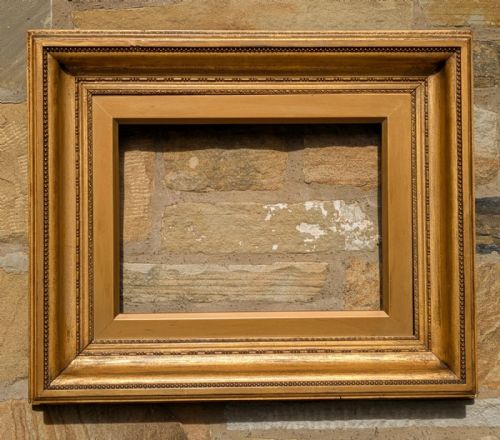
Most examples encountered here date from the nineteenth century, including Victorian mirror plates and ornate frames featuring traditional moulding techniques. Buyers will find both standalone artworks and decorative frames enclosing textile scenes or botanical prints.
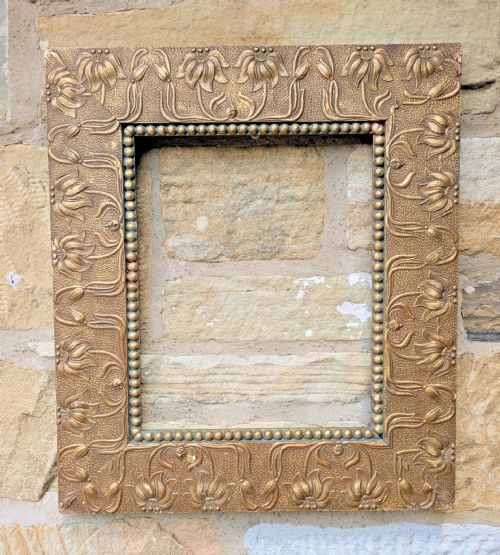
Origin and period styles vary widely across the inventory, touching upon Stuart, Regency, Victorian, and Art Nouveau aesthetics. Whether housing a Royal Hunting needlework scene or an original female nude life drawing, these pieces serve as striking wall art.
How they were made
Makers utilised wood, gesso, and composition to build up the intricate relief work found on these surrounds, applying gold leaf to achieve a brilliant metallic sheen. This traditional application method creates the reflective surfaces characteristic of water gilded oval frames.
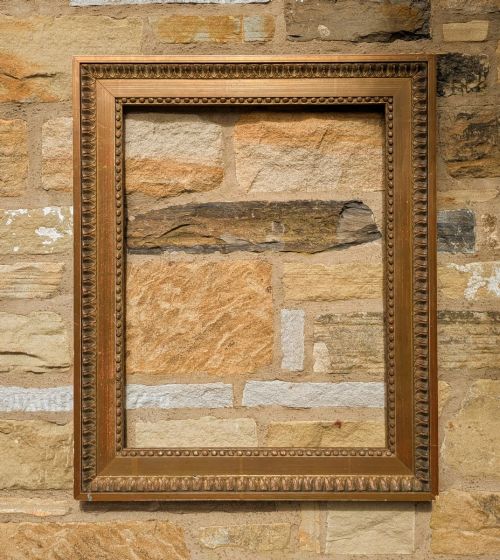
Internal components frequently combine glass, paper, and textile elements, such as detailed beadwork fragments and delicate watercolour paintings. Structural frames often incorporate carved details like acanthus leaves and egg and dart beaded mouldings.
Among the delicate watercolours and stately portraits hide meticulous butterfly prints, proving that Victorian walls celebrated entomology just as much as fine art.
What varies in quality
Quality rests upon the crispness of the gesso moulding and the preservation of the original gold leaf surface. Finer examples display deeply carved decorative motifs and well-preserved giltwood rather than flat, uniform replacements.
The relationship between the artwork and its surround determines the integrity of the piece, particularly where period needleworks or seventeenth-century beadwork fragments remain in their matching frames.
Thomas Woolnoth
The Beaded Gilt Framed Picture Glossary
- Giltwood
- Wood that has been coated with gold leaf or a thin layer of gold paint. This finish provides a warm, reflective surface that defines antique frames and mirrors.
- Gesso
- A plaster-like mixture applied to wood frames to create a smooth surface for gilding. Artisans carve and mould this material into intricate decorative reliefs before applying gold leaf.
- Composition
- A durable mixture of whiting, resin, glue, and oil pressed into moulds to form decorative ornaments. It offers an efficient alternative to hand-carved wood details on Victorian frames.
- Needlework
- Decorative sewing executed on canvas or fabric using yarn or thread. These historic textiles frequently appear mounted behind glass within ornamental gilt surrounds.
- Egg and dart
- An ornamental banding detail featuring an alternating pattern of oval shapes and pointed arrowheads. This classical motif commonly appears on nineteenth-century framing mouldings.
Beaded Gilt Framed Picture: Frequently Asked Questions
Are these frames original to the art?
Many frames remain paired with their historical contents, such as nineteenth-century watercolour portraits and early needlework scenes.
Some pieces combine period artwork with later surrounds or replacement glass, which collectors note by examining the joinery and backing materials.
How do I hang a heavy gilt mirror?
Secure the piece directly into wall studs using appropriate fixings rated for the combined weight of wood, gesso, and glass.
Heavy Victorian frames require professional picture wire or robust mirror brackets to distribute the load safely.
What period do these frames represent?
The collection spans several eras, featuring seventeenth-century textile fragments alongside Victorian and Art Nouveau decorative framing.
Nineteenth-century examples form the core of the selection, showcasing neoclassical influences and elaborate floral ornamentation.