


Classical Empire Wall Mirror
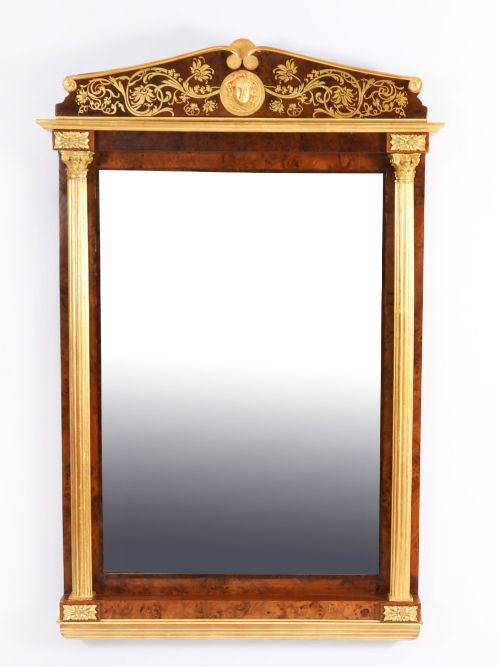
A classical empire wall mirror brings grand architectural presence and deep historical weight to a room through bold giltwood, rich mahogany, and classic neoclassical motifs.
Classical Empire Wall Mirror
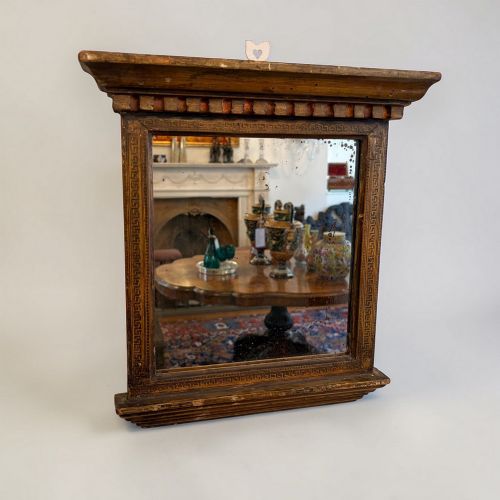
A classical empire wall mirror is a commanding decorative focal point designed to reflect light and expand spatial depth within a grand interior. These pieces encompass stately wall mirrors, broad overmantel mirrors, and tall pier mirrors suited for placement between windows or above mantelpieces.
The examples found here span the nineteenth century, including Victorian interpretations and specific continental movements such as French Empire, Danish Empire, and Regency Neoclassical styles. Buyers will frequently encounter generous overmantel mirrors and striking pier glasses framed in rich woods or heavy gilt.
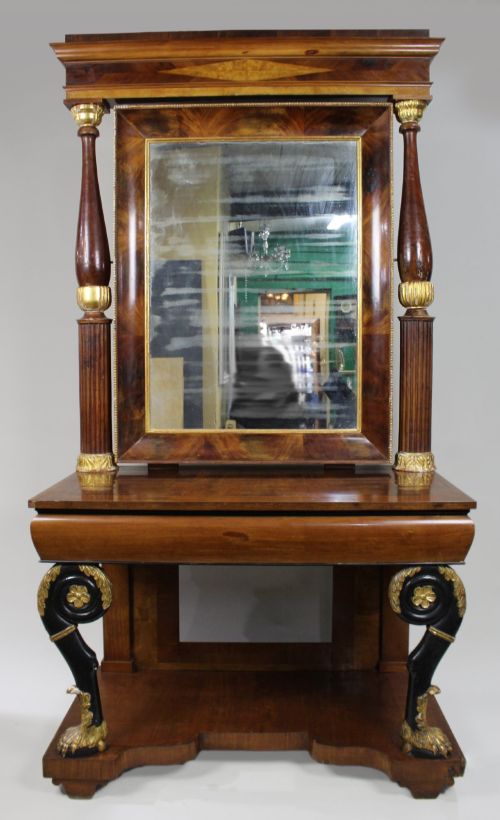
Many variants integrate architectural elements like console tables or incorporate detailed decorative relief panels depicting classical figures. From simple walnut frames to tall architectural formats, these mirrors anchor a room with distinct period character.
How they were made
The construction of a classical empire wall mirror relies heavily on dense cabinet timbers such as mahogany, walnut, and rosewood, often paired with parcel gilt or ebonised wood details. Woodworkers shaped these robust foundations to support substantial glass plates, utilising brass detailing and painted wooden panels for added ornamentation.
Giltwood and gesso techniques were applied to create the brilliant metallic surfaces characteristic of the empire and neoclassical styles. Artisans carved intricate relief scenes directly into the plaster or wood, capturing mythological motifs like chariots and cherubs with sharp sculptural definition.
One exceptional nineteenth-century overmantel mirror even depicts the dramatic mythological tale of Anania and her chariot carved right into the frame.
What varies in quality
The hierarchy of quality in a classical empire wall mirror rests on the ambition of its architectural conception and the crispness of its carved ornament. Superior pieces display deeply undercut gesso work and finely cast brass mounts rather than soft, indistinct surface moulding.
The Classical Empire Wall Mirror Glossary
- Pier mirror
- A tall mirror specifically designed to hang on the wall space between two windows. It frequently sits above a matching console table.
- Overmantel mirror
- A wide horizontal mirror built to rest directly upon the mantelpiece ledge above a fireplace. These pieces often feature tripartite plates.
- Giltwood
- Timber that has been coated with a thin layer of gold leaf over a prepared gesso ground. It provides a luminous, reflective surface for frames.
- Trumeau
- An interior decorative wall panel that incorporates a painted scene or artwork alongside a mirror plate. It originates from eighteenth and nineteenth-century French interior design.
- Ebonised
- Wood that has been treated chemically or stained dark to imitate expensive ebony. This dark finish creates a striking contrast against gilt details.
Classical Empire Wall Mirror: Frequently Asked Questions
Where should I hang a classical empire wall mirror?
These mirrors suit rooms with high ceilings where their substantial architectural frames can command the space effectively.
Positioning one above a fireplace or between tall windows allows the piece to function as a traditional focal point while maximising natural light.
How do I distinguish French Empire from Regency styles?
French Empire pieces typically lean heavily into monumental neoclassical forms with distinct military or mythological relief panels.
Regency and Regency Neoclassical variants often incorporate lighter ebonised details alongside giltwood, reflecting British interpretations of similar classical ideals.
What is an overmantel mirror used for?
An overmantel mirror is traditionally placed directly above the mantelpiece to anchor the fireplace wall within the room's decorative scheme.
Because of its horizontal spread and division into multiple glass plates, it visually widens the hearth area and bounces firelight around the interior.
Are these mirrors heavy to hang?
These pieces are constructed from dense hardwoods, thick gesso, and heavy glass plates, making them considerably weighty objects.
Secure installation requires professional wall fixings and proper anchoring into structural studs or masonry to support the load safely.