

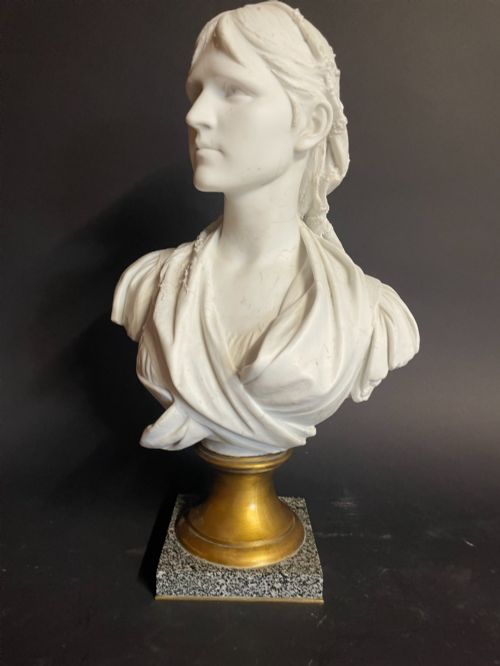
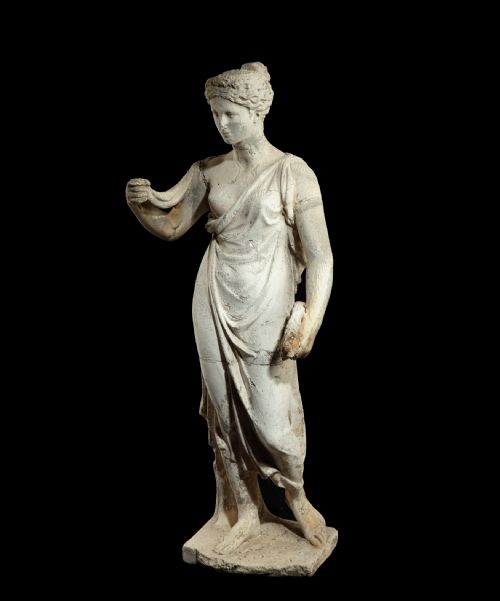
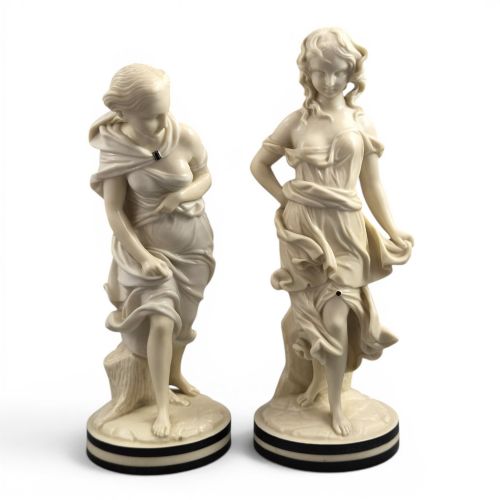



Classical Draped Female Statue
A classical draped female statue brings the serene poise of antiquity into a room, fashioned from marble, bronze, or plaster.

Classical Draped Female Statue
A classical draped female statue embodies the sculptural traditions of ancient Greece and Rome, reimagined across the nineteenth and twentieth centuries. When searching for a classical draped female statue, buyers encounter everything from grand garden figures in reconstituted stone to delicate porcelain figurines and substantial bronze sculptures.
The pieces on this page span diverse forms, including interior busts, torcheres, and life-sized garden statues on plinths. Makers and foundries drew heavily on mythological and allegorical subjects, producing figures of goddesses, water carriers, and personifications of seasons like autumn.
Originating largely from British, French, and Italian workshops, these works reflect enduring tastes from the Regency era through to the Art Nouveau period and mid-twentieth-century stone production. Domestic tabletop figures sit alongside monumental gallery marbles and weather-resistant outdoor statuary.
How they were made
Foundries and studios utilised traditional methods of casting, carving, and moulding to achieve realistic drapery and form. Sculptors worked directly in marble and alabaster, while bronze editions required expert lost-wax or sand casting followed by detailed hand-chasing.
Plaster and parian ware allowed workshops to produce intricate interior figures and busts efficiently, often capturing the fine folds of classical garments. Outdoor pieces relied on durable cast stone, reconstituted stone, and sturdy stucco to withstand the elements while maintaining sharp sculptural detail.
Classical Draped Female Statue Retail Price Guide 2026
Typical asking prices for classical draped female statue among the pieces listed under this phrase on Sellingantiques today, from the lower quarter to the upper quarter. They describe what is for sale here now, not the wider market.
The selection spans multiple periods, including Regency, Victorian, Art Nouveau, and mid-twentieth-century garden statuary.
What varies in quality
The distinction between standard commercial pieces and masterworks rests on the sensitivity of the carving and the crispness of the casting. Finer marbles and alabasters reveal subtle translucency and masterly control over the complex folds of heavy cloth, whereas lesser works appear rigid and thick-handed.
Bronze sculptures show quality in the precision of the foundry work and the depth of the patination, distinguishing accomplished editions from routine commercial output. In porcelain and parian figures, superior definition in facial expressions and delicate extremities separates exceptional manufactory output from standard decorative items.
Barbedienne·Royal Worcester·Pugi·Humphrey Hopper·Ernst Barrias·Auguste Moreau
The Classical Draped Female Statue Glossary
- Parian ware
- A type of fine biscuit porcelain developed in the nineteenth century to imitate carved marble. It gained popularity for portrait busts and classical figures due to its smooth, matte finish.
- Torchere
- A tall stand or ornamental pedestal designed to support a lamp, or a figure holding a light source. In classical sculpture, these often take the form of draped female figures.
- Caryatid
- A sculpted female figure serving as an architectural support taking the place of a column or a pillar. Pairs of these figures frequently appear in plaster or stone architectural settings.
- Bisque porcelain
- Unglazed porcelain fired to a matte, white state that resembles marble. Victorian makers utilised this surface to highlight the soft contours of classical drapery.
Classical Draped Female Statue: Frequently Asked Questions
Where should I place a large stone statue?
Heavy stone and reconstituted stone figures suit garden terraces, courtyards, or substantial entrance halls where they can anchor a spatial view.
Ensure the ground or plinth is level to support the substantial weight safely without shifting over time.
How do I clean marble sculptures safely?
Dust marble and alabaster surfaces regularly with a soft, dry microfibre cloth to prevent the accumulation of airborne particles in the carved crevices.
Avoid using water, household detergents, or chemical cleaners, as these can damage the polished stone or soft alabaster surface.
Can plaster figures go outdoors?
Plaster and parian ware pieces are strictly intended for interior display because moisture and frost will rapidly degrade the material.
Keep these delicate interior sculptures away from direct sunlight and damp environments to preserve their original surface finish.
What is the difference between bronze and brass?
Bronze is an alloy primarily composed of copper and tin, valued by foundries for its strength and ability to capture fine sculptural detail.
Brass contains copper and zinc, typically resulting in a brighter golden tone that appears less frequently in classical figurative statuary.