


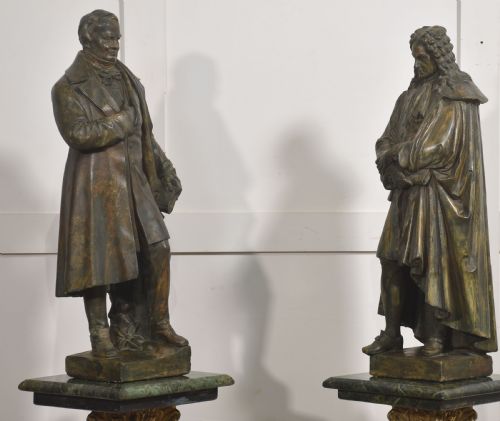
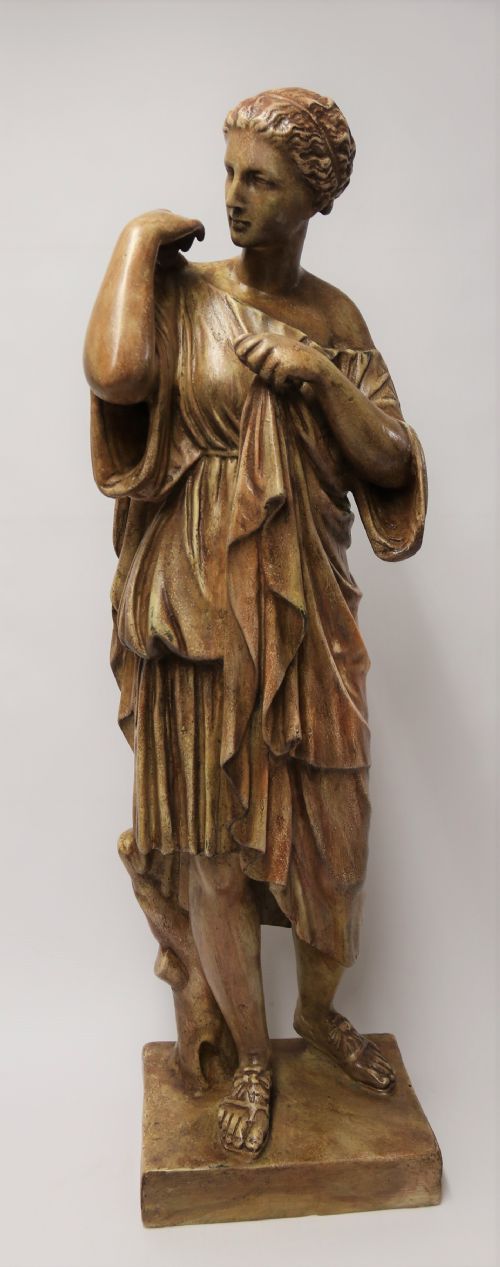


19th Century Plaster Figure
These 19th century plaster figure pieces bring classical mythology, portraiture, and academic realism straight into an interior.
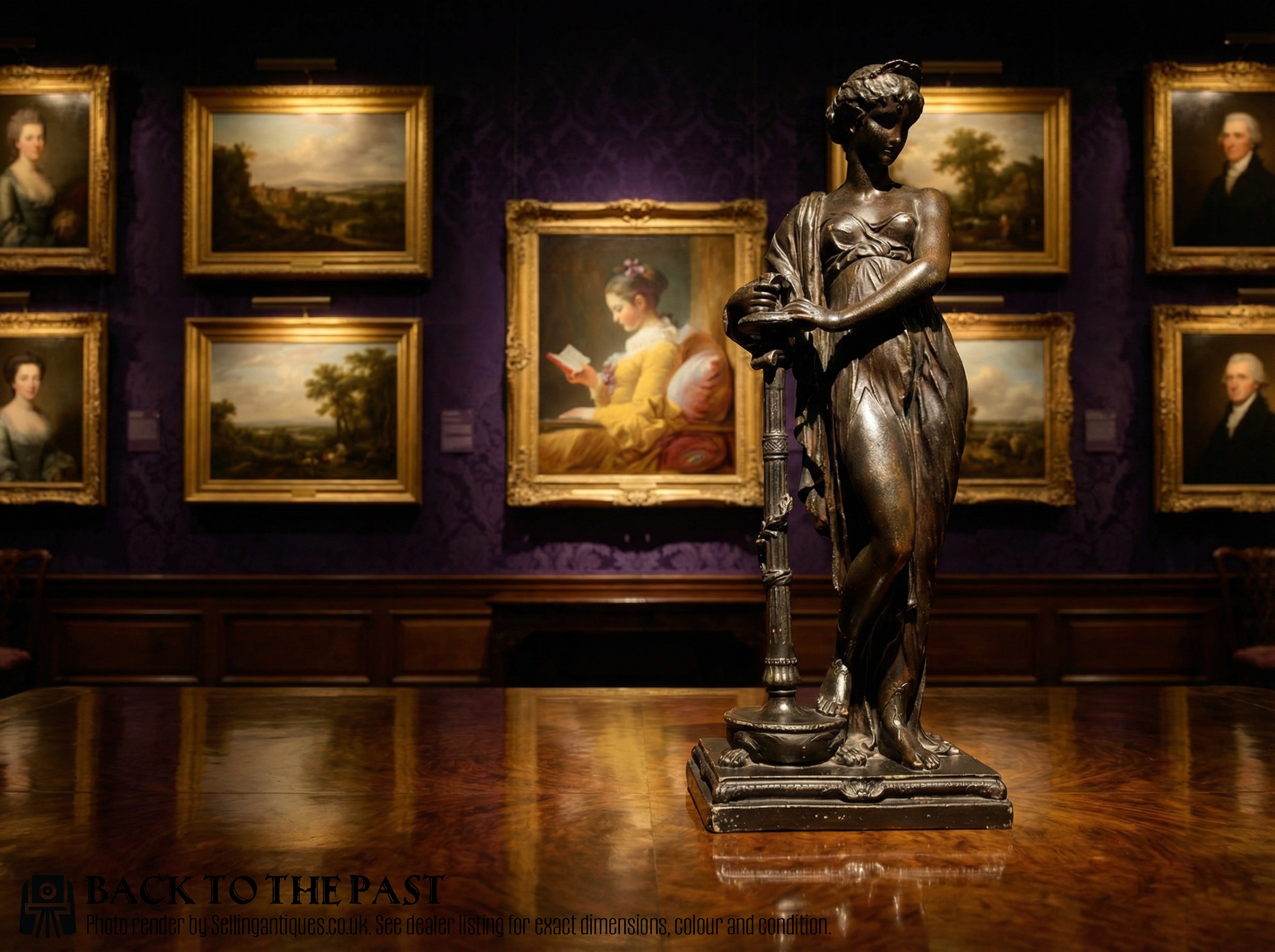
19th Century Plaster Figure
A 19th century plaster figure captures the dominant aesthetic currents of its era, ranging from Regency and Neoclassical subjects to Victorian academic realism and Orientalist depictions. Buyers searching this phrase encounter sculptural objects that replicate antique marbles and bronzes or present original modelled portraits and allegorical studies.
The selection on this page most frequently includes portrait busts of Roman emperors and historical figures, classical deities such as Diana and the Dancing Faun, and full-length decorative studies. These pieces originate from workshops across Britain, France, and Austria, often reflecting the tastes of the Grand Tour and Renaissance Revival.
Makers and modellers of the period drew heavily on classical antiquity and the Renaissance, producing figures intended for domestic display in libraries, halls, and studies. The forms span from modest cabinet busts to large-scale architectural corbels and polychromed Orientalist figures.
How they were made
Moulders created these works by pouring wet plaster or chalkware into complex multi-part moulds, capturing fine details from original sculpted models or ancient marbles. Once dry, the surfaces received finishing treatments including oil-based paints, pigment washes, and metallic coatings to simulate bronze, terracotta, or patinated metal.
Many pieces incorporate internal armature supports of wood or wire to stabilise larger forms like full-length figures and torcheres. Polychromed and patinated examples required skilled hand-finishing with coloured pigments and verdigris effects to achieve realistic skin tones, fabric textures, and aged patinas.
19th Century Plaster Figure Retail Price Guide 2026
Typical asking prices for 19th century plaster figure among the pieces listed under this phrase on Sellingantiques today, from the lower quarter to the upper quarter. They describe what is for sale here now, not the wider market.
Roman emperors Marcus Aurelius and Caracalla keep a stern watch over the collection from their nineteenth-century plaster pedestals.
What varies in quality
Surface treatment significantly influences character and value, with original polychromy and convincing bronze or verdigris patination demonstrating superior execution compared to flat, uniform modern repainting. The fidelity to the source material, whether an Antonio Rossellino sculpture or a classical antiquity, marks the ambition of the original maker.
Dopmeier·Humphrey Hopper·Antonio Rossellino·Antoine-Felix Bouré
The 19th Century Plaster Figure Glossary
- Chalkware
- A moulded plaster material treated with a matte finish and often hand-painted to resemble more expensive ceramic or bronze figures. It was widely utilised for decorative domestic objects throughout the nineteenth century.
- Polychromed
- Decorated or painted in several colours. This surface treatment appears on Orientalist and portrait figures to heighten realism and replicate costume details.
- Grand Tour
- A traditional trip through Europe undertaken by upper-class young men to absorb classical art and culture. Figures purchased on these travels often included plaster reductions of ancient sculptures.
- Verdigris Patina
- A green or bluish crust formed on copper, brass, or bronze through oxidation. Nineteenth-century makers frequently replicated this finish on plaster surfaces to simulate aged metalwork.
- Torchere
- A tall ornamental stand or sculptural figure holding a light source. In nineteenth-century plaster, these often took the form of classical or Orientalist figures supporting a sconce.
19th Century Plaster Figure: Frequently Asked Questions
How do I clean a plaster figure?
Dust surfaces gently with a soft, dry brush or microfibre cloth without applying water or liquid cleaners. Moisture softens historical plaster and can permanently lift original pigments or painted patinas.
Avoid abrasive materials entirely when maintaining these sculptures. Professional conservation is necessary for removing deep-seated grime from porous chalkware or polychromed surfaces.
Are these figures solid plaster?
Most nineteenth-century sculptural works are cast hollow to reduce weight and material costs during production. Larger pieces often incorporate internal wooden armatures or metal rods for structural support.
Solid plaster is generally restricted to smaller portrait busts and cabinet pieces. Hollow casts require careful handling to prevent cracking along stress points.
How can I date a plaster bust?
Dating relies on stylistic clues, mounting materials, and the presence of original makers' stamps or inscribed titles on the base. Regency and Georgian examples often show distinct classical proportions and simpler wood or plaster plinths compared to later Victorian pieces.
Examine the underside and interior where visible for construction methods and ageing of the plaster. Pigment types and surface patination also offer reliable indicators of the period.
Where were these figures displayed originally?
Nineteenth-century interiors featured these sculptures in libraries, entrance halls, and formal drawing rooms as symbols of education and taste. Grand Tour souvenirs and classical figures communicated the owner's familiarity with European history and art.
Larger figures and torcheres served an architectural role in framing doorways or illuminating dark corners. Smaller portrait busts populated mantelpieces and bookcases alongside collected books.