

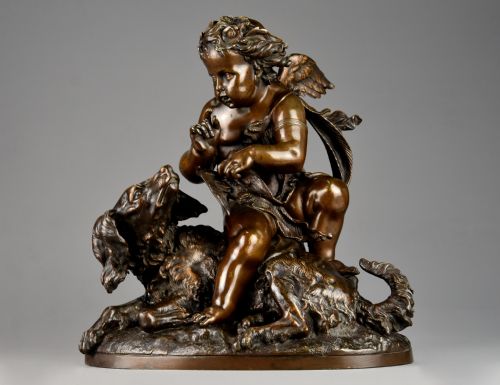


Classical Cherub Figurine
A classical cherub figurine brings mythological grace into a room through small-scale bronze and marble sculpture.
Classical Cherub Figurine
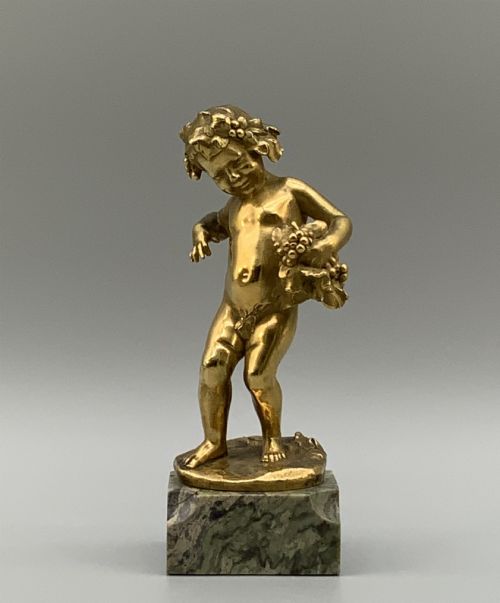
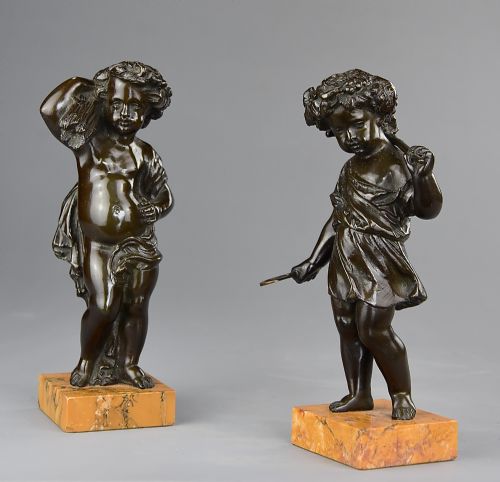
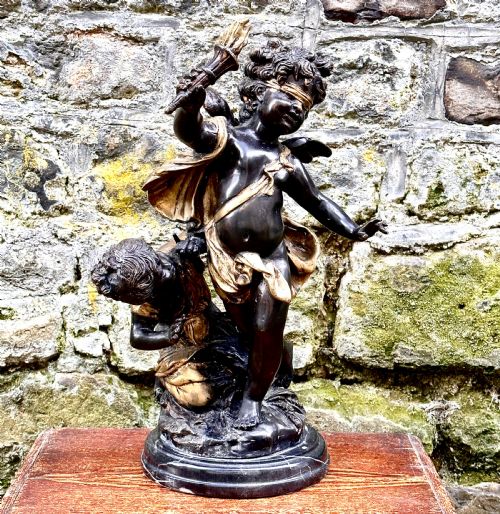
When you examine a classical cherub figurine, you are looking at sculptural depictions of putti, cupids, and infant Bacchic figures cast in metal or carved from stone. These works draw heavily upon Neoclassical and Rococo Revival idioms that dominated European studios throughout the nineteenth century.
The versions you meet most often on this page take the form of freestanding bronze sculptures, mounted bookends, and mantel clocks. Many derive their inspiration from classical models or reproduce compositions by celebrated French and Italian ateliers.
How they were made
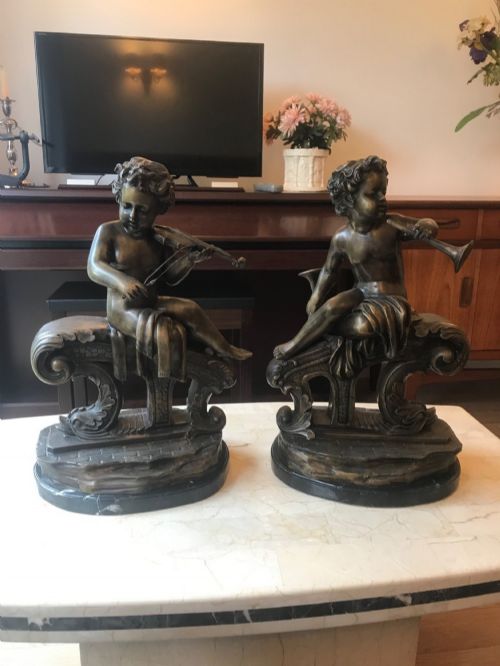
Foundries utilised the lost-wax casting method to render these bronze sculptures, capturing delicate details in the wings, musical instruments, and drapery. Patination ranged from warm golden gilt surfaces to deep dark brown finishes.
Carved pieces relied on white marble and alabaster, shaped with chisels and polished to highlight the softness of youthful limbs. Wood and enamel occasionally provided contrasting bases or structural framing for the stone and metal figures.
The sculptural subjects span sleeping cherubs, grape-harvesting putti, and figures playing musical triangles.
What varies in quality
The distinction between a standard cast and a superior piece lies in the crispness of the chasing and the liveliness of the modelling. Master founders meticulously finished their bronzes by hand after casting, ensuring that hair, feathers, and facial expressions retained sharp definition.
Weight and stability also separate tiers of production, particularly when figures serve functional roles as bookends or clock components. Heavier bronze allocations and dense marble bases indicate a higher grade of manufacture from established workshops.
Charles Louis Malric·Susse Frères·Claude Michael Clodion·Antonio Canova·Richard Avrilli·Louis Auguste Moreau·Dumond·Aug. Moreau·Ferrand·Denise Delavigne·Pigale·Pugi
The Classical Cherub Figurine Glossary
- Putto
- A chubby male infant, often winged, derived from classical art and frequently depicted in Renaissance and nineteenth-century sculpture. These figures embody mischievous or playful allegorical themes.
- Patinated Bronze
- Metal sculpture treated with chemical solutions to produce a specific surface colour, ranging from rich brown to verdigris. This layer protects the alloy and adds visual depth to the modelling.
- Gilt Bronze
- Bronze metal coated in a thin layer of gold or gold-coloured alloy to give a brilliant metallic sheen. It is also known as ormolu when used in French decorative arts.
- Neoclassical
- A style spanning the eighteenth and nineteenth centuries that revived the aesthetic principles of classical antiquity. It prioritises clarity of form, balanced composition, and mythological subjects.
Classical Cherub Figurine: Frequently Asked Questions
Where did these figures sit?
These sculptures typically occupied prominent domestic spaces such as mantelpieces, centre tables, and libraries. They acted as decorative accents within formal nineteenth-century interiors.
Heavier examples often served dual purposes as bookends or clock mounts, combining utility with classical iconography.
How do I identify cast bronze?
Genuine cast bronzes feel cool to the touch and display seams or chased details consistent with traditional foundry work. They often possess substantial weight relative to their physical dimensions.
Examination with a loupe reveals hand-chasing marks rather than the uniform texture associated with modern industrial moulding.
What is a putto?
A putto is a small winged infant figure rooted in classical mythology and frequently revived during the Renaissance and nineteenth century. They represent love, harvest, or music depending on their attributes.
Artists used them to inject narrative warmth and allegorical meaning into decorative metalwork and stone carving.
How do I clean marble bases?
Marble requires gentle dusting with a soft, dry cloth to prevent abrasive particles from scratching the polished surface. Moisture should be kept to a minimum during routine maintenance.
Harsh chemical detergents must be avoided entirely to preserve the natural integrity of the stone.