


Antique Marble Cupid
An antique marble cupid brings neoclassical charm and sculptural grace into a room.
Antique Marble Cupid
When you search for an antique marble cupid, you encounter nineteenth century sculptures, mantel clocks, and figures rendered in white marble, red marble, and sienna marble.
The pieces on this page span the 1850s, 1860s, 1890s, and the broader nineteenth century, frequently incorporating cast bronze, ormolu, and gilt bronze elements alongside the stone.
French French Empire, French Second Empire, and Neoclassical styles dominate these representations of cherubs, putti, and mythological figures such as Cupid and Psyche.
Materials and construction methods
These works combine carved marble bases and figures with cast bronze, ormolu, and gilt bronze components.
Makers utilised specialised techniques to mount marble onto bronze or ormolu structures, frequently featuring signed signatures on bases and integrated clock movements such as silk suspension.
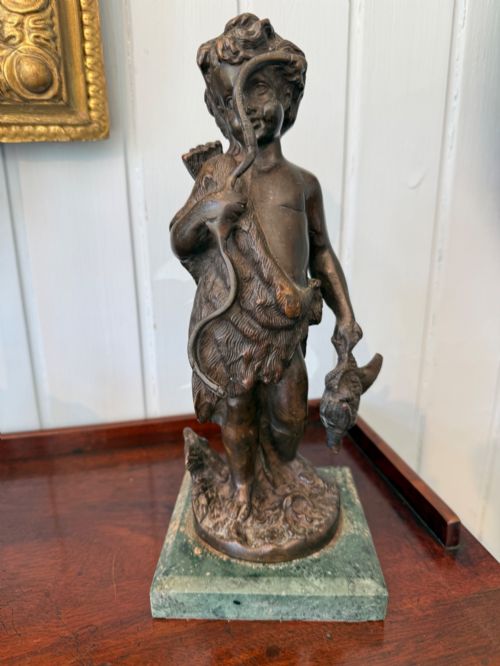
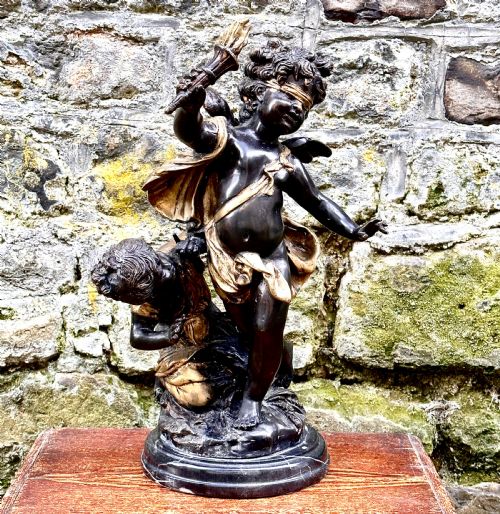
Putti occasionally wield bows or become bound on their bases.
Judging quality in marble and bronze sculptures
Quality rests in the crispness of the carving and the fidelity of the bronze casting, where named makers and signed bases elevate a piece above anonymous workshop output.
The integration of materials also defines the standard, distinguishing simple carved stone from complex compositions combining specimen marble, enamel dials, and fire gilt ormolu.
Antonio Canova·Louis Auguste Moreau·Denise Delavigne·Clodion
The Antique Marble Cupid Glossary
- Ormolu
- Gilded bronze utilised for decorative mounts and clock cases. This technique involves applying a finely ground high-carat gold mercury amalgam to a bronze object.
- Putto
- A plump, naked male child figure often depicted in classical art. These winged figures appear frequently in nineteenth century sculpture and clock designs.
- Grand Tour
- The traditional trip of Europe undertaken by upper-class European young men of the eighteenth and nineteenth centuries. These travellers acquired small bronzes and sculptures as souvenirs.
- Neoclassical
- The dominant western artistic style drawing on the art and culture of classical antiquity. It manifests in these listings through balanced proportions and mythological subject matter.
Antique Marble Cupid: Frequently Asked Questions
What periods do these pieces date from?
The listings span the nineteenth century, including specific years like 1850, 1860, 1890, and circa 1800.
Makers working within French Empire and Neoclassical styles produced these marble and bronze sculptures during this era.
How were these sculptures constructed?
Sculptors combined carved white, red, and sienna marble with cast bronze and ormolu mounts.
Many pieces feature integrated clock movements or signed bronze figures mounted directly onto stone bases.
Who made these cupid figures?
Recorded artists and makers include Antonio Canova, Louis Auguste Moreau, Denise Delavigne, and Clodion.
Works range from signed studio pieces to Grand Tour bronzes and French mantel clocks.
Where do these pieces originate?
The evidence points primarily to French workshops producing French Second Empire and French Empire designs.
Grand Tour souvenirs also account for some of the bronze and marble statuary found in this category.