


Classical Carved Side Table
A classical carved side table brings architectural dignity and marble surfaces into a room, spanning styles from Georgian to Victorian and Italian neoclassical.
Classical Carved Side Table
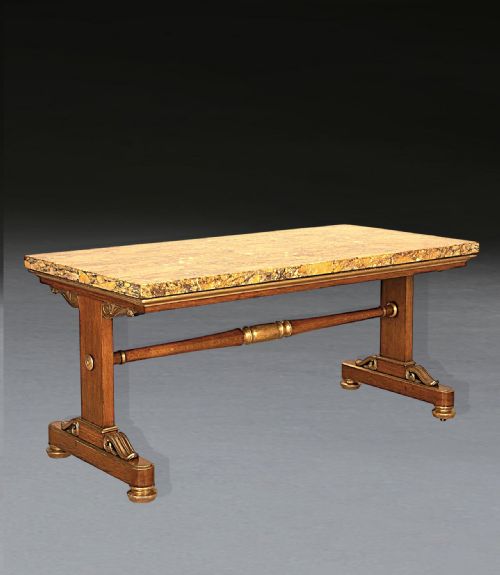
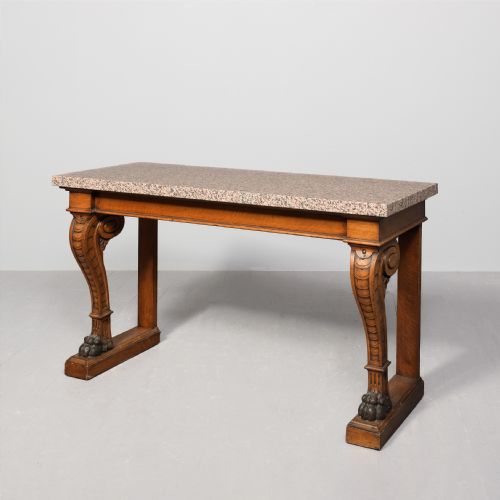
A classical carved side table encompasses console tables, serving tables, and centre tables that draw on neoclassical, Regency, and Italian designs. These pieces often feature prominent stone surfaces and carved wooden frames suited for hallways and principal rooms.
The inventory on this page ranges widely across time periods, including 18th-century examples, 19th-century Victorian and Regency pieces, and early 20th-century revivals. English mahogany formats sit alongside Italian and French painted or giltwood models.
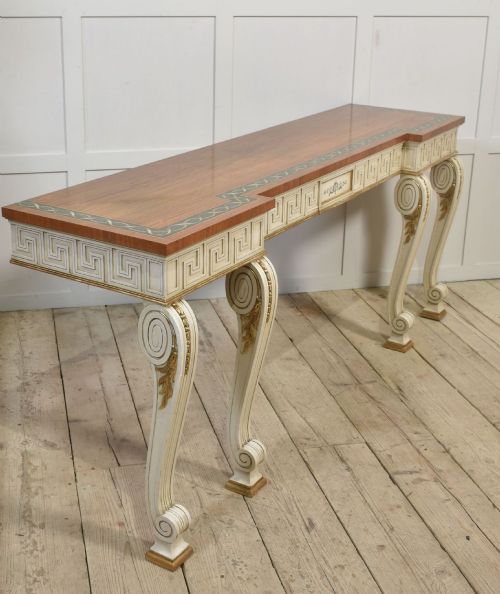
Makers and designers referenced in these traditions include Robert Adam and Alexander McKenzie of Glasgow, reflecting both classical restraint and ornate regional craftsmanship. Buyers encounter formats utilising serpentine fronts, giltwood ornamentation, and structural marble tops.
Materials and Techniques
Construction relies heavily on dense timbers such as mahogany and oak, paired with carved elements in pine, giltwood, and painted wood. Surfaces are frequently topped with white marble, Siena marble, granite, or alabaster to create a durable, cool-toned contrast to the warm timber frames.
Decoration involves hand carving, parcel gilding, and ormolu mounts, translating classical motifs like dolphins, rams' heads, and Corinthian capitals into solid furniture. French and Italian workshops also employed faux porphyry and specialised painted finishes to mimic expensive stones.
Listings feature items spanning the eighteenth century through to the nineteen-thirties, utilising mahogany, marble, giltwood, and bronze.
Judging Quality
Quality rests in the crispness of the hand carving and the integration of the stone top with the wooden base. Superior examples display precise joins, deep relief work in the giltwood or mahogany, and substantial, unblemished marble or onyx slabs.
Proportion and provenance elevate certain pieces above standard production. Items designed in specific regional manners, such as the Kentian style or the architectural formulas associated with Robert Adam, exhibit greater structural ambition and refined surface detailing.
Alexander McKenzie of Glasgow·Robert Adam
The Classical Carved Side Table Glossary
- Console table
- A table fixed to a wall or supported by front legs, traditionally designed to stand against a flat surface in a hallway or reception room.
- Giltwood
- Timber coated with a thin layer of gold leaf or gesso, used extensively on neoclassical and baroque frames to catch the light.
- Parcel-gilt
- A decorative technique where only specific raised portions or carved details of a painted or stained wooden surface are gilded.
- Siena marble
- A distinctive yellow-gold marble quarried in Italy, featuring dark grey or purple veins and prized for high-status tables.
- Ormolu
- Gilded bronze or brass mounts applied to furniture and decorative objects during the eighteenth and nineteenth centuries.
Classical Carved Side Table: Frequently Asked Questions
Where should I place a classical carved side table?
These tables suit hallways, entryways, and principal reception rooms where their architectural lines and stone tops can be appreciated. They function well against flat walls beneath mirrors or artwork.
Because many examples feature marble or granite surfaces, they offer a durable landing space for objects while anchoring the surrounding wall space with classical proportions.
How do I identify the period of a side table?
Dating relies on combining timber types, carving styles, and structural clues. Eighteenth-century pieces often show hand-cut joinery and restrained neoclassical lines, while Victorian and later revivals lean into heavier ornamentation or specific regional interpretations.
Reference to designers like Robert Adam or the use of specific marbles like Siena helps narrow down the manufacturing window from the eighteenth to the early twentieth century.
Are the marble tops original to the tables?
In many classical designs, the stone slab is an integral part of the piece, chosen specifically to complement the timber frame or giltwood base. Examining how the marble rests on the rails provides insight into its period integration.
Heavier stones such as white marble, onyx, and alabaster were standard for Italian and French console tables intended for formal display.
What is the difference between a console and a centre table?
A console table is built to stand flat against a wall, often supported at the front by two legs with the rear secured or resting against the masonry. A centre table is finished on all sides and meant to stand free in the middle of a room.
Both forms appear within classical traditions, utilising similar materials like mahogany, marble, and giltwood but serving different spatial functions.