





Baroque Style Console Table
A baroque style console table brings theatrical drama to a hallway, channelling centuries of Italian, French, Spanish and Portuguese design.
Baroque Style Console Table
A baroque style console table combines heavy structural carving with theatrical silhouettes, often designed to anchor a formal wall space beneath a mirror or painting. These statement pieces emerge in the listings across periods from the eighteenth century to the early twentieth century, reflecting enduring revivals.
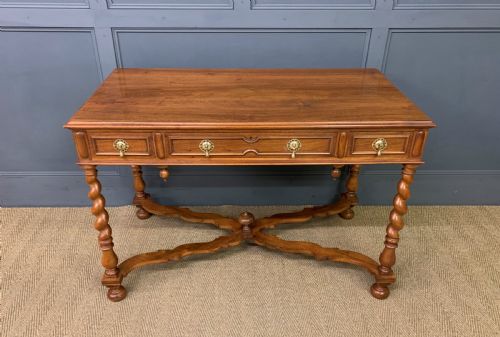
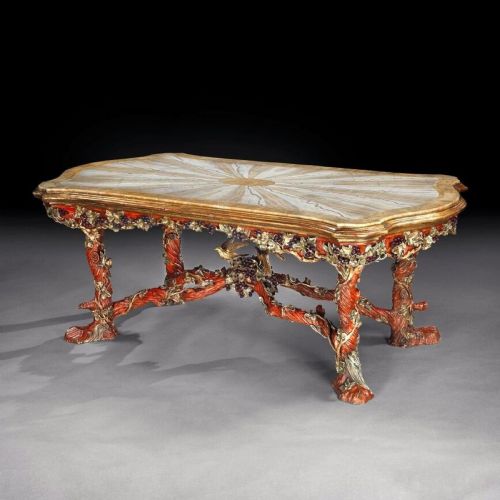
The versions most commonly met here present substantial timber construction paired with stone surfaces, featuring distinct regional interpretations from Italian giltwood to Spanish walnut. Forms span classic console tables, centre tables, and side tables, demonstrating the adaptable scale of these heavy designs.
Makers and workshops draw upon specific historical repertoires, including Italian Rococo, French Provincial, and Kentian manners. The resulting furniture balances monumental presence with intricate details such as putto carvings, eagle supports, and rams and maiden heads.
Materials and construction methods
Makers build these tables using robust timbers including oak, walnut, yew tree, and rosewood, alongside carved wood frameworks finished in gesso and giltwood. Polychrome finishes and painted surfaces also appear, providing diverse textural contrast to the underlying woodwork.
Heavy marble and onyx slabs form the tabletops on many examples, demanding sturdy structural joinery and reinforced aprons to support the stone weight. Carving techniques range from deep relief work on eagles and centaur designs to delicate gilding applications.
Baroque Style Console Table Retail Price Guide 2026
Typical asking prices for baroque style console table among the pieces listed under this phrase on Sellingantiques today, from the lower quarter to the upper quarter. They describe what is for sale here now, not the wider market.
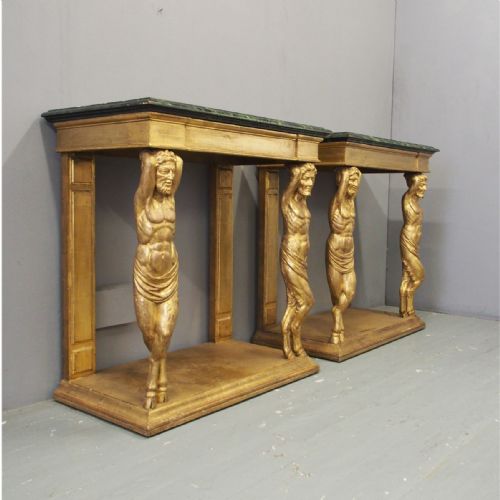
Tables featuring carved eagles and centaurs demonstrate how literal mythological beasts crept into nineteenth-century dining and hallway furniture.
Distinctions in craftsmanship and design
The refinement of the hand-carved ornamentation distinguishes finer pieces, particularly where figures like putti, eagles, or maidens show anatomical precision rather than stiff execution. Giltwood surfaces demonstrate quality through the depth of preparation layers and the crispness of the underlying gesso work.
The integration of heavy marble or onyx tops with the wooden base indicates structural ambition, with superior tables achieving a balanced proportion between the stone thickness and the carved frieze. Regional variations in walnut and oak framing reveal the carver's mastery over dense hardwoods.
Amleto Bertoni
The Baroque Style Console Table Glossary
- Console table
- A wall-mounted or heavily bracketed table designed to stand against a vertical surface, frequently paired with a matching mirror. They often feature elaborate front legs while relying on wall fixation for complete stability.
- Giltwood
- Timber that has been coated with a thin layer of gold leaf over a prepared gesso ground. This finish defines many formal Italian and French tables of the period.
- Gesso
- A plaster-like mixture applied to wood surfaces to provide a smooth base for gilding or painting. Its thickness allows artisans to carve fine details directly into the coating.
- Kentian manner
- A heavy, architectural furniture style inspired by the designs of William Kent. These pieces incorporate bold classical motifs and substantial proportions.
- Putto
- A plump, winged child figure frequently carved into the supports or aprons of formal tables. The plural form is putti.
Baroque Style Console Table: Frequently Asked Questions
Where should I place a baroque style console table?
These tables suit grand entrance halls, long corridors, or principal living spaces where their architectural presence can be appreciated against a blank wall. Pairing them with a large mirror or painting completes the traditional domestic arrangement.
Because many examples feature heavy marble or onyx tops, placement requires a solid wall for any supporting brackets or a floor capable of sustaining substantial weight. They function primarily as decorative focal points rather than utilitarian work surfaces.
How do I care for giltwood and carved wood surfaces?
Giltwood requires delicate handling because the gold leaf and underlying gesso are sensitive to moisture and abrasion. Dusting should be performed gently with a soft, dry brush rather than a cloth that might snag on intricate carved details.
Avoid placing these tables in direct sunlight or near heat sources, which can cause timber to split and gesso to crack. Professional conservation is recommended for any structural repairs or surface restoration.
What is the difference between a console table and a centre table?
A console table is designed to sit flat against a wall, frequently featuring flat or uncarved rear legs because the back remains unseen. They often require structural attachment to the wall for balance.
A centre table stands independently in the middle of a room, finished with detailed carving or joinery on all four sides. They are meant to be viewed from every angle as a freestanding sculptural object.
How can I tell different regional styles apart?
Italian and French interpretations often rely heavily on giltwood, elaborate putto carvings, and marble tops reflecting a theatrical baroque aesthetic. Spanish and Portuguese examples tend to emphasise dense, dark woods like walnut and rosewood with sober structural lines.
British iterations, such as those in the Kentian manner, display heavy architectural moulding and classical motifs inspired by Palladian design. Examining the primary timber and the character of the carving usually reveals the workshop's geographic origin.