




Classical Bronze Statue Lamp
A classical bronze statue lamp brings sculpted human and mythological forms into domestic lighting, combining grand neoclassical figures with functional illumination.
Classical Bronze Statue Lamp
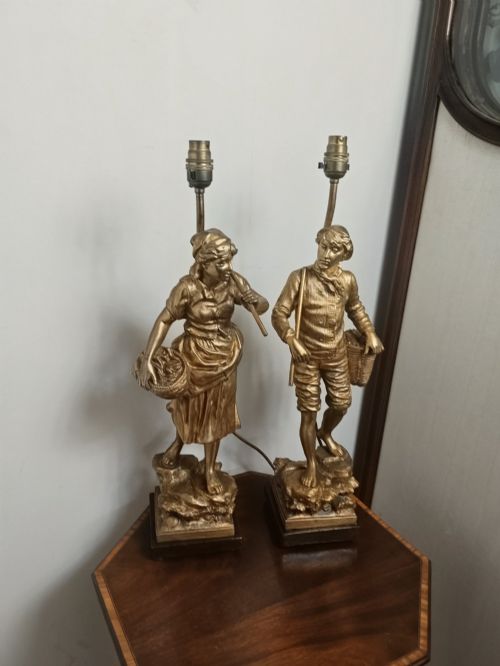
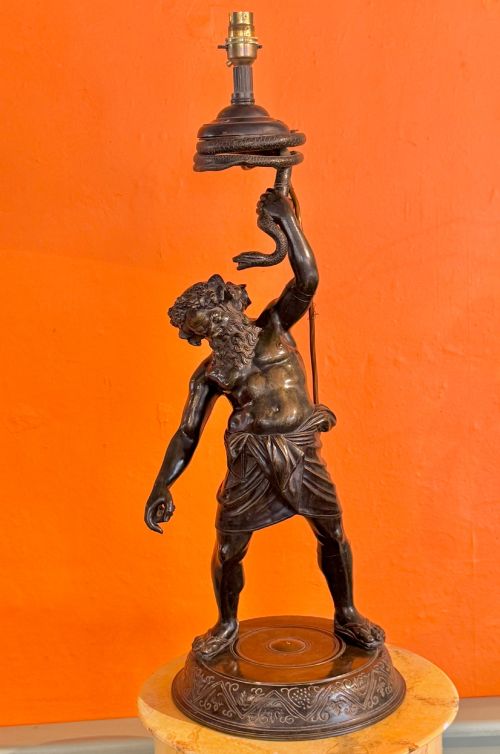
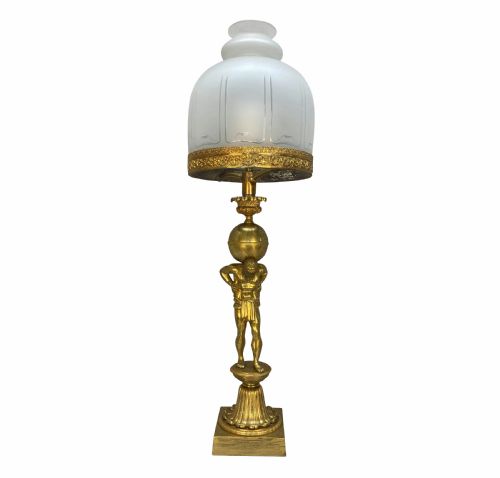
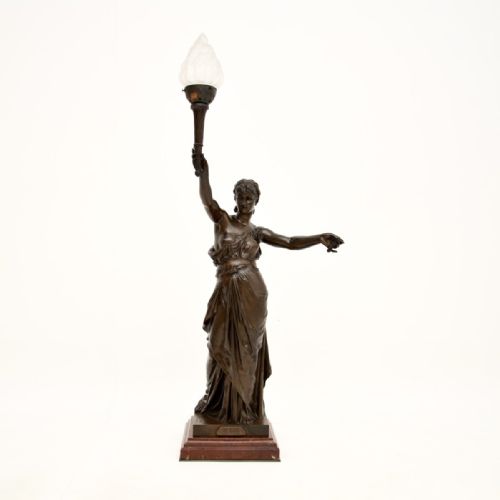
A classical bronze statue lamp transforms historical figures and mythological subjects into structural bases for interior lighting. When you search for a classical bronze statue lamp, you encounter table lamps, floor lamps, and torcheres derived from Regency, Victorian, and French nineteenth-century aesthetics.
The sculptural subjects draw heavily on the Grand Tour tradition and neoclassical revival movements. Subjects include allegorical figures, classical maidens, muses, and ancient deities mounted on sturdy plinths.
Most examples date from the nineteenth century, ranging from regency interpretations to later French castings. They frequently utilise patinated or gilded metals to accentuate the classical drapery and anatomical detail of the figures.
Distinctions in Quality and Execution
Quality separates in the crispness of the metal chasing and the depth of the casting detail across the figure's face and drapery. Finer pieces display careful hand-finished tooling on patinated or gilt surfaces rather than uniform industrial smoothing.
The integration of the electrical fittings or original oil mechanisms into the sculptural design dictates the harmony of the finished piece. Heavier marble plinths and signed foundry work or artist signatures elevate the piece within the historical range.
Signed works by prominent French and Italian sculptors appear alongside unmarked table lamps and towering architectural torcheres.
E Rousseau·G. Amodio Naples·F. De Luca·Emile Picault·Humphrey Hopper·Jean-Jules Cambos·H. Moreau·François-Christophe-Armand Toussaint·Coutan·Henri Honore Ple
The Classical Bronze Statue Lamp Glossary
- Patination
- The chemical treatment or natural ageing applied to the surface of bronze to alter its colour and tone. This process deepens the visual texture of the metal figure.
- Torchere
- A tall stand or floor lamp designed to hold a light source aloft. In classical forms, a figure often holds the torch or lighting element directly.
- Spelter
- A zinc-based alloy utilised as an economical alternative to bronze for figural castings. It is softer and lighter than genuine bronze.
- Grand Tour
- A cultural journey of Europe undertaken by wealthy young men in the eighteenth and nineteenth centuries. It popularised miniature bronzes and classical reproductions.
- Ormolu
- Finely ground high-carat gold applied to a bronze base through a mercury amalgamation process. This technique creates a brilliant golden decorative surface.
Classical Bronze Statue Lamp: Frequently Asked Questions
Were these originally made as lamps?
Many nineteenth-century pieces began as decorative statues, torchere figures, or oil lamps before being adapted for modern electrical lighting. The conversion process often involved running a wire through the original central channel or sculptural support.
Original oil lamp conversions retain burners or reservoirs that help date the lighting mechanism relative to the base.
How do I clean a patinated bronze lamp?
Dust the surface gently with a soft, dry brush to prevent the accumulation of dirt within the intricate recessed details of the casting. Avoid harsh chemical cleaners or abrasive polishes that can strip the original patination or gilding.
Applying a light microcrystalline wax can help protect the metal surface from moisture and handling wear over time.
What shade style suits a classical figural lamp?
Simple tailored fabric shades in neutral tones complement the detailed metalwork without distracting from the central sculptural figure. Pleated silk or parchment styles often mirror the period aesthetic of nineteenth-century interiors.
The scale of the shade must balance the height and weight of the bronze base to maintain structural stability.