


Classical Bronze Candleholders
These classical bronze candleholders bring architectural dignity and warm illumination to a room, cast in heavy metals and stone.
Classical Bronze Candleholders
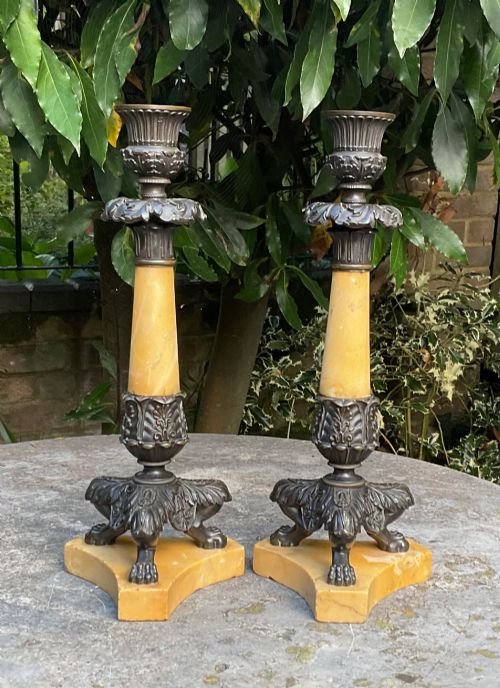
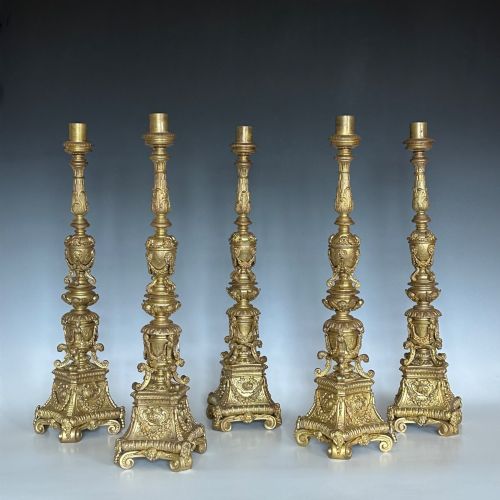
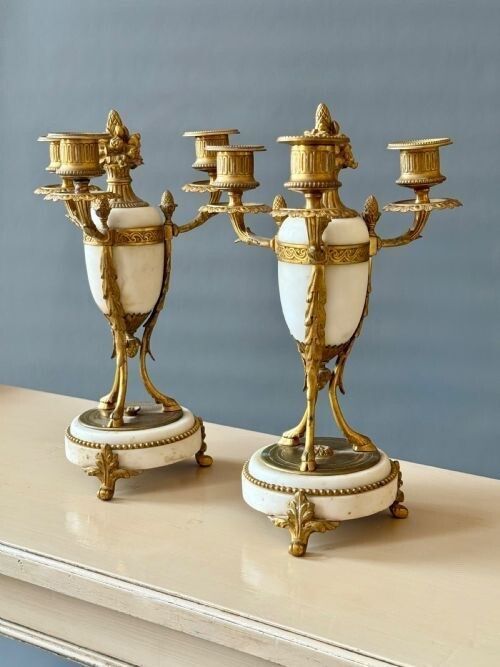
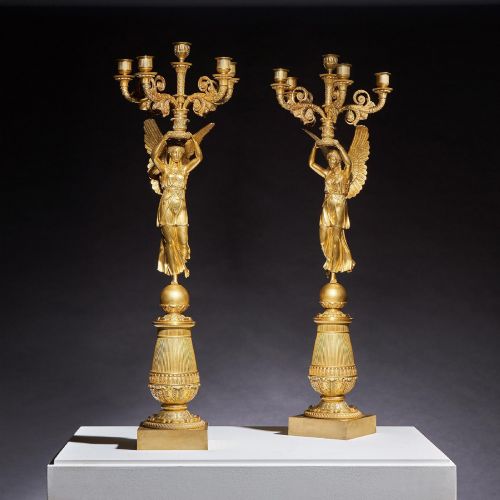
Classical bronze candleholders encompass sticks and branch-form lights created across the eighteenth and nineteenth centuries, taking inspiration from ancient architectural motifs. Buyers seeking classical bronze candleholders will primarily encounter pairs shaped during the Regency, French Empire, and Victorian eras, alongside later revivals.
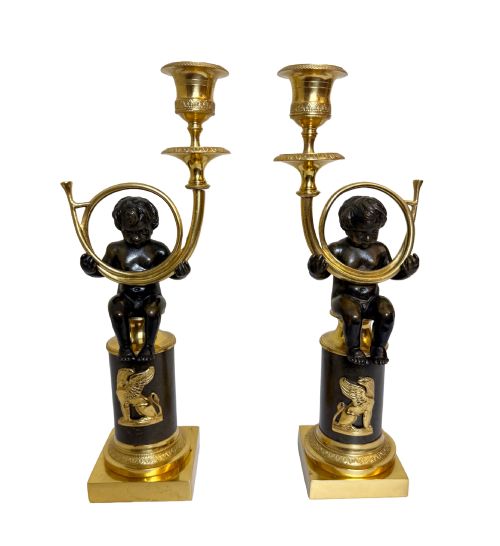
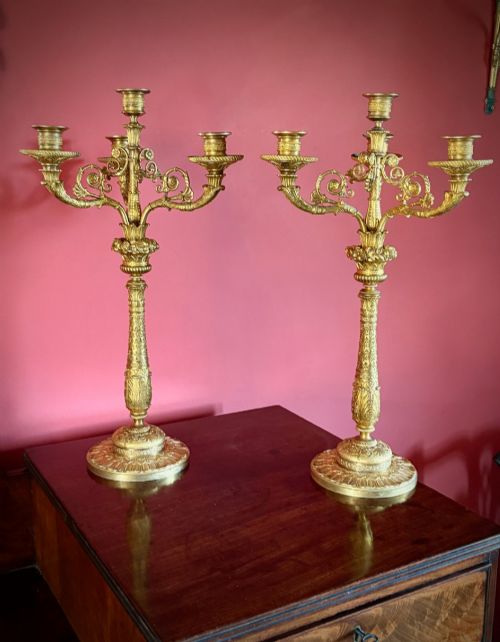
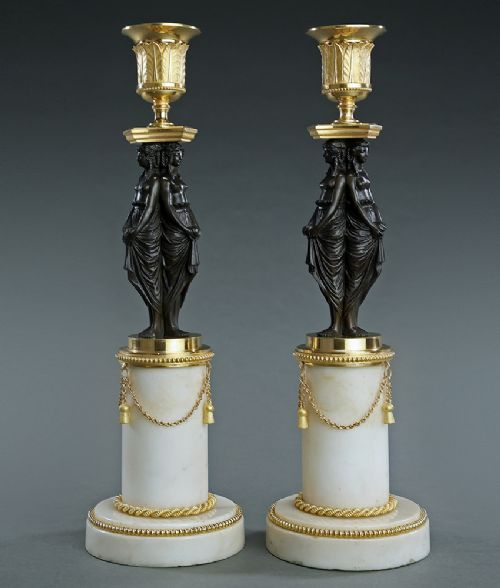
The inventory on this page ranges from simple single-socket sticks to multi-light candelabra. Many incorporate figures such as cherubs, caryatids, and maidens, or draw upon specific designs like the Athenienne form.
Origins stretch from English Regency workshops to French houses influenced by Louis XVI and Empire styles, with occasional Venetian pieces. White marble and porphyry frequently appear as supportive bases beneath the metalwork.
Quality and execution
The weight of the bronze and the density of the marble base indicate the substance of the materials used. Superior mounts fit flush against stone elements, and the gilding displays a rich, even tone across complex surfaces.
Signed works or those attributed to recorded makers demonstrate a higher standard of design and studio execution. The integration of separate cast components reveals the ambition of the original workshop.
Dolphin motifs appear on early nineteenth-century pieces, lending a marine twist to classical table lighting.
Pierre Philippe Thomire·Rabiat
The Classical Bronze Candleholders Glossary
- Ormolu
- Gilded bronze, produced by applying a gold and mercury amalgam to a bronze base and heating it to drive off the mercury. This technique creates a durable golden surface seen on many French pieces.
- Patinated bronze
- Metal treated to produce a dark, stable surface finish. This contrasts with the bright sections of gilding.
- Candelabra
- A branched lighting fixture holding multiple candles. These branch from a central stem and often feature removable top sections.
- Caryatid
- A sculpted female figure serving as an architectural support. In these objects, they form the central stem of the candlestick.
- Grand Tour
- Souvenirs purchased by travellers in Europe during the nineteenth century. These pieces often reference classical antiquities.
Classical Bronze Candleholders: Frequently Asked Questions
How do I identify a French Empire piece?
French Empire pieces display strict symmetry, military motifs, and classical figures derived from Greek and Roman art. They frequently combine dark patinated bronze with fire-gilded ormolu mounts.
Marble bases under these lights are usually square or rectangular, supporting columns, maidens, or sphinxes.
What is a Grand Tour candleholder?
Grand Tour pieces are nineteenth-century objects acquired by travellers visiting classical sites in Italy and France. They replicate ancient bronzes, columns, and sculptures seen during these educational journeys.
These items often feature dark patination and rest on marble or porphyry bases.
How do I clean bronze and ormolu safely?
Dust these objects gently with a soft, dry microfibre cloth to remove surface particles. Avoid chemical polishes, abrasive cloths, or water, as these can strip the historical patina or damage fragile ormolu gilding.
Professional conservation is recommended if deeper cleaning is required.