
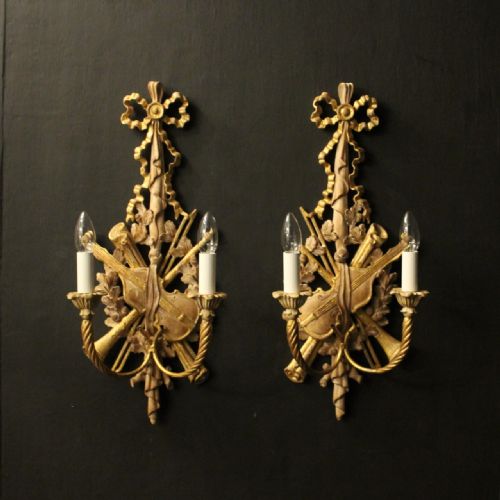


Louis XVI Candelabra Pair
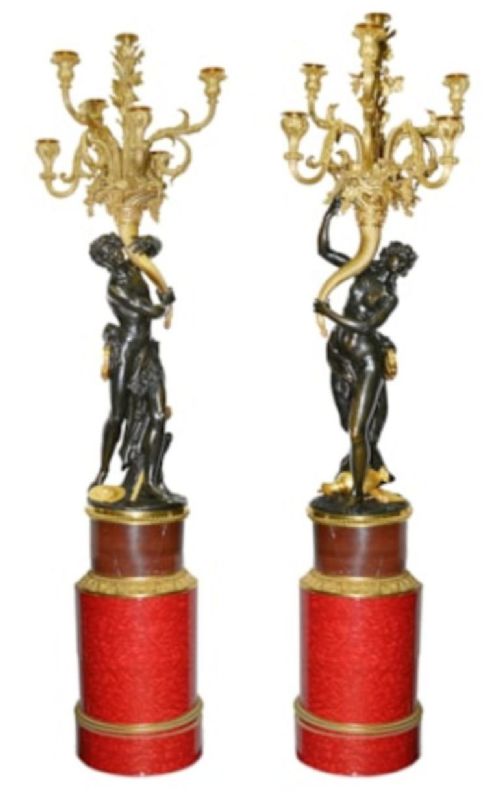
A louis xvi candelabra pair brings neoclassical symmetry and classical ornamentation to a room, cast in bronze and mounted on marble.
Louis XVI Candelabra Pair
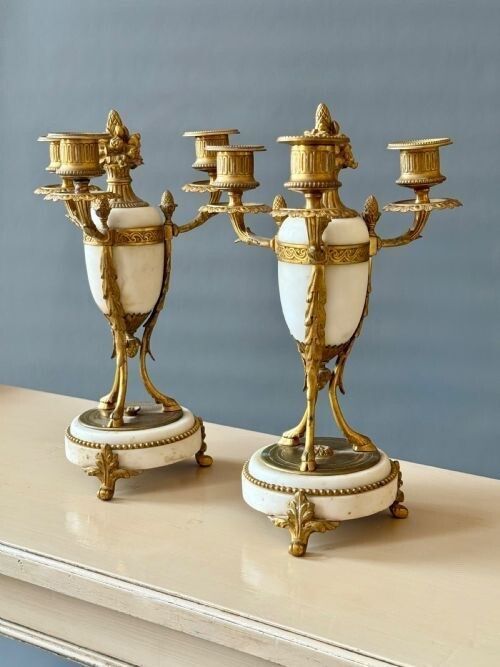
A louis xvi candelabra pair comprises matched lighting pieces designed to sit on a mantelpiece or table, often featuring multiple arms for candles.
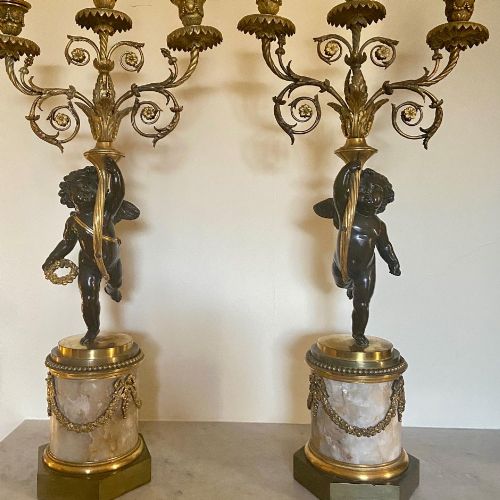
The most common form on this page combines gilt bronze, patinated bronze, and white marble, frequently incorporating figures such as putti or cherubs.
These items originate from the eighteenth century through to the nineteenth century Revival period, drawing upon classical French design principles.
How They Were Made
Foundry workers cast the bronze components in detailed moulds before finishing the surfaces through chasing and gilding with ormolu.
Masons shaped white marble into pedestals and plinths, combining stone with metalwork to provide structural weight and visual contrast.
Craftsmen assembled the multi-arm branches and candle nozzles to ensure a balanced pair designed for domestic illumination.
Wings on bronze putti were cast separately and pinned into place, meaning many cherubs carry the secret of detachable flight.
What Varies In Quality
The depth and preservation of the original gilding or ormolu dictate the visual richness of the metal surfaces.
The selection of the marble base, particularly its purity and weight, separates standard decorative output from finer workshop productions.
Francois Redmond·Claude Clodion
The Louis XVI Candelabra Pair Glossary
- Ormolu
- Gilded bronze used for decorative mounts on furniture and candelabra. The technique involves applying a gold and mercury amalgam to the bronze surface.
- Putti
- Depictions of chubby male infants, often winged, used as decorative figures in neoclassical art. They frequently appear supporting the candelabra arms.
- Girandole
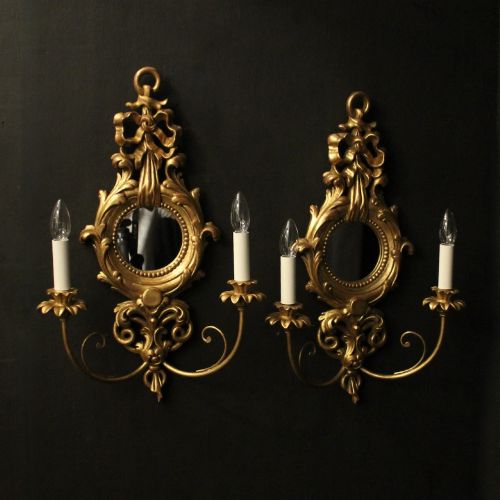
- A branched wall light or candelabra featuring reflective surfaces or polished metal. These fixtures direct candlelight further into a room.
- Clock garniture
- A set comprising a mantel clock accompanied by matching decorative pieces. A candelabra pair often forms the flanking elements of such a group.
- Patinated bronze
- Bronze that has been chemically treated to alter its surface colour. This dark finish provides contrast against bright gilt bronze mounts.
Louis XVI Candelabra Pair: Frequently Asked Questions
Were these pieces wired for electricity?
Most of these items were originally made for candles, though some examples in the archive were adapted later as table lamps. Conversion for modern lighting is common without altering the core structure.
Consult a professional electrician to ensure any wiring preserves the antique components.
How can I tell an eighteenth-century pair from a nineteenth-century revival pair?
Eighteenth-century examples display the precise hand-chasing and material weight characteristic of the period. Revival pieces from the nineteenth century often show heavier casting methods and different patination techniques.
Examining the internal screw threads and construction joins helps clarify the date of manufacture.
Where should I place a candelabra pair in my home?
These items suit placement on a mantelpiece, sideboard, or console table where their symmetrical design can be appreciated. Ensure they sit on a stable, flat surface away from heavy foot traffic.
Keep them out of direct sunlight to protect the patination on the bronze and marble.