



Classical Bronze Candle Stand
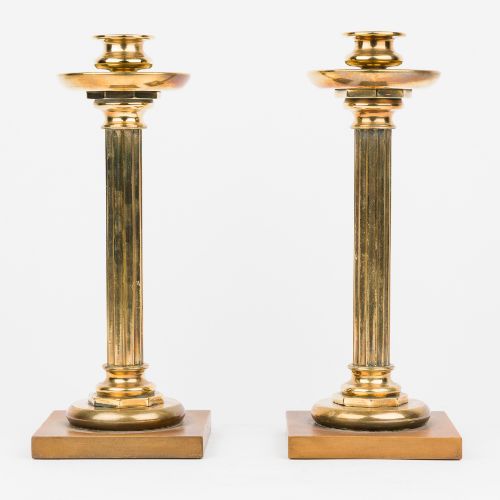
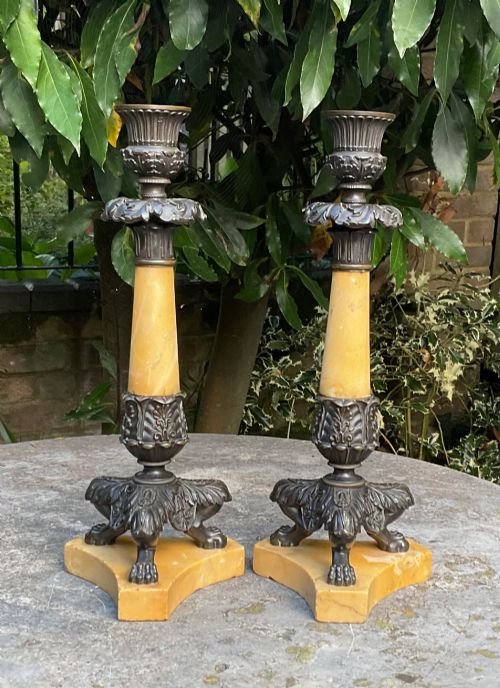
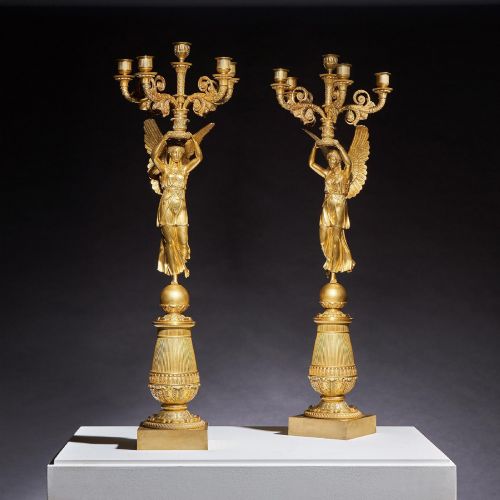
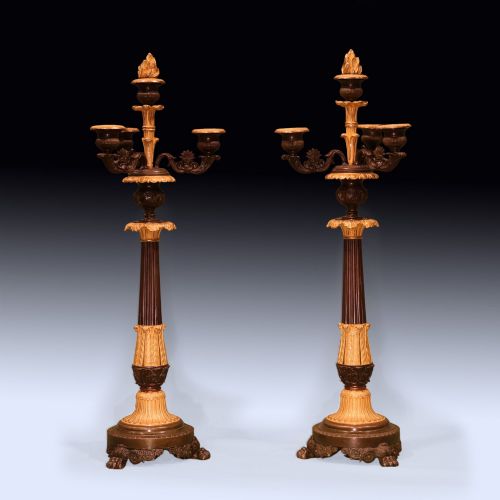
A classical bronze candle stand brings heavy metal and gleaming ormolu into a room, holding light with distinct architectural presence.
Classical Bronze Candle Stand
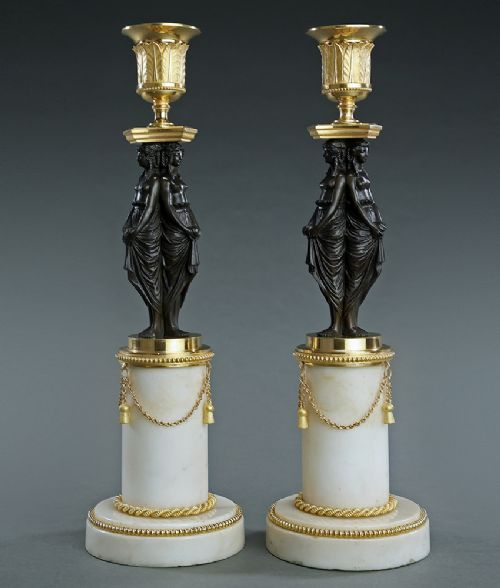
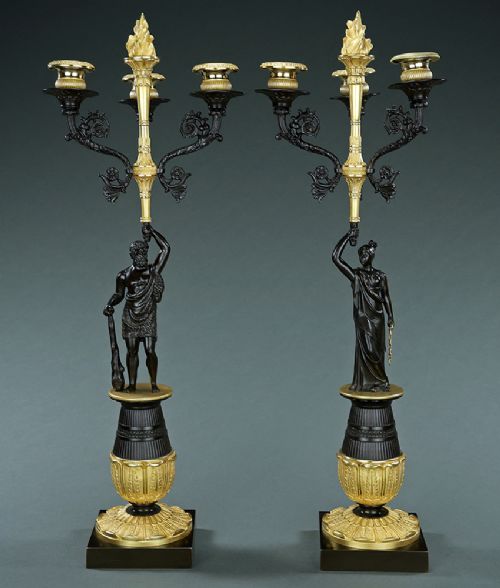
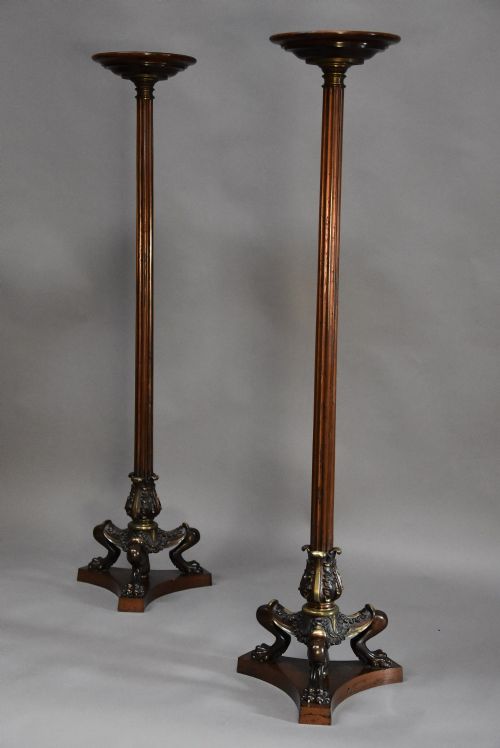
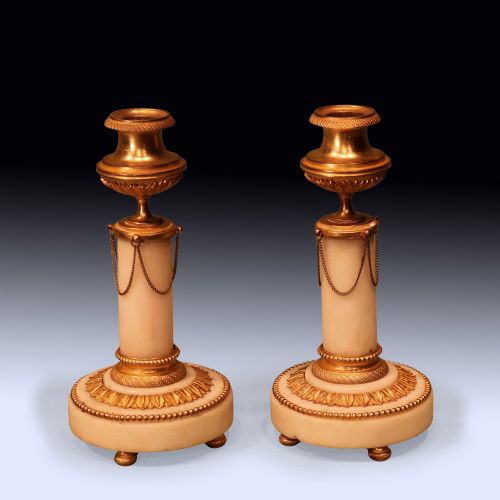
A classical bronze candle stand appears in various Regency, French Empire, and Louis XVI forms, ranging from simple single candlesticks to multi-armed candelabra and tall torcheres. These pieces draw on Neoclassical and Greco-Roman design, often incorporating figures such as caryatids, puttis, and dolphins.
The materials span patinated bronze, bright ormolu, and gilt bronze, frequently paired with white marble, porphyry, or mahogany bases. Examples date from the eighteenth and nineteenth centuries, including Grand Tour souvenirs and English Regency or continental pieces.
Materials and construction
Foundry work relies on bronze, brass, and patinated metal cast into complex figural and architectural shapes, then finished with mercury gilding to create contrasting ormolu highlights. Artisans combined dark patinated surfaces with polished gilt bronze to accentuate the classical detailing.
Stonemasonry complements the metalwork, mounting heavy bronze shafts onto turned white marble, porphyry, or mahogany pedestals. Structural stability depends on internal threaded rods securing the metal components to these stone and wooden bases.
Materials span patinated bronze, ormolu, gilt bronze, brass, white marble, porphyry, and mahogany across Regency and nineteenth-century pieces.
Craftsmanship and detail
The depth and durability of the gilding and patination determine the visual weight of the piece, with genuine mercury gilding offering a soft lustre that chemical plating lacks. Furthermore, the solidity of the marble or bronze base adds physical balance to multi-armed designs.
Pierre Philippe Thomire·Rabiat·George Smith·Thomas Hope·Humphrey Hopper
The Classical Bronze Candle Stand Glossary
- Ormolu
- Gilded bronze, produced by applying a mercury and gold amalgam to the metal surface and heating it to drive off the mercury. This technique creates a rich, matte gold finish characteristic of eighteenth and nineteenth-century decorative arts.
- Torchere
- A tall stand designed to support a light or candle, often taking the form of a column or figural pedestal. In classical interiors, these stood on the floor to illuminate corners or doorways.
- Patinated bronze
- Bronze treated with chemicals or heat to alter its surface colour, usually to a dark brown or greenish hue. This finish provides contrast against bright gilt ormolu mounts.
- Caryatid
- A sculpted female figure serving as an architectural support in place of a column. They frequently appear supporting the stems of candlesticks and candelabra in Neoclassical designs.
- Grand Tour
- The traditional trip undertaken by European aristocrats to visit the cultural sites of Italy and France. It resulted in the acquisition of classical bronzes and architectural models.
Classical Bronze Candle Stand: Frequently Asked Questions
What is a classical bronze candle stand?
A classical bronze candle stand is a lighting device cast in bronze or brass, styled after ancient Greek and Roman architecture and mythology. These pieces often feature figural elements like caryatids or puttis.
They were produced extensively during the Regency, French Empire, and nineteenth-century revival periods as both functional illuminators and decorative art objects.
How were candelabra used historically?
Candelabra and candlesticks provided primary illumination on dining tables, mantelpieces, and sideboards before the widespread adoption of gas and electric lighting. Tall torcheres stood directly on the floor to light dark corners of grand rooms.
Their substantial weight and reflective gilt surfaces also served to display wealth and refine interior aesthetics during evening gatherings.
How can I tell French Empire from Regency?
French Empire pieces typically exhibit strict symmetry, heavier use of fire-gilt ormolu, and direct references to Napoleonic or classical iconography. Regency works from England often blend French influences with local interpretations, incorporating mahogany, simpler patinated bronze, and diverse revival styles.
Examining the casting methods, base construction, and mounting screws helps confirm the regional origin and period.