
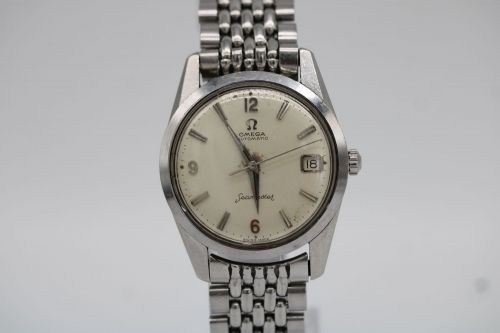
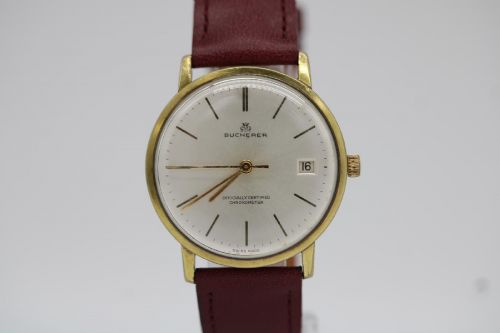
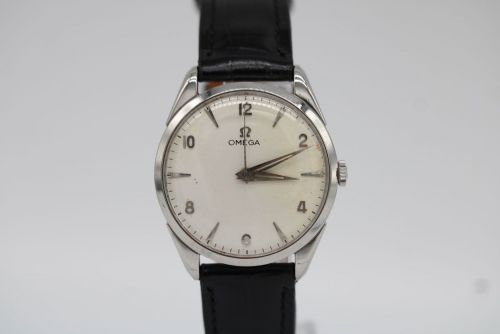
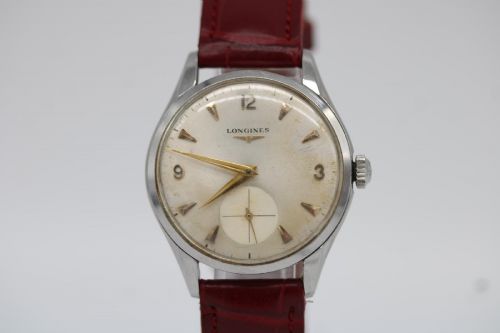
Classic Mens Dress Watch
A classic mens dress watch brings mid-century refinement to the wrist, offering dependable mechanical timekeeping wrapped in slim, understated proportions.
Classic Mens Dress Watch
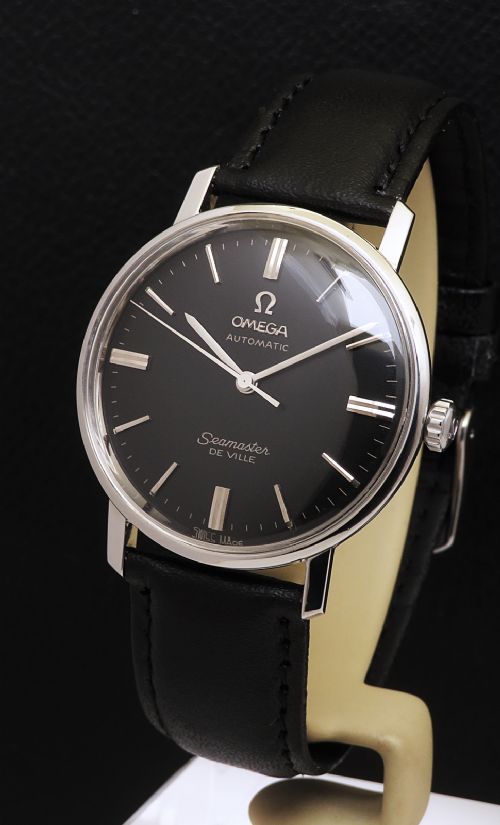
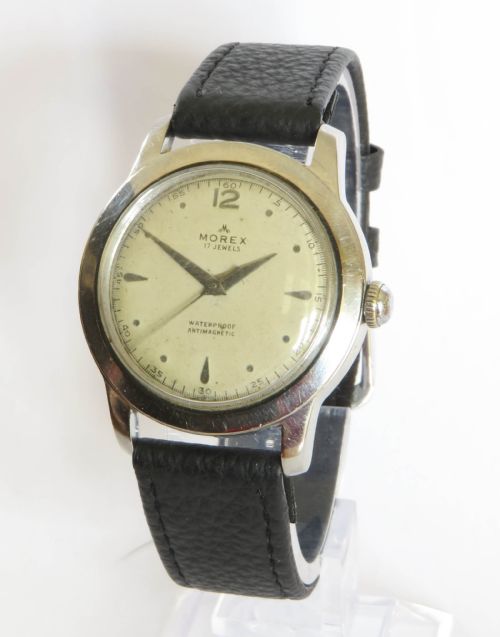
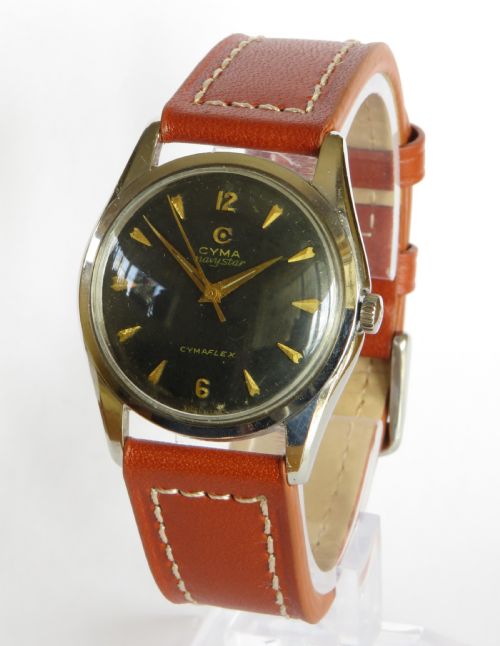
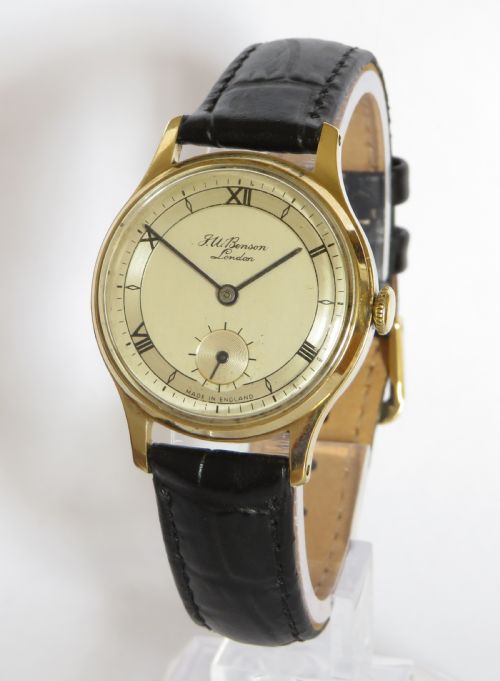
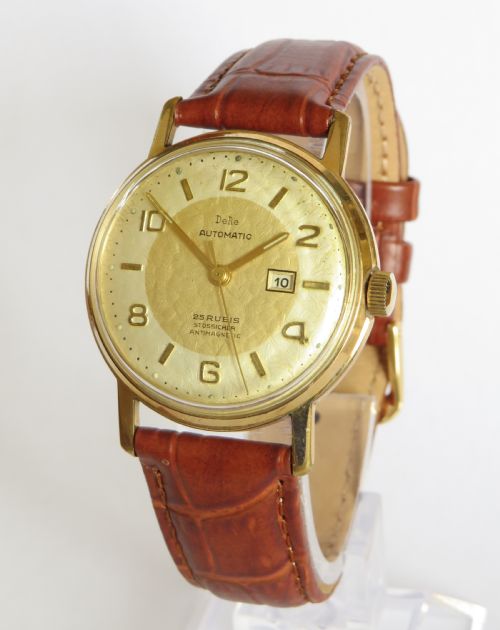
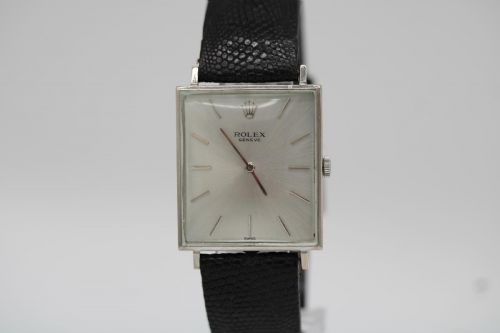
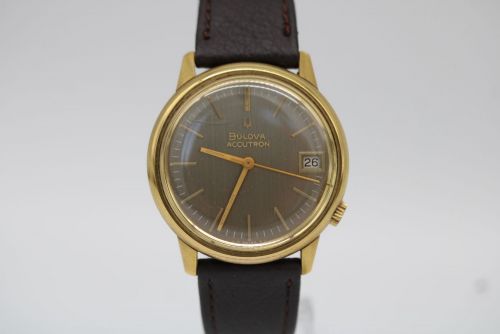
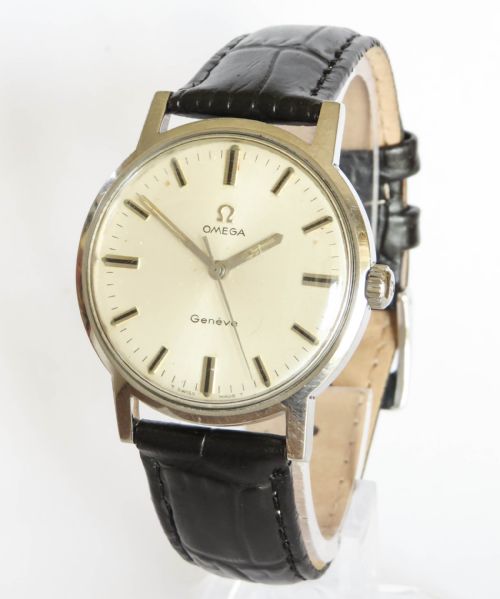
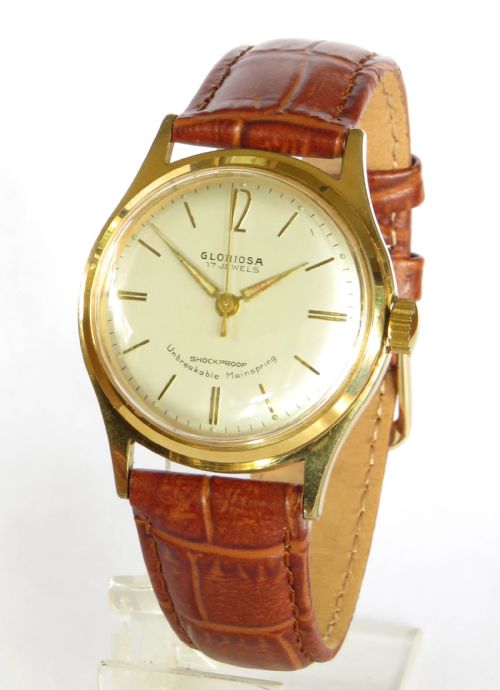
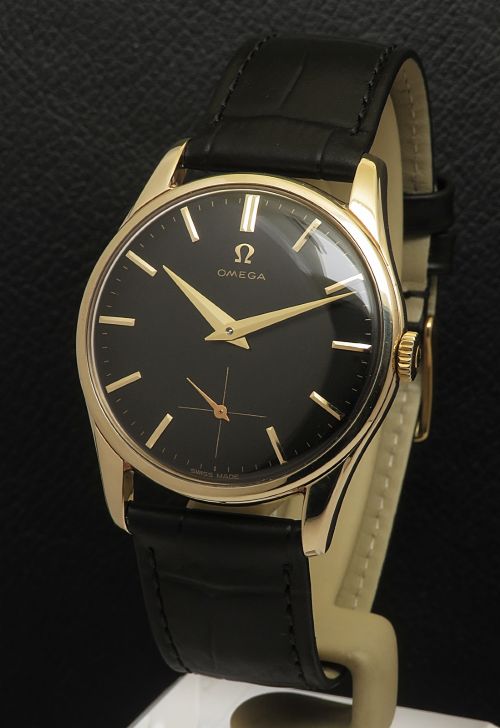
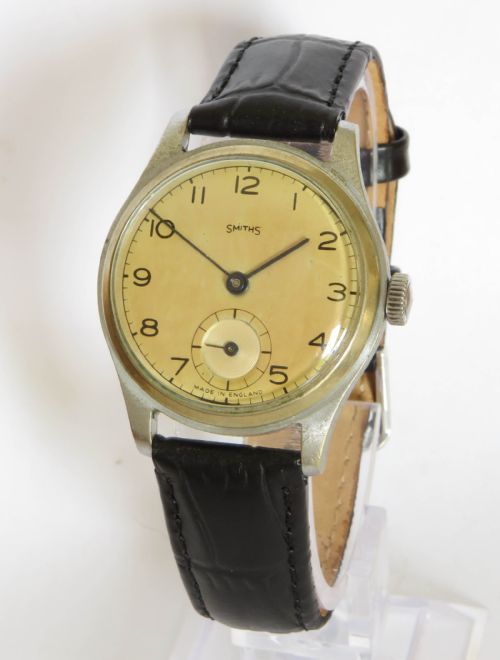
When you search for a classic mens dress watch, you encounter wristwatches originating primarily from the 1940s, 1950s, and 1960s. These pieces reflect mid-century design movements, spanning styles such as Mid-Century Modern, Mid-Century Classic, and Art Deco.
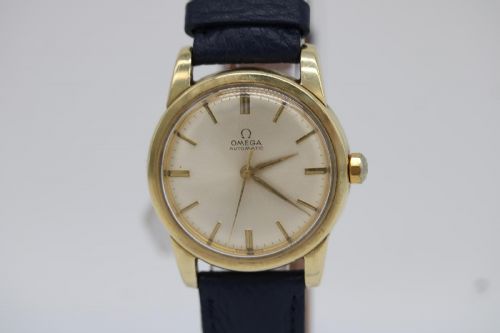
The selections on this page centre heavily on mechanical timepieces designed for men, ranging from manual wind movements to early automatics. Most examples take the form of round wristwatches housed in slim profiles intended to slip easily beneath a shirt cuff.
How they were made
Cases combine precious metals like 9ct gold and 18ct white gold with more utilitarian materials such as stainless steel, chrome, and gold plate. Dials are protected by clear glass, acrylic, or acrylic glass crystals.
Movements are intricate mechanical calibres driven by manual wind or automatic winding mechanisms. Straps are typically constructed from leather to complement the formal character of the metal case.
The listings feature mechanical movements powered by manual wind and automatic systems originating from the 1940s, 1950s, and 1960s.
What varies in quality
The degree of preservation in the movement and dial dictates the standing of an individual piece. Original dials that retain their crisp typography and authentic patina command distinct appreciation compared to heavily refinished surfaces.
Case materials also establish tiers within the selection, moving from gold plate and stainless steel up to solid 9ct and 18ct gold housings. The inclusion of original components, such as signed buckles and branded straps, further elevates the integrity of the watch.
Omega·Rolex·Bulova·Longines·Smiths·Cyma·Eterna·Girard Perregaux·Garrard·Rotary·Tudor·Bucherer·Baume·Certina·Marvin
The Classic Mens Dress Watch Glossary
- Calibre
- The specific internal movement mechanism designed and numbered by the watch manufacturer. This term allows technicians and collectors to identify the exact mechanical engine powering the watch.
- Manual wind
- A mechanical movement that requires the wearer to manually turn the crown to tension the mainspring. Unlike self-winding watches, these rely entirely on human interaction to store power.
- Automatic
- A self-winding mechanical movement that uses a weighted rotor to wind the mainspring using the natural motion of the wearer's wrist. This innovation became standard in many mid-century luxury timepieces.
- Acrylic glass
- A lightweight, shatter-resistant form of plastic utilised for watch crystals during the mid-century period. It can be easily polished to remove minor surface scratches.
- Explorer dial
- A specific dial configuration featuring prominent Arabic numerals at the primary compass points alongside baton markers. This layout originates from rugged utility watches but occasionally appears in refined dress contexts.
Classic Mens Dress Watch: Frequently Asked Questions
How do I wind a manual watch?
Gently rotate the crown clockwise between your thumb and forefinger until you feel increasing resistance. Stop turning immediately once you meet this tension to avoid damaging the mainspring.
Most vintage manual pieces require this action once a day to maintain accurate timekeeping throughout use.
Are these watches waterproof?
Mid-century dress watches generally offer little to no resistance against moisture or water exposure. Original gaskets and seals degrade significantly over the decades.
Keep these timepieces entirely away from swimming, showering, and heavy rain to protect the delicate internal movement.
How often does a movement need servicing?
Mechanical watches require periodic cleaning and lubrication of their internal gears to ensure consistent operation. A professional service every few years keeps the oils from drying out.
Regular maintenance prevents premature wear on the metal pivots and gears inside the case.
Can I replace the leather strap?
Leather straps wear out faster than metal cases and can be swapped easily using a spring bar tool. Selecting a strap of the correct lug width preserves the balanced proportions of the watch.
Many collectors enjoy pairing different leather textures and colours to alter the formality of the piece.