


Classic Mahogany Chest
A classic mahogany chest brings warmth and dependable storage to a room, grounding the space with rich timber grain and solid proportions.
Classic Mahogany Chest
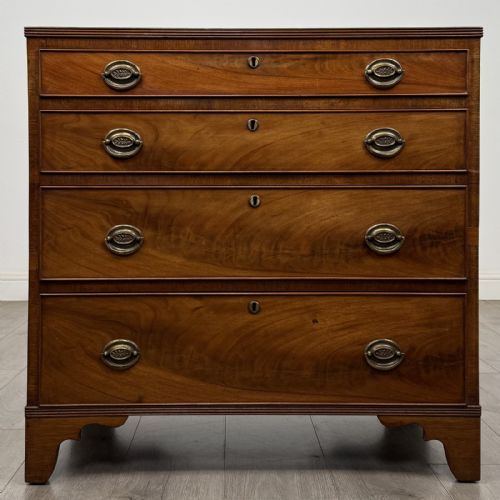
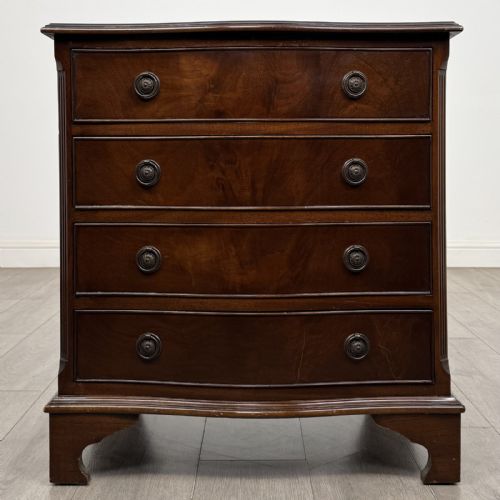
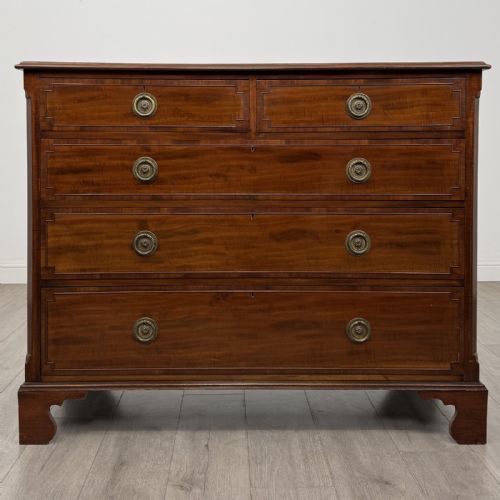
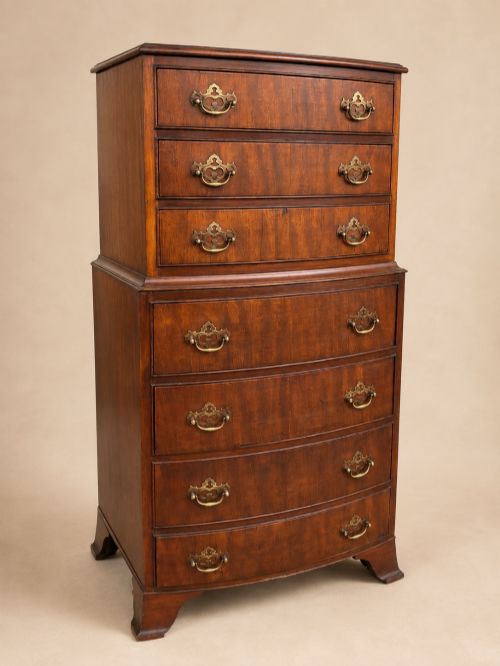
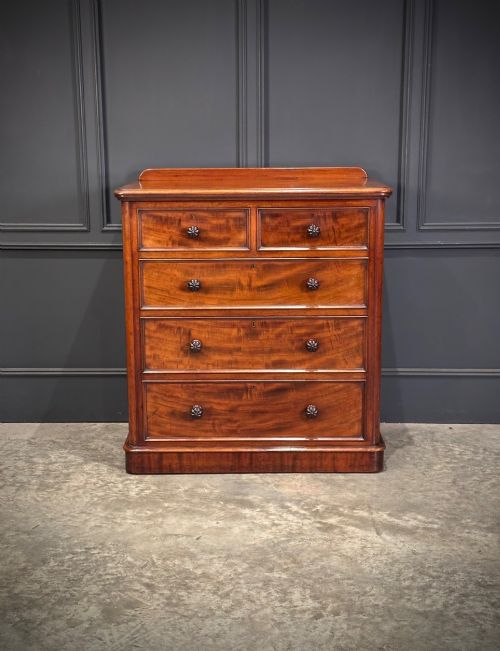
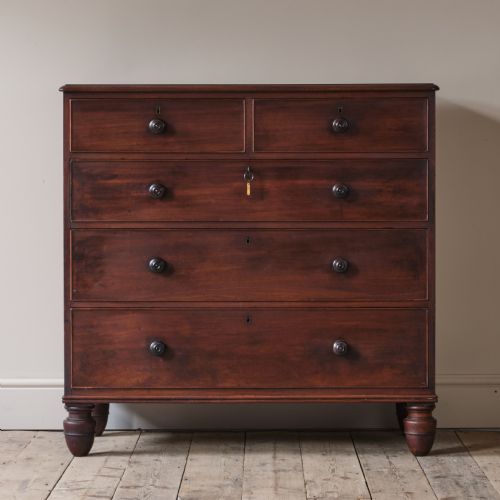
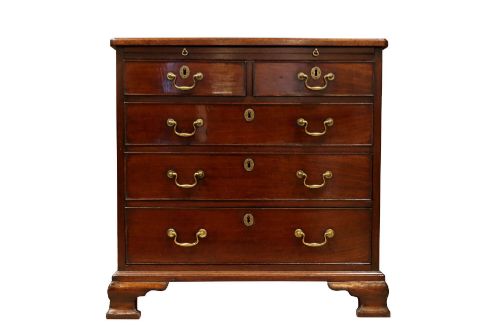
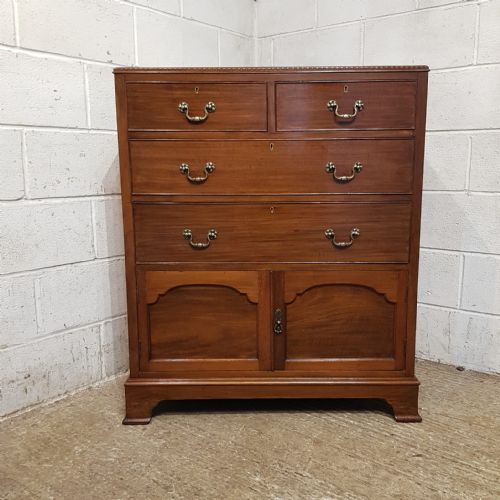
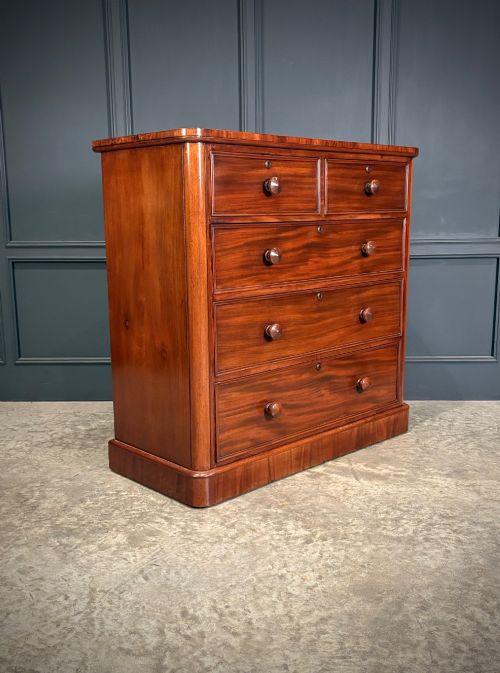
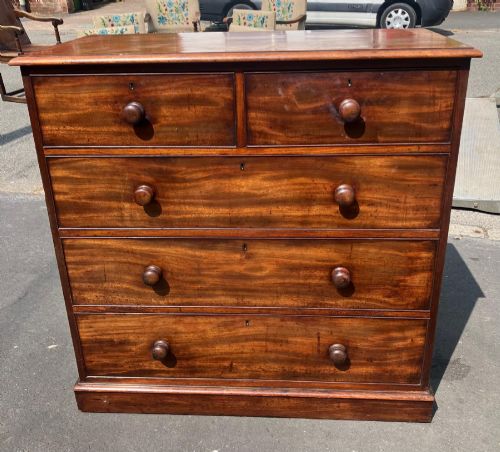
A classic mahogany chest provides substantial storage through stacked drawers, ranging from compact bedside cabinets to tallboys and large chests on chests. Buyers searching this phrase encounter forms spanning Georgian, Regency, Victorian, and Edwardian periods.
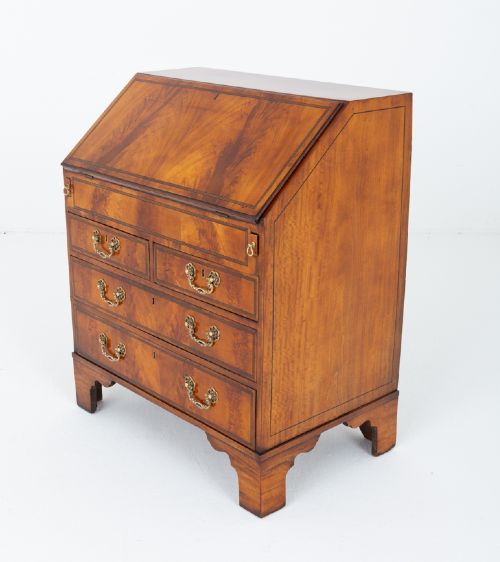
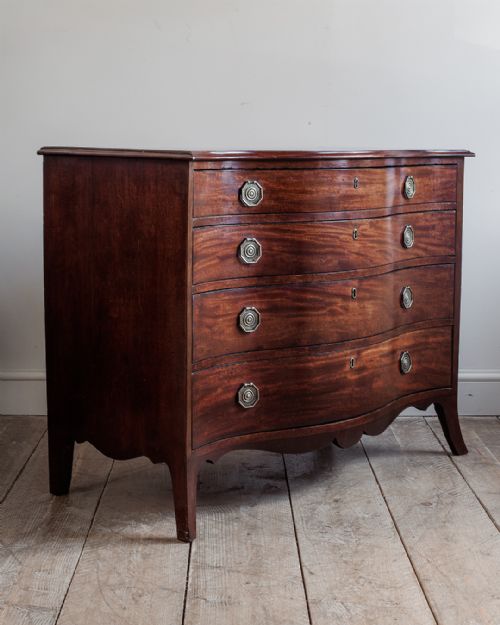
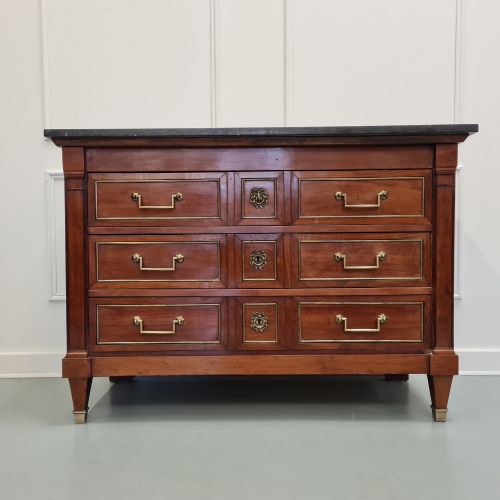
The standard chest of drawers dominates the selection, often appearing with straight, bowfront, or serpentine contours. Pieces frequently display specific regional traits, such as Scottish variations or continental commodes featuring marble tops and escritoire writing compartments.
Materials and construction methods
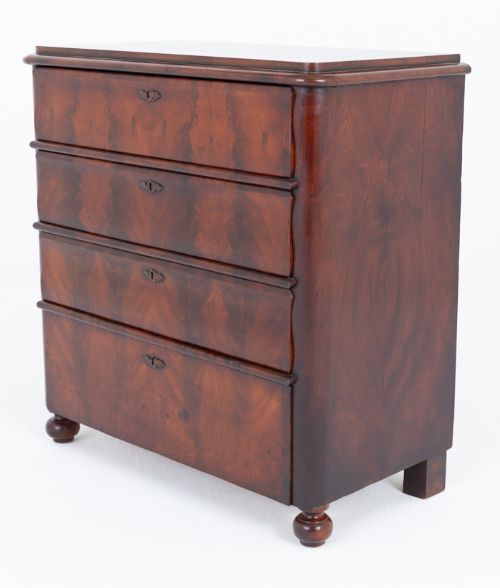
Cabinet makers relied primarily on solid mahogany and flame mahogany veneer applied over secondary timbers like pine. Fine grain patterns were carefully matched across drawer fronts to create balanced visual movement.
Hardware details typically included cast brass handles and escutcheons, while interior framing utilised secondary woods. Inlaid stringing in boxwood or ebonised wood occasionally accented drawer borders and top surfaces.
Classic Mahogany Chest Retail Price Guide 2026
Typical asking prices for classic mahogany chest among the pieces listed under this phrase on Sellingantiques today, from the lower quarter to the upper quarter. They describe what is for sale here now, not the wider market.
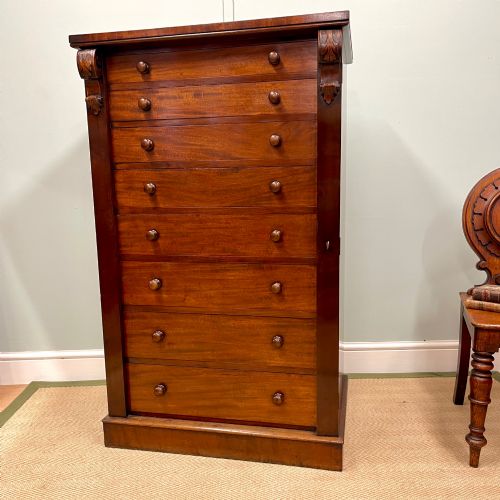
One remarkably equipped collectors cabinet packs forty individual drawers into its mahogany frame, offering endless sorting for the fiercely organised.
Distinctions in craftsmanship
Quality rests in the precision of the drawer construction and the depth of the timber figuring. Superior examples exhibit tightly fitted dovetails, smooth drawer action, and thick veneer selections that maintain integrity over centuries.
The refinement of the carcase design, from simple bracket feet to carved bracket bases or column supports, separates standard utility furniture from high workshop output.
T & G Seddon·C Hindley·Brady
The Classic Mahogany Chest Glossary
- Bowfront
- A convex curved front profile popular in Georgian and Regency cabinet making. This shape softens the room's geometry while adding interior volume to the drawers.
- Flame mahogany
- Timber cut from the fork of the tree where branches meet the trunk, producing a dramatic, flickering grain pattern. Cabinet makers used this veneer on prominent drawer fronts.
- Tallboy
- A tall chest of drawers, often constructed as a chest on chest or a single high carcase. It maximises vertical storage space without enlarging the floor footprint.
- Escritoire
- A writing cabinet featuring a fall-front desk flap concealing interior pigeonholes and small drawers. This form combines the storage of a chest with a dedicated writing surface.
- Serpentine
- A front contour characterised by a convex centre flanked by concave curves. This intricate shape requires skilled woodworking and signals a higher grade of manufacture.
Classic Mahogany Chest: Frequently Asked Questions
How do I date a mahogany chest?
Dating relies on construction methods, handle styles, and secondary woods visible inside the carcase. Earlier Georgian pieces often show hand-cut dovetails and oak linings, whereas later Victorian examples utilise machine-sawn components.
Secondary indicators include leg shapes and veneer thicknesses. Bracket feet and cockbeaded drawer edges point to the eighteenth century, while plainer plinths and applied mouldings frequently suggest the later nineteenth century.
Where should I place a tallboy?
A tallboy suits bedrooms, hallways, or dressing rooms where vertical storage is necessary. Its height allows for significant drawer capacity within a narrow floor area.
Keep the piece away from direct heat sources and strong sunlight to protect the mahogany polish and veneer. Position it against a stable wall, utilising safety fixings if the top-heavy carcase requires securing.
What is the difference between a commode and a chest?
A commode generally refers to a low, ornate cabinet of continental origin, often fitted with a marble top. Standard chests of drawers are typically taller British pieces designed primarily for utilitarian clothes storage.
Continental commodes often showcase neoclassical styling or Biedermeier influence. Traditional British chests focus on timber grain and formal proportion rather than decorative stone tops.