
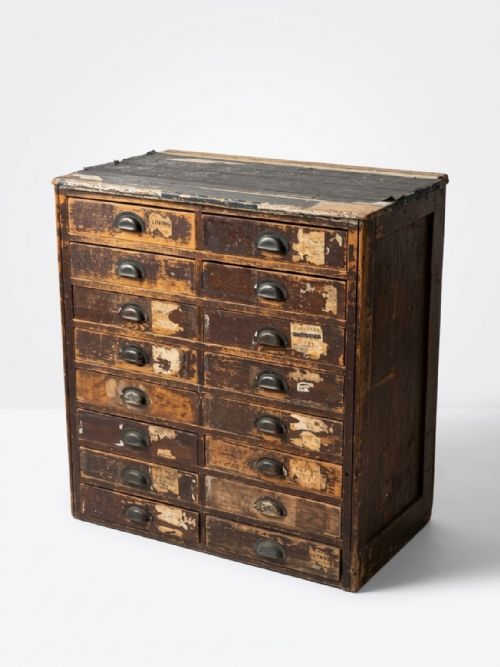
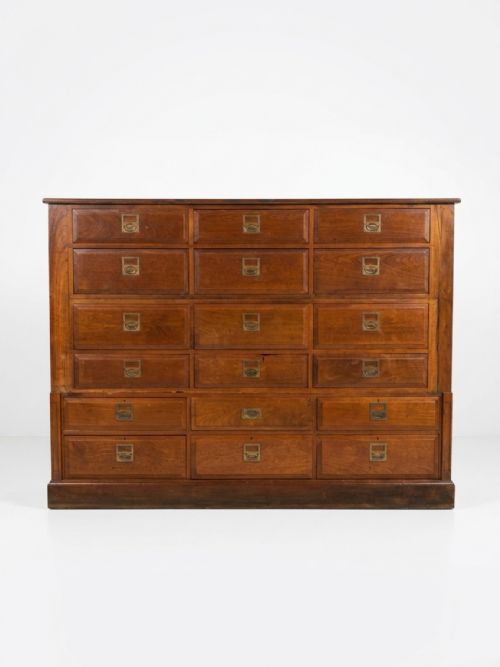
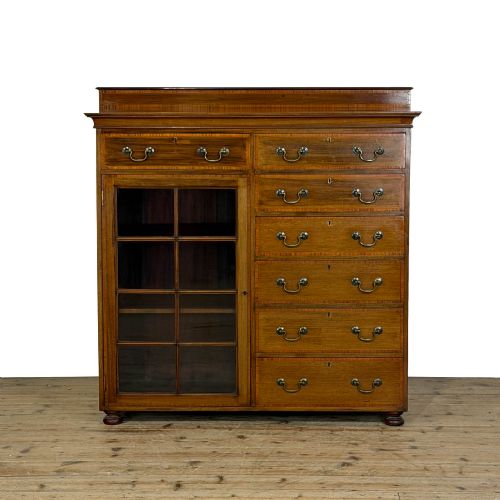
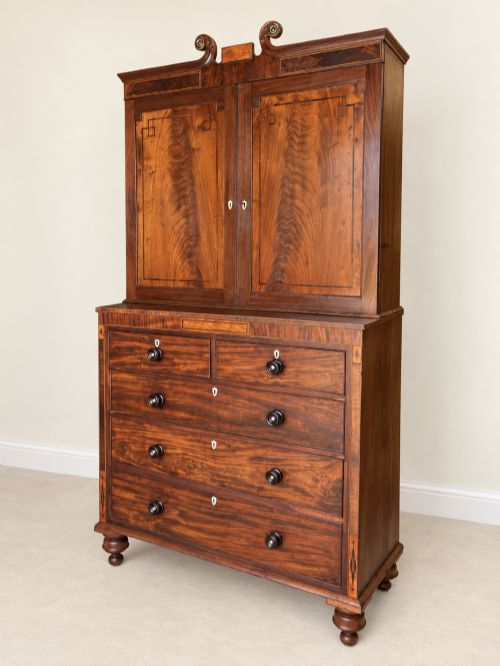

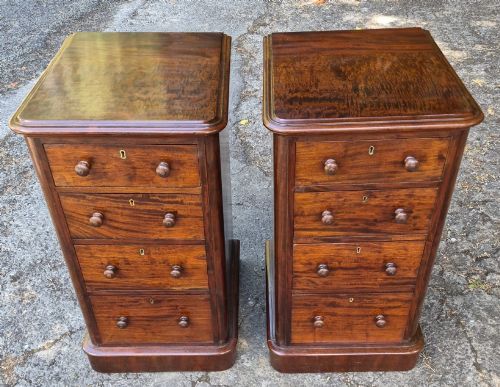
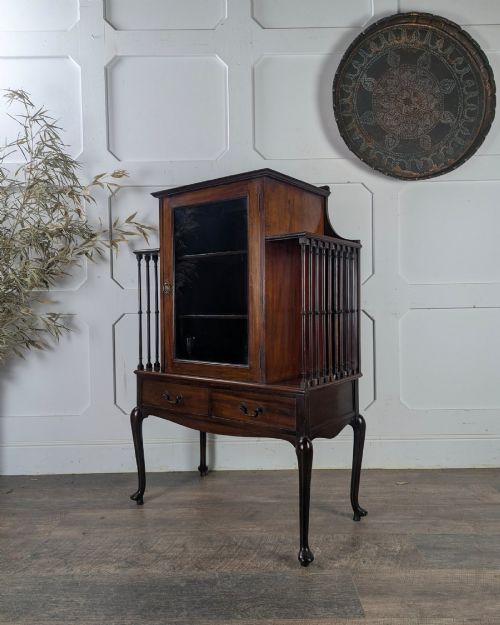
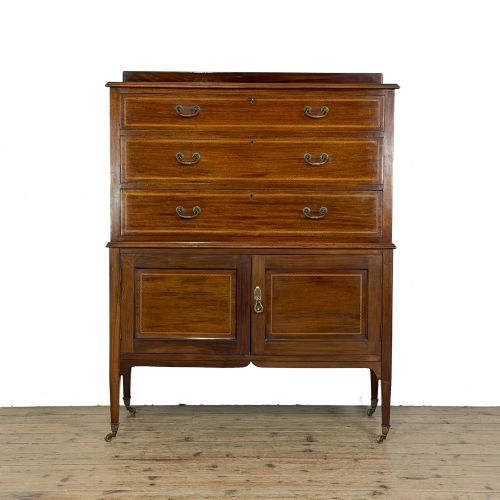
Edwardian Chest with Cupboard
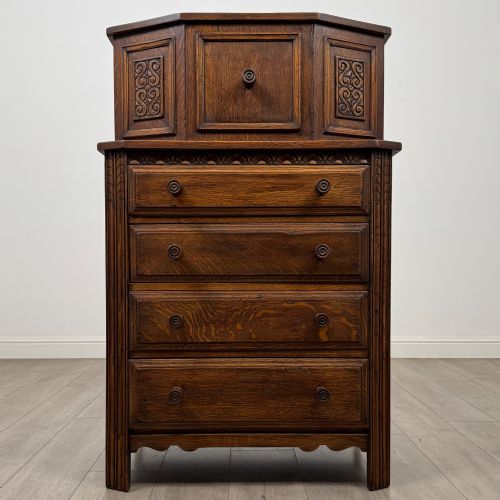
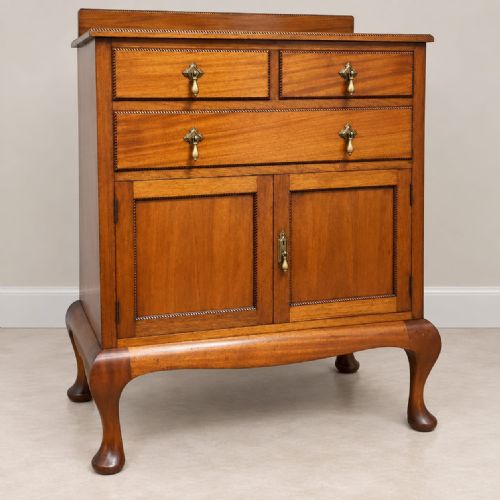
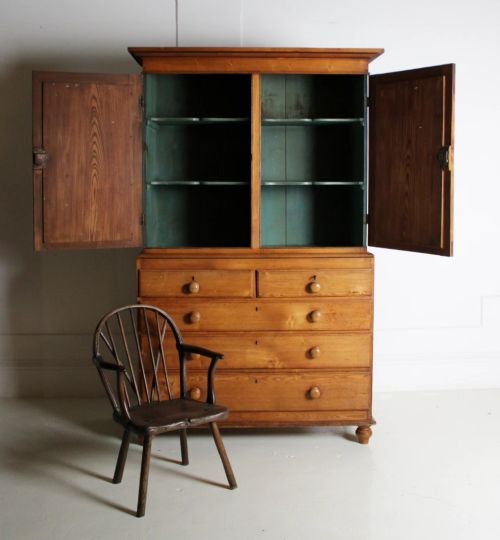
An Edwardian chest with cupboard brings together generous drawer storage and enclosed shelving in a single piece of home furniture.
Edwardian Chest with Cupboard
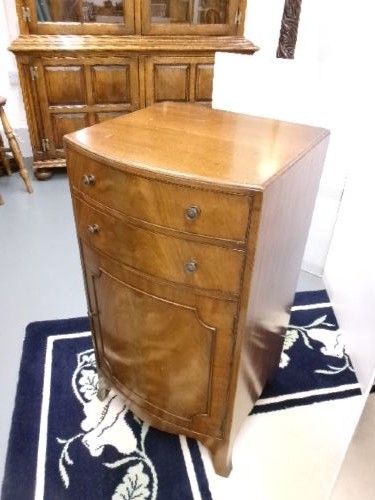
The edwardian chest with cupboard combines the standard drawer storage of a traditional chest with the concealed, shelved space of a cabinet. These hybrid forms serve collectors who require functional storage without sacrificing period character.
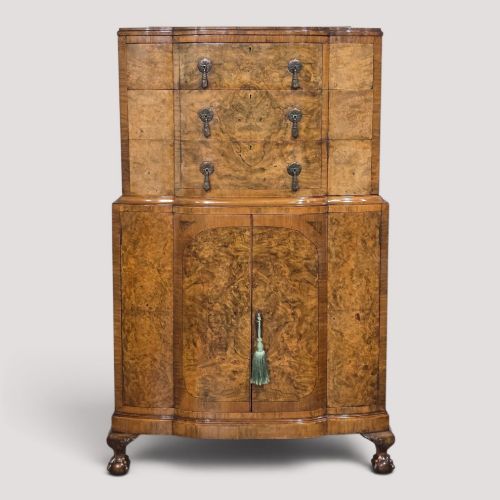
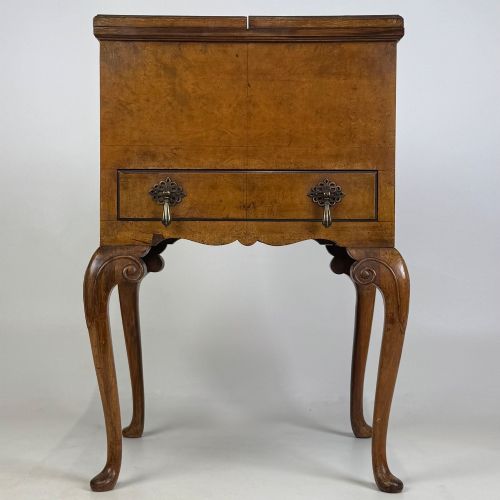
The pieces on this page span the Edwardian era alongside Victorian, Regency, and 19th century examples, incorporating forms such as tallboys, compactums, dressing chests, and combination wardrobes.
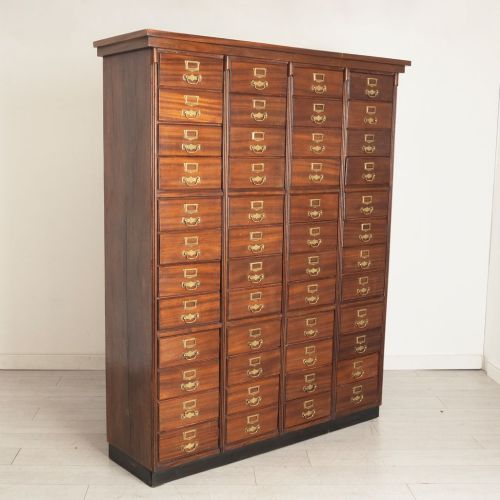
Makers designed these items to solve specific domestic storage needs, pairing exterior drawers with internal cupboards, linen presses, or shoe compartments.
How they were made
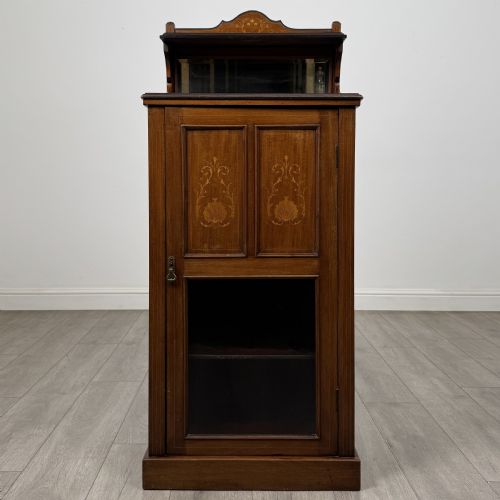
Cabinet makers utilised sturdy timbers such as mahogany, oak, walnut, pine, and satinwood inlay to build these robust carcasses. Selected woods provide both structural strength and striking grain patterns across the front facades.
Metal elements including brass handles and fitted safes added both utility and decoration, while glass doors appear on specific bookcase and music cabinet variations.
Certain bedside cabinets arrive equipped with a pull-out step, proving that early twentieth-century mornings required deliberate elevation.
What varies in quality
Quality rests upon the selection of timber veneers, the precision of the satinwood inlay, and the integration of internal fittings such as drawers, shelving, and built-in safes. Superior examples maintain balanced proportions and crisp mouldings.
The integrity of the brass hardware, working keys for cupboards, and the smooth operation of drawers separate standard utility furniture from finer domestic pieces.
Whytock and Reid of Edinburgh
The Edwardian Chest with Cupboard Glossary
- Tallboy
- A tall chest of drawers standing upon another chest or cupboard section. This form maximises vertical storage capacity in smaller rooms.
- Compactum
- A large wardrobe or cabinet combining multiple internal compartments, hanging space, and drawers. These multi-functional pieces organise diverse garments efficiently.
- Chiffonier
- A low sideboard or cabinet equipped with drawers and cupboards below. Originating in the nineteenth century, it serves living and dining spaces.
- Satinwood inlay
- Contrasting light-coloured wood inserted into the primary timber surface to create decorative borders and patterns. This technique highlights Edwardian cabinet work.
- Burr yew wood
- A highly figured timber featuring swirling knot formations. Cabinet makers utilised this prized wood for decorative veneer panels on high-end music and display cabinets.
Edwardian Chest with Cupboard: Frequently Asked Questions
What is an Edwardian chest with cupboard?
An Edwardian chest with cupboard is a piece of furniture that unites traditional pull-out drawers with an enclosed storage cabinet. These items were built to maximise domestic organisation in bedrooms and dressing rooms.
They reflect the practical design ethos of the early twentieth century, offering varied internal configurations including shelves, linen presses, and shoe compartments.
How do I date an Edwardian cabinet?
Dating relies on examining timber choices, construction methods, and hardware styles. Edwardian pieces frequently feature mahogany or inlaid satinwood alongside period brass handles.
Comparing the internal secondary woods, such as pine or oak drawer linings, against known nineteenth and twentieth-century production standards further clarifies the period.
Where were these cabinets used?
These combination pieces were primarily designed for bedrooms, dressing rooms, and country house hallways. Their dual storage functions made them essential for organising linens, garments, and daily accessories.
Today, buyers place them in bedrooms and living spaces where both drawer space and concealed shelving are required.
How do I care for mahogany furniture?
Maintaining mahogany and walnut surfaces requires stable room humidity and protection from direct sunlight. Regular dusting with a soft, dry cloth preserves the polished finish.
Occasional application of appropriate wax polish nourishes the timber grain without building up heavy residues on the satinwood inlay.