
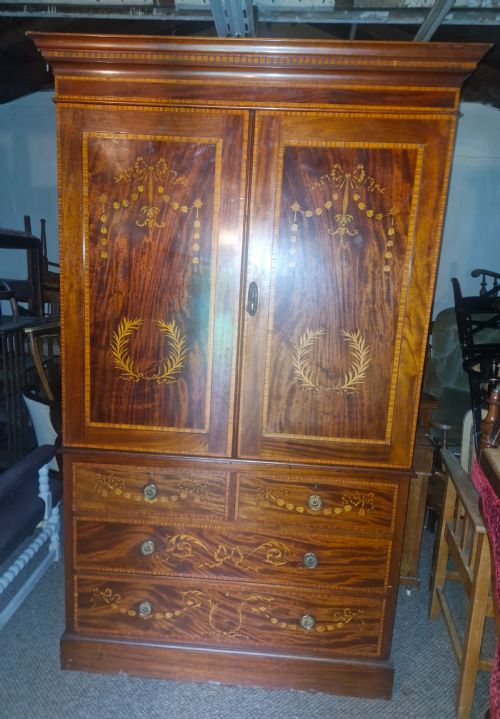


Edwardian Linen Chest
Edwardian linen chest pieces offer robust bedroom storage, combining period timbers with traditional craftsmanship to organise household linens.
Edwardian Linen Chest
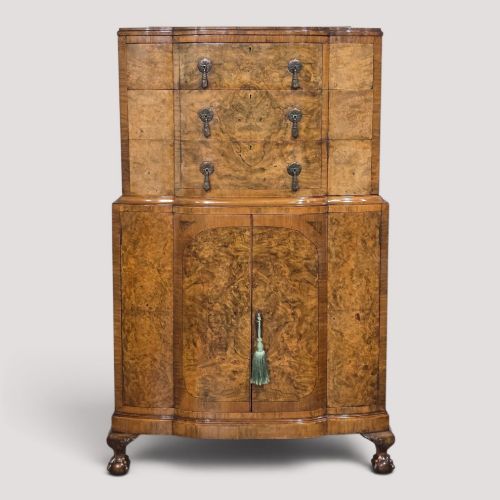
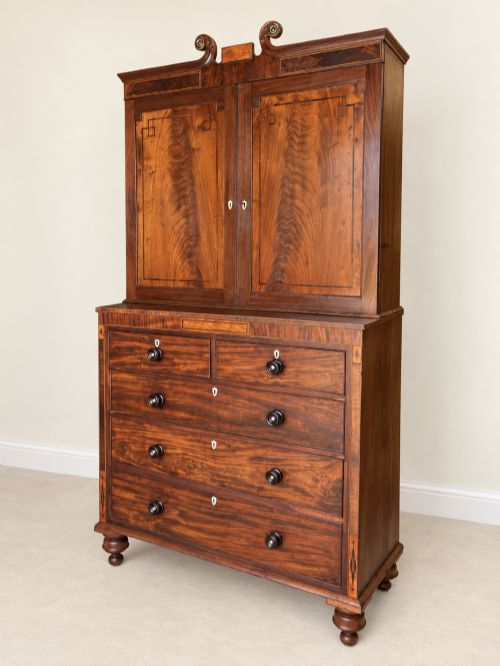
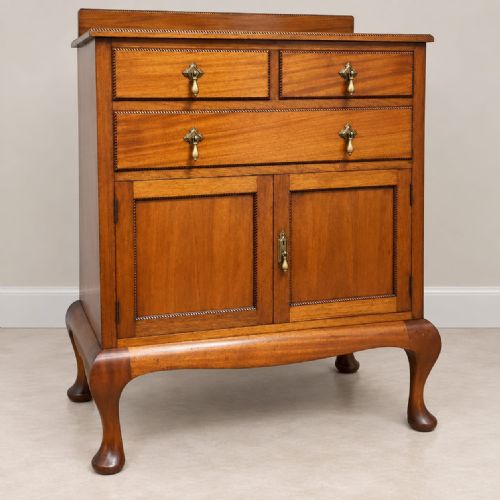
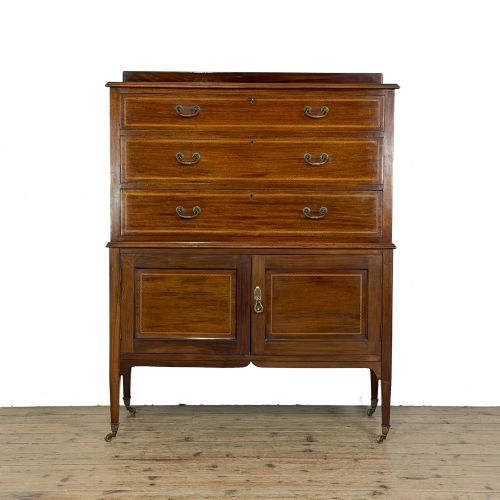
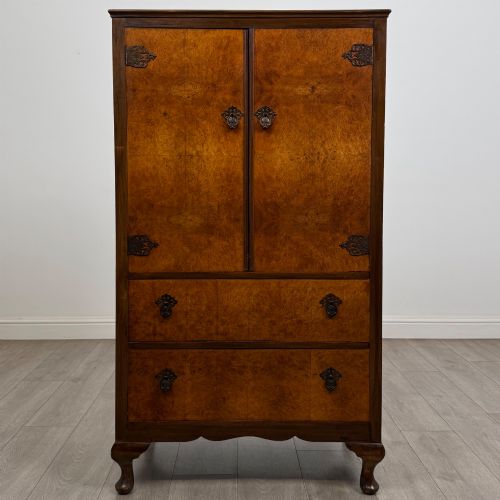
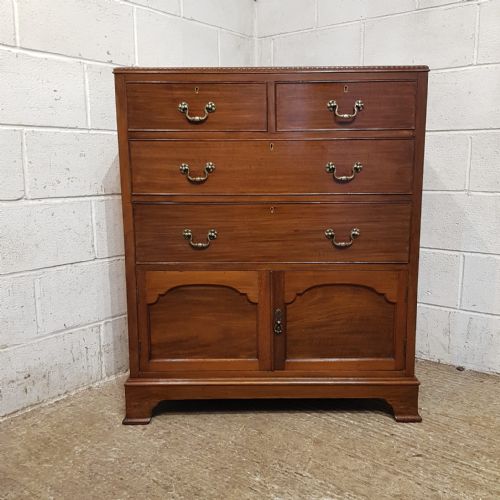
When buyers search for an edwardian linen chest, they encounter various forms including linen presses, tallboys, and chests of drawers. These pieces reflect the domestic storage needs of the early twentieth century, designed to hold household textiles and clothing securely.
The pieces on this page span several periods, with Edwardian examples appearing alongside Georgian, Victorian, and later twentieth-century items. Materials range from mahogany and oak to burr walnut and ash, often featuring boxwood inlay or brass hardware.
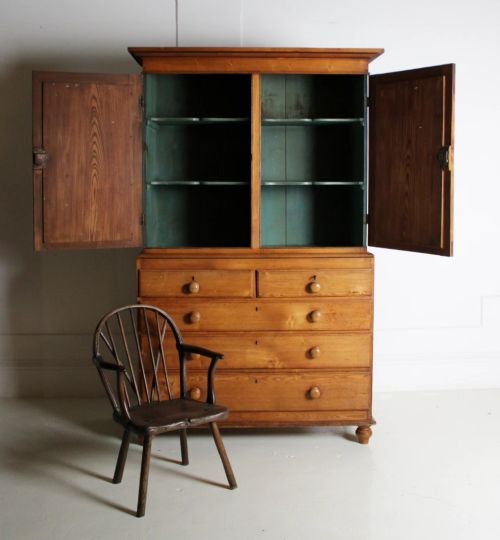
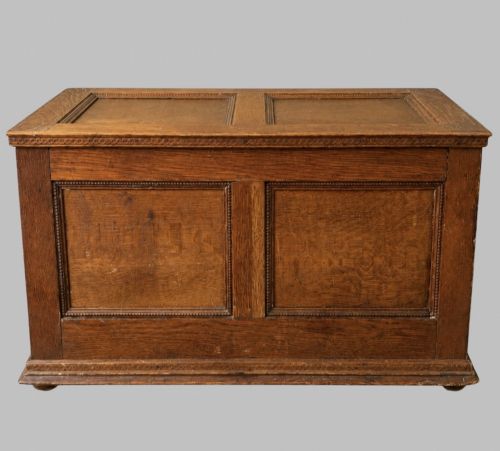
Object types vary from traditional linen presses and housekeeper's cupboards to wardrobes, cabinets, and trunks. While formal Edwardian pieces dominate, country variations in pine and ash also feature among the selections.
What varies in quality
Quality differences rest on the selection of timber figures, such as burr walnut or flame mahogany, and the precision of decorative boxwood inlay. Superior examples demonstrate careful matching of grain patterns across drawer fronts and doors.
Structural integrity and original hardware, including brass handles and working locks, influence the standing of a piece. Finer items retain their original internal linen slides and fitted shelving without modern alterations.
Druce & Co.·Maple and Co·Whytock & Reid of Edinburgh
The Edwardian Linen Chest Glossary
- Linen press
- A tall piece of furniture featuring upper cupboard doors enclosing sliding trays, positioned above a base of drawers. It was traditionally used for storing folded household linen.
- Tallboy
- A tall chest of drawers, often constructed in two sections with a smaller chest stacked upon a larger one. This form maximised vertical storage space in bedrooms.
- Boxwood inlay
- A decorative technique where small pieces of pale boxwood are fitted into recesses in a darker wood surface to create contrasting patterns or borders.
- Compactum wardrobe
- A large fitted wardrobe combining hanging space, drawers, and shelving within a single multi-compartment unit. It offered comprehensive clothing storage for a Victorian or Edwardian bedroom.
Edwardian Linen Chest: Frequently Asked Questions
What is the difference between a linen press and a chest of drawers?
A linen press combines upper enclosed shelving or sliding trays with lower drawers, specifically designed for folded textiles.
A standard chest of drawers provides horizontal storage drawers stacked vertically from top to bottom without upper cupboard doors.
How do I identify an Edwardian piece?
Edwardian furniture typically dates from the reign of King Edward VII between 1901 and 1910, though the style extends slightly either side. It frequently exhibits lighter timbers, delicate boxwood inlay, and neoclassical or Arts and Crafts influences.
Construction methods transition towards factory production while retaining traditional dovetailing and solid timber framing seen in earlier periods.
Where were linen chests placed in the home?
These pieces were primarily positioned in bedrooms, dressing rooms, or large landing spaces to store household linens and daily garments. Housekeeper's cupboards often served utility rooms or grand kitchens for linen management.
Their substantial storage capacity made them central furniture items for organising textiles before fitted wardrobes became standard.
Are these pieces made of solid wood?
Many items feature solid structural timbers such as oak, ash, or mahogany, particularly in country pieces and earlier periods. Finer Edwardian cabinets often combine solid frames with decorative wood veneers applied to stable panel cores.
Secondary woods like pine are regularly used for internal drawer linings and back panels.