
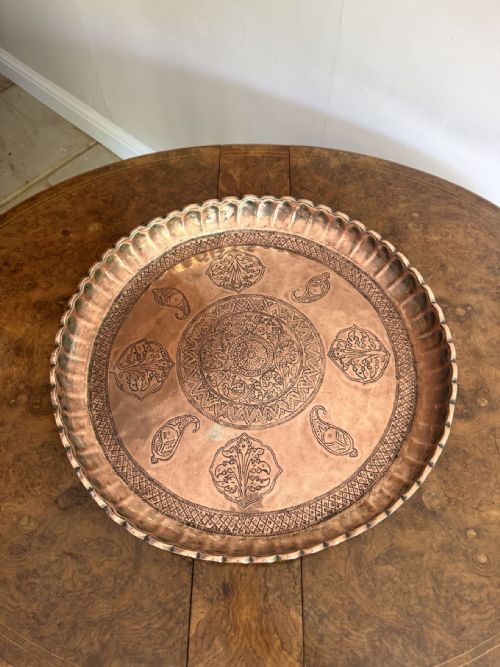


Circular Serving Tray
A circular serving tray brings formal hospitality into daily use, offering a dependable stage for drinks, glasses, and silver.
Circular Serving Tray
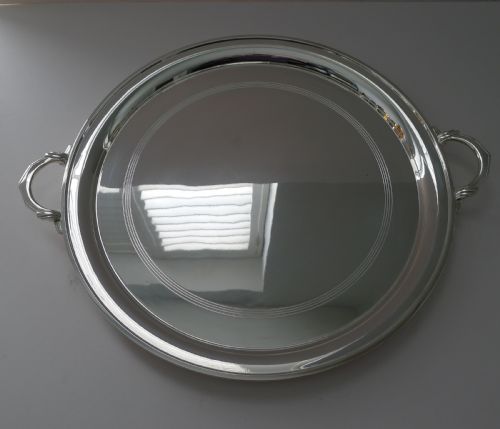
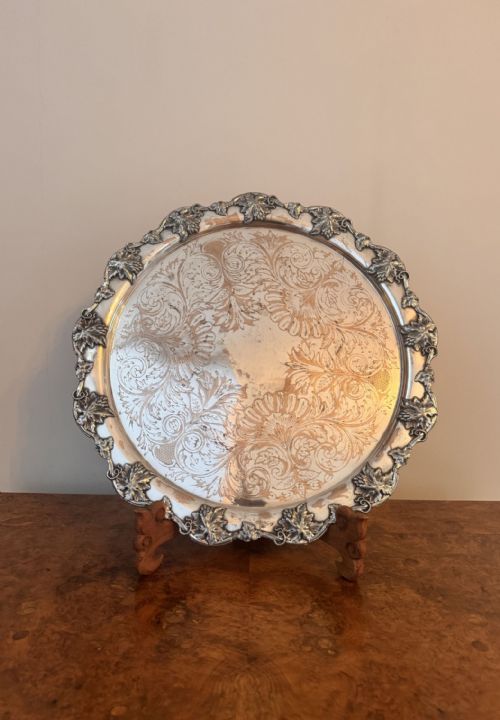
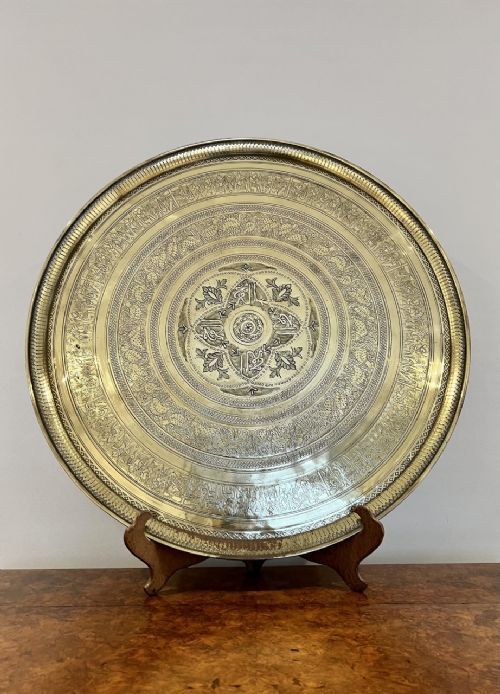
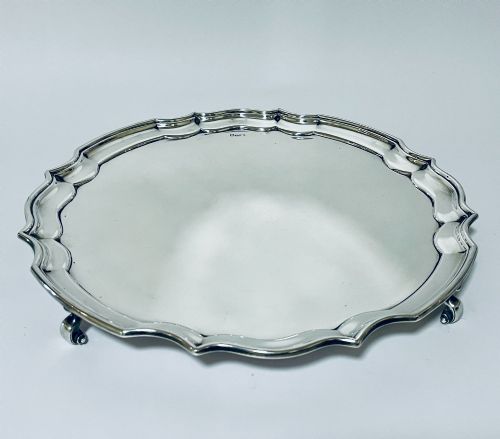
A circular serving tray forms the foundation of domestic hospitality, designed to carry glassware, decanters, and tea services with stability and balance. The examples gathered under a circular serving tray span from the Georgian period through the Victorian and Edwardian eras into Art Deco and mid-century modern designs.
The assortment includes pieces shaped from silver plate, copper, brass, mahogany, and mixed metals, alongside specialised forms like the lazy susan and the salver. Most pieces you meet will be Victorian or early twentieth-century silver-plated items, though earlier Georgian mahogany wine trays and later modernist cocktail trays also appear.
Materials and Method
Metal trays rely on silver plate, Old Sheffield plate, copper, brass, and EPNS, often worked with engraving, engine turning, or applied borders. The combination of metals creates contrasting tones on mixed metal and Japanese-style pieces.
Wooden items, specifically Georgian mahogany wine trays, use timber shaped with inlaid decoration and raised rims. Pontypool toleware brings painted iron into the selection, utilising lacquer and pigment on metal.
Materials represented include sterling silver, silver plate, EPNS, copper, brass, pewter, mahogany, and mixed metals.
Judging Quality
Quality rests in the weight of the metal, the crispness of the chased or engraved decoration, and the integrity of the rim construction. A heavier gauge of silver plate or solid timber provides durability and balance when the tray is fully loaded.
Artisanal involvement distinguishes standard commercial production from exceptional work, seen in the precision of engine turning by makers like Elkington or the distinct design of a Keith Murray cocktail tray. Details such as applied pie crust edges or well-fitted oak bases elevate the standing of a piece.
Keith Murray For Mappin & Webb·Walker & Hall·J Dixon & Sons·Elkington
The Circular Serving Tray Glossary
- Salver
- A flat metal tray used for serving drinks or presenting cards. These pieces often feature footed bases and formal engraved decoration.
- Old Sheffield Plate
- A composite material formed by fusing a sheet of silver to a copper ingot. This technique was largely superseded by electroplating in the nineteenth century.
- Engine Turned
- A surface pattern mechanically engraved into metal using a lathe. This creates precise geometric designs common on twentieth-century cocktail trays.
- Toleware
- Painted or lacquered metalware produced in tinplate. Eighteenth and nineteenth-century examples often display decorative japanning.
- Lazy Susan
- A revolving tray placed on a table to assist with serving food or condiments. Edwardian examples occasionally take the form of canapé party turntables.
Circular Serving Tray: Frequently Asked Questions
What is the difference between a tray and a salver?
A salver is traditionally a formal, footed tray used for serving drinks or presenting letters, whereas a flat tray serves broader domestic carrying purposes.
Salvers frequently carry more ornate chased or engraved coats of arms or floral motifs on their surfaces.
How do I care for a silver plated tray?
Clean silver plate using a gentle cream polish and a soft cloth to avoid wearing through the thin silver layer to the base metal.
Store the tray in a dry environment and avoid prolonged contact with acidic foods or liquids that can tarnish the surface.
Can I use an antique tray for daily serving?
Most metal and wooden trays are structurally robust enough for carrying glassware and bottles during modern gatherings.
Care should be taken with fragile toleware surfaces and older silver plate to preserve the original finish.
How do I date an antique serving tray?
Dating relies on maker marks, registered design lozenges, and the prevailing style of the period, such as Victorian engraving or Art Deco geometry.
Materials also provide clues, as Old Sheffield plate points to earlier production before electroplating became common.