


Sheffield Silver Plate Tray
A sheffield silver plate tray brings substantial Georgian and Victorian dining elegance to the table.
Sheffield Silver Plate Tray
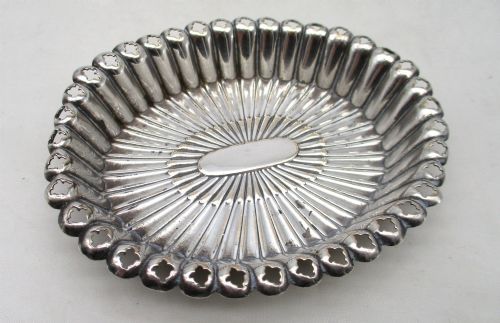
A sheffield silver plate tray encompasses serving platters, salvers, tea trays and desk stands produced across the eighteenth and nineteenth centuries. The pieces on this page span Georgian, Regency, Victorian and Edwardian periods, appearing in forms from small card trays to very large serving pieces.
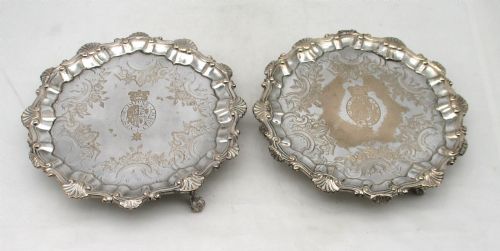
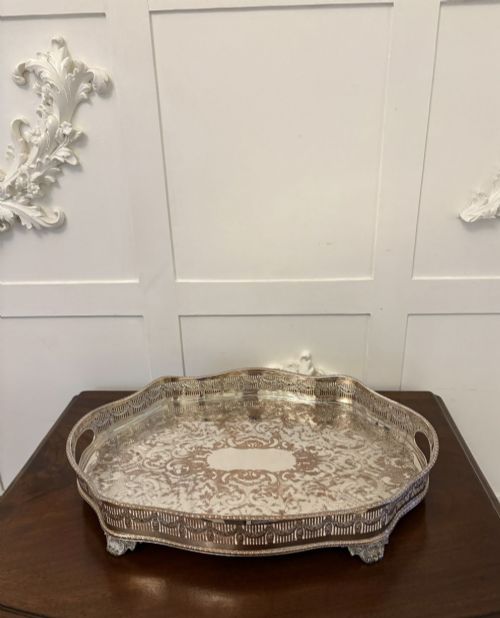
The version most likely to meet a buyer on this page is the Old Sheffield plate tray, often featuring engraved surfaces, gallery borders or cast shell motifs. These items range from mid eighteenth-century pin trays to large nineteenth-century drinks trays and meat dishes.
How they were made
Makers constructed early pieces by fusing a sheet of silver to a thicker copper ingot, then rolling the combined metals under heat into sheets for shaping. This fusion method, known as Old Sheffield plate, often reveals thin copper lines along edges or wear points.
Later nineteenth-century production shifted toward electroplated nickel silver, applying silver via an electrical current over a base metal alloy. Artisans finished these trays with hand-chased engraving, pierced reticulated galleries and applied cast borders in Rococo Revival or George III styles.
Listings feature items spanning the eighteenth, nineteenth and twentieth centuries, utilising silver plate, copper, old sheffield plate and cut glass across various tray forms.
What varies in quality
The calibre of a sheffield silver plate tray depends on the crispness of its chased decoration and the weight of the underlying metal. Superior examples maintain substantial heft and deep, sharp hand engraving rather than shallow machine stamping.
Execution of applied borders, such as cast scrollwork or pierced galleries, separates standard items from finer workshop output. The integrity of the fused silver layer over the copper base also distinguishes early pieces from simpler later plating.
Creswick·Walker Knowles·Padley Parkin·J Dixon and Sons·Frank Cobb and Co·Daniel Holy·Lee and Wigfull·Viners of Sheffield·Atkin Brothers·Harrison
The Sheffield Silver Plate Tray Glossary
- Old Sheffield plate
- An early method of fusing silver and copper together before rolling them into sheets for smithing. This technique preceded modern electroplating.
- Salver
- A flat serving tray, usually circular and supported on small feet, designed for presenting glasses or documents. These pieces frequently feature engraved crests.
- Gallery tray
- A serving tray fitted with a pierced or pierced and engraved metal rim around the edge. This raised border prevented items from sliding off during service.
- Mazarine
- A decorative draining plate or insert placed within a larger serving dish to separate food from juices. These form part of larger dining services.
- Electroplated nickel silver
- A base metal alloy of copper, nickel and zinc coated with a layer of pure silver via electrolysis. This process replaced older fusion techniques in the Victorian era.
Sheffield Silver Plate Tray: Frequently Asked Questions
What is Old Sheffield plate?
Old Sheffield plate is a composite material formed by sandwiching a sheet of copper between thin layers of silver and fusing them with heat. Artisans then worked this sheet into trays and salvers by hand.
This technique produced pieces with distinct material properties that differ from later nineteenth-century electroplated items.
How do I clean my tray?
Clean these items using a soft cloth and a mild silver polish formulated for plated items. Avoid harsh abrasremoved that might wear through the thin silver layer to the copper beneath.
Store the tray in a dry environment to prevent tarnishing and moisture damage to the metal surface.
How do I date these pieces?
Dating relies on stylistic markers such as Georgian Rococo Revival motifs, Regency borders or Edwardian reticulation. Maker marks and manufacturing techniques, such as fused plate versus electroplate, also indicate the period.
Pieces often carry maker stamps from Sheffield workshops that help narrow their decade of origin.
Can I use these for serving food?
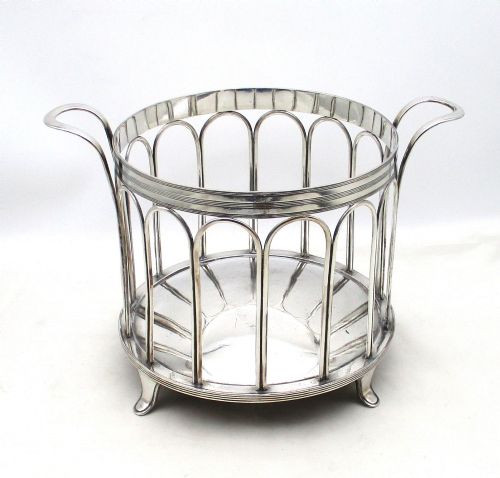
These trays function well for serving drinks, canapés or tea services during gatherings. Many historical examples served specific dining roles like meat warming dishes or wine coasters.
Careful handling ensures the historic silver plate remains protected during daily domestic use.