
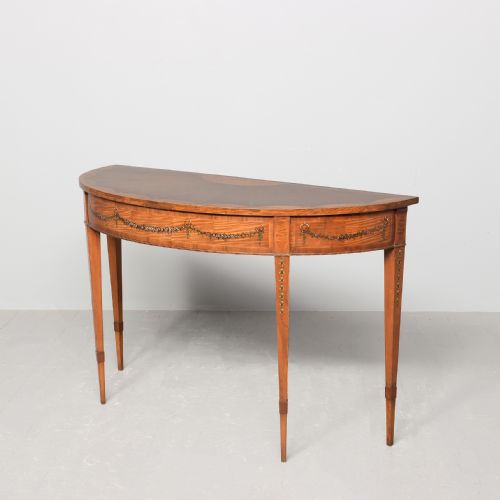


Circular Satinwood Table
A circular satinwood table brings figured timber and refined form together, offering a functional surface suited to period and modern interiors alike.
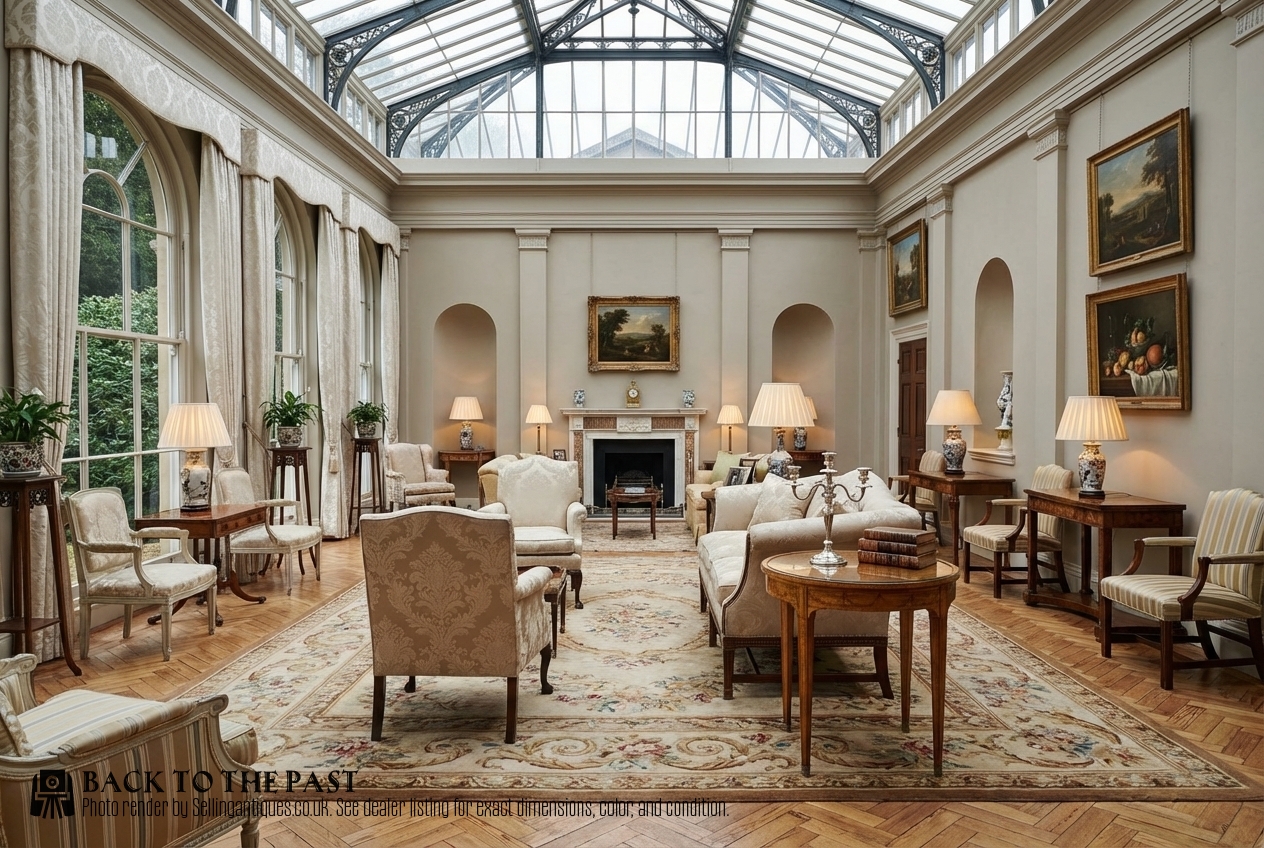
Circular Satinwood Table
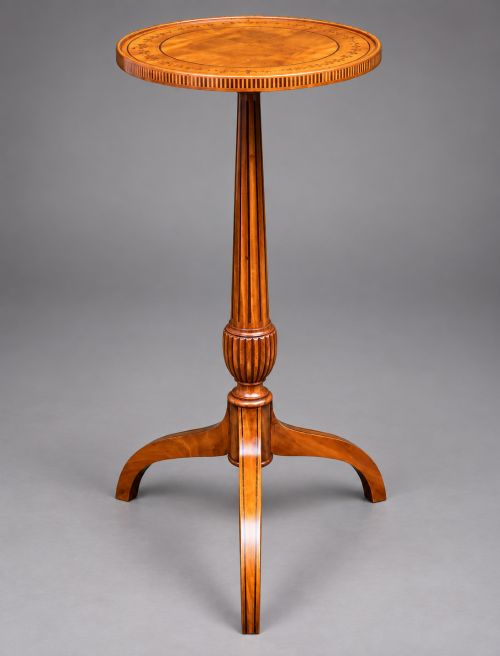
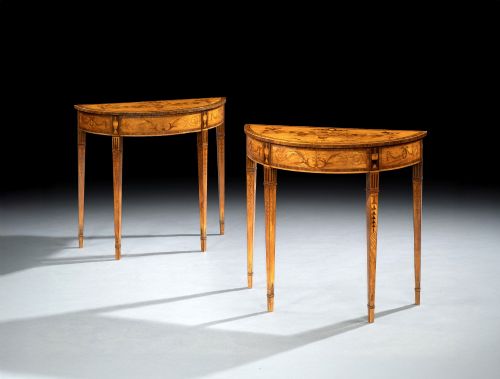
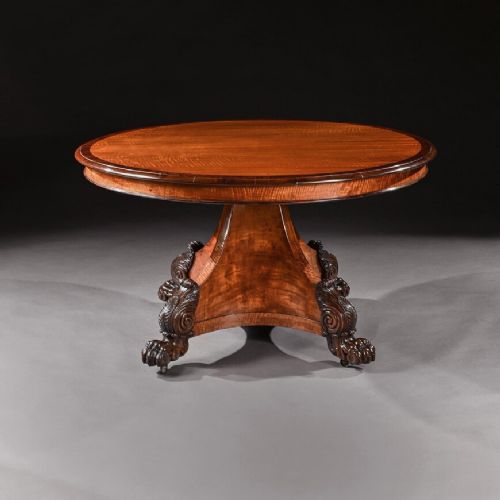
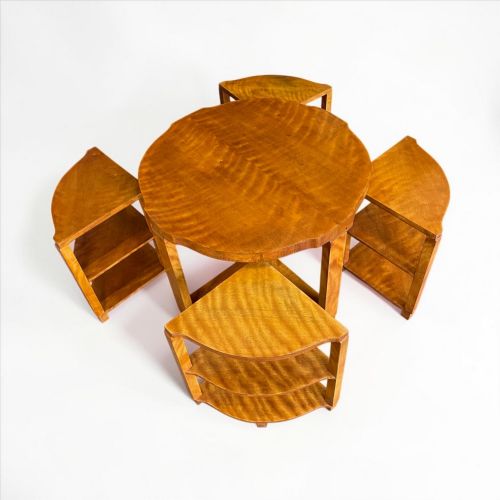
A circular satinwood table appears in several distinct forms across this selection, ranging from compact occasional and wine tables to larger breakfast, centre, and drum tables. These pieces span the eighteenth, nineteenth, and early twentieth centuries, encompassing Georgian, Regency, Victorian, Edwardian, and later revivals.
Buyers seeking a circular satinwood table will most commonly encounter Edwardian and nineteenth-century occasional or centre tables alongside eighteenth-century examples. The selection draws on diverse stylistic influences, including Sheraton Revival, Regency, and French Neoclassical designs.
Makers and origins vary across the recorded pieces, incorporating English, French, Italian, and Ceylonese craftsmanship. Forms adapt to domestic use as lamp tables, card tables, breakfast tables, and small side pieces.
Materials and Construction
Construction relies heavily on figured satinwood veneers applied to solid secondary timbers, frequently enhanced by crossbanding in rosewood, mahogany, or boxwood. Marquetry inlays and painted details appear across Georgian and revival pieces to define borders and tabletops.
Alternative timbers such as satin birch, burr oak, and yew wood support the primary satinwood surfaces on specific tables. Structural integrity depends on stable pedestal pillars, tripod legs, or four-legged frames joined with period cabinetmaking techniques.
Listings feature satinwood combined with mahogany, rosewood, and marble across Georgian, Regency, and Edwardian periods.
Execution and Detail
Quality rests on the selection and grain pattern of the satinwood veneer, where highly figured timber commands greater visual presence than plain surfaces. The precision of inlaid marquetry, crossbanding, and stringing distinguishes finer examples from simpler production.
The sophistication of the substructure, from turned pedestals to carved or reeded legs, dictates the overall refinement of the piece. Crispness in carved details and stability in the central pillar or joints separate superior examples from standard workshop output.
Peters of Genoa·Ambrose Heal
The Circular Satinwood Table Glossary
- Satinwood
- A durable tropical timber valued for its pale yellow colour and natural sheen. It takes a high polish and serves as the primary face veneer on fine furniture.
- Crossbanding
- A border technique where veneer strips are laid perpendicular to the grain of the central panel. This frames the tabletop and adds geometric contrast.
- Marquetry
- The art of forming decorative patterns using fitted pieces of various wood veneers. It frequently depicts floral or classical motifs on tabletops.
- Guéridon
- A small French occasional table supported by a central pillar or figures. These pieces often feature circular tops and decorative veneering.
- Tilt-top
- A hinged tabletop mechanism allowing the surface to tilt vertically when not in use. This design originated to save floor space in period rooms.
Circular Satinwood Table: Frequently Asked Questions
What rooms suit a circular satinwood table?
Smaller occasional and wine tables fit easily beside seating in living spaces or libraries as lamp surfaces. Larger centre or breakfast tables anchor hallways and reception rooms.
The pale timber brightens darker corners while maintaining a formal presence suited to traditional or eclectic interiors.
How do I care for satinwood surfaces?
Dust regularly with a soft, dry cloth to prevent grit accumulation on the polished veneer. Avoid placing the table in direct sunlight or near heat sources to protect the wood from fading and splitting.
Apply a quality furniture wax sparingly when the finish requires nourishment.
How can I tell Georgian from Edwardian pieces?
Georgian tables exhibit eighteenth-century proportions, hand-cut joinery, and authentic period patination developed through centuries of use. Edwardian pieces often reflect Sheraton Revival influences with machine-assisted precision and lighter internal construction.
Secondary timbers and hardware styles also provide clues to the manufacturing era.
What is the difference between a centre table and an occasional table?
Centre tables traditionally stand freestanding in the middle of a room as a decorative focal point. They typically feature finished detail around the entire circumference.
Occasional tables are lighter, smaller, and intended to be moved easily for specific uses such as holding drinks or lamps.