


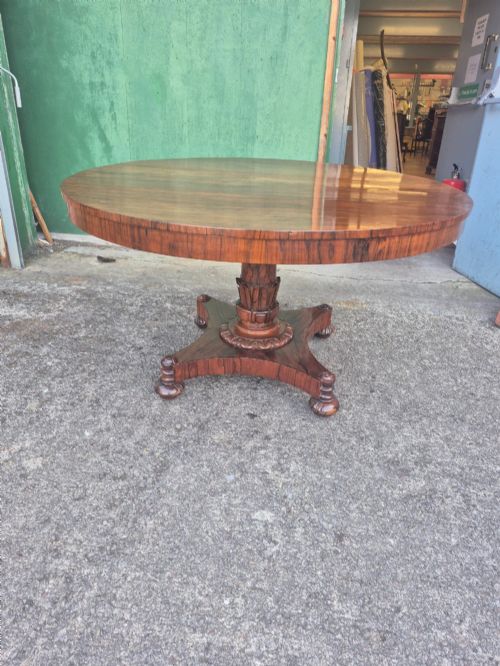
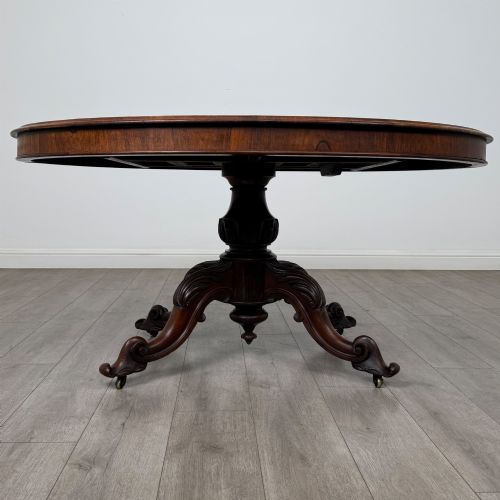
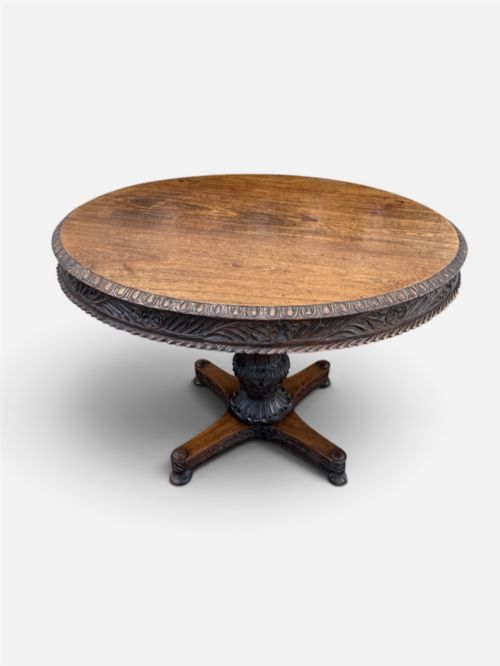
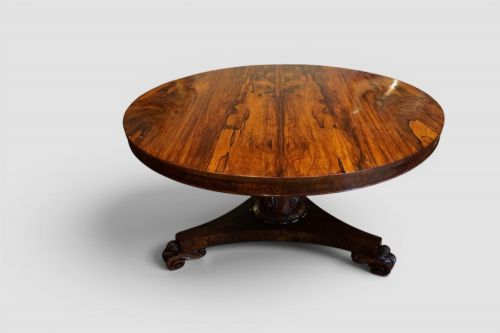
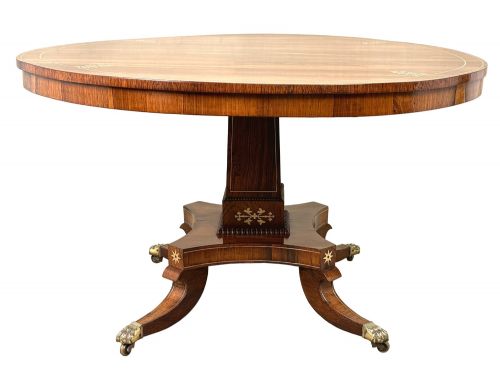
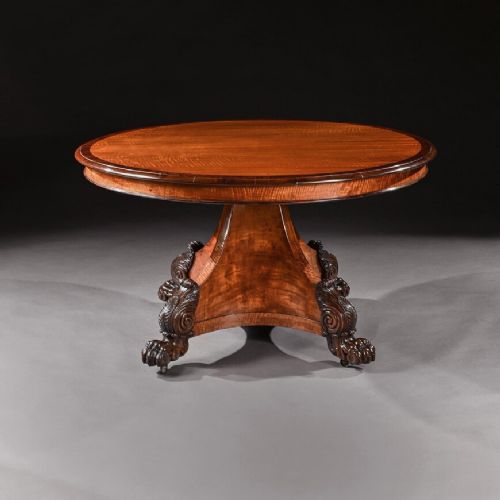
Circular Rosewood Centre Table
When buying a circular rosewood centre table, you select a substantial piece designed to anchor a room from the middle.
Circular Rosewood Centre Table
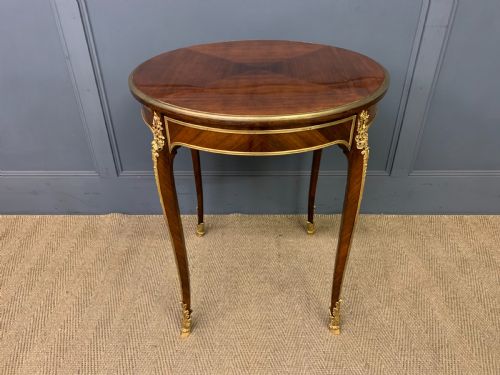
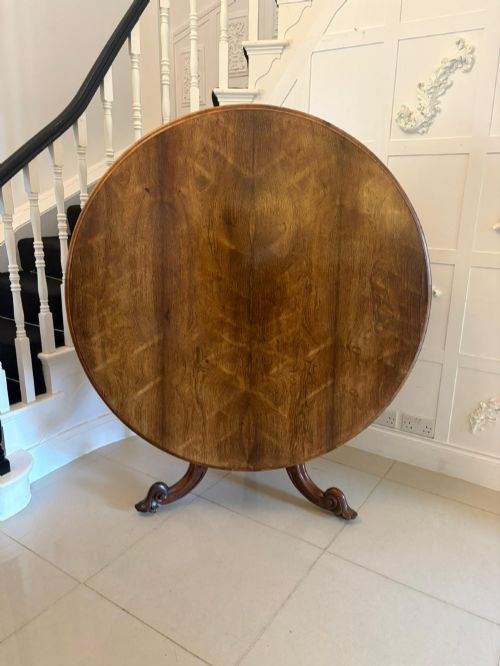
A circular rosewood centre table is a freestanding table designed to sit in the middle of a room rather than against a wall. The pieces found here date predominantly from the nineteenth century, spanning Regency, William IV, George IV, and Victorian periods.
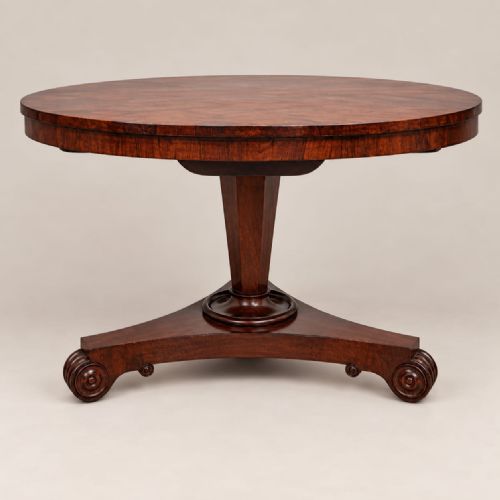
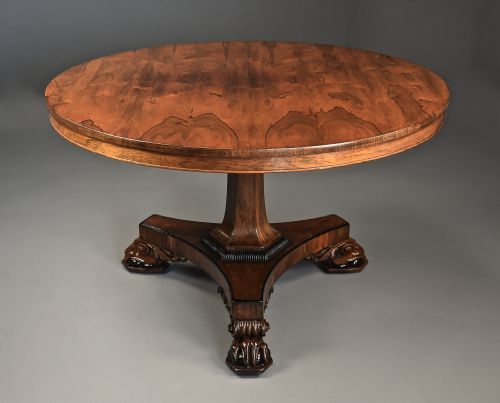
The form encompasses various functional types including breakfast tables, dining tables, tilt-top tables, and occasional pieces. Many examples rest upon a central pedestal supported by a triform or circular base.
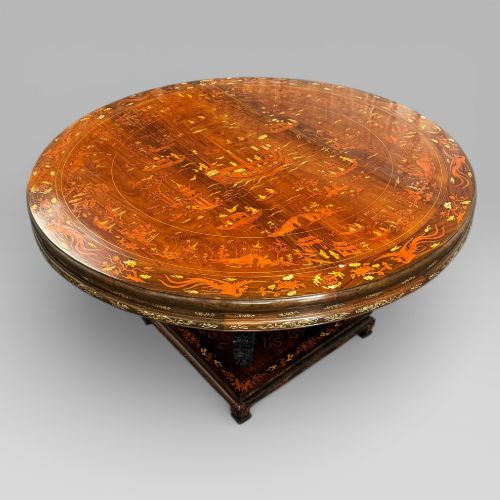
Origins include English workshops as well as Anglo-Indian and Chinese export productions. Buyers encounter formats ranging from compact occasional tables to large dining surfaces.
How They Were Made
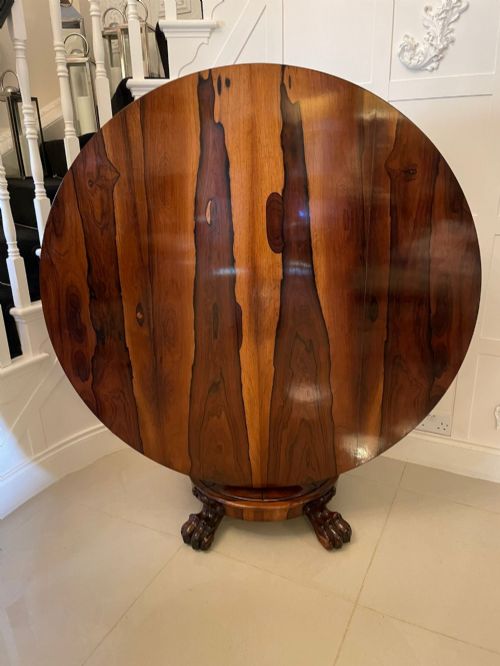
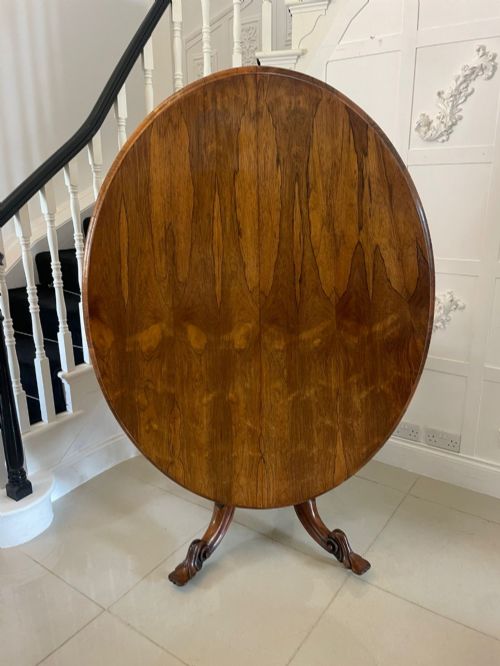
Cabinet makers utilised dense imported hardwoods, applying figured rosewood veneers over secondary timbers to create highly decorative table tops. Timber selection allowed craftsmen to display dramatic grain patterns across wide circular surfaces.
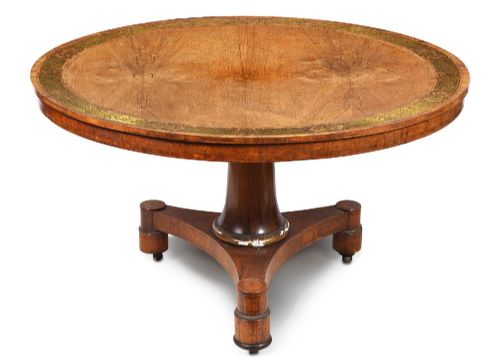
Decoration often involved brass inlay, parcel gilt, or carved wooden details around the pedestals and borders. Some variations incorporate mother of pearl or satinwood elements set directly into the polished surface.
Tilt-top mechanisms utilised hinged wooden blocks that allowed the heavy circular top to fold vertically when not in use. Pedestals frequently stood upon robust platforms fitted with concealed castors.
Several tables fold flat like giant wooden pancakes so they could hide politely against the wall.
What Varies in Quality
Quality rests significantly upon the choice of timber and the symmetry of the wood grain displayed on the top. Superior examples exhibit richly figured rosewood veneers matched carefully across the entire diameter.
Construction methods and carving depth distinguish standard production from exceptional workshop output. Tables attributed to prominent makers or specific regional styles often display more intricate brass inlay and refined pedestal proportions.
The structural integrity of the central pedestal and the smooth operation of tilt-top mechanisms indicate the original standard of assembly. Preservation of the polished finish without excessive restoration preserves the character of the piece.
Edwards and Roberts·Gillows·Peters of Genoa
The Circular Rosewood Centre Table Glossary
- Centre table
- A freestanding table finished on all sides, intended to be placed in the middle of a room rather than against a wall.
- Tilt-top table
- A table featuring a hinged mechanism that allows the top to rotate to a vertical position for storage.
- Triform base
- A three-sided pedestal platform providing stability for heavy central pillar tables.
- Veneer
- A thin layer of figured rosewood applied over a stable timber carcass to decorative effect.
- Ormolu
- Gilded bronze mounts applied to furniture for decorative enrichment during the Regency and Victorian periods.
Circular Rosewood Centre Table: Frequently Asked Questions
How do I use a centre table?
These pieces stand in the middle of a room to hold lamps, books, or decorative objects. They function equally well for informal dining or as a striking focal point.
Larger variations accommodate seating for multiple diners when placed centrally within a principal reception room.
How do I date a rosewood table?
Dating relies upon stylistic markers such as pedestal shapes, carving motifs, and leg configurations associated with periods like Regency or William IV. Regency examples often display brass inlay and classical proportions, while later Victorian versions favour heavier carved elements.
Construction details beneath the top provide further clues regarding the era of manufacture.
Where should I place a round table?
A circular table requires adequate clearance around its perimeter to allow comfortable movement and seating access. Placing the piece beneath a central ceiling rose or chandelier enhances its role as a room anchor.
Smaller occasional versions fit comfortably in libraries, large hallways, or drawing-room corners.