


Regency Circular Breakfast Table
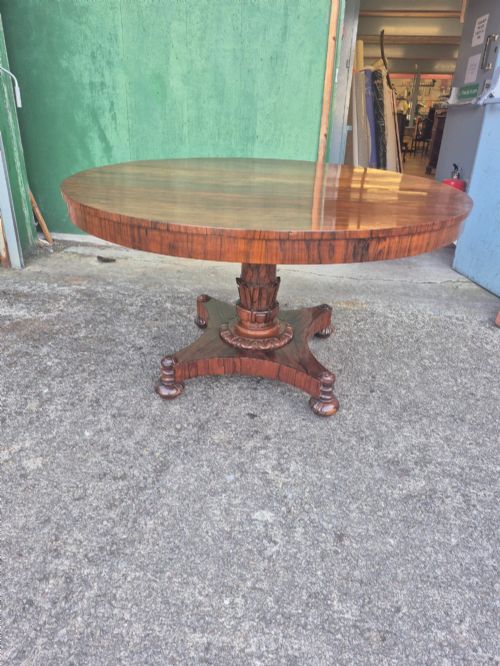
A regency circular breakfast table brings sociable dining and rich timbers like mahogany and rosewood directly to the centre of the room.
Regency Circular Breakfast Table
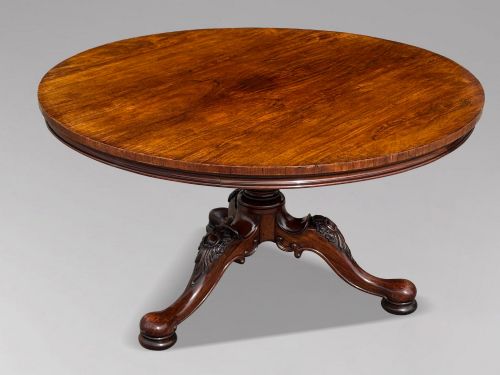
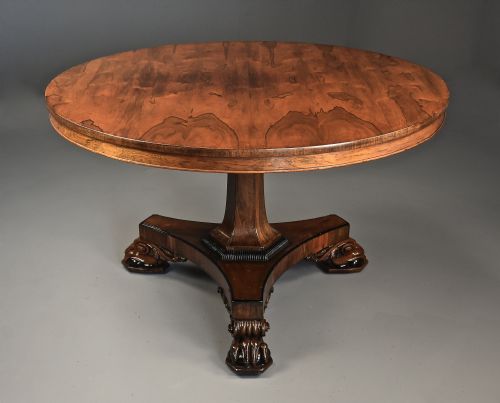
A regency circular breakfast table stands as a versatile piece designed for morning meals or central display, frequently appearing alongside related dining and centre tables in nineteenth-century forms.
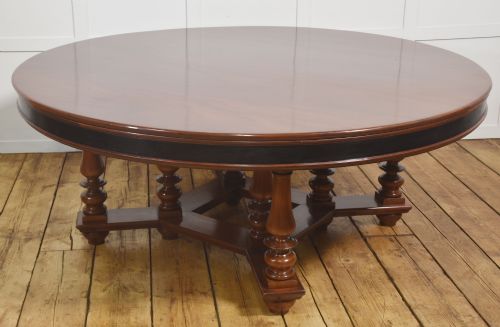
The pieces on this page span the Georgian, Regency, and William IV periods, executed in round formats that range from compact tilt-top designs to large eight-seater dining proportions.
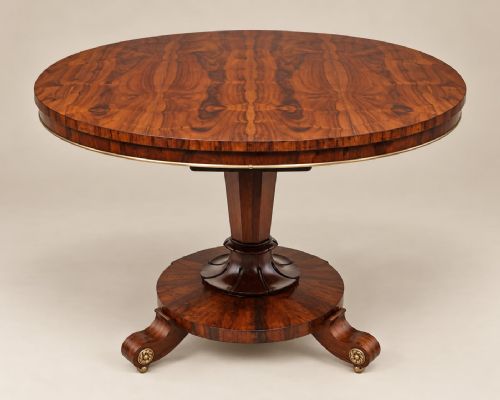
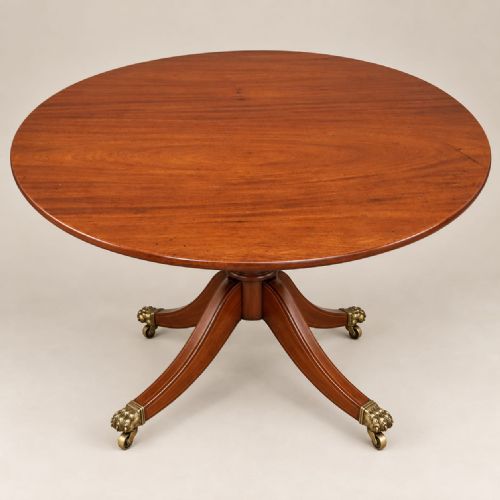
Makers shaped these tables from foundational timbers including mahogany, rosewood, and oak, often mounting them on robust central pillars with triform or tripod bases.
Materials and Construction
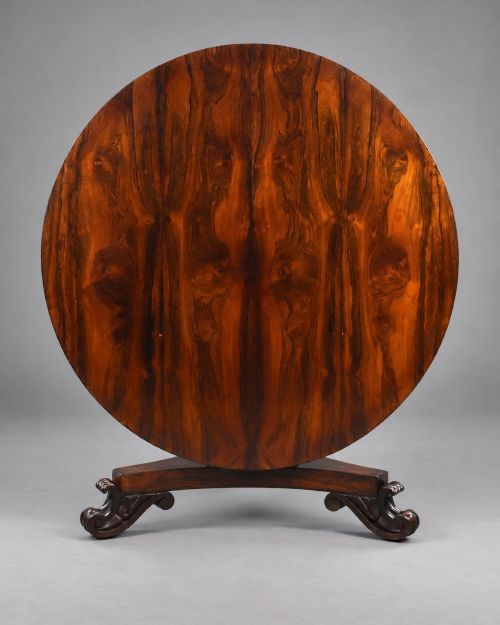
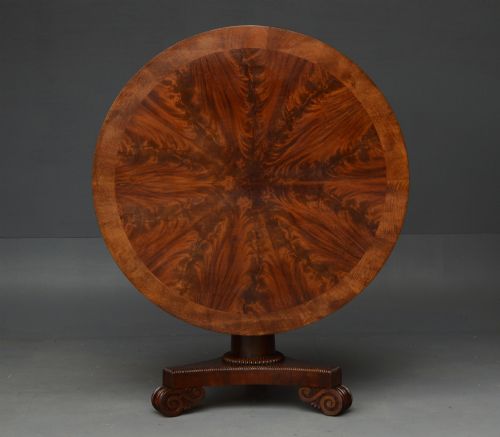
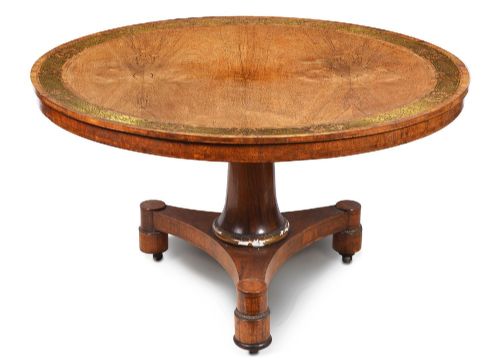
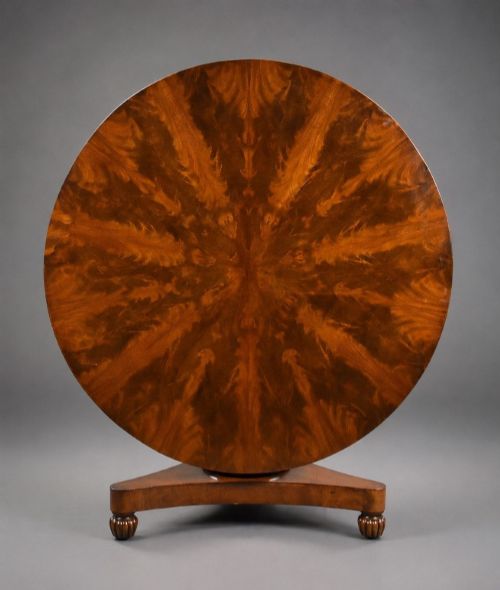
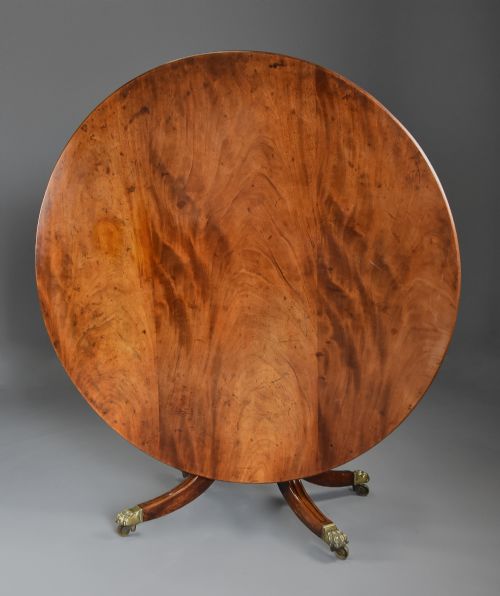
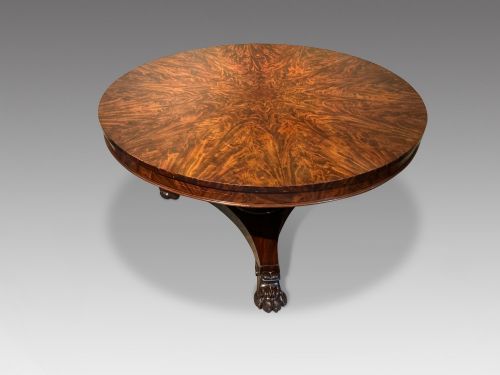
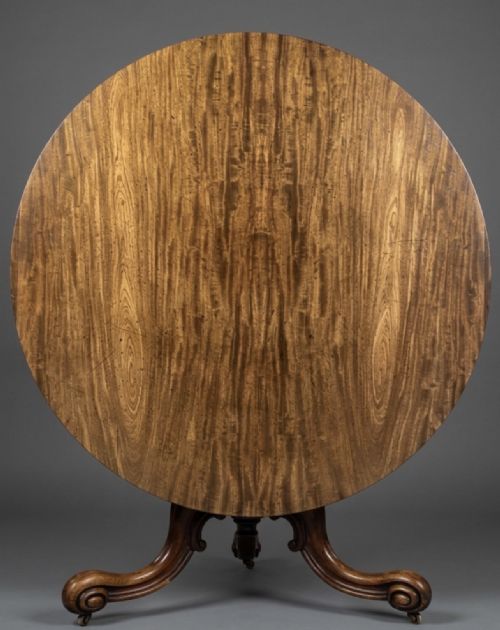
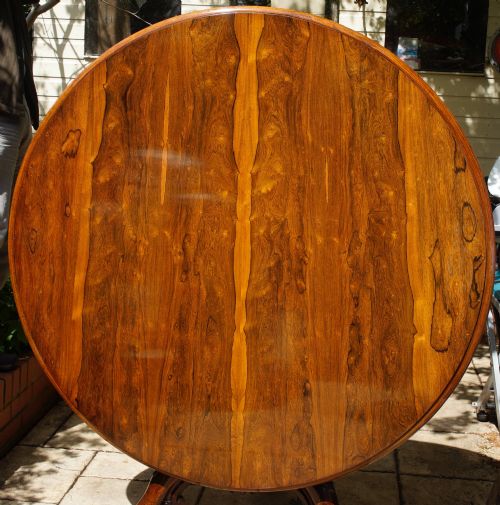
Cabinetmakers utilised dense solid hardwoods and applied elaborate veneers such as flame mahogany, burr walnut, pollard oak, and coromandel across the circular tops.
Many examples incorporate tilt-top mechanisms allowing the surface to fold vertically when not in use, supported by sturdy central pedestals and brass fittings.
Regency Circular Breakfast Table Retail Price Guide 2026
Typical asking prices for regency circular breakfast table among the pieces listed under this phrase on Sellingantiques today, from the lower quarter to the upper quarter. They describe what is for sale here now, not the wider market.
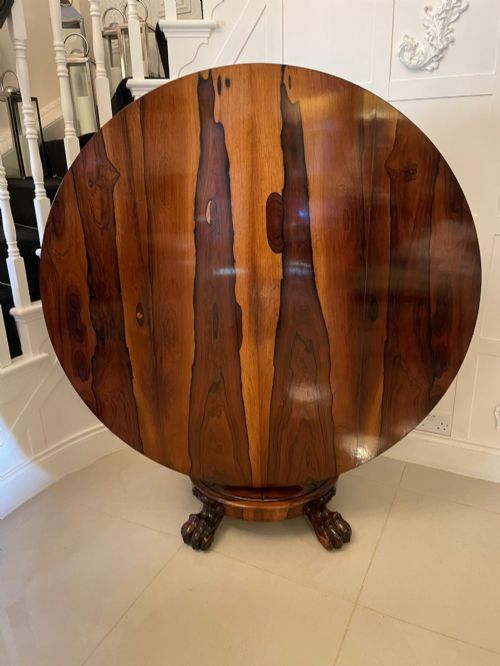
Materials span traditional mahogany and rosewood alongside less common selections like coromandel, plum pudding mahogany, and burr elm.
Assessing the Pieces
Selection of the timber grain dictates visual impact, with figured mahogany and richly patterned rosewood marking out more ambitious workshop output.
The architectural strength of the central pillar and the stability of the triform or tripod base separate standard utility tables from more finely proportioned examples.
Walker-Lancaster
The Regency Circular Breakfast Table Glossary
- Tilt-top
- A hinged table mechanism that permits the circular surface to lock horizontally for dining or vertically for storage.
- Triform base
- A three-sided pedestal foundation supporting the central pillar of the table.
- Flame mahogany
- A veneer cut from the fork of the mahogany tree to create a distinctive flickering flame pattern.
- Gonçalo Alves
- A dense exotic hardwood with striking dark figuring utilised in certain nineteenth-century tables.
Regency Circular Breakfast Table: Frequently Asked Questions
What is a regency circular breakfast table?
A regency circular breakfast table is a nineteenth-century round dining or centre table designed for domestic use.
These pieces typically feature a central pedestal and support daily dining or central room placement.
How do I use a tilt-top table?
A tilt-top table uses a release catch allowing the circular top to pivot into a vertical position.
This mechanism saved floor space in historic interiors when the table was not required for meals.
What woods were used for these tables?
Cabinetmakers constructed these tables using solid timbers and decorative veneers including mahogany, rosewood, burr oak, and walnut.
Exotic woods like coromandel and gonçalo Alves also appear across nineteenth-century examples.
How do I date a circular breakfast table?
Dating relies on identifying stylistic markers from the Georgian, Regency, and William IV periods recorded in the structure.
Details such as octagonal pillars, parcel gilt accents, and specific veneer choices help determine the era.
Where should I place a centre table?
A centre table stands naturally in the middle of a principal room as a focal point.
Its circular format allows chairs to gather evenly around the perimeter for dining or social use.