





Circular Railway Clock
A circular railway clock brings precision timekeeping from the platform into the room, combining robust utility with clear, legible dials.
Circular Railway Clock
A circular railway clock serves as a dependable timekeeper originating from stations, signal boxes, and offices across the transport network. These wall-mounted pieces range from compact models to large dial variations designed for clear visibility across busy spaces.
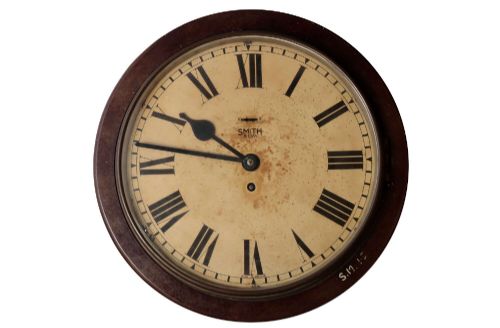
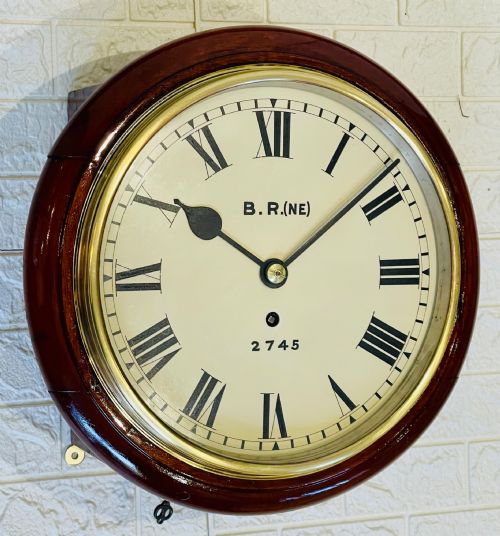
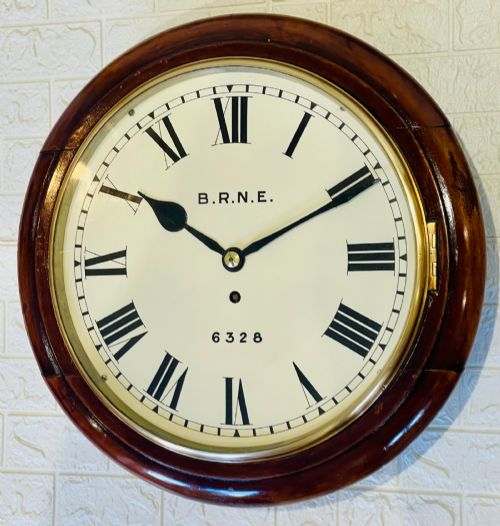
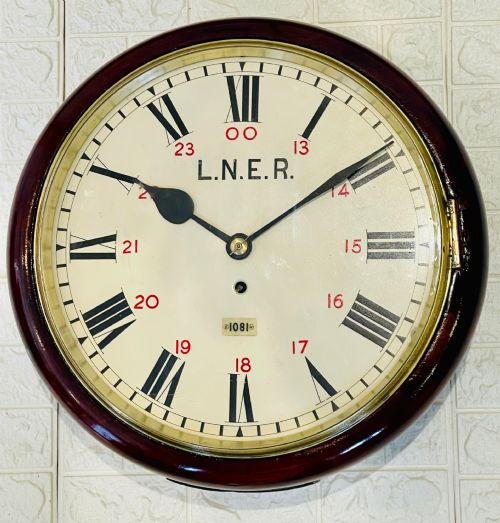
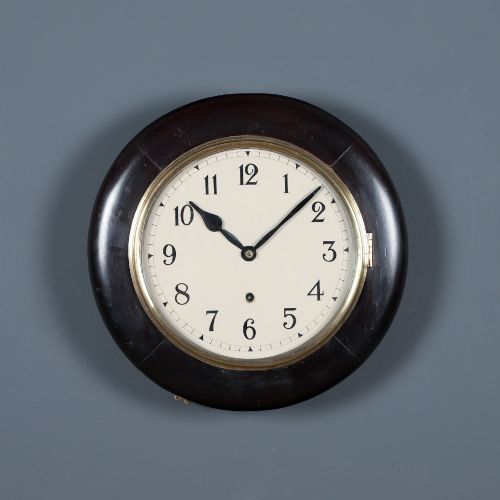
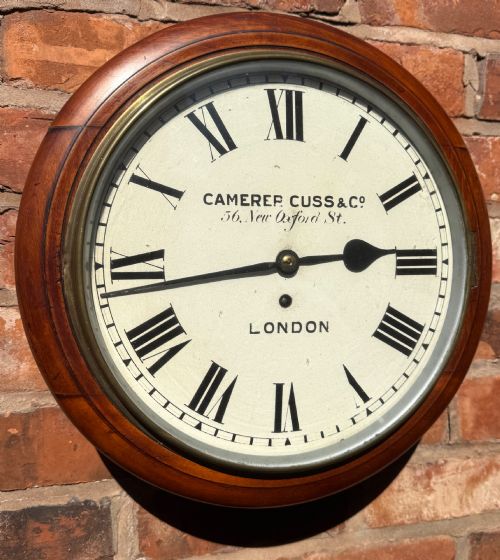
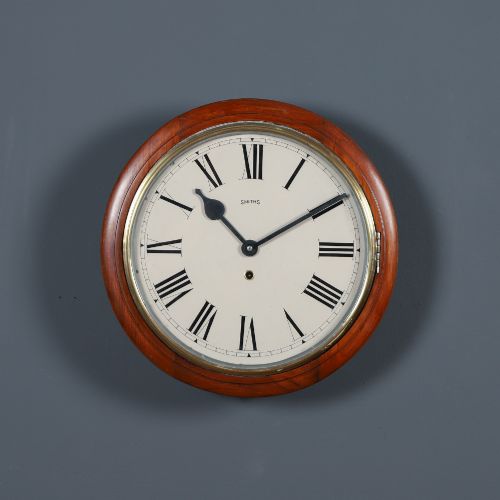
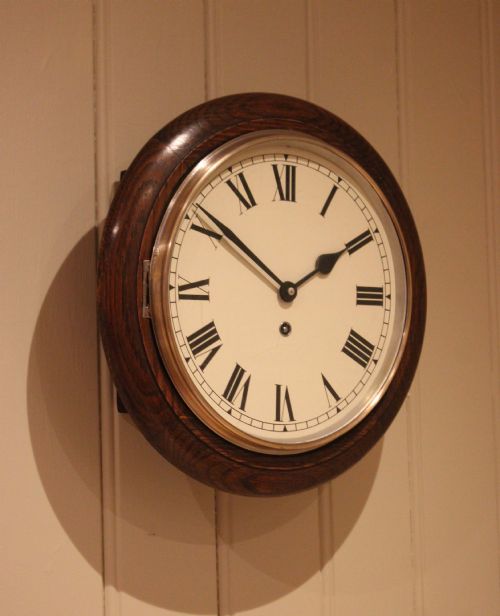
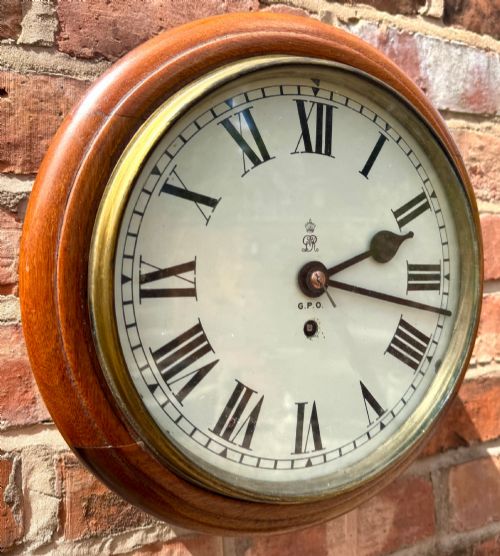
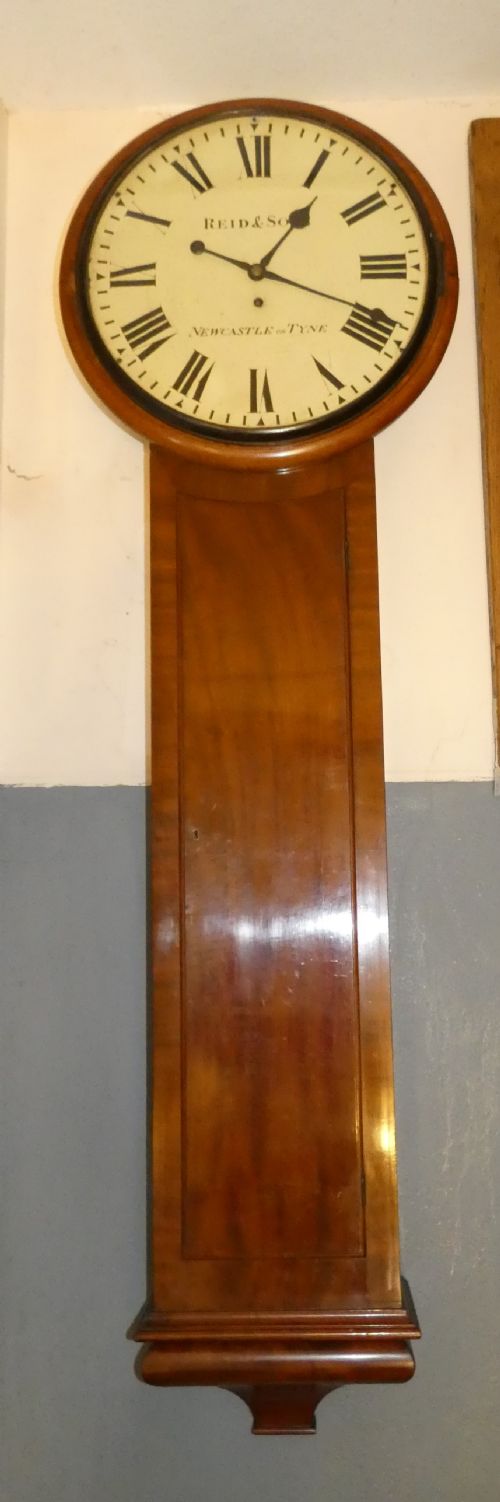
Victorian examples and early twentieth-century pieces dominate the selection, often bearing company initials or station names on the dial. The round case format allows the mechanism to sit flush against the wall while keeping the face entirely unobstructed.
How they were made
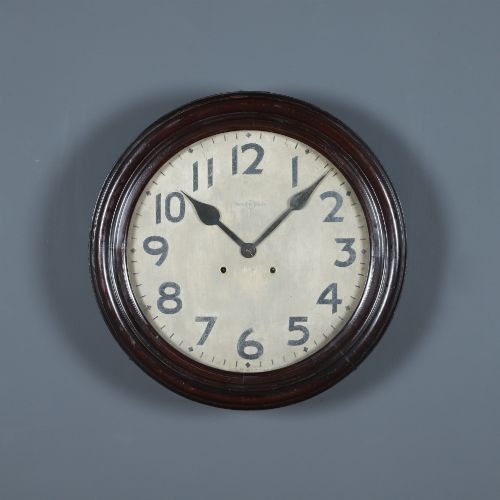
Cases are predominantly constructed from timber such as mahogany and oak, turned or joined into solid round frames with hinged bezels for glass protection. Bakelite and iron appear in later twentieth-century iterations as manufacturing methods shifted towards industrial plastics and metals.
Mechanical movements rely on fusee or eight-day systems to maintain even tension and accurate timekeeping. Brass components within the movement gear train work alongside steel springs and weights to drive the hands reliably.
Circular Railway Clock Retail Price Guide 2026
Typical asking prices for circular railway clock among the pieces listed under this phrase on Sellingantiques today, from the lower quarter to the upper quarter. They describe what is for sale here now, not the wider market.
Listings feature timber cases in mahogany and oak, alongside later Bakelite and iron variants from the 1920s and 1930s.
What varies in quality
The refinement of the movement distinguishes standard utility pieces from high-grade station instruments. Fusee movements offering consistent power delivery represent superior craftsmanship compared to simpler timepieces.
Case construction and dial preservation define overall desirability. Solid timber framing with crisp lettering on the painted dial face indicates a higher standard of original manufacture.
Smith·Camerer Cuss & Co·John Walker·Thomas Gibbs·Anglo Swiss Watch Co
The Circular Railway Clock Glossary
- Fusee
- A conical pulley used in clock movements to maintain even force on the gear train as the mainspring unwinds. This mechanism ensures steady timekeeping across the duration of the wind.
- Dial
- The face of the clock where the numerals and minutes are displayed. Railway examples feature bold black numbers for rapid reading from a distance.
- Bezel
- The brass or wooden ring that holds the glass protecting the clock face. It typically swings open on a hinge to allow hand-setting and winding.
- Timepiece
- A clock that indicates the time without striking or chiming on the hour. Many railway and office wall clocks follow this simpler mechanical format.
Circular Railway Clock: Frequently Asked Questions
Where were these clocks used?
These clocks hung in railway stations, signal boxes, platform offices, and administrative rooms to coordinate train movements and staff schedules.
Their prominent round faces ensured that stationmasters and passengers could check the time at a glance from across a busy concourse.
How do I wind a fusee clock?
A fusee clock requires a specialised winding key inserted into the dial hole to tension the mainspring via the fusee cone. Care must be taken not to overwind the mechanism.
Most traditional eight-day models need attention roughly once a week to maintain continuous operation.
Why do some dials show railway initials?
Railway companies commissioned clocks bearing their specific initials or station names to maintain standardised time across their networks. These markings often denote the specific operating region or terminus.
Over time, these original inscriptions provide a direct link to the clock's operational history.
How do I hang a heavy wall clock?
A heavy mahogany or oak wall clock requires secure fixing directly into a wall stud or masonry using appropriate wall anchors. The weight of the timber case and internal movement demands a robust mounting point.
Ensuring the case hangs level prevents the pendulum or fusee mechanism from binding and stopping.