
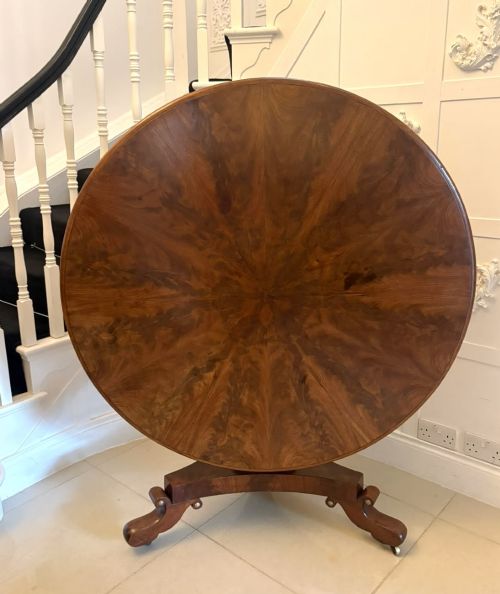
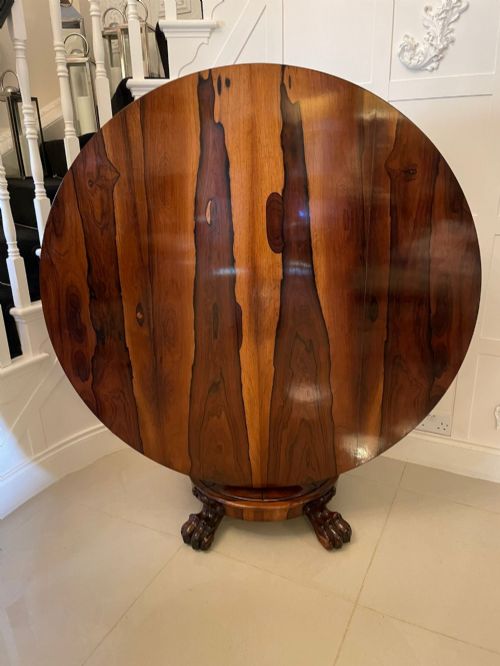


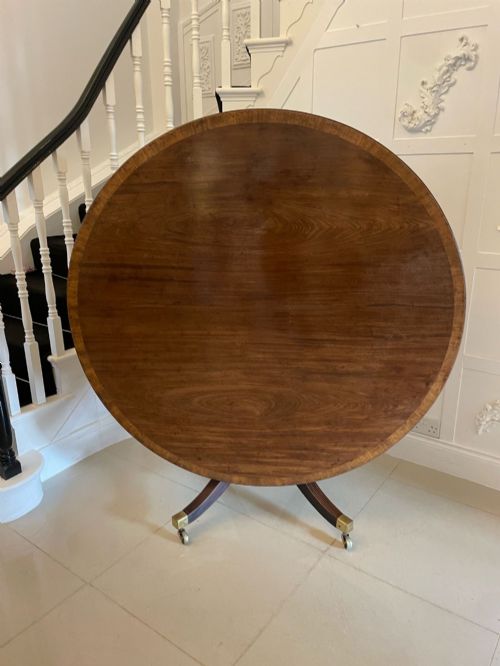
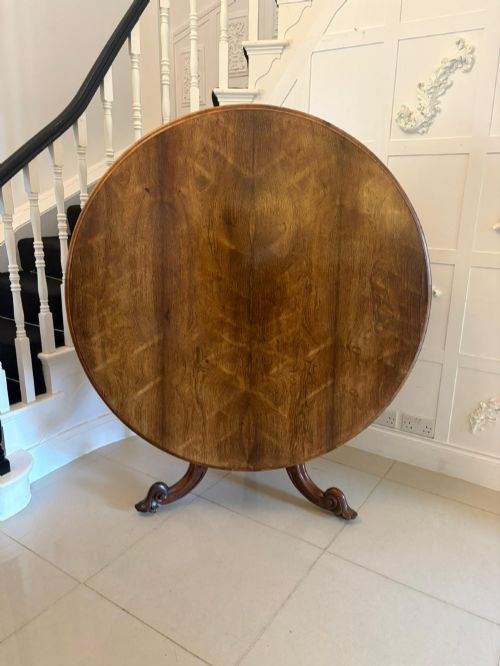
Circular Pedestal Dining Table
A circular pedestal dining table brings people together around a single central pillar, offering flexible seating without awkward table legs in the way.
Circular Pedestal Dining Table
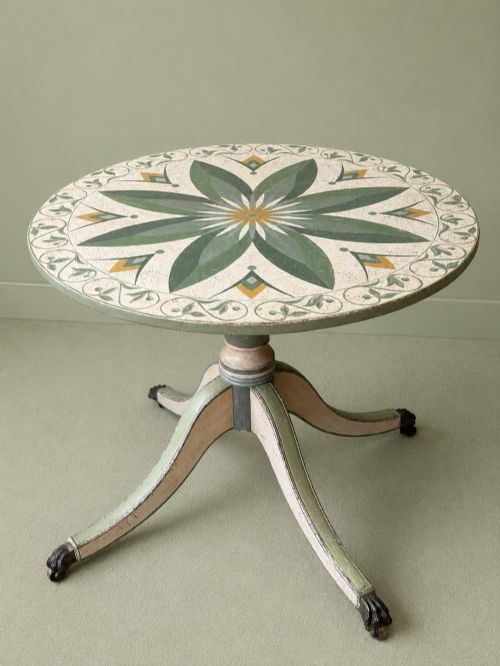
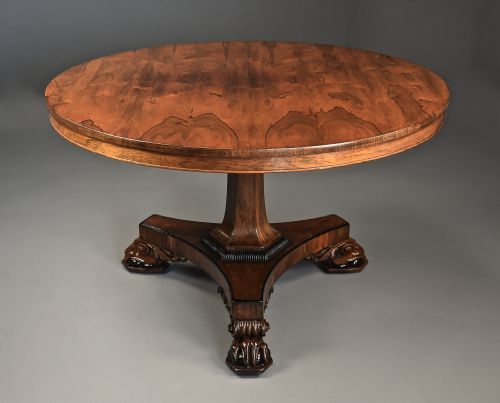
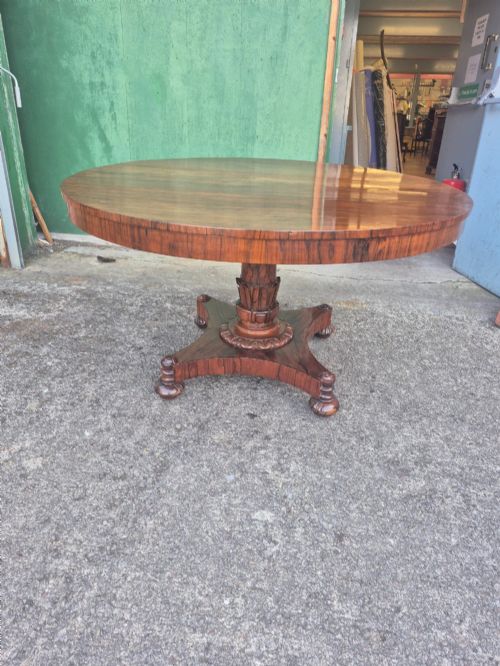
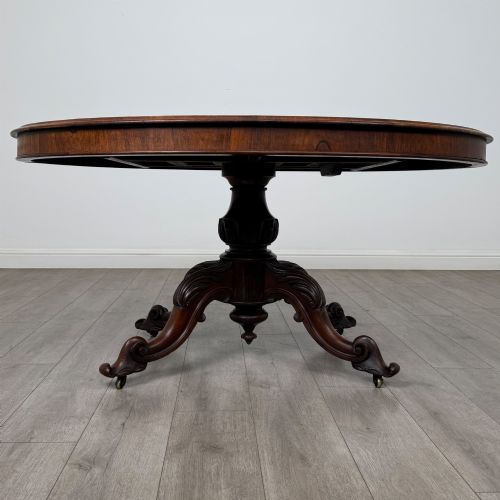
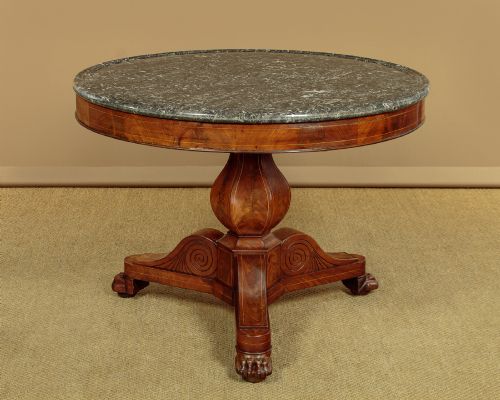
A circular pedestal dining table stands on a single central support, leaving the perimeter entirely free of obstructing legs. When searching this phrase, buyers encounter examples primarily from the nineteenth century, including the Regency, William IV, and Victorian periods.
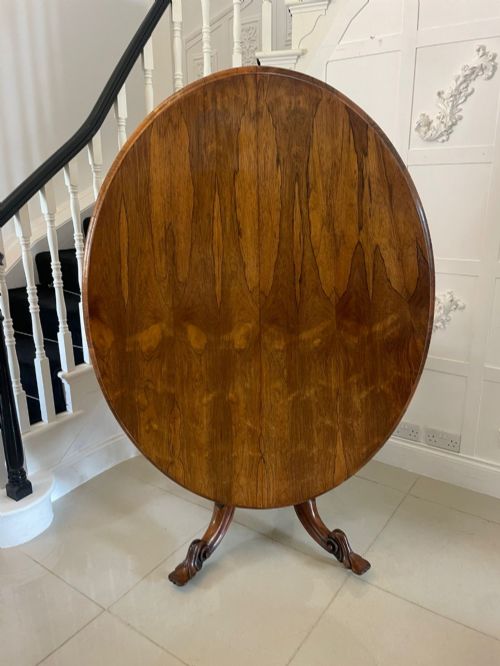
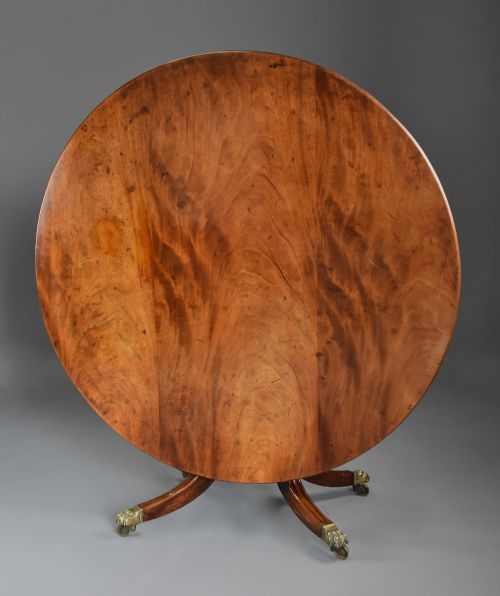
The selections span grand six and eight-seater dining models down to smaller breakfast tables, centre tables, and occasional pieces. Mahogany and rosewood dominate the listings, frequently accompanied by walnut, burr walnut, and oak.
Many of these tables feature tilt-top or snap-top mechanisms designed to tip the surface vertically when not in use, allowing the furniture to be pushed against a wall to save floor space.
Materials and Construction
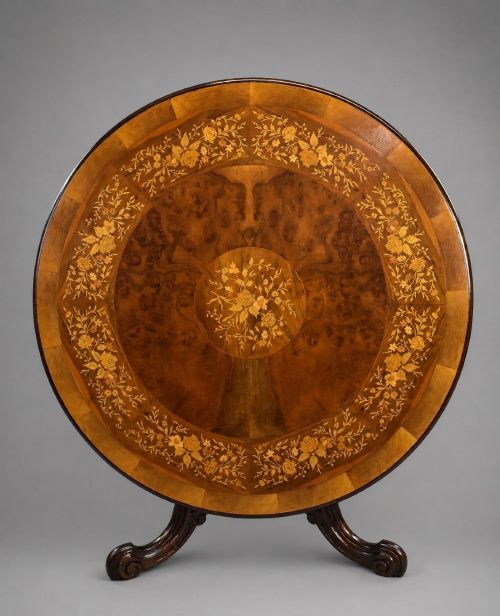
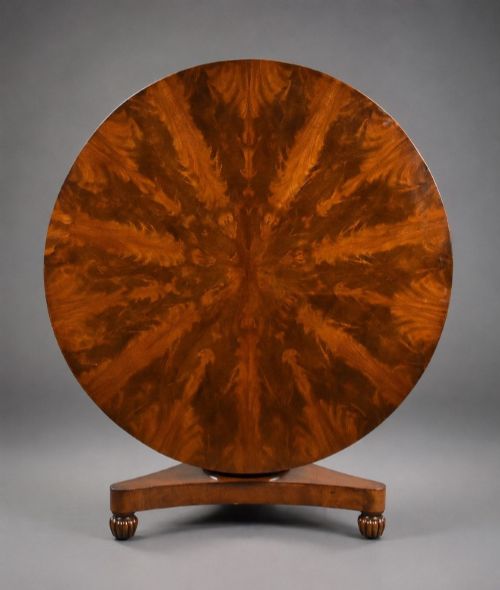
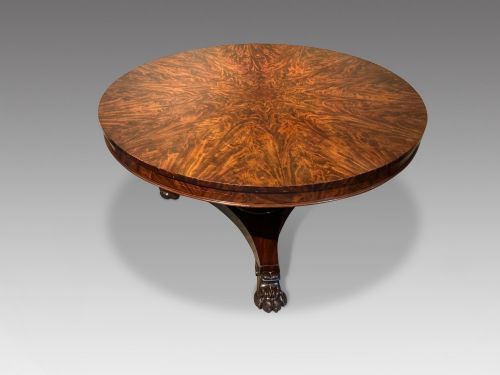
Cabinet makers built these tables using dense timbers like mahogany, rosewood, and walnut, often applying finely figured veneers such as flame mahogany or burr walnut to the main surface to create striking grain patterns.
The central pillar frequently rests upon a triform or circular base, sometimes fitted with brass castors to ease movement across a room.
Expanding versions incorporate internal wind-out mechanisms concealed beneath the circular top to accommodate additional leaves for larger gatherings.
Some nineteenth-century tables tip up so sharply they double as impromptu room dividers when not holding tea.
Evaluating Craftsmanship
Quality rests heavily on the choice of timber and the dexterity of the veneer work, where symmetrical grain matching across a segmented top distinguishes finer workshop output from simpler utilitarian pieces.
The rigidity of the central pedestal and the smoothness of any tilt-top or extending mechanism indicate the precision of the original joinery and the durability of the internal framing.
Carved details upon the base, ranging from robust William IV scrolls to delicate Victorian foliate motifs, show the hand of a skilled carver rather than a hurried mould casting.
Peters of Genoa·Holmes Baldock·Gillows·M.Willson
The Circular Pedestal Dining Table Glossary
- Tilt-top
- A hinged tabletop mechanism allowing the surface to rotate and lock vertically for storage or room clearance. This feature appears frequently on nineteenth-century breakfast and centre tables.
- Triform base
- A three-sided pedestal foot assembly providing stable support beneath the central column. These bases often terminate in scroll feet or brass castors.
- Veneer
- A thin slice of decorative wood applied over a secondary timber base to display rich grain patterns. Figured mahogany and burr walnut are common examples.
- Wind-out mechanism
- An internal screw gearing system operated by a crank handle to separate a dining table halves for insertion leaves. It permits a round table to expand securely.
- Gueridon
- A small ornamental stand or table, usually with a round top supported by a central column. Nineteenth-century versions often feature marble tops.
Circular Pedestal Dining Table: Frequently Asked Questions
How do I seat six people comfortably?
A circular top removes corner constraints, allowing chairs to tuck in closely around the perimeter without hitting table legs.
Measuring the diameter helps ensure adequate knee clearance for everyday dining use.
Can these tables be extended for guests?
Some period examples feature concealed wind-out mechanisms that pull apart to accept central extension leaves.
Fixed-top models remain strictly circular, so you must rely entirely on the initial diameter for seating capacity.
What is a tilt-top used for?
A tilting mechanism allows the heavy top to swing vertically against the pedestal base when dining concludes.
This practical nineteenth-century feature enabled homeowners to reclaim valuable floor space in smaller parlours.
How do I distinguish Regency from Victorian examples?
Regency tables tend to show cleaner architectural lines with restrained brass inlay and rosewood or mahogany surfaces.
Victorian pieces frequently display heavier carved scrolling on the pedestal and richer figured veneers like burr walnut.