




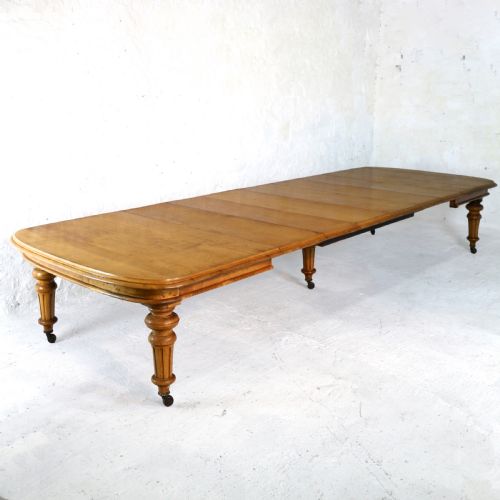
Early Victorian Dining Table
An early victorian dining table brings solid mahogany, rosewood and clever extension mechanisms into the principal room.
Early Victorian Dining Table
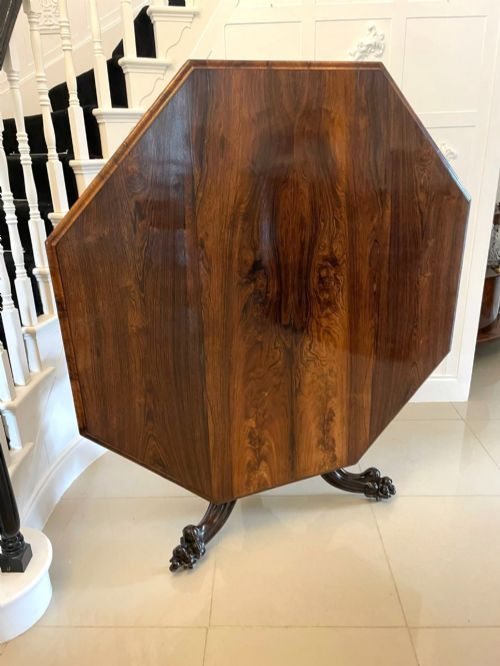
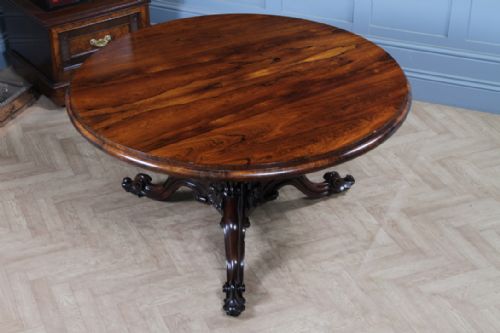
An early victorian dining table is a heavy timber furnishing built to host large gatherings, appearing in forms from solid mahogany wind-out mechanisms to tilt-top pedestal pieces in rosewood and burr walnut.
Buyers meet extension tables with multiple leaves alongside round centre tables and breakfast tables, spanning styles from late regency influence through to robust mid-nineteenth-century cabinet work.
Makers and workshops of the period constructed these boards for principal rooms and country houses, utilising native hardwoods and imported tropical veneers to satisfy domestic display and hospitality.
How they were made
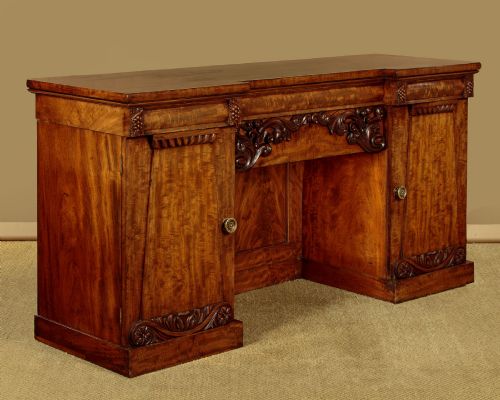
Cabinet makers built these frames primarily in solid mahogany, oak, rosewood and burr walnut, employing brass screw mechanisms for extending wind-out leaves and tilt-top mechanisms for pedestal bases.
Surfaces frequently show flame mahogany veneers, marquetry inlay, boxwood stringing and solid turned pedestals, joined with traditional tenons and supported by brass castors.
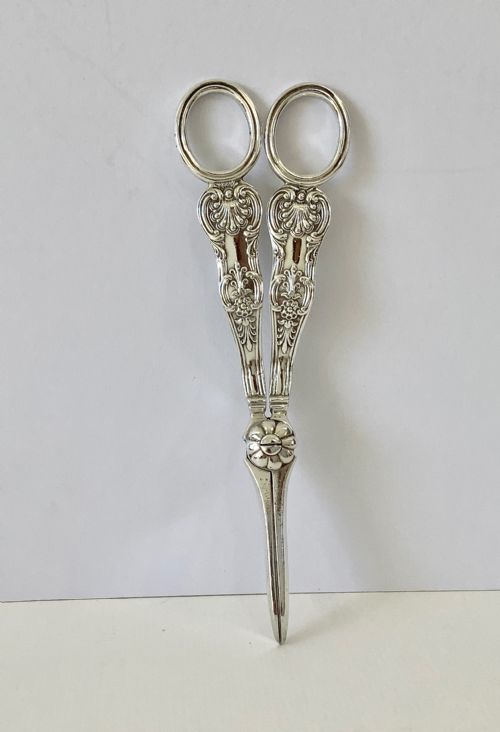
One listed pair of grape scissors carries maker marks from Reilly and Storer, ready for nineteenth-century dessert courses.
What varies in quality
Quality depends upon timber selection, evident in the depth of flame mahogany figures, the richness of rosewood grain and the crispness of carved pedestal details.
The sophistication of the internal mechanism separates standard pieces from grand extending tables, alongside the reputation of recorded workshops like Gillows.
Gillows·Reilly And Storer
The Early Victorian Dining Table Glossary
- Wind-out
- A mechanical system using a handle and threaded screw rod to expand the frame so additional leaves fit into the centre. This clever design allows tables to lengthen smoothly for large dinner parties.
- Tilt-top
- A tabletop hinged to its central pillar so it folds vertically when not in use. This clever space-saving mechanism allowed tables to stand flat against walls in smaller rooms.
- Flame mahogany
- A distinct timber figure created by slicing across the branch bough of the tree. The resulting grain pattern produces dramatic flamelike ripples across the polished surface.
- Drop leaf
- A table top with hinged flaps on either side that lower when space is required. These folding flaps are supported by swing legs.
- Pedestal
- A central column supporting the weight of the tabletop above a tripod or platform base. This single support replaces standard corner legs to give diners extra legroom.
Early Victorian Dining Table: Frequently Asked Questions
How do wind-out tables operate?
These tables use an internal metal screw mechanism connected to a removable handle. Turning the handle separates the two main halves of the frame evenly.
Extra wooden leaves drop into the central gap to increase seating capacity for large dinners.
Where were these tables used?
Craftsmen built these pieces for formal dining rooms in townhouses and country estates. They served families during daily meals and large gatherings alike.
Smaller tilt-top versions stood in parlours as breakfast or centre tables.
How do I care for polished wood?
Keep timber surfaces away from direct sunlight and radiators to prevent the wood veneers from drying and splitting. Regular dusting with a soft dry cloth maintains the polished finish.
Apply traditional beeswax periodically to nourish the mahogany or rosewood grain.
How do I distinguish the period?
Examine the timber choices, turning styles on the legs and construction methods underneath the top. Early pieces often retain regency proportions alongside robust Victorian timber weights.
Look for hand-cut joints and brass hardware typical of mid-nineteenth-century workshops.