
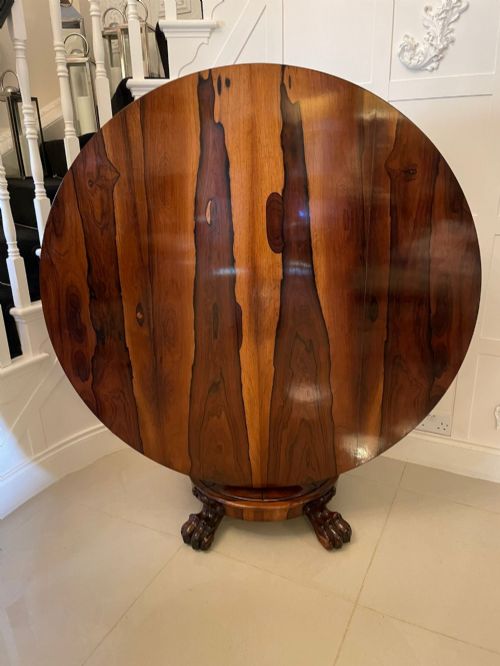


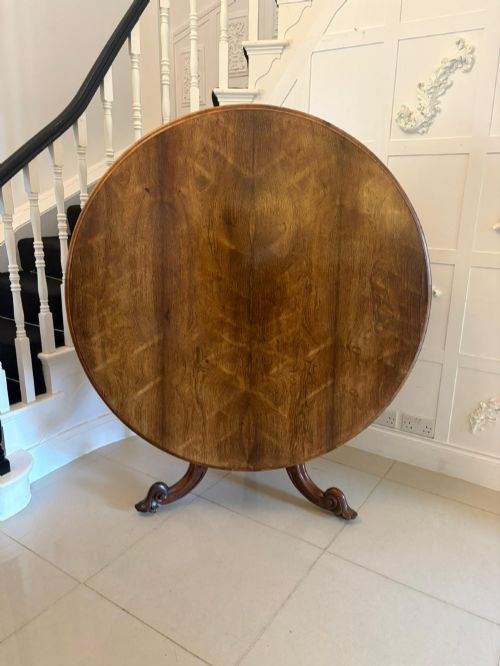
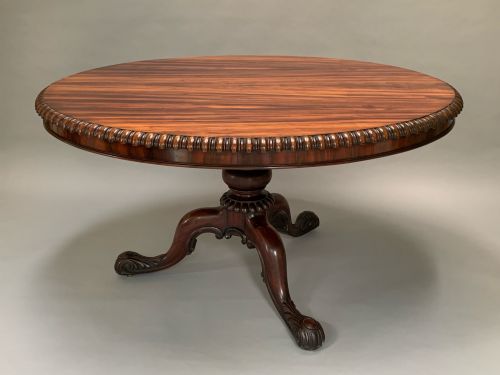
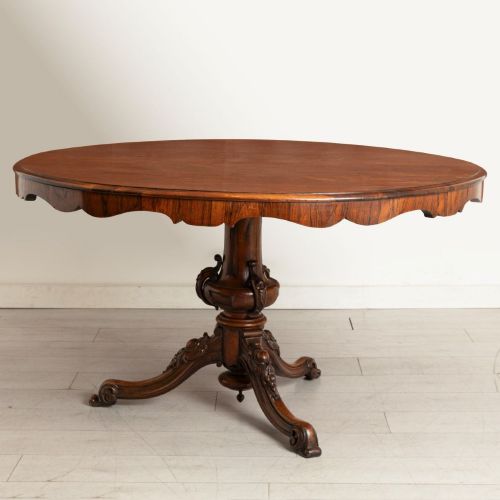
Pedestal Rosewood Breakfast Table
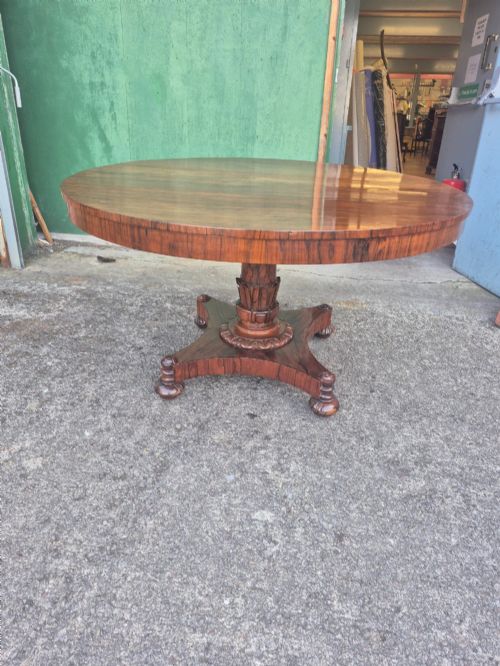
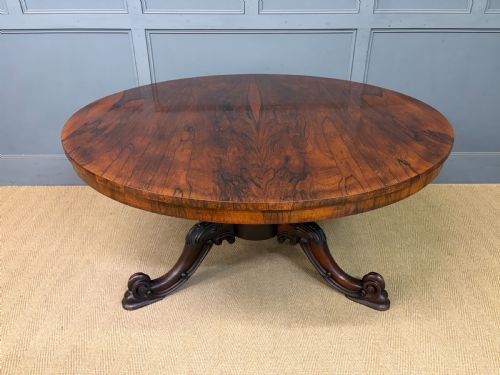
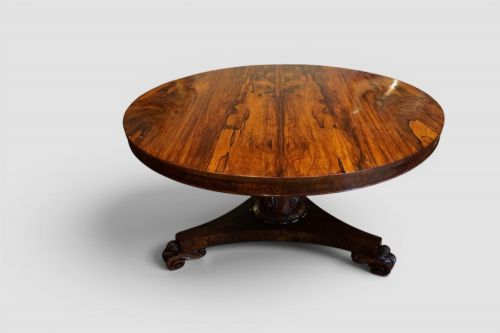
These pedestal rosewood breakfast table examples combine rich timber grains with heavy central supports, built for dining and morning gatherings in nineteenth-century rooms.
Pedestal Rosewood Breakfast Table
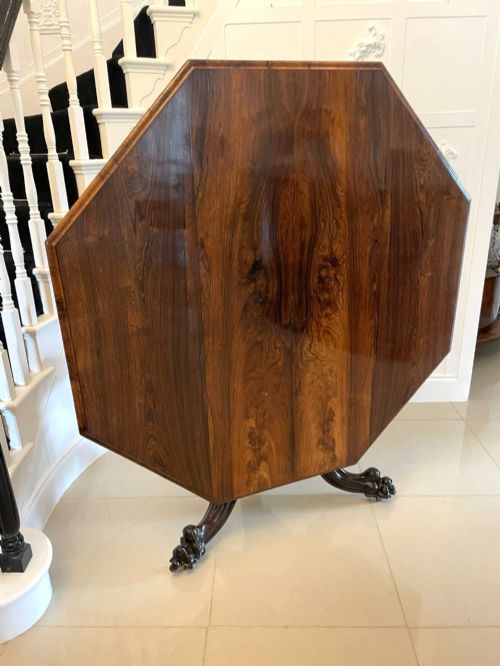
A pedestal rosewood breakfast table stands on a central column rather than four corner legs, allowing chairs to tuck neatly around the perimeter. Most specimens on this page date from the nineteenth century, spanning the Regency, William IV, and Victorian periods.
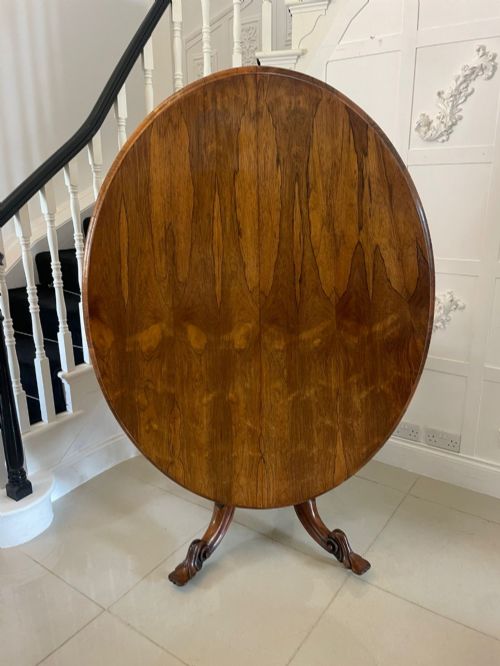
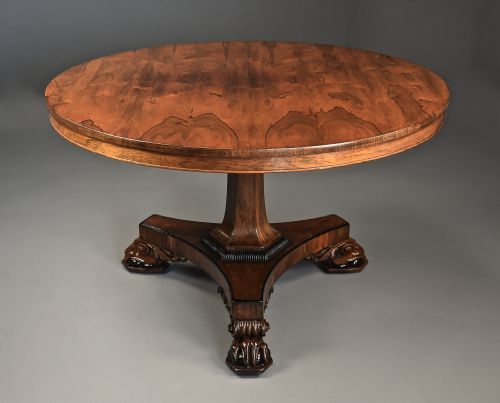
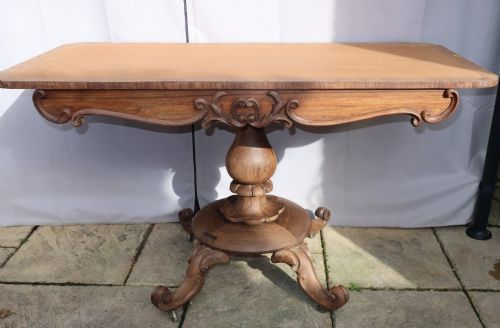
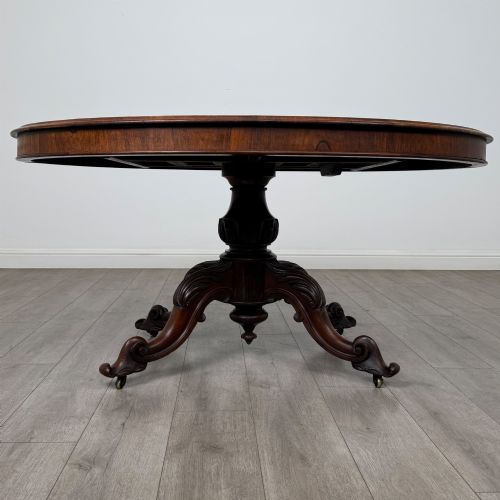
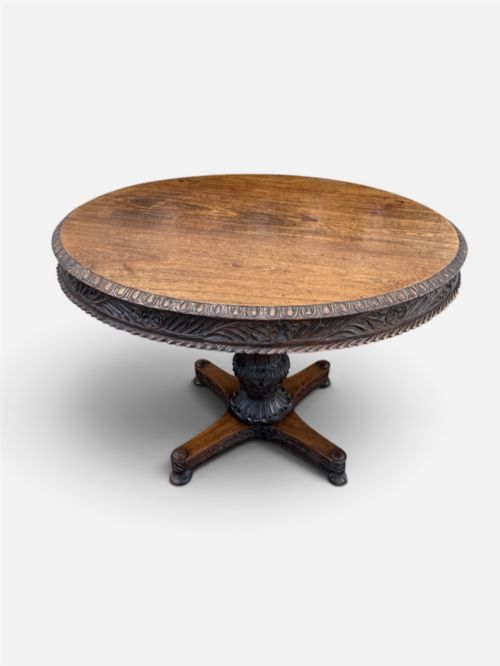
Forms include circular tops with tilt mechanisms, oval shapes, and occasional loo tables designed for multi-purpose use in country houses and town residences. The central pillar frequently rests on a triangular triform base or a platform fitted with carved scroll feet.
Materials and construction methods
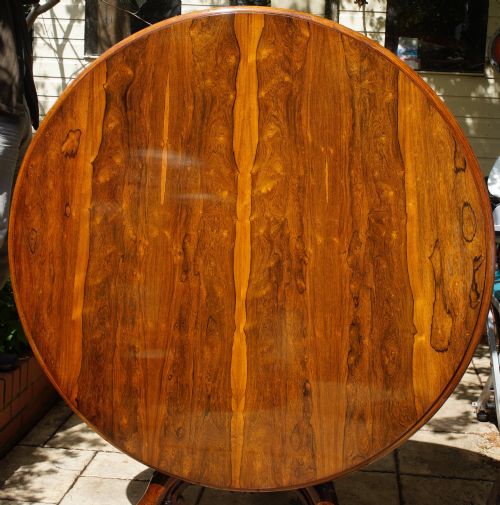
Cabinetmakers utilised dense rosewood veneer laid over secondary timbers, often selecting figured grain patterns to create striking visual movement across the wide circular surfaces. Solid rosewood was reserved for turned columns, carved pedestals, and structural mouldings.
Many examples incorporate tilt-top or snap-top mechanisms of iron and brass, allowing the heavy top to pivot vertically when not in use. Secondary woods such as mahogany appear beneath the surface veneers, whilst occasional pieces utilise exotic alternatives like Albuera wood or Goncalo Alves.
Tilt mechanisms let nineteenth-century hosts stash huge tables against the wall, freeing the room for midnight card games.
Assessing quality and craftsmanship
Quality rests upon the selection of timber figures and the precision with which the rosewood veneer is matched across the expanse of the top. Superior examples display restrained, deep relief carving on the pedestal and base rather than heavy, indistinct ornamentation.
The stability of the central pillar and the smoothness of the tilt mechanism indicate the original joinery standards. A balanced, heavy triform base prevents rocking and shows careful proportioning relative to the expansive top above.
Gillows
The Pedestal Rosewood Breakfast Table Glossary
- Tilt-top table
- A table with a hinged top that pivots to a vertical position for storage against a wall. This mechanism allowed large dining surfaces to clear floor space when rooms served multiple daily functions.
- Triform base
- A three-sided pedestal foot assembly that provides stable weight distribution for a heavy centre column. It is frequently mounted on castors to permit movement.
- Veneer
- A thin layer of figured rosewood applied over a stable secondary timber carcass. Skilled cabinetmakers arranged these slices to create symmetrical grain patterns.
- Loo table
- A large round Victorian table originally utilised for the card game loo. These share identical pedestal forms with standard breakfast tables.
Pedestal Rosewood Breakfast Table: Frequently Asked Questions
What is a pedestal rosewood breakfast table?
It is a nineteenth-century freestanding table supported by a single central column and a heavy base, designed for dining and domestic interiors.
Cabinetmakers built these tables using dense tropical hardwoods, creating generous circular or oval surfaces suitable for multiple diners.
How were these tables used originally?
Households utilised them for morning meals, writing, and general entertaining in principal reception rooms.
Their tilting tops allowed servants to store the heavy pieces compactly against the perimeter walls when floor space was required for other activities.
How do I tell Regency from Victorian examples?
Regency and William IV pieces tend to feature bolder architectural proportions, crisper scrollwork, and rich brass inlay or gilt accents.
Victorian specimens often display heavier, more elaborate floral carving on the pedestal base alongside darker figured timber veneers.
Can I fit standard chairs around them?
The central pedestal design naturally accommodates dining chairs because there are no corner legs obstructing the perimeter.
However, buyers should check the clearance beneath the frieze and the width of the base platform to ensure comfortable legroom.