
Circular Mahogany Tilt Top
A circular mahogany tilt top table offers practical folding design alongside the rich grain of 18th and 19th-century cabinet work.
Circular Mahogany Tilt Top
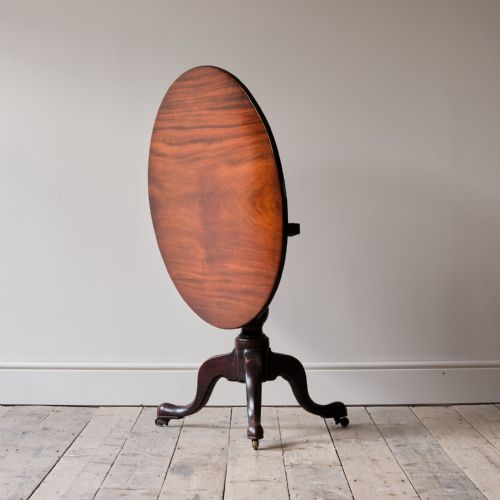
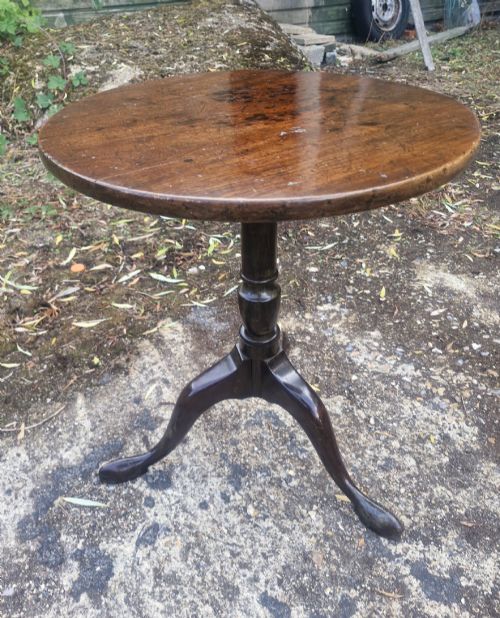
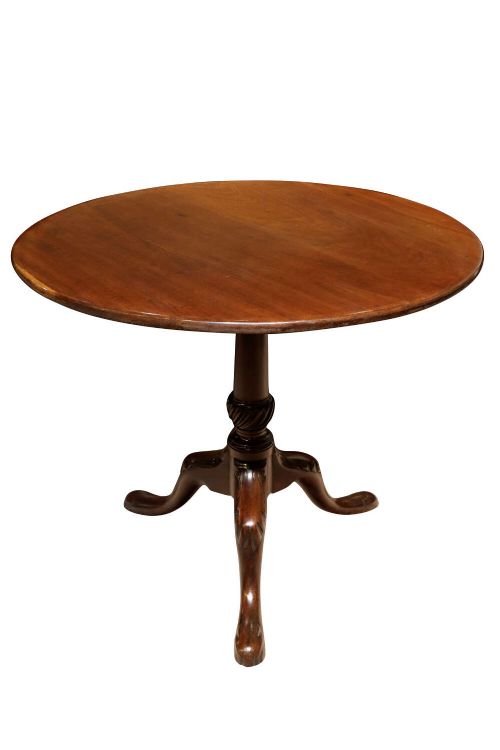
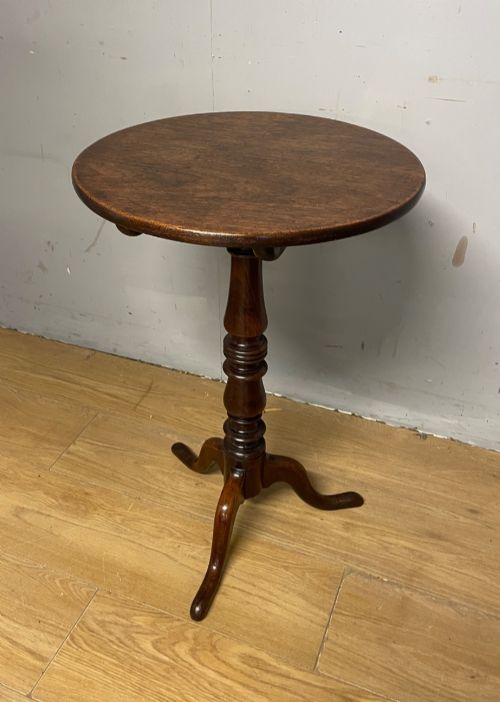
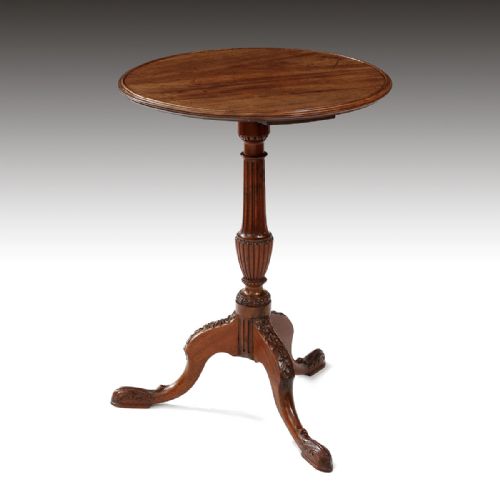
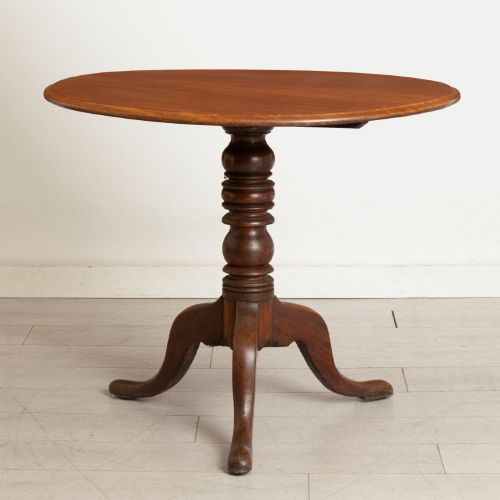
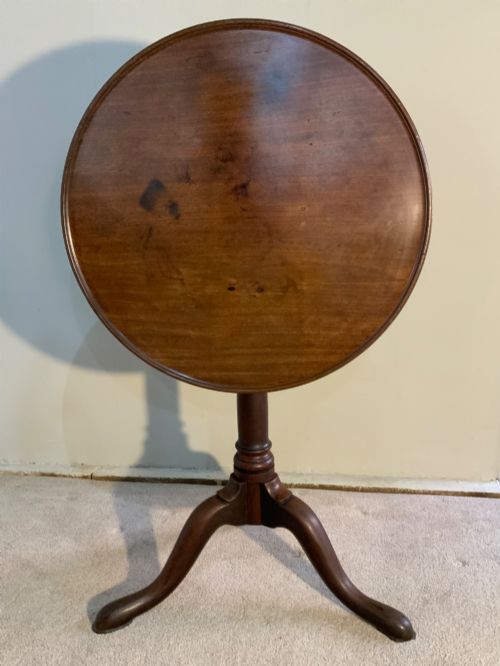
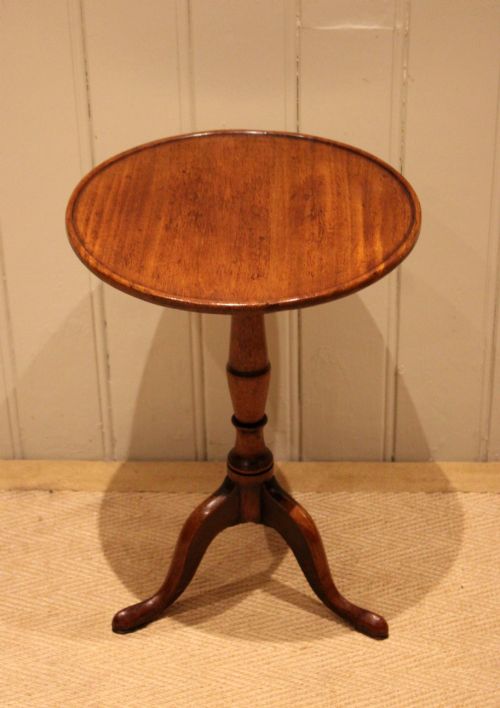
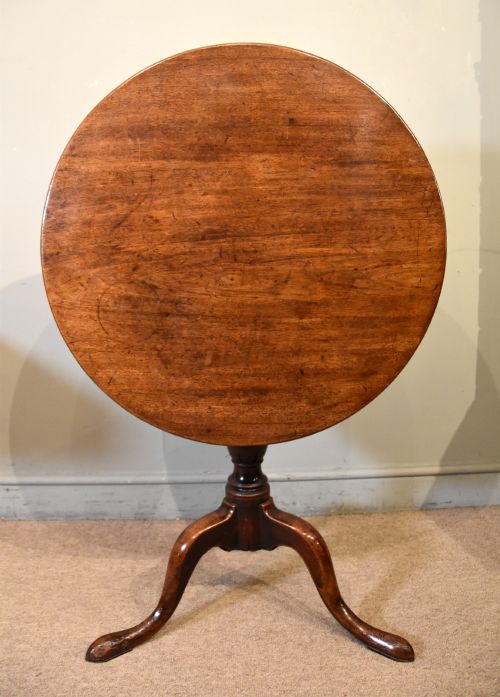
A circular mahogany tilt top table combines a pivoting circular top with a folding mechanism, designed to save space in domestic interiors when not in use. These pieces appear frequently across Georgian, Regency, and Victorian periods, taking forms from small tripod wine tables to large breakfast and dining tables.
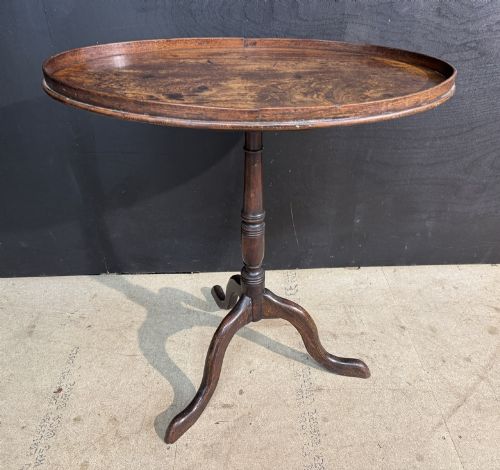
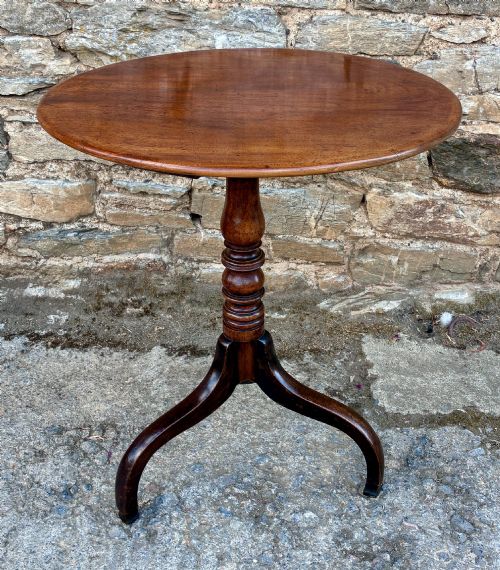
The selection on this page includes occasional tables, side tables, and centre tables alongside dedicated dining and breakfast variants. Buyers encounter simpler tripod bases from the 18th century as well as heavier pedestal designs from the 19th century.
Origins trace primarily through Georgian and Regency workshops, with occasional Victorian examples carrying later stylistic interpretations. Solid timber construction and veneered surfaces both feature prominently across the recorded inventory.
How they were made
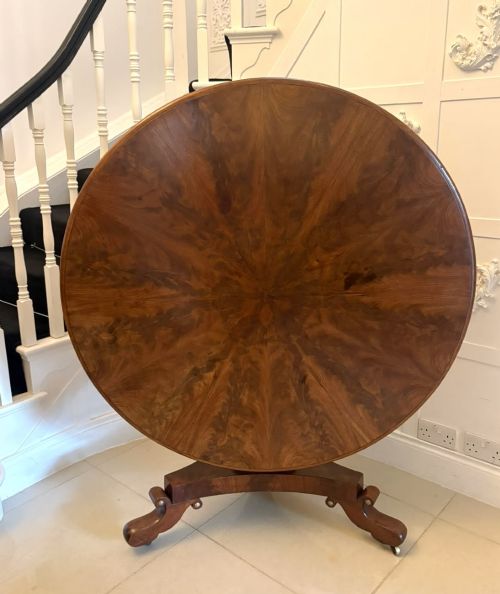
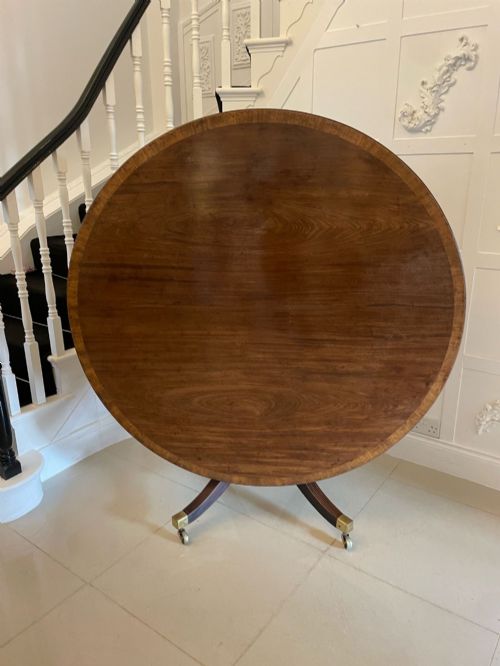
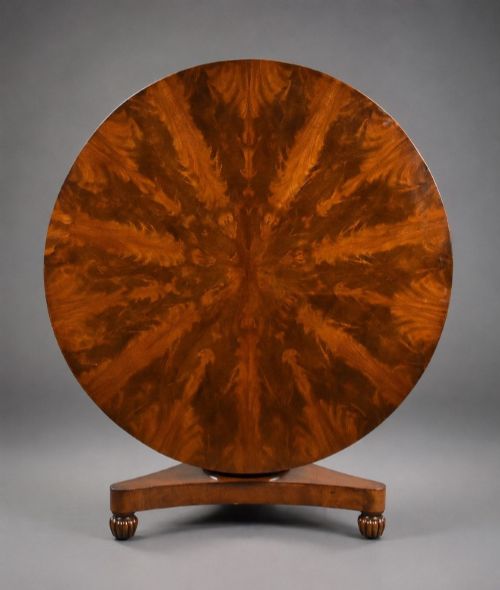
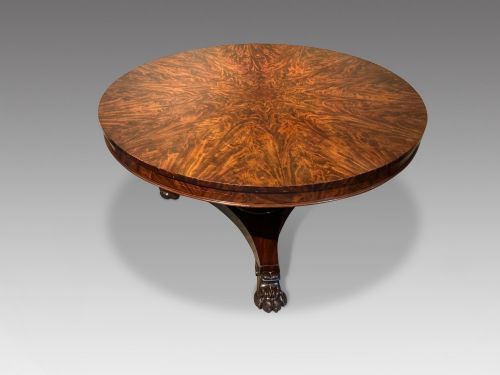
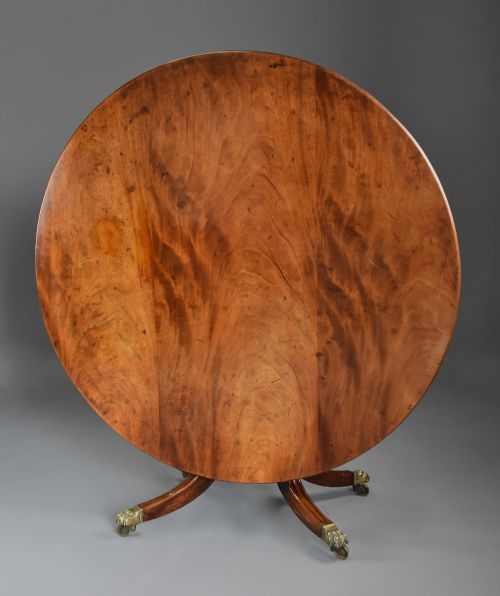
Makers utilised solid mahogany and flame mahogany veneers over secondary timbers, often supported by turned columns and tripod legs fitted with iron or brass castors. The timber was selected for its figure, particularly on breakfast and dining tops where growth patterns formed striking visual displays.
Joinery techniques included birdcage mechanisms and snap-top catches that allowed the circular top to lock securely into a horizontal position or fold flat vertically. Pedestal bases relied on robust central pillars balanced by three or four splayed legs.
Some clever tables include a revolving top so diners could spin the tea service around without reaching across the mahogany.
What varies in quality
The distinction between standard domestic pieces and superior examples rests upon the choice of timber and the precision of the tilting mechanism. Figured mahogany, curl mahogany, and well-matched single-plank tops elevate a piece above simpler stock.
Proportion and stability define the construction standard, particularly in the alignment of the central column and the firm seating of the snap-top catch. Carved details on tripod legs and patination developed through age further distinguish finer cabinet work.
Gillow·Walker-Lancaster·James Winter
The Circular Mahogany Tilt Top Glossary
- Tilt top
- A table mechanism allowing the surface to pivot to a vertical position when not in use. This design saved valuable floor space in historic rooms.
- Birdcage
- A timber framework beneath the tabletop that enables both rotation and tilting actions. It sits between the pillar and the top itself.
- Tripod base
- A support structure featuring three splayed legs radiating from a central column. These provide stability on uneven historic flooring.
- Snap-top
- A spring-loaded catch or latch that secures the table top in the horizontal position. It prevents accidental tilting during everyday use.
- Flame mahogany
- A veneer cut from timber fork joints that produces a distinctive flickering flame pattern. Cabinet makers reserved this for prominent surfaces.
Circular Mahogany Tilt Top: Frequently Asked Questions
How did people use tilt top tables?
These tables served multiple functions in historic homes, acting as dining surfaces, tea tables, or wine tables during the evening. When the meal or gathering ended, the top tilted vertically so the table could rest flat against a wall.
This space-saving arrangement allowed larger rooms to remain flexible for other domestic activities throughout the day.
What is a birdcage mechanism?
A birdcage is a small wooden cage structure fitted beneath the circular top that connects the surface to the central pillar. It allows the table top to both rotate horizontally and tilt vertically.
This assembly represents a traditional method of construction found on many Georgian examples.
How do I tell a wine table from a breakfast table?
Wine tables are generally smaller tripod pieces designed to hold a single bottle and glasses beside a chair. Breakfast tables and dining tables feature much larger circular surfaces supported by heavier pedestals or robust tripod bases.
Scale and proportion immediately distinguish the intimate wine table from the larger dining variants.
Can I use a tilt top table daily?
These tables adapt well to modern living as occasional tables, coffee tables, or small dining surfaces. The tilt mechanism remains fully functional on many surviving examples.
Care should be taken with moisture and heat on historic polished mahogany surfaces just as with any antique furniture.