

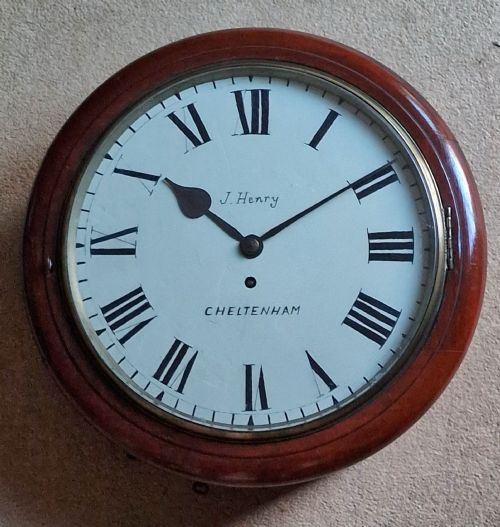
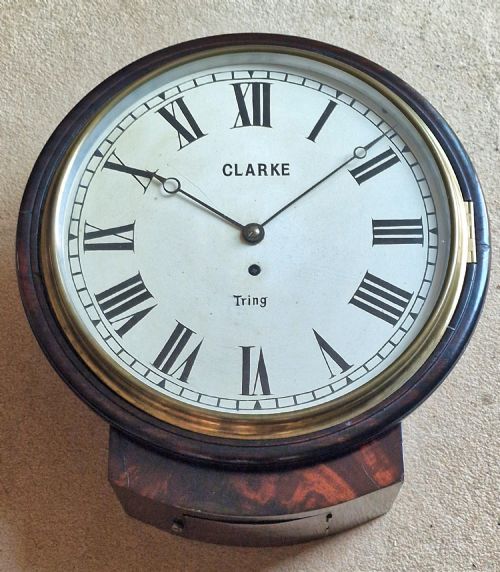
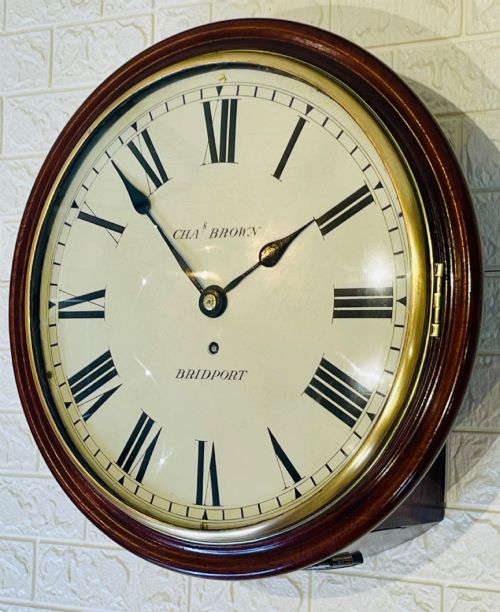
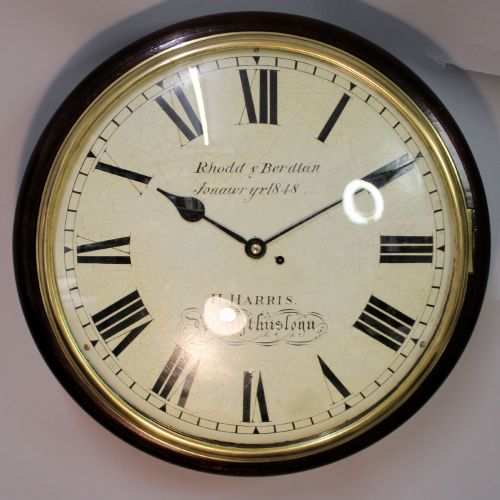
Circular Mahogany Clock
A circular mahogany clock brings reliable timekeeping and classic timber framing into a room, spanning periods from the Georgian era to the twentieth century.
Circular Mahogany Clock
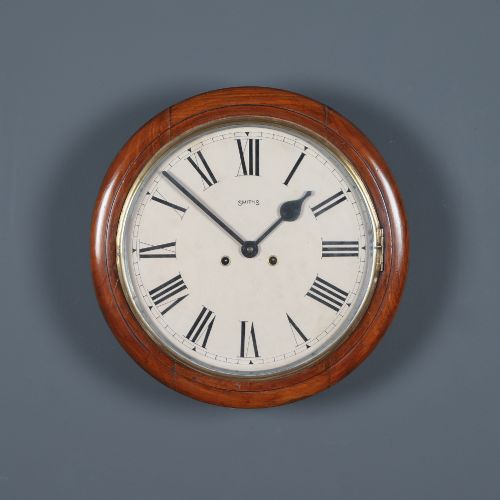
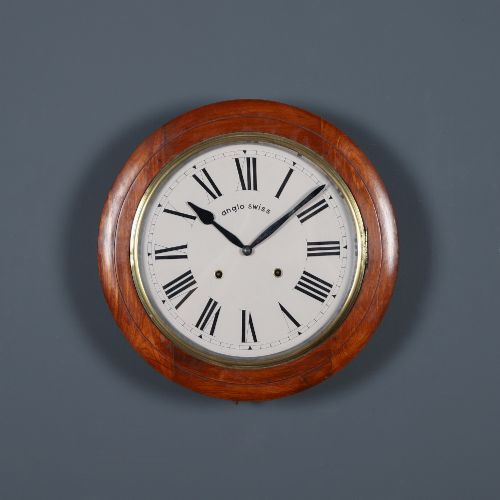
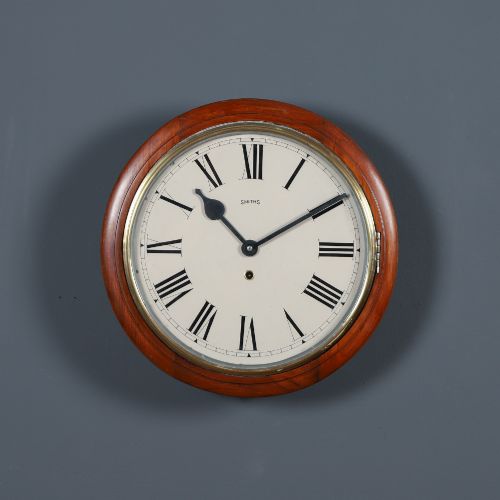
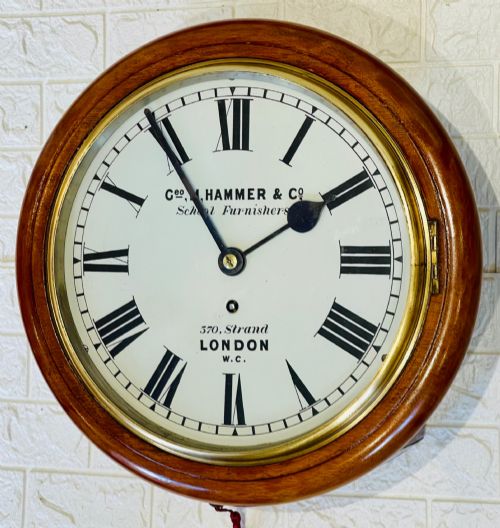
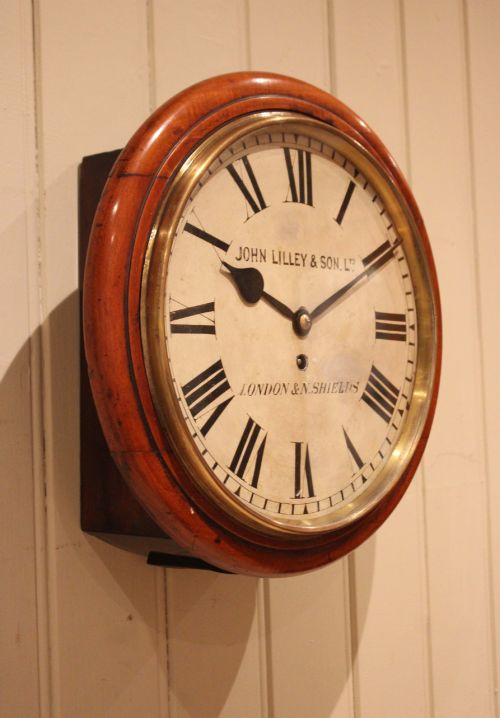
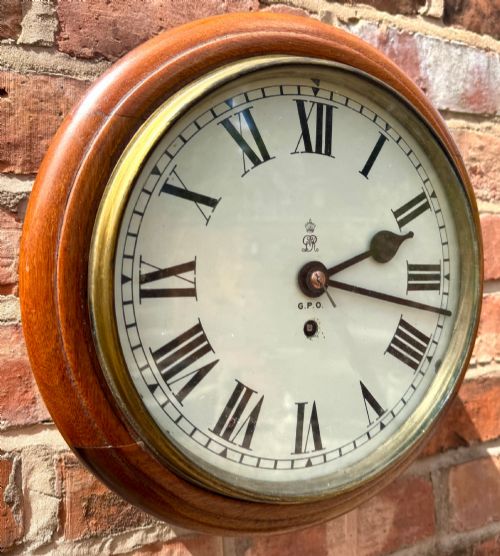
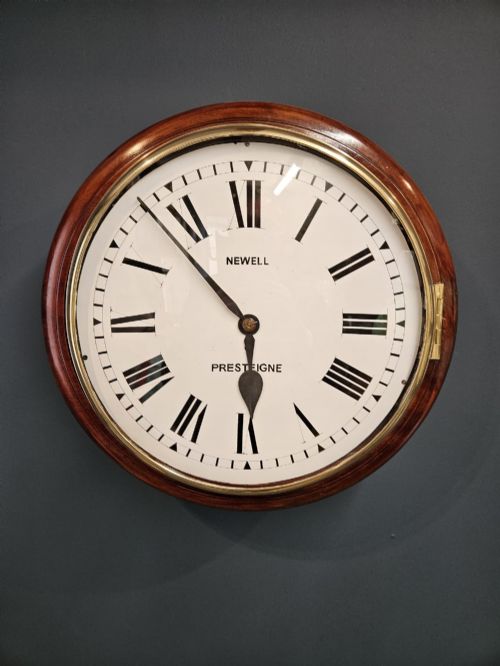
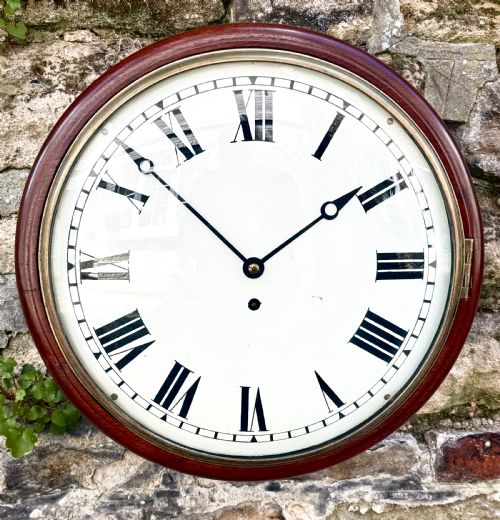
A circular mahogany clock is typically mounted on a wall, featuring a round dial enclosed by timber framing and a protective glass cover. You will frequently encounter examples originating from the Victorian period and the nineteenth century, often associated with railways, postal offices, or public stations.
Many specimens on this page take the form of dial clocks or school clocks, with sizes ranging from compact domestic pieces to large format public timepieces. The timber cases commonly utilise solid mahogany, housing mechanical movements designed for daily reliability in municipal or transport settings.
How they were made
The construction relies heavily on solid mahogany for the circular wall cases, paired with brass and iron components within the mechanical movements. Dial faces are frequently constructed from painted metal or iron, protected by heavy glass panels fitted into brass bezels.
Fusee movements are standard in many of the traditional English examples, providing an even pull from the mainspring to maintain consistent accuracy as the power winds down. Makers also utilised chain fusee systems alongside standard timepieces and striking mechanisms.
Circular Mahogany Clock Retail Price Guide 2026
Typical asking prices for circular mahogany clock among the pieces listed under this phrase on Sellingantiques today, from the lower quarter to the upper quarter. They describe what is for sale here now, not the wider market.
Listings feature dial clocks spanning the Georgian, Victorian, and Edwardian periods, constructed in mahogany, brass, and painted iron.
What varies in quality
The refinement of the movement distinguishes standard utility timepieces from exceptional work, particularly seen in the crisp execution of fusee mechanisms and signed brass backplates. Makers who supplied railway companies and official postal networks produced robust movements built for heavy daily service.
Cabinetwork quality shows in the depth and grain of the mahogany cases, alongside the legibility and preservation of the painted metal dials. Original brass bezels, matching hands, and untouched dial signatures add significantly to the integrity of an individual piece.
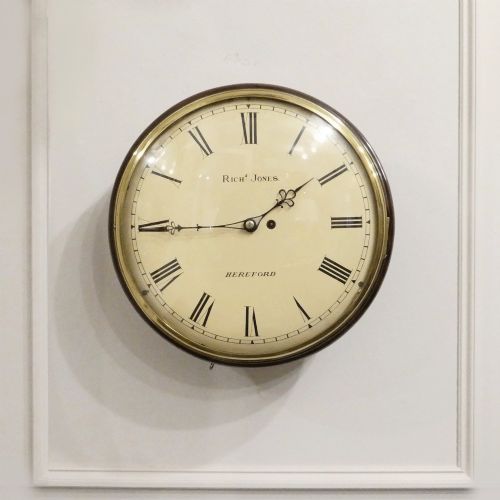
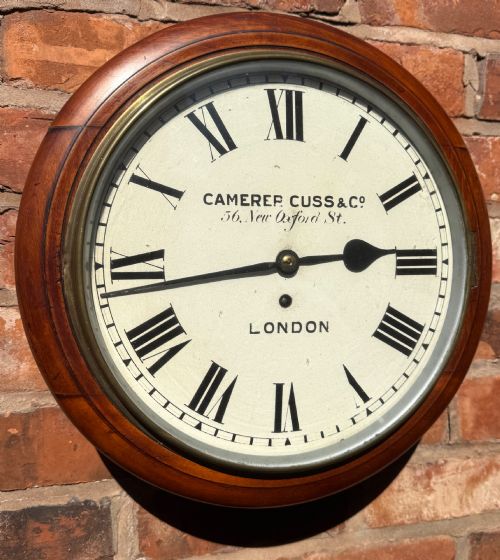
Richard Jones of Hereford·Camerer Cuss and Co London·Henry Harris of Monythusloyn·Thomas Hedge of Colchester·John Walker London·Francis Perigal London
The Circular Mahogany Clock Glossary
- Fusee
- A conical pulley used in clock movements to equalise the torque of the mainspring as it unwinds. This mechanism ensures consistent force is delivered to the gear train for greater accuracy.
- Dial clock
- A wall-mounted timepiece featuring a prominent circular face and a compact wooden trunk enclosing the movement. These were widely used in offices, railway stations, and schools.
- Bezel
- The brass or metal ring that holds the glass protecting the clock face. It often opens on a hinge to allow access for winding and hand adjustment.
- Timepiece
- A clock that indicates the time without any striking or chiming mechanism. It relies purely on a gear train dedicated to motion and escapement.
Circular Mahogany Clock: Frequently Asked Questions
How do I wind a fusee wall clock?
You insert the winding key into the small aperture on the dial face and turn it gently clockwise until the mechanism comes to a stop. Take care not to overwind the mainspring.
Most chain fusee movements require weekly attention to maintain accurate timekeeping. Ensure the pendulum is securely hung before setting the hands forward.
Where were railway dial clocks used?
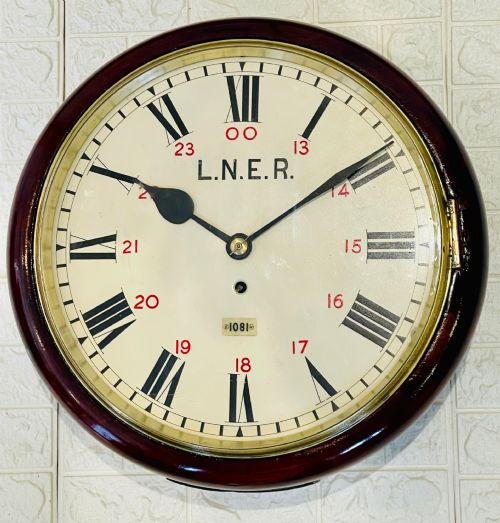
Railway companies placed these timepieces in booking halls, platform offices, and signal boxes to keep staff and passengers coordinated. Names such as LNER or GWR frequently appear on the dials.
These working environments demanded robust construction, which explains the enduring survival of many nineteenth century examples today.
How can I tell a Georgian clock from a Victorian one?
Georgian examples often feature finer cabinet details, distinct hand-painted dial lettering, and specific maker signatures inscribed directly onto the metal face. Movements from this earlier period frequently utilise verge or early anchor escapements.
Victorian clocks tend towards sturdier utility designs, particularly those destined for railway stations and public offices. The timber bezels and case depths also reflect evolving workshop practices through the nineteenth century.
How do I hang a heavy mahogany wall clock?
You should secure the clock directly into a wall stud or use heavy duty fixings suited to the weight of solid timber and glass. The sturdy wooden backboard usually incorporates designated mounting points for stability.
Ensure the clock hangs completely plumb so the pendulum swings evenly without catching on the case interior. A level tick confirms the correct alignment.