

Circular Mahogany Centre Table
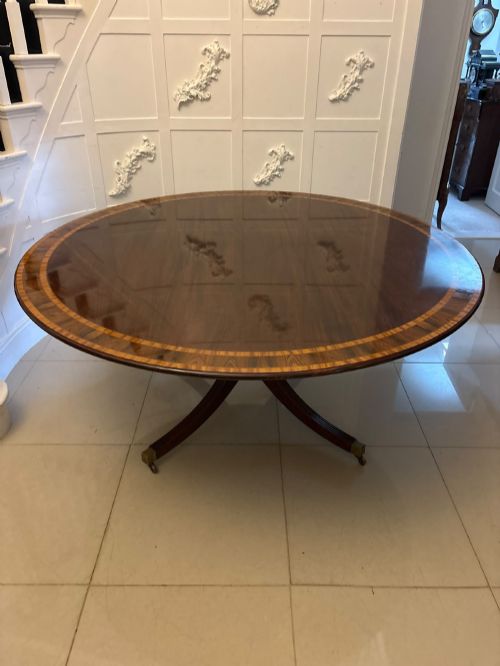
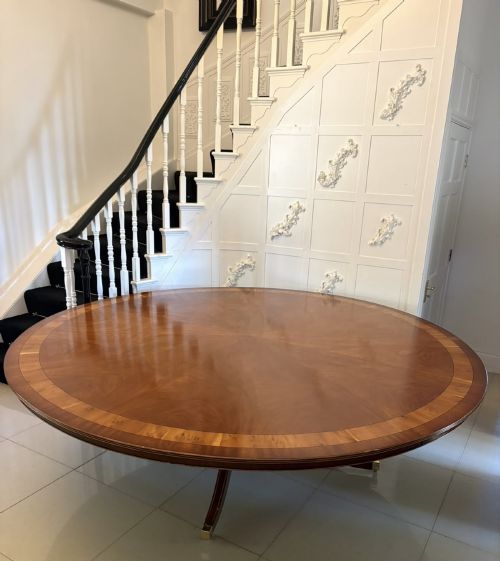
A circular mahogany centre table anchors a room with its balanced proportions, providing a functional surface that sits comfortably in the middle of a space.
Circular Mahogany Centre Table
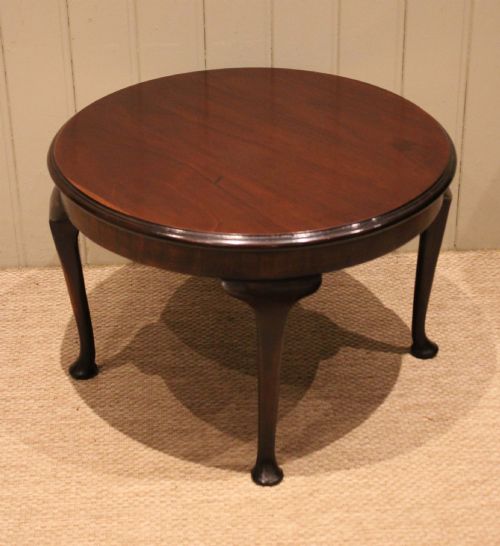
When searching for a circular mahogany centre table, buyers encounter freestanding pedestal pieces designed to sit in the middle of a room rather than against a wall. These tables span several periods, with the 19th century and the Regency era yielding the most robust examples.
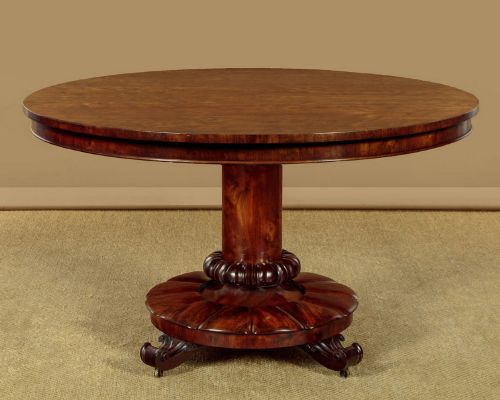
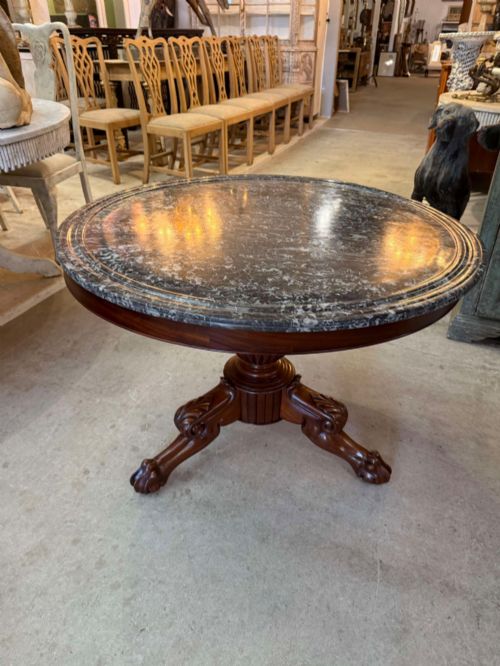
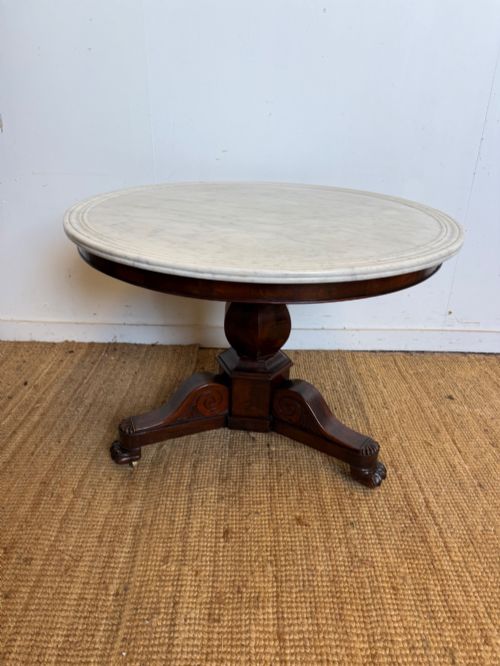
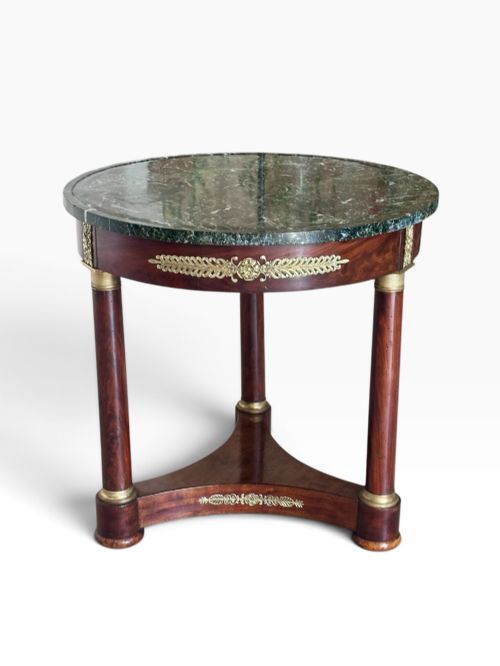
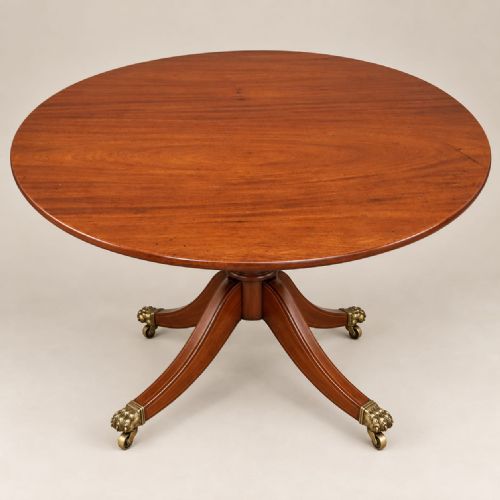
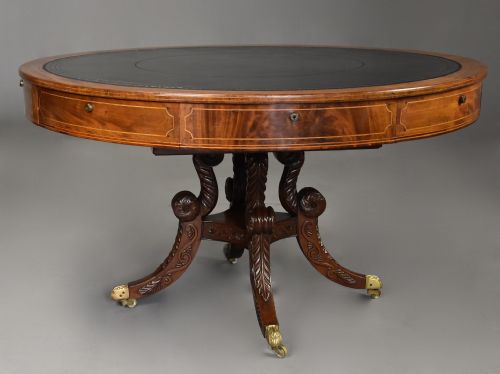
The form encompasses diverse types, including tilt-top dining tables, breakfast tables, drum tables, and French gueridons. Many feature central pillars supported by tripod or pedestal bases, while others adopt heavier pillar configurations suited to larger proportions.
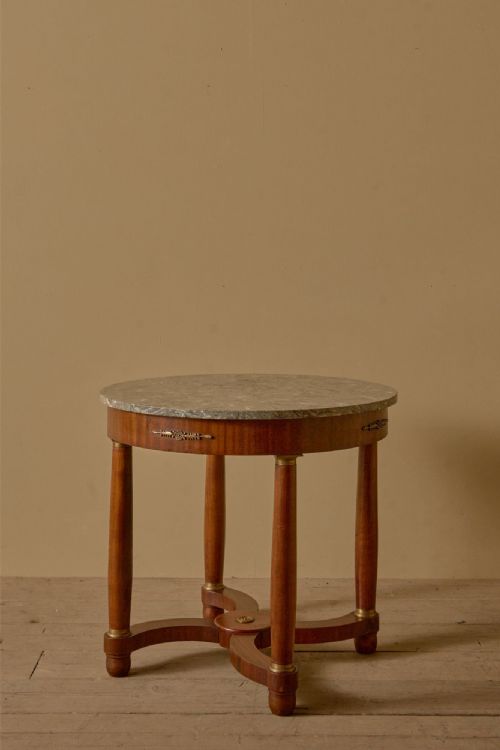
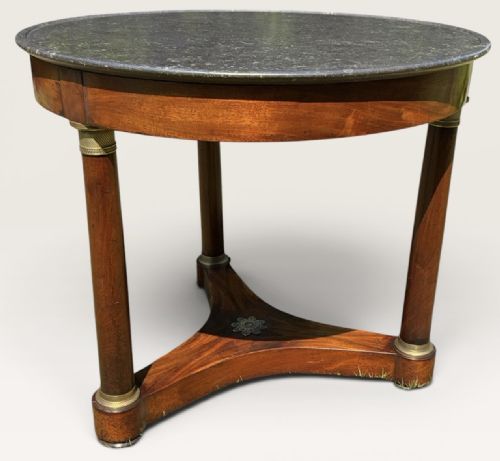
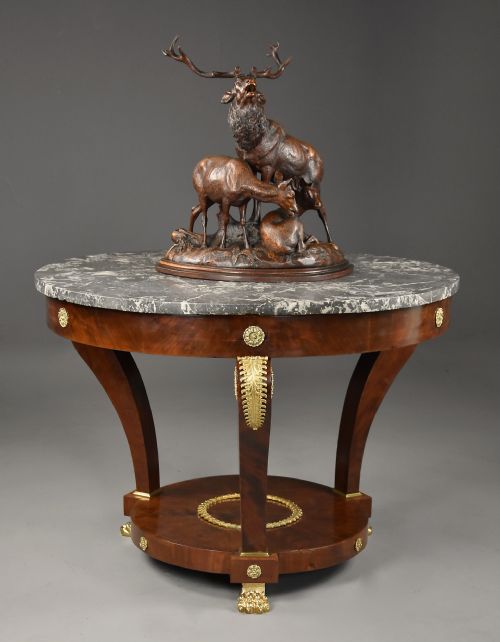
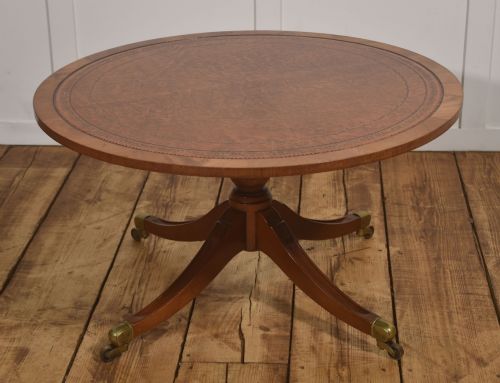
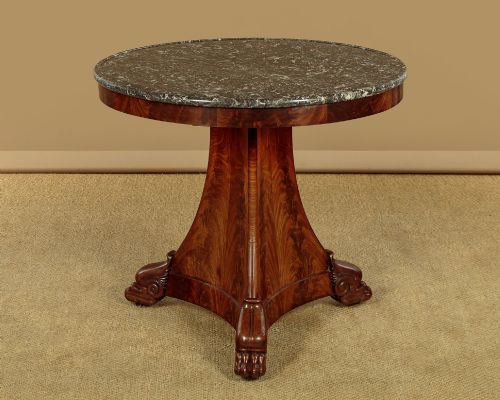
English and French designs dominate the selection, bringing variations in timber grain and structural detailing. Buyers regularly find tables finished with plain timber tops alongside variants fitted with inset leather or marble surfaces.
How they were made
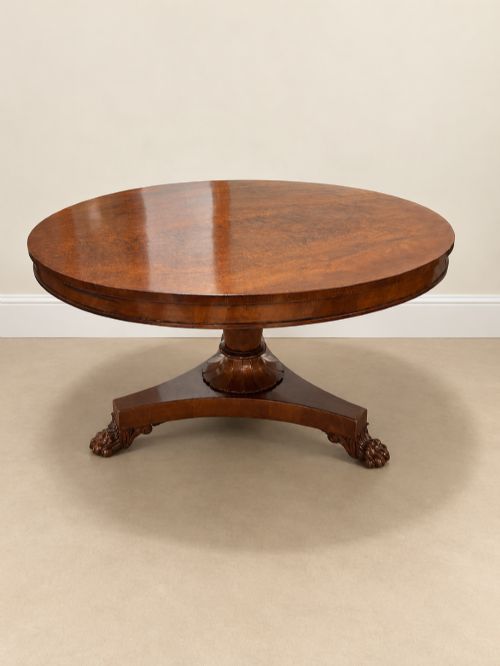
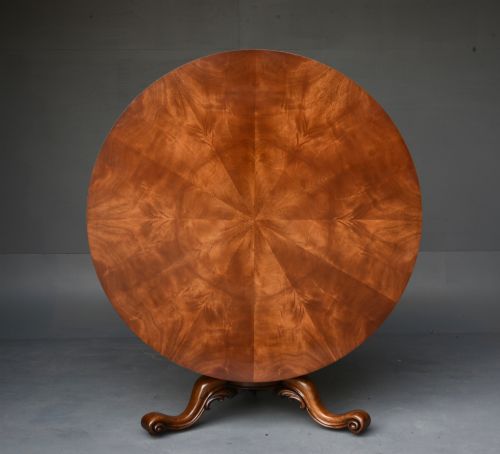
Cabinetmakers utilised solid timber and veneers, frequently selecting flame mahogany or figured mahogany to create striking grain patterns across circular tabletops. Selected pieces incorporate brass mounts, ormolu decoration, and inlaid details to accentuate the primary wood.
Pedestal construction often involves a central column rising from a triform, quadform, or tripod base, sometimes resting on paw feet or castors. Tilt-top mechanisms appear frequently, allowing the tabletop to fold vertically when not in use.
Circular Mahogany Centre Table Retail Price Guide 2026
Typical asking prices for circular mahogany centre table among the pieces listed under this phrase on Sellingantiques today, from the lower quarter to the upper quarter. They describe what is for sale here now, not the wider market.
Materials paired with mahogany across these tables include inset leather, grey and specimen marble, brass accents, and rosewood crossbanding.
What varies in quality
Quality rests significantly on the selection of the timber veneer and the symmetry of its grain pattern across the circular surface. Finer examples display carefully matched flame mahogany sections that radiate evenly from the centre.
Structural stability in the pedestal and base distinguishes higher-grade pieces from standard workshop output. Robust joinery in the pillar connection prevents wobble, ensuring the freestanding table maintains rigidity under daily use.
Gillows·Walker-Lancaster·Linke
The Circular Mahogany Centre Table Glossary
- Gueridon
- A small French freestanding pedestal table. These pieces often feature marble tops and brass galleries.
- Tilt-top
- A tabletop hinged to the pedestal base. This mechanism allows the table to be stored flat against a wall when space is required.
- Flame mahogany
- Timber veneer cut from the branch junction where the grain twists. This creates a distinctive fiery, feather-like pattern across the surface.
- Drum table
- A deep circular library table containing drawers around the perimeter. It typically sits on a single central pillar with a tripod base.
- Triform base
- A three-sided pedestal support base. This configuration provides stable footing for circular tables of various periods.
Circular Mahogany Centre Table: Frequently Asked Questions
Can I use a centre table for dining?
Many circular mahogany tables function effectively for everyday meals, particularly tilt-top breakfast tables and larger pedestal designs. Their freestanding nature allows chairs to fit comfortably around the perimeter.
However, clearance heights vary between earlier Georgian pieces and later Victorian examples, so checking the apron height against chair arms is sensible before daily use.
How do I maintain a mahogany table surface?
Routine upkeep involves dusting with a dry, soft cloth to prevent particulate buildup on the polished timber. Avoid placing hot items or liquids directly onto the wood to protect the French polish or wax finish.
Leather-topped variants require specialised leather balms, while marble-insert tables benefit from periodic wiping with a damp cloth followed by immediate drying.
What is the difference between a gueridon and a centre table?
A gueridon is a specific style of French pedestal table, frequently equipped with a marble top and an open or tripod base. While all gueridons function as centre tables, not all centre tables follow the French gueridon template.
English centre tables often lean towards heavier timber construction, drum configurations, or tilt-top mechanisms without necessarily incorporating stone inserts.
How do I identify a tilt-top mechanism?
Tilt-top tables feature a wooden catch or brass latch underneath the tabletop that locks the surface to the pedestal block. Releasing this catch allows the top to pivot upright on its hinge.
This practical feature was originally designed to clear floor space in grand rooms when the furniture was not in active use.