



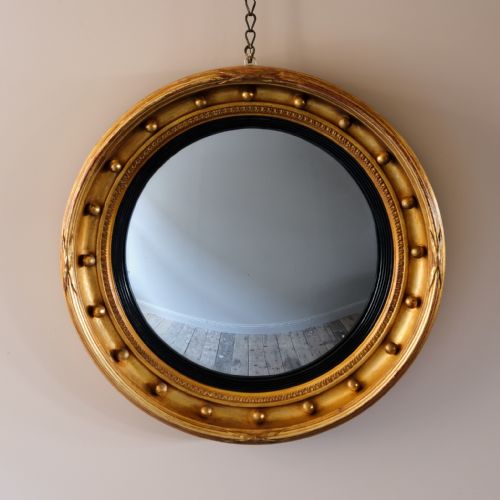


Circular Gilded Frame
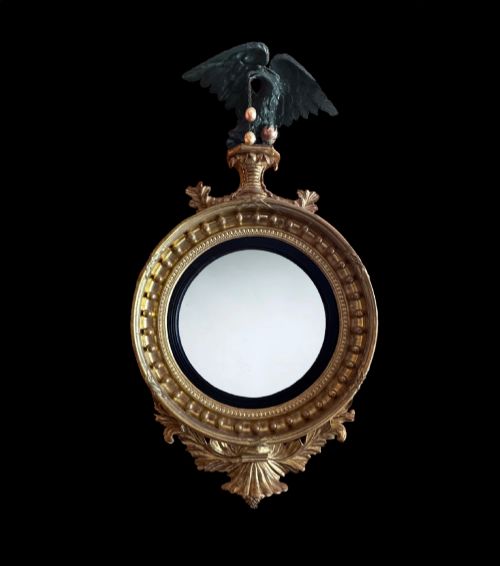
A circular gilded frame brings immediate focus and reflected light to a room, whether housing a deep convex mirror or a tondo oil painting.
Circular Gilded Frame
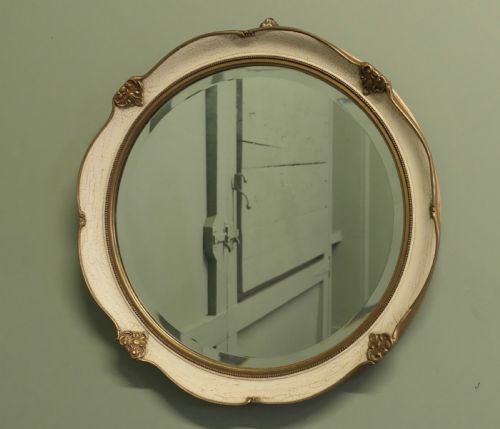
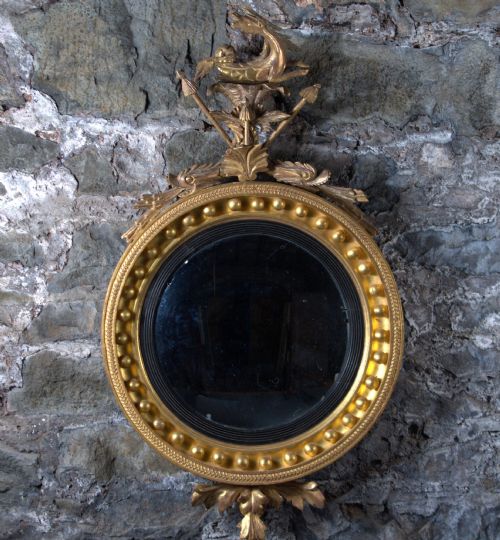
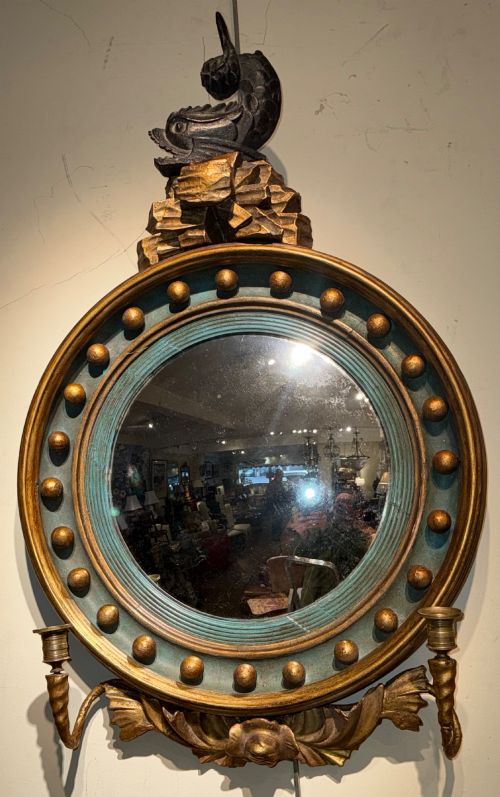
A circular gilded frame most often appears on wall mirrors and convex mirrors dating from the Regency and Victorian periods, along with 19th century tondo landscape paintings and miniature portraits.
Buyers seeking a circular gilded frame encounter pieces ranging from grand scale Regency convex mirrors with ebonised sight lines to smaller Florentine carved wood designs and French Art Deco wall mirrors.
Origins span English, French, and Italian workshops, with Victorian revivals and Edwardian iterations sitting alongside genuine Georgian and Regency examples.
How they were made
Makers shaped these frames from wood, cast iron, or gesso over a timber base, applying gold leaf or water gilding to achieve a luminous metallic surface.
Convex mirror plates required specialised curved glass to distort reflections outward, while oil paintings on board utilised tondo formats to fit circular profiles.
Convex mirrors were historically nicknamed bank mirrors because shopkeepers used their wide-angle view to monitor customers and prevent theft.
What varies in quality
The depth of the carving and the purity of the giltwood or gold leaf application dictate the visual weight and brilliance of the piece.
Original convex glass plates with silvering deterioration show age differently than replaced glass, while hand-carved Florentine gesso work demonstrates superior artistry compared to moulded alternatives.
Coalbrookdale·John Bell·Lady Francis Herbert
The Circular Gilded Frame Glossary
- Convex mirror
- A round mirror with a curved outward glass plate that reflects a wide, distortion-rich view of the interior. These pieces frequently feature decorative eagles or candle sconces.
- Giltwood
- Timber coated with gold leaf or gold paint over a prepared gesso ground. This material defines the luxurious finish of Regency and Florentine frames.
- Tondo
- A Renaissance term for a circular work of art, usually a painting or a relief. On this page, this refers to round oil on board landscapes.
- Gesso
- A plaster-like mixture applied to wood frames to create a smooth surface for gilding and intricate moulding. Skilled artisans carved crisp details into this dried layer.
Circular Gilded Frame: Frequently Asked Questions
How do I hang a heavy convex mirror safely?
Heavy circular giltwood frames require robust wall fixings secured directly into masonry or substantial timber studs. Due to the considerable weight of cast iron or large wood frames, professional installation ensures the security of the piece.
Position the mirror at eye level to capture the best reflected light and spatial depth within the room. Ensure the hanging wire or integrated metal brackets match the substantial mass of the frame.
What is the difference between Regency and Victorian frames?
Regency frames often display bold architectural details, ebonised reeded inner rings, and convex mirror plates designed to expand visual space. Victorian interpretations frequently adopt heavier, more ornate floral motifs or Florentine Rococo scrollwork.
Examining the construction methods and the composition of the gesso helps distinguish between the crisp carving of the early nineteenth century and later revival pieces.
Can I place a circular gilded frame in a hallway?
Hallways benefit enormously from round mirrors because the reflective surface bounces ambient light into darker transitional spaces. Smaller scaled hall mirrors fit narrow walls while maintaining a strong decorative presence.
Pisces from the Georgian and Victorian eras suit traditional entrance halls, adding character and a functional focal point.
How should I clean a antique gilded surface?
Dust gilded wood gently with a soft, dry brush to avoid damaging the delicate gold leaf or flaking the underlying gesso. Moisture can ruin antique water gilding, so liquid cleaners must remain strictly away from the frame.
Glass surfaces tolerate standard glass cleaner applied sparingly to a cloth, ensuring no liquid drips onto the surrounding antique wood or gilt.