
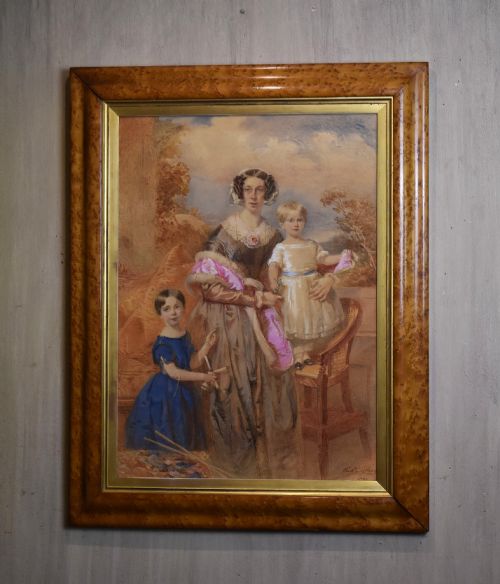


Framed Child Watercolour
A framed child watercolour captures intimate historical moments on paper, bringing 18th-century, Regency and Victorian portraiture into modern rooms.
Framed Child Watercolour
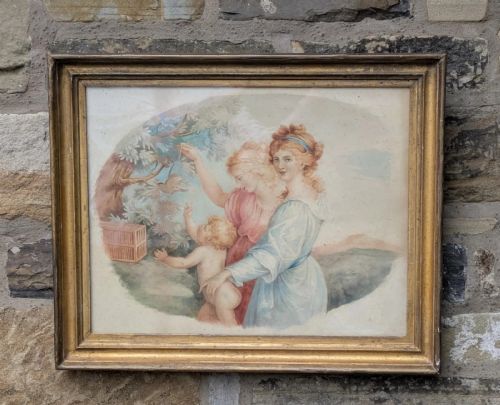
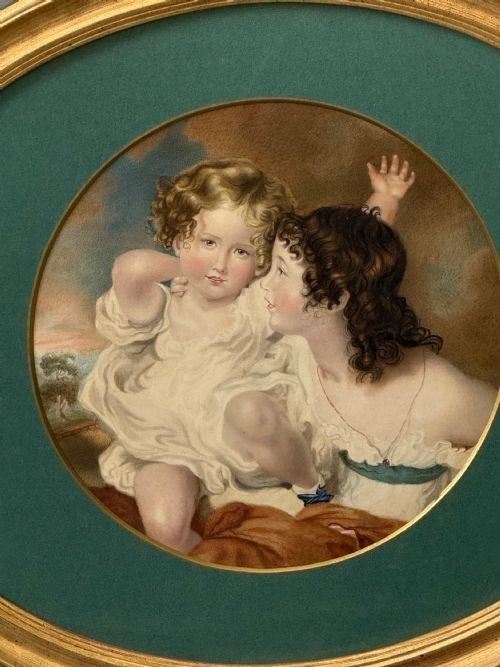
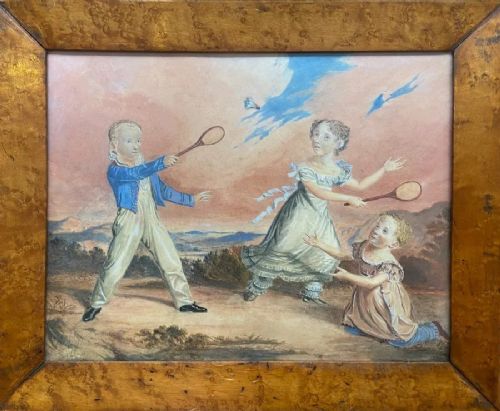
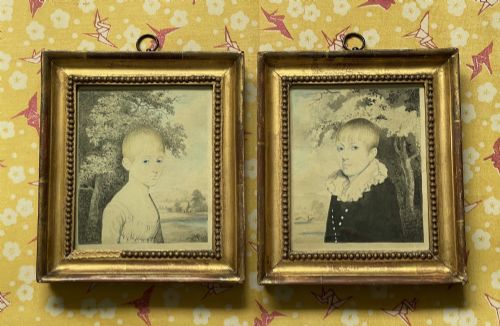
A framed child watercolour typically presents historical portrait miniatures or narrative genre scenes executed on paper. These works capture youngsters at play, within family groups, or as individual studies across Georgian, Regency, and Victorian periods.
Buyers encountering this selection will find portraits ranging from intimate miniature paintings set in period ebonised frames to larger Victorian and Edwardian cottage garden scenes. The subjects span naive family records and accomplished academic works by known artists.
The origin of these pieces stretches from English country schools to Irish and Scottish workshops, often preserving the clothing, toys, and domestic settings of past centuries behind protective glass.
Materials and Techniques
The foundation of these works is handmade paper or card, upon which artists applied fine watercolour pigment, sometimes accompanied by ink or bodycolour. Pigments were brushed in delicate washes to render skin tones and fabrics, relying on the white of the paper for highlights.
Protection and presentation relied on contemporary framing methods using wood, rosewood, or ebonised mouldings, frequently finished with gold leaf or giltwood accents. Glazing with historic glass sealed the fragile pigments away from airborne dust and moisture.
Listings feature works created across three distinct centuries, spanning Georgian, Regency, and Victorian aesthetics.
Variations in Quality
The distinction between standard works and superior examples lies in the precision of the brushwork and the psychological depth of the portrait. Master hands captured expression, gesture, and textile texture with remarkable economy, whereas lesser examples remain stiff or formulaic.
The integrity of the original presentation also determines the standing of a piece. Retaining the period frame, untouched paper surfaces without excessive fading, and legible artist signatures or contemporary inscriptions elevate the historical weight of the painting.
Henry Travis·Frederick Tatham·James Hardy of Bath·Helena Maguire·William Stephen Coleman·James George Bingley·Henry Sykes·William Lucas·Linnie Watt·Arthur Claude Strachan·Henry John Sylvester Stannard·Henry Silkstone Hopwood·John E Bosanquet·Eveline Lance·Charles Edward Wilson·John Pedder·Karl Feiertag
The Framed Child Watercolour Glossary
- Watercolour pigment
- Finely ground colour particles suspended in a water-soluble binder, applied to paper in transparent washes. This medium allows for luminous effects and delicate tonal gradations.
- Giltwood
- Timber, often gessoed and carved, coated with a thin layer of gold leaf. It provides a reflective, ornate border that complements historical portraiture.
- Portrait miniature
- A small-scale painting designed for intimate viewing, often depicting an individual's face with meticulous detail. These were frequently housed in protective cases or small wall frames.
- Ebonised frame
- Wood stained or treated to imitate dense, dark ebony wood. This finish was widely utilised in the 19th century to create a sharp contrast against light-toned watercolours.
- Genre scene
- A painting depicting aspects of everyday life by portraying ordinary people engaged in common activities. These works provide social historians with clear records of domestic customs and play.
Framed Child Watercolour: Frequently Asked Questions
What periods do these watercolours span?
The available selection primarily encompasses works produced from the mid-18th century through the early 20th century. Examples stretch from Georgian and Regency eras into Victorian and Edwardian domestic scenes.
Specific dates on listings indicate either the exact year of execution or the broader stylistic epoch of the painting's origin.
How should I hang these paintings?
Because watercolour pigments are sensitive to bright sunlight, these framed pieces require placement away from direct window glare. Interior walls with ambient, indirect light protect the paper and original framing.
Grouping smaller portrait miniatures together on a single wall creates a balanced display reminiscent of historic domestic arrangements.
Are original frames common?
Many listings retain their period surrounds, including rosewood, ebonised wood, or giltwood mouldings appropriate to the date of the artwork. These frames often show minor age-related wear that confirms their historical age.
Checking the backing and glass type helps distinguish contemporary housing from later replacement framing.
How do I identify a naive painting?
Naive works display an untrained, direct approach to perspective, proportion, and anatomy. They often feature charming, flat rendering of figures and domestic animals rather than academic precision.
These pieces derive their appeal from personal expression and unpretentious records of family life rather than formal artistic rules.