
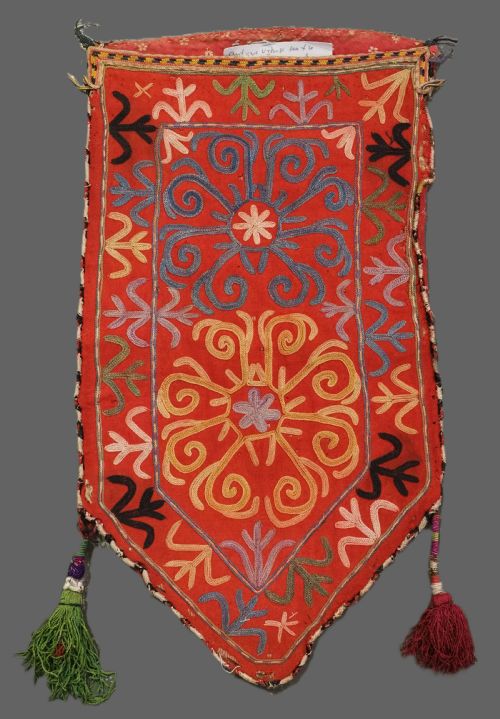
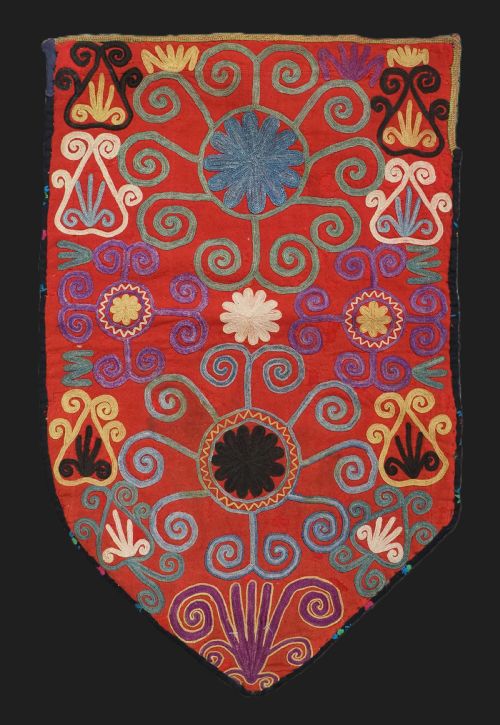
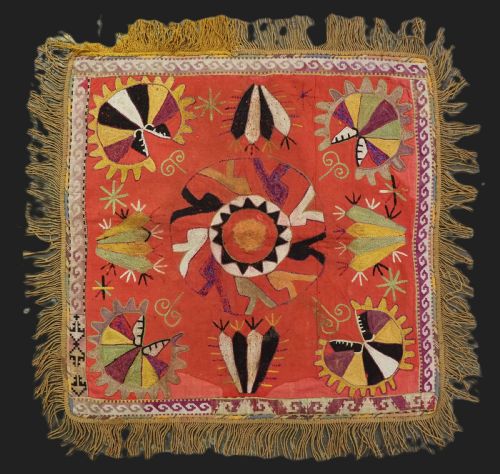
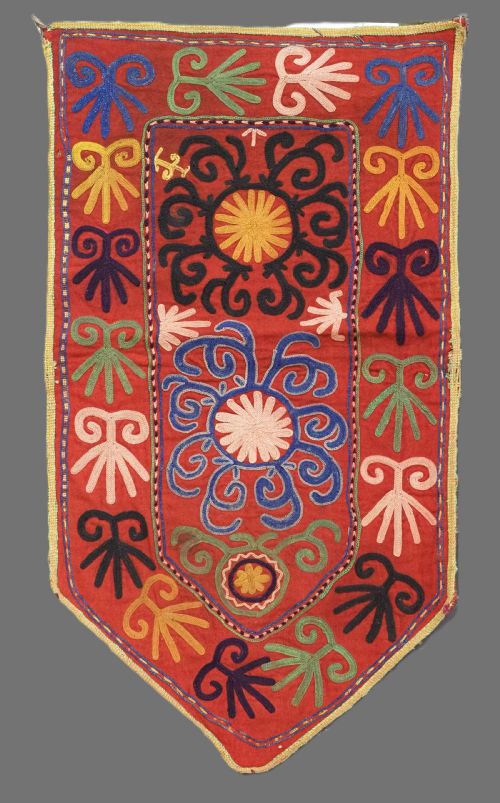
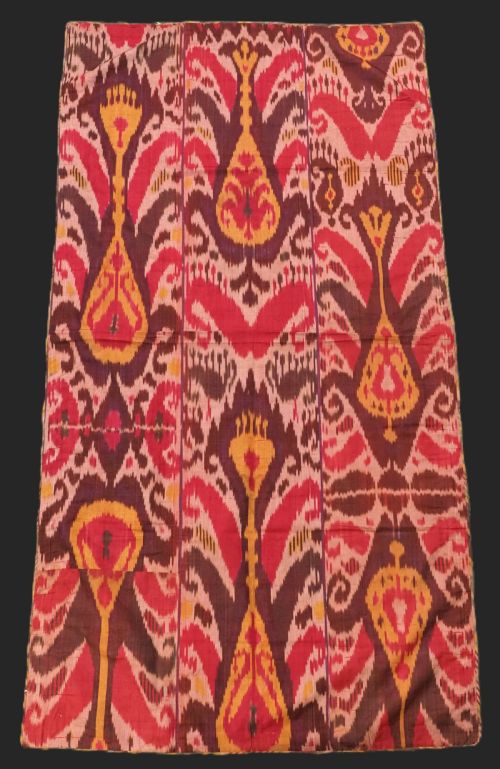
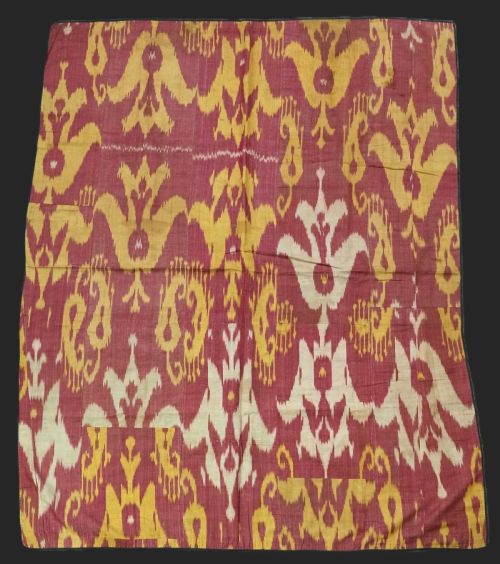
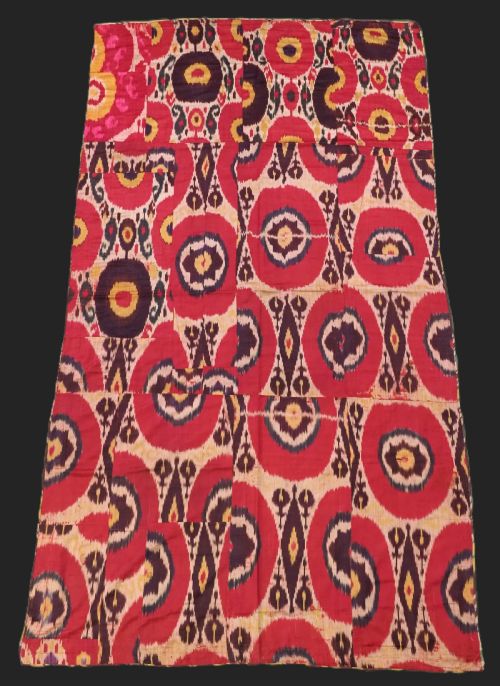

Circa 1900 Uzbek Textile
These circa 1900 uzbek textile pieces bring rich Central Asian history and bold tribal patterns into modern interiors as wall hangings and covers.
Circa 1900 Uzbek Textile
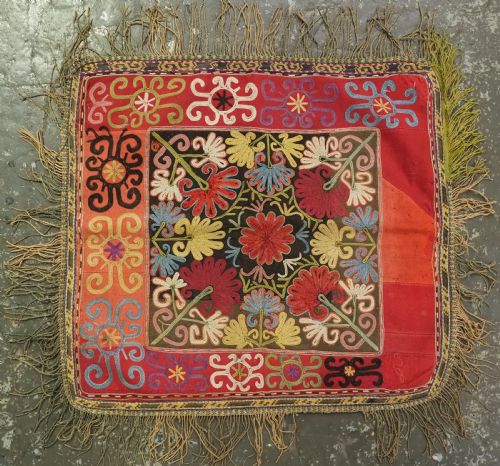
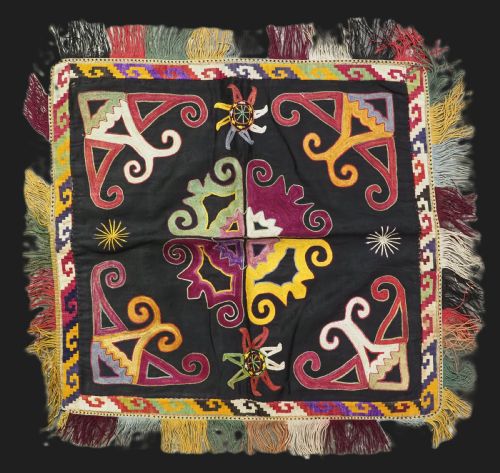
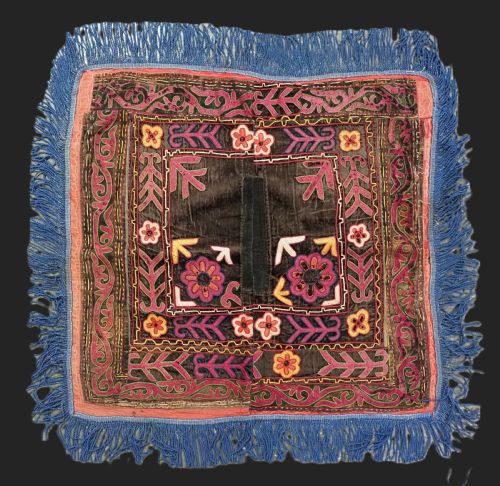
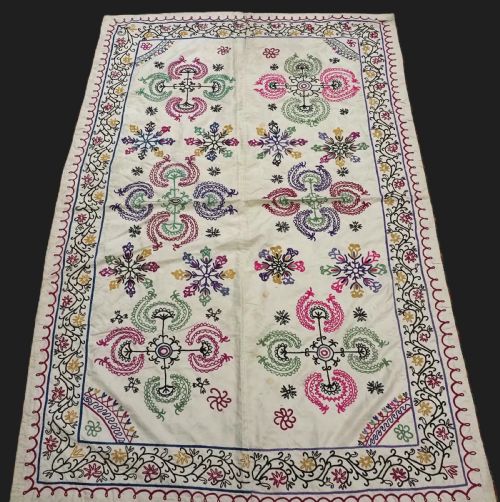
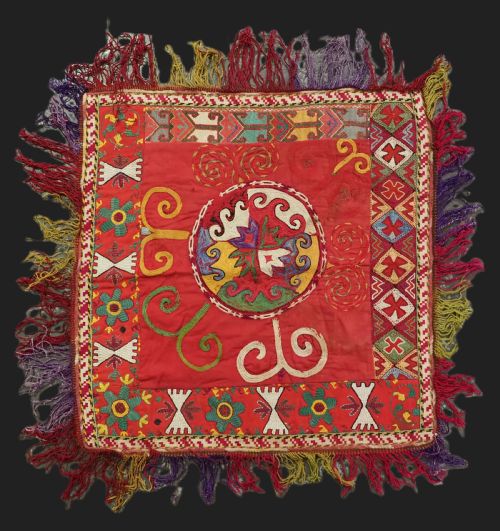
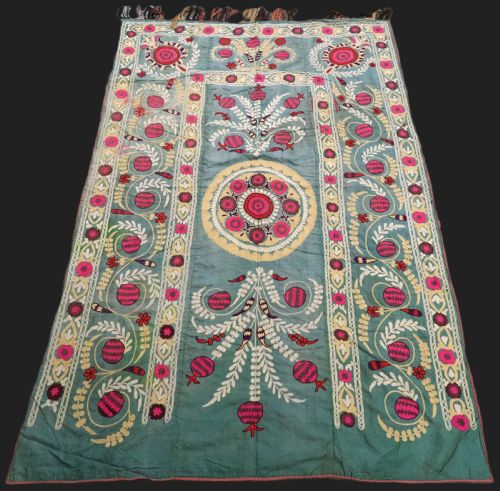
A circa 1900 uzbek textile encompasses a range of traditional Central Asian needlework, flatweaves, and ikat panels created by tribal and regional makers around the turn of the twentieth century. Buyers encounter embroidered suzani bed covers, small dowry items like uut kap ilgich wall hangings, and patterned fabric panels designed for domestic use.
The selection centres on pieces originating from nomadic and settled communities, including the Lakai tribe, Tajik makers, and regional workshops in Shahrisabz, Tashkent, and Bukhara. These textiles served functional roles within traditional households before entering the collector market as decorative wall art and tapestries.
How they were made
Maker communities employed natural dyes to colour silk threads, cotton, wool, and felt, yielding vibrant reds, yellows, and dark grounds. Embroiderers worked fine silk thread onto various foundation fabrics such as cotton, wool, and adras, which is a semi-silk and cotton blend.
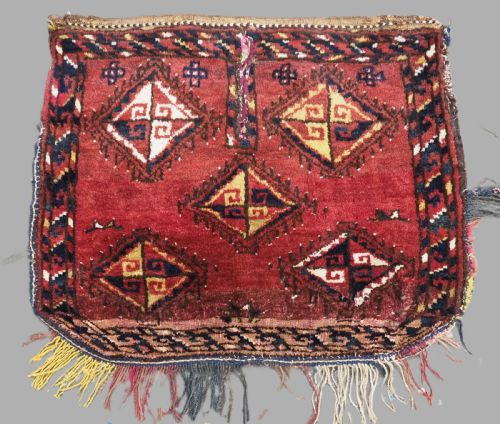
Some saddle bags carry stories of miles travelled across steppes, now quietly guarding living room walls.
What varies in quality
The density and fineness of the needlework distinguish different grades of embroidery, with full work suzanis representing a more intensive investment of maker time than lighter layouts. The clarity of natural dye colours and the complexity of the repeat designs contribute significantly to the visual impact of each panel.
Structural integrity depends on the preservation of the ground fabric, whether cotton, wool, or silk, and the stability of the original foundation strips in kilims. The balance of proportion within traditional motifs and the precision of tribal geometric or floral layouts separate standard examples from superior artistic achievements.
The Circa 1900 Uzbek Textile Glossary
- Suzani
- An embroidered hanging or bed cover originating from Central Asia, typically worked in silk thread on a cotton or silk foundation. These textiles often feature large floral and medallion designs.
- Ikat
- A dyeing and weaving technique where yarn is resist-dyed prior to being woven into fabric, creating distinctive feathered pattern edges. Artisans in Bukhara produced notable panels using this method.
- Adras
- A traditional fabric woven from a combination of silk warp and cotton weft yarns. It provides a durable yet lustrous ground for textile panels.
- Ilgich
- A specific form of embroidered hanging or dowry piece associated with nomadic groups such as the Lakai tribe. These items frequently display bold, dynamic geometric patterns.
- Kilim
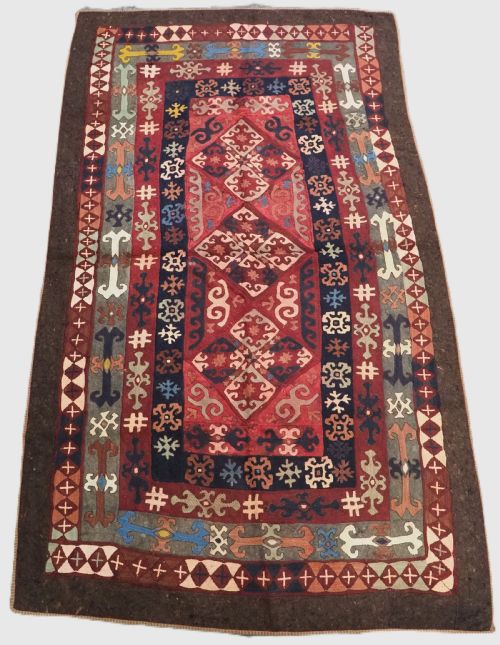
- A flatwoven textile produced without a pile, constructed either as a standalone rug or incorporated into panels and covers. Uzbek examples often comprise multiple woven strips joined together.
Circa 1900 Uzbek Textile: Frequently Asked Questions
What is a suzani used for?
Traditional makers utilised suzanis primarily as decorative bed covers, wall hangings, and ceremonial textiles for dowries within Central Asian households.
Today, collectors mount these embroidered panels on interior walls as large-scale textile art to showcase the intricate silk needlework.
How do I care for antique textiles?
Protect delicate silk embroidery and natural dyes by keeping antique textiles away from direct sunlight and high humidity.
Mount hanging pieces securely to distribute weight evenly across the cotton or wool ground fabric.
What is an ikat fabric panel?
An ikat panel is created by resist-dyeing threads before weaving them into a patterned textile with characteristic soft-edged designs.
These semi-silk adras panels served decorative and functional purposes in regional homes.
How are tribal pieces identified?
Tribal attribution relies on specific motifs, stitch types, and regional formats associated with groups like the Lakai or Tajik communities.
Felt rugs, saddle bags, and specific embroidery layouts point directly to these distinct nomadic and settled traditions.