


Vintage Hand Embroidered Panel
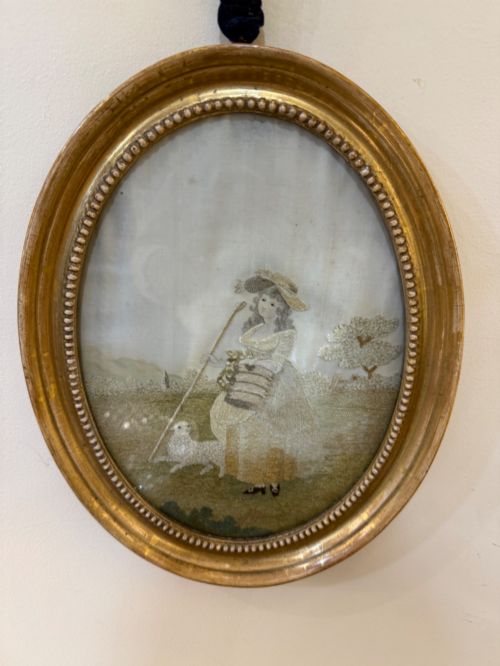
When searching for a vintage hand embroidered panel, a buyer encounters textile wall hangings, framed needlework pictures and ceremonial covers originating from Central Asia and England.
Vintage Hand Embroidered Panel
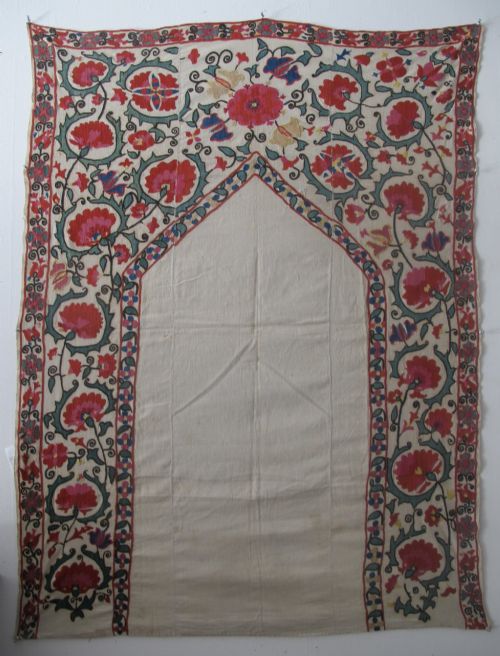
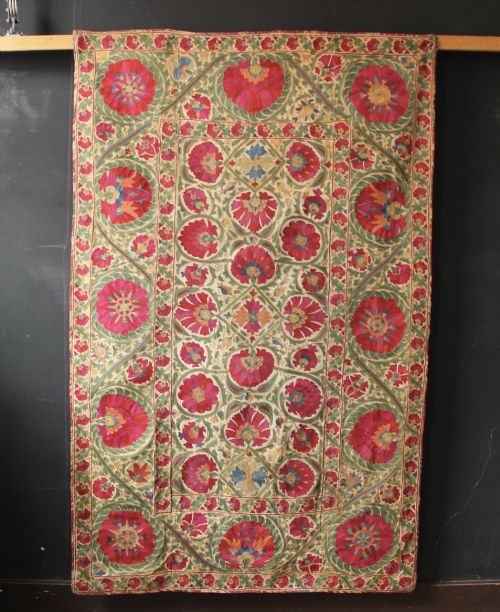
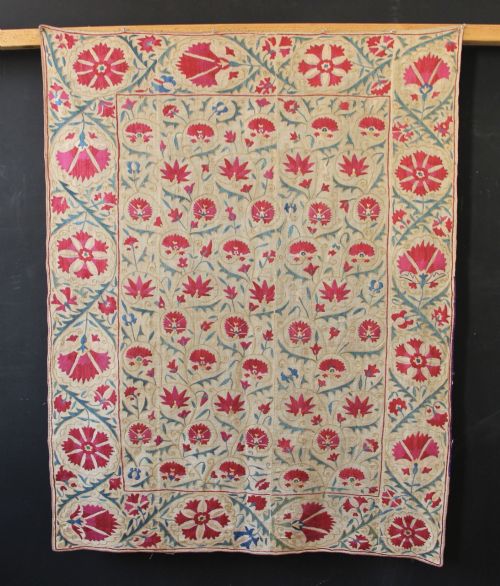
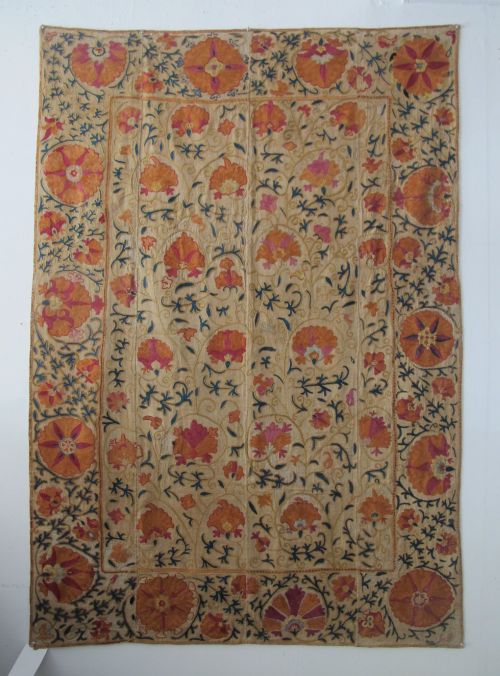
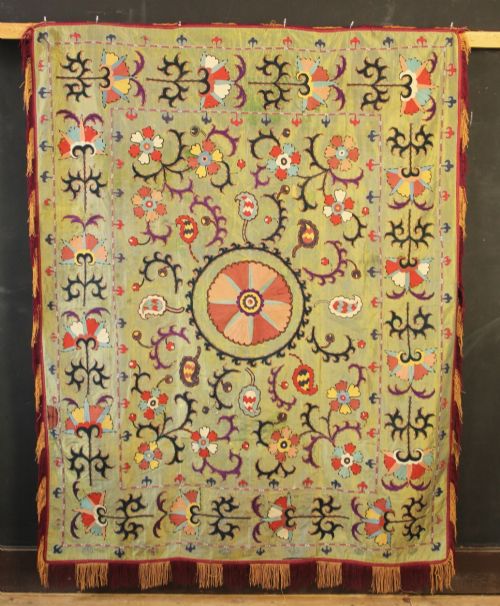
A vintage hand embroidered panel typically manifests as a textile wall hanging or wall panel, often taking the form of an Uzbek suzani worked in silk on a cotton or adras ground. These pieces serve primarily as decorative wall art, though English crewelwork panels and samplers also appear.
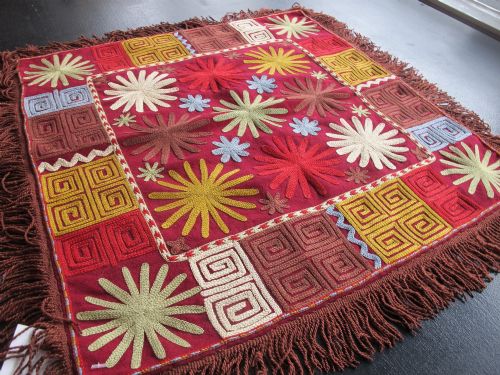
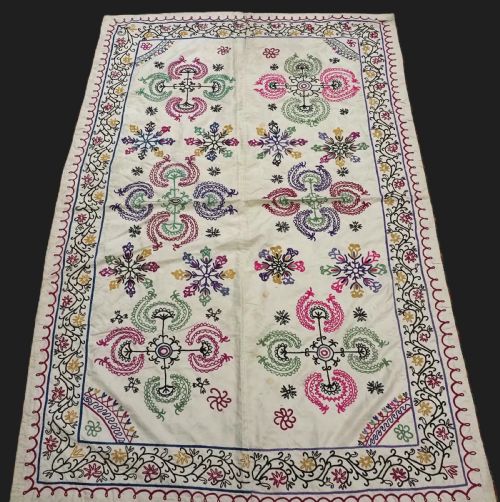
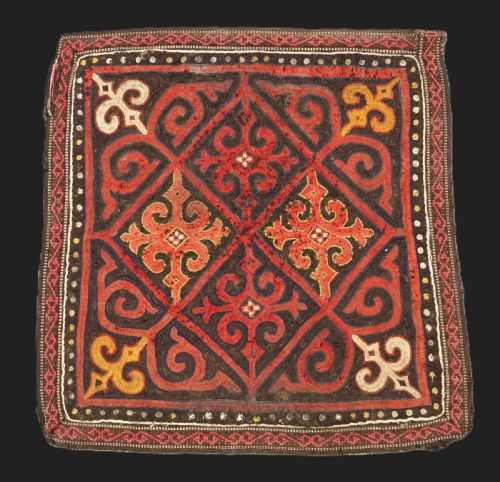
The selection ranges from large architectural suzanis to smaller nim suzanis, Lakai tribal embroideries, and Kyrgyz tush kyiz yurt wall hangings. Buyers also encounter English crewelwork spanning multiple centuries alongside framed samplers.
Originating predominantly from Uzbekistan and England, these textiles reflect distinct regional traditions. Central Asian examples display bold floral or architectural motifs, whereas English panels lean towards crewelwork and stitched samplers.
How they were made
Makers utilised natural materials including silk, cotton, wool, and linen as foundations for stitching. Silk thread serves as the primary medium for embellishment across Central Asian suzanis and tribal works.
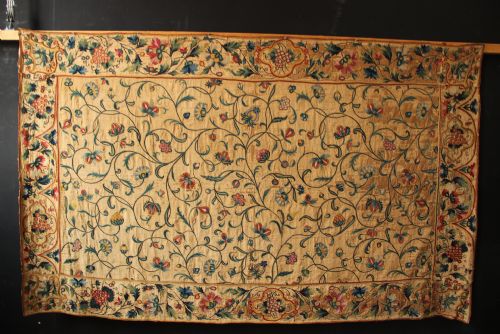
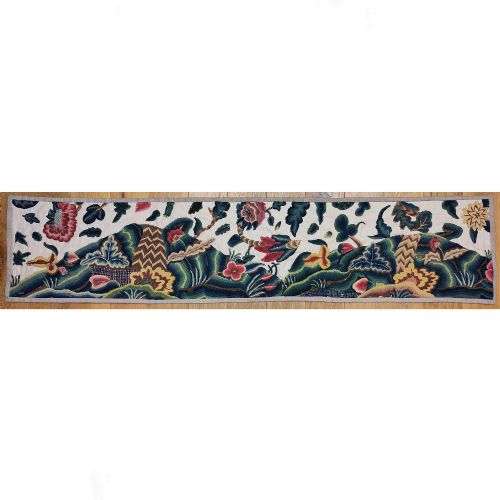
English crewelwork involves wool thread worked upon linen grounds, while other traditional items incorporate felt or coloured cotton grounds such as adras silk. Artisans employed needlework techniques ranging from fine embroidery to crewel stitching.
Listings feature textiles spanning from the eighteenth century through to the 1930s, utilising silk, cotton, wool, linen, and felt.
What varies in quality
Quality separates ordinary examples from finer specimens through the density of the stitching and the complexity of the design. Fully embroidered palak suzanis demonstrate a higher degree of labour than sparsely worked textiles.
The harmony and vibrancy of the colour palette also distinguish superior pieces. Artistry in execution, particularly in regional motifs such as central stars or architectural elements, dictates the standing of each textile panel.
The Vintage Hand Embroidered Panel Glossary
- Suzani
- An embroidered tribal textile from Central Asia, traditionally made as part of a bride's dowry. These large wall hangings feature silk thread on cotton or silk grounds.
- Nim Suzani
- A smaller version of the traditional suzani wall hanging. These pieces offer compact dimensions while retaining the intricate embroidery styles of larger covers.
- Crewelwork
- A type of embroidery executed using wool yarn on a linen or cotton fabric. English examples often depict flowing floral and arboreal patterns.
- Palak
- A fully embroidered suzani variety originating from Tashkent. These dense panels cover the entire ground fabric with intricate silk needlework.
Vintage Hand Embroidered Panel: Frequently Asked Questions
How were antique panels used?
Many Central Asian textiles served as decorative wall hangings, prayer panels, or ceremonial saddle covers within nomadic and settled communities. Kyrgyz tush kyiz specifically adorned the interior walls of yurts.
English crewelwork panels and samplers were similarly created to decorate domestic interiors, often framed or applied to furnishings.
What is the difference between a suzani and a nim suzani?
The primary distinction lies in physical scale and layout. A standard suzani is a large format textile designed to cover substantial wall space.
A nim suzani represents a smaller variant of the same tradition, making it easier to integrate into contemporary wall displays while maintaining identical embroidery techniques.
How do I identify English crewelwork?
English crewelwork relies on wool thread stitched onto robust linen foundations. The designs frequently incorporate stylized trees, scrolling vines, and floral elements derived from Jacobean traditions.
These panels contrast sharply in material and motif with the vibrant silk-on-cotton floral patterns found in Central Asian embroidery.
How do I care for an antique textile panel?
Antique embroideries require protection from direct sunlight to prevent the fading of silk and wool threads. Mounting them professionally behind UV-filtered glass or hanging them away from direct heat sources preserves the ground fabric.
Regular gentle dusting helps maintain the surface without disturbing delicate historic stitches.