
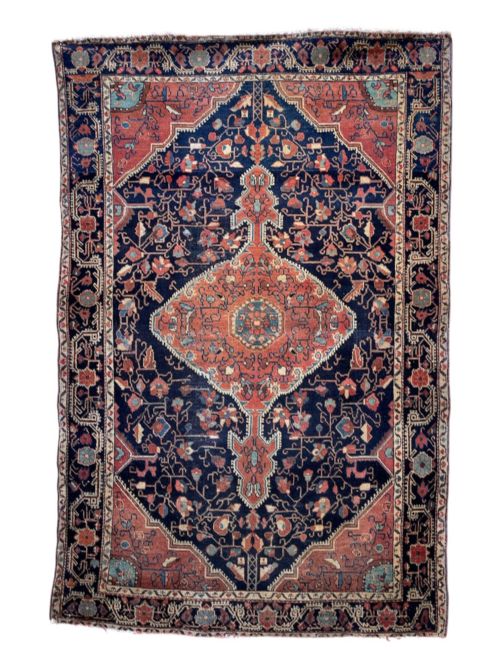
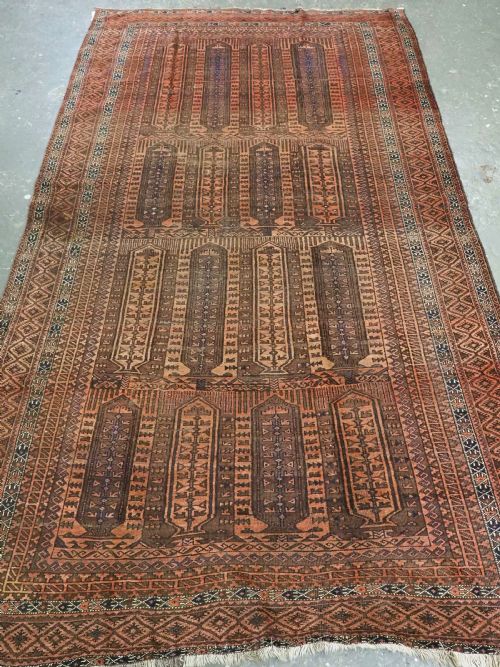
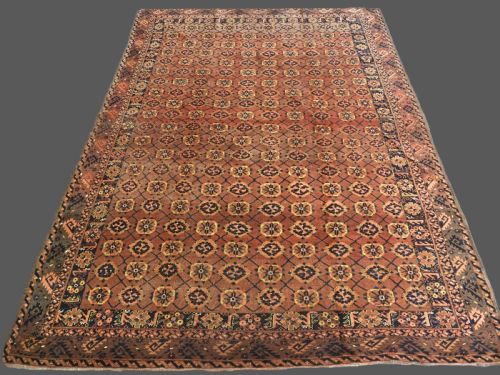
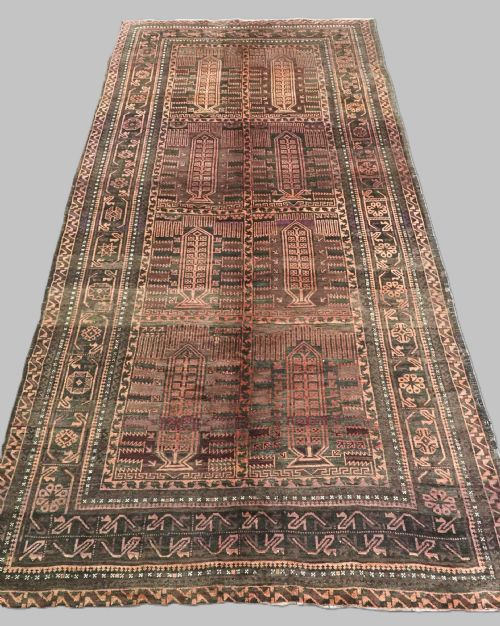
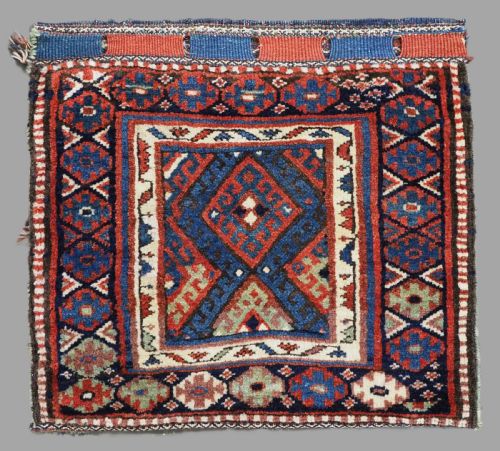
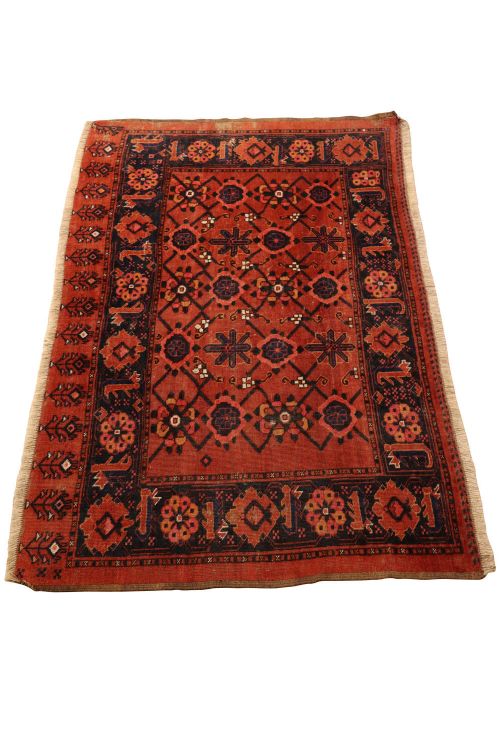

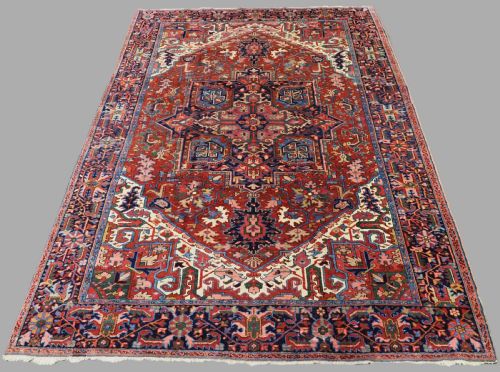


Circa 1900 Persian Rug
A circa 1900 persian rug brings hand-knotted tribal history, rich natural tones, and enduring warmth into a modern interior.
Circa 1900 Persian Rug
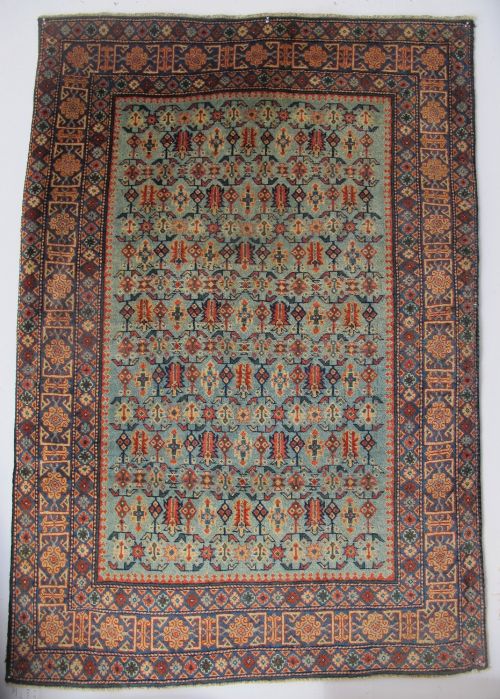
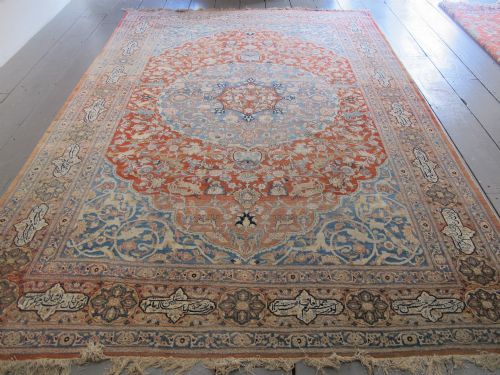
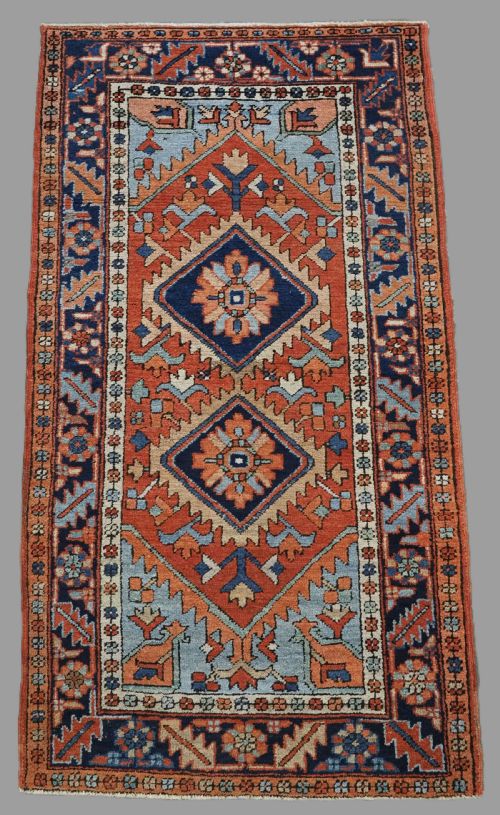
When browsing for a circa 1900 persian rug, collectors and homeowners encounter a diverse landscape of hand-knotted village carpets, nomadic tribal pieces, and room-sized formats. The selection ranges from geometric Heriz and Serab formats to finely woven Kashan and Tabriz workshop carpets produced at the dawn of the twentieth century.
Village and tribal examples such as Qashqai, Afshar, and Khamseh rugs frequently appear alongside practical runners and functional storage bags. These textiles reflect the distinct weaving traditions of different regions across Persia, offering structured medallions, repeating boteh motifs, and asymmetric village designs.
The assortment also encompasses specialised regional styles like Kurdish, Baluch, and Baktiari weaves alongside decorative Rasht silk embroideries on felt. Buyers discover both intimate small rugs suited for modest spaces and expansive carpets capable of anchoring large country house interiors.
How They Were Made
Makers utilised hand-spun wool and cotton foundations, binding the dense pile with durable hand-knotted techniques that ensured longevity across generations of daily use. Natural dyes provided the foundational palette, yielding rich hues that mellow gracefully over decades without losing their depth.
Nomadic and village weavers frequently employed wool felt and plain weave techniques for backing utility bags and saddlebag faces. Silk elements also appeared in specific regional embroideries and fine urban workshop formats, adding textural contrast to wool-heavy compositions.
Circa 1900 Persian Rug Retail Price Guide 2026
Typical asking prices for circa 1900 persian rug among the pieces listed under this phrase on Sellingantiques today, from the lower quarter to the upper quarter. They describe what is for sale here now, not the wider market.
Listings feature wool, cotton, and natural dyes across village carpets, runners, and storage bags dated to 1900, 1910, and 1920.
What Varies in Quality
The upper tier of these textiles is distinguished by exceptional dye saturation and the complexity of the design layout, where natural pigments interact to create luminous visual depth. Master weavers achieved precise knot density and harmonious colour balance that set urban masterpieces and superior village pieces apart from routine commercial production.
Structural integrity and the survival of original borders and plain weave backs significantly influence the standing of an individual textile. Examples retaining full pile and crisp drawing demonstrate superior initial craftsmanship and careful preservation over time.
The Circa 1900 Persian Rug Glossary
- Boteh
- A traditional almond-shaped or paisley motif representing a floral cluster, sprout, or cypress tree. This ancient symbol appears frequently across Persian tribal and village weavings.
- Medallion
- A central ornamental design element placed in the middle of the rug field. It serves as the primary focal point for many classical and tribal carpet compositions.
- Kilim
- A flat-woven textile produced without a pile by tightly interweaving warp and weft strands. These pieces were often utilised for utility bags, covers, and portable floor coverings.
- Runner
- A long, narrow carpet format traditionally used in corridors, hallways, or alongside larger furniture pieces. These elongated textiles accommodate specific architectural spaces.
- Pushti
- A small nomadic mat or cushion face designed for resting or leaning against. These compact pieces display intricate regional motifs within a restricted surface area.
Circa 1900 Persian Rug: Frequently Asked Questions
How do I care for my rug?
Vacuum gently without a rotating brush to remove embedded dust, and protect the textile from direct, harsh sunlight to preserve the natural dyes.
Professional cleaning by specialists familiar with antique hand-knotted wool is recommended every few years to maintain the integrity of the pile.
Where were these pieces woven?
Weaving took place across diverse regions of Persia, spanning urban workshops in cities like Tabriz and Kashan, as well as distinct tribal territories.
Nomadic confederations and village communities in the north-west, south, and east each developed recognizable regional designs and working methods.
Can I use runners in hallways?
Long and narrow formats were historically produced precisely to accommodate transitional spaces, corridors, and high-traffic areas within traditional homes.
Using a suitable underlay helps keep the runner stable and cushions the foundation against wear on hard flooring surfaces.
How are tribal rugs distinguished?
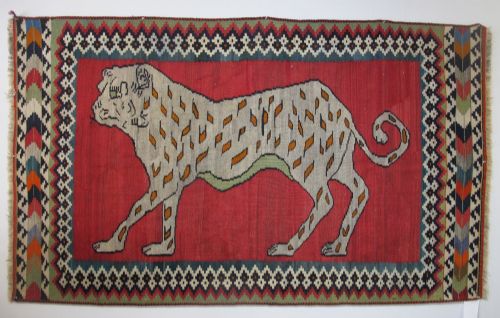
Tribal pieces generally display bolder geometric layouts, animal motifs, and asymmetric village designs rather than formal, highly symmetrical urban compositions.
Makers utilised locally available wool and regional dye palettes, resulting in spontaneous artistic expressions unique to specific nomadic groups.