




Church Pricket Stand
A church pricket stand brings centuries of solemn ritual into domestic spaces through heavy metal and carved wood.
Church Pricket Stand
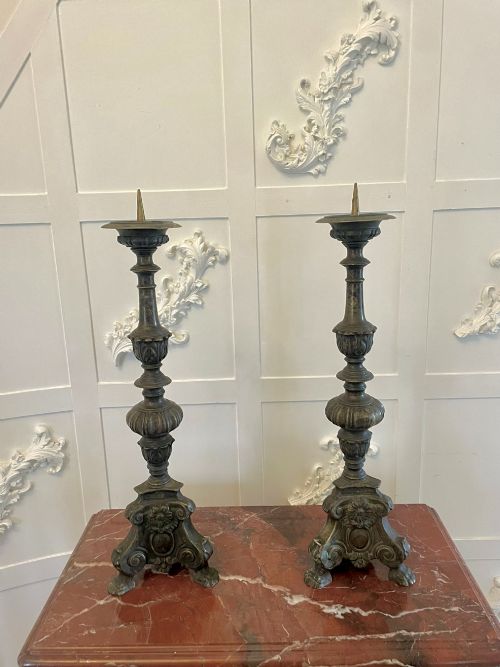
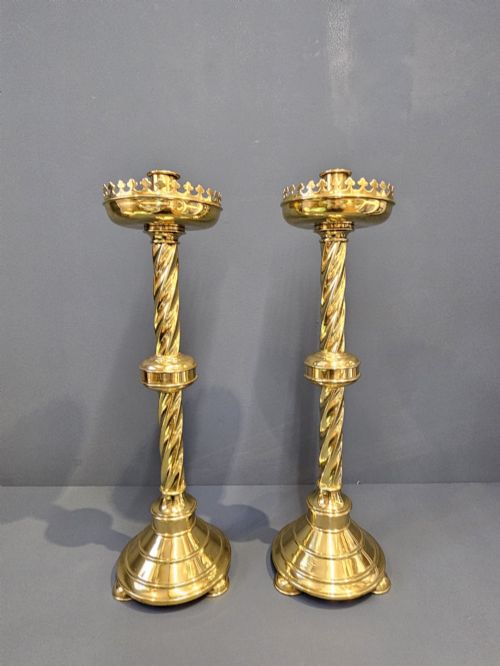
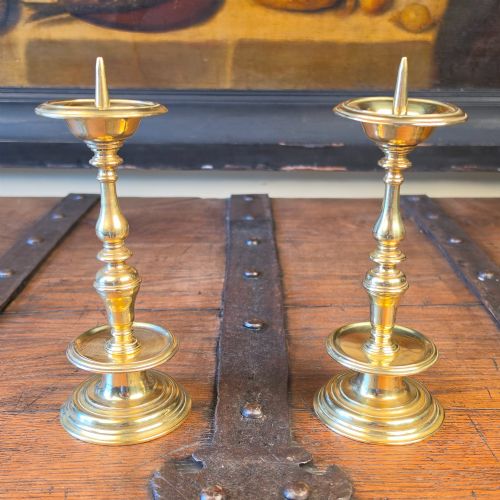
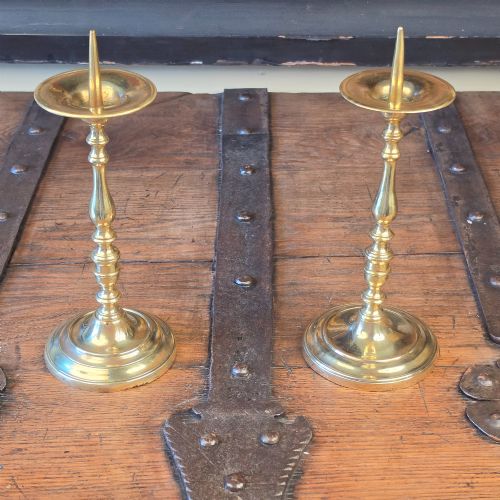
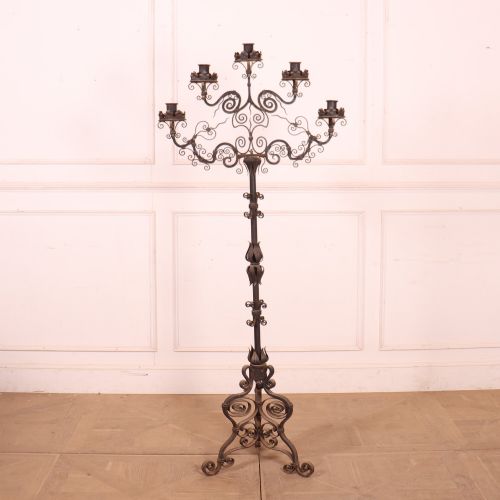
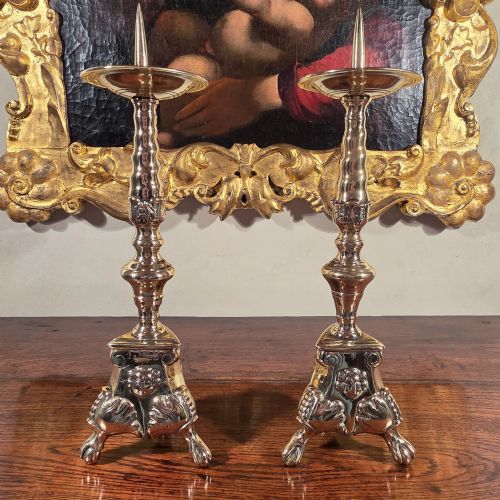
A church pricket stand is an ecclesiastical lighting fixture featuring a central spike, known as a pricket, designed to impound large candles rather than hold them in a socket. These items span periods from the seventeenth to the twentieth century, with nineteenth-century examples appearing most frequently.
Forms vary considerably from tabletop brass candlesticks to towering floor-standing candle holders and torcheres made for altars and chancels. Styles lean heavily into historical revivals, encompassing Gothic Revival, Baroque, and Amsterdam School aesthetics.
Origin points stretch across Europe, featuring Italian and French wooden altar pieces alongside Flemish brass work and English designs. Buyers encounter pairs and larger sets alongside singular monumental floor pieces.
What varies in quality in church pricket stands
The degree of hand-carving and surface decoration dictates the visual weight of wooden pieces. Giltwood and silvered finishes range from flat applications to deeply articulated baroque detail that catches candlelight.
Metal castings vary in heft and intricacy, separating simple utility items from ornate, heavy church fixtures. Proportion and balance define the superior examples, whether standing on the floor or resting on an altar.
Styles represented include Gothic Revival, Baroque, and Amsterdam School forms.
The Church Pricket Stand Glossary
- Pricket
- A metal spike on top of a candlestick designed to hold a candle in place by impounding the base. This method predates the socket style of candle holder.
- Torchere
- A tall stand or ornamental candlestick originally meant to carry a torch or large candle. These often feature elaborate carved wood or wrought iron columns.
- Giltwood
- Wood that has been given a thin layer of gold leaf or gold paint. This technique creates a luminous surface suited to dim liturgical interiors.
- Gesso
- A plaster-like mixture applied to wood surfaces as a base for painting or gilding. It allows artisans to carve fine details before applying finish.
- Altar stand
- A heavy ecclesiastical holder positioned on or beside the altar for ceremonial lighting. These items generally display grander proportions than domestic counterparts.
Church Pricket Stand: Frequently Asked Questions
How do I use a pricket stand safely?
Push the base of a wide pillar candle firmly onto the central metal spike until it sits level. Ensure the stand rests on a stable surface away from drafts.
Place a suitable drip tray or plate beneath if the candle lacks a wide pan, as historic prickets often allowed wax to run down the shaft.
What is the difference between a candlestick and a torchere?
Candlesticks are generally shorter items designed for tables, altars, or mantels. They support smaller or medium-sized candles.
Torcheres function as tall, floor-standing columns intended to illuminate larger spaces or focal points within a room.
How can I tell the period of a brass pricket?
Examine the casting marks, weight, and assembly methods used on the metal components. Earlier pieces often show hand-finishing and uneven surface textures from sand casting.
Stylistic cues like seventeenth-century Flemish bulbous stems or Amsterdam School geometric lines also point toward specific eras of production.
Are these stands suitable for modern homes?
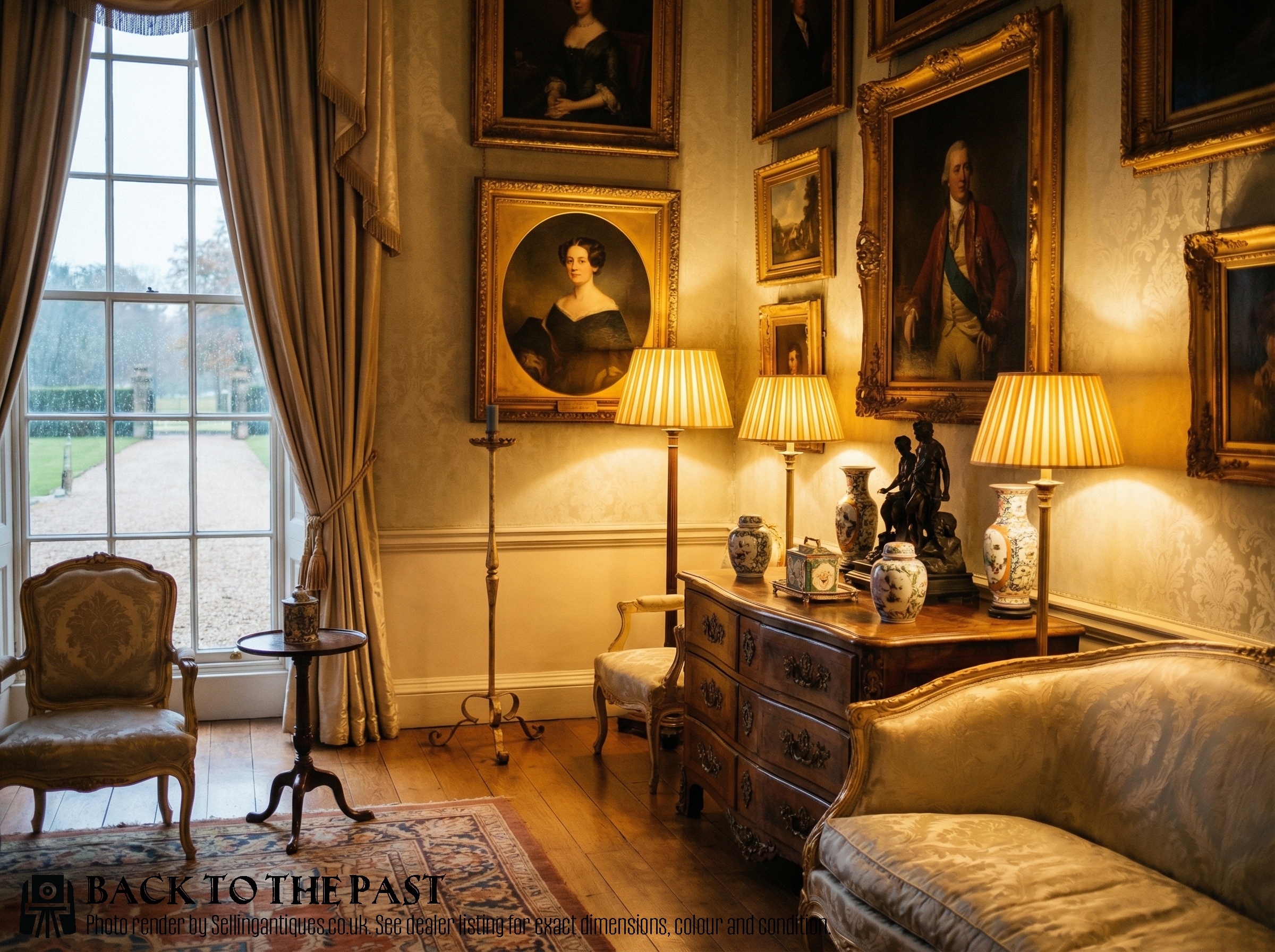
These pieces integrate well into contemporary interiors as sculptural floor art or striking table centerpieces. Their ecclesiastical origins add a sense of history and architectural gravity to a room.
Many tall examples also find new life converted safely into floor lamps or left in their original state for ambient candle lighting.