


Christofle Silver Plate
Christofle silver plate encompasses French metalware spanning barware, tableware and decorative items created across the nineteenth and twentieth centuries.
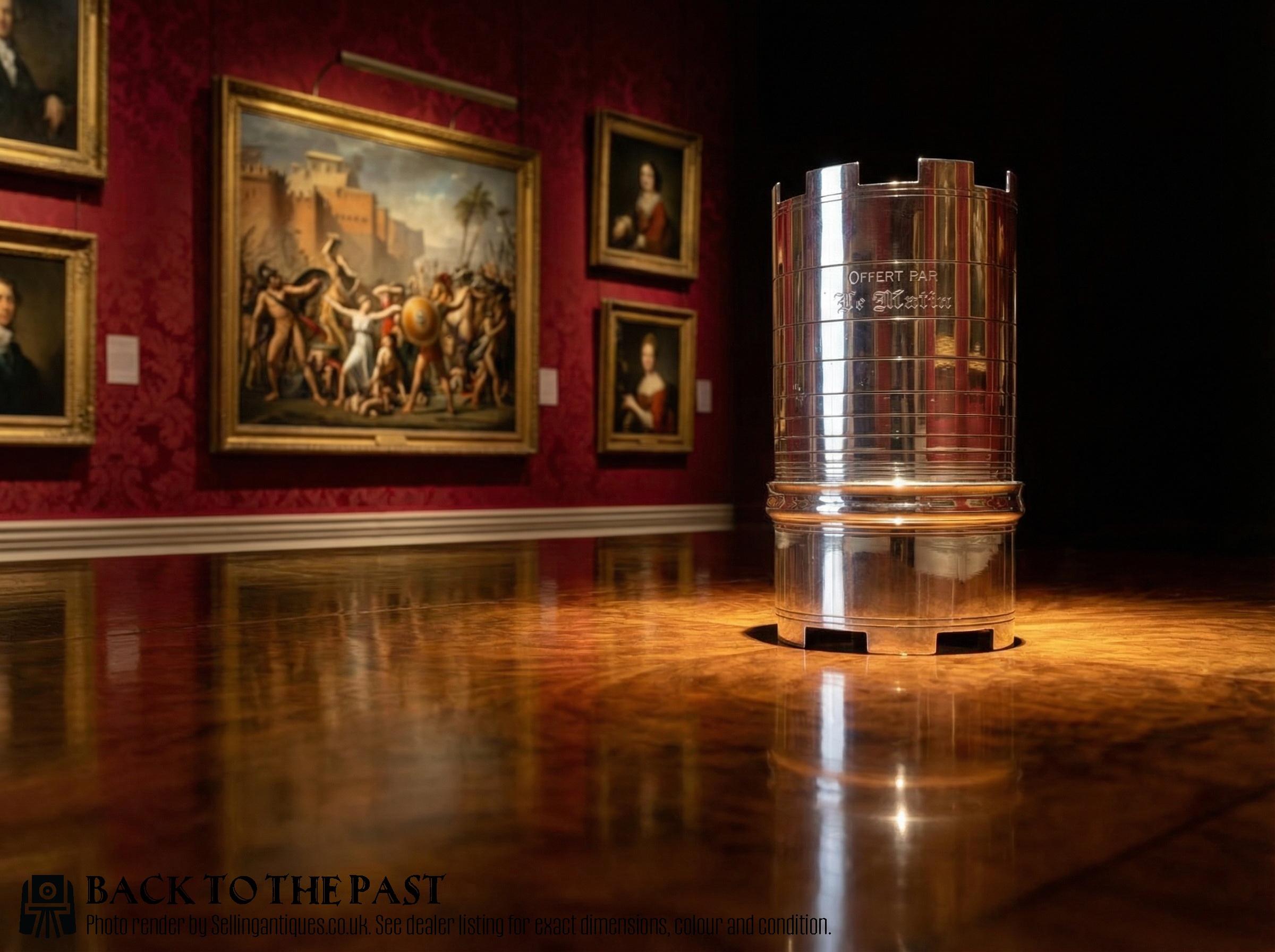
Christofle Silver Plate
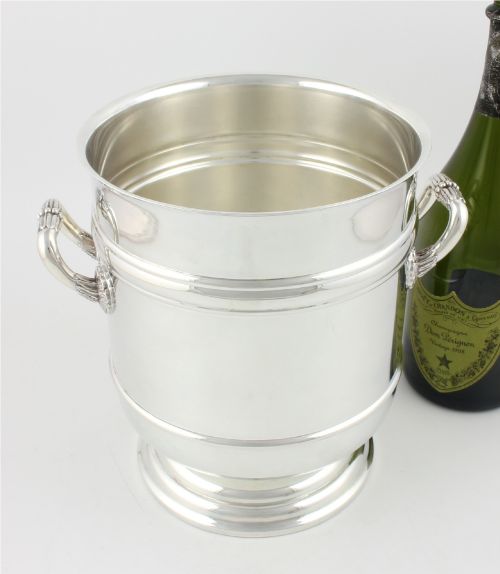
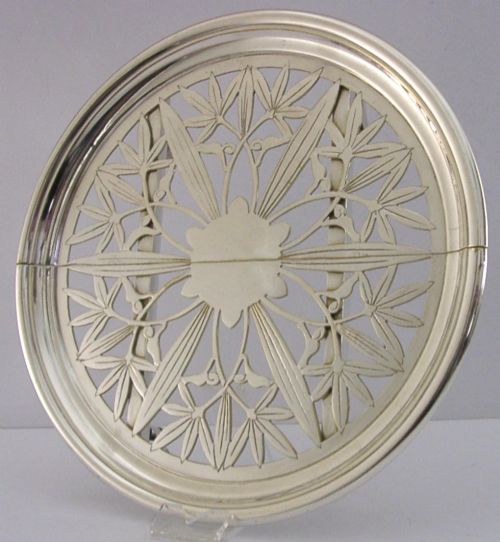
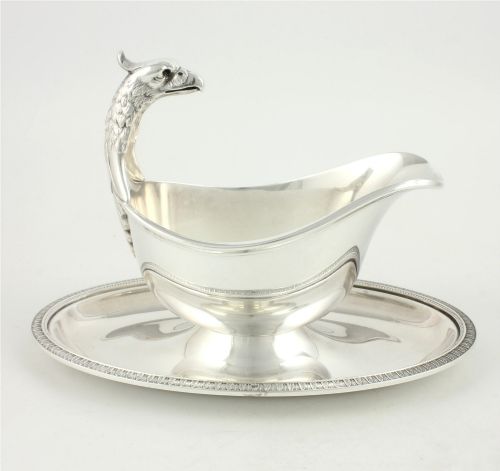
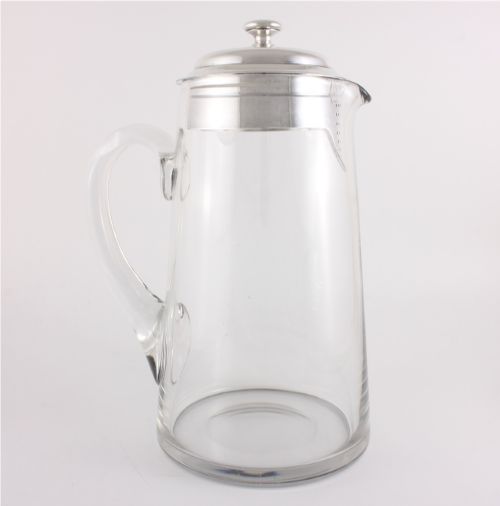
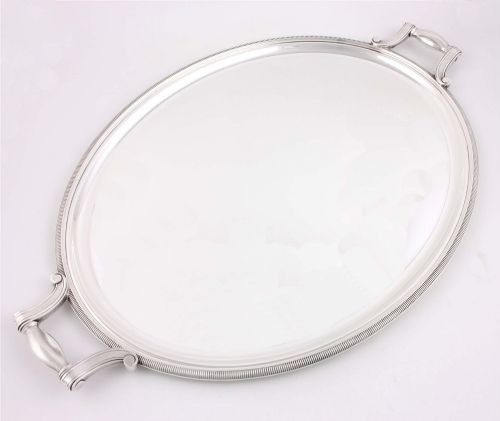
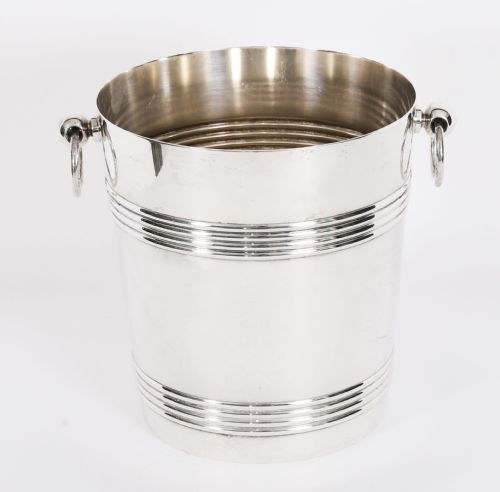
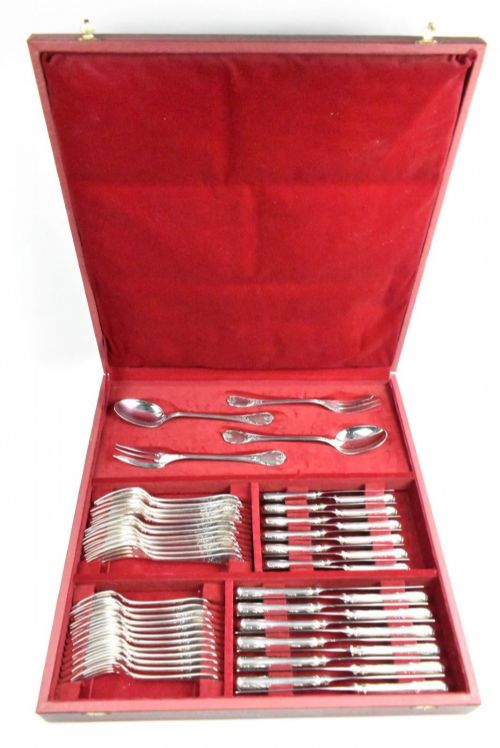
The assortment includes functional pieces designed for hospitality, such as champagne coolers, ice buckets, cocktail shakers, and serving trays. Alongside these barware items, domestic table items like sauce boats, pitchers, cutlery sets, and water jugs appear frequently across various periods.
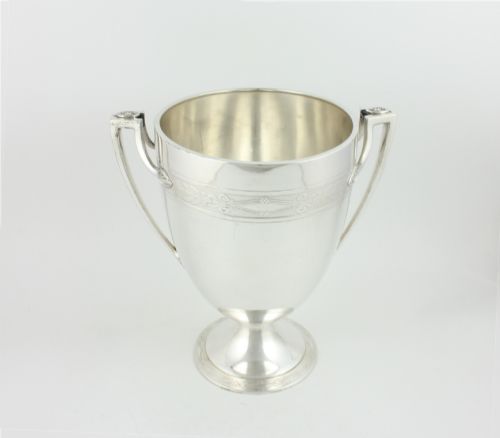
Stylistic influences range from nineteenth-century revivals and organic Art Nouveau forms through to the geometric lines of Art Deco and the clean aesthetics of Mid-Century Modern design. Pieces frequently carry specific historical patterns or bear marks from associated workshops like Orfèvrerie Gallia.
How They Were Made
The manufacture of these objects relies on a base metal foundation, predominantly utilising copper alloys or white metal, which undergoes an electroplating process to deposit a layer of silver over the surface. Surviving pieces often combine this plated foundation with subsidiary materials such as glass inserts, wooden handles, Bakelite details, or fabric linings.
Techniques evolved from ornate nineteenth-century casting and hand-chasing towards the streamlined fabrication methods of the Art Deco era and the modernist designs of the mid-twentieth century. Surface decoration was achieved through engraving, applied cast motifs, and polished finishes that highlighted the contours of the metal.
Several items combine silver plate with Bakelite, offering a tactile contrast between cold metal and warm early plastic.
What Varies in Quality
Quality in these objects is determined by the weight of the metal foundation and the thickness of the silver deposition, which dictates how well the plating withstands decades of handling and polishing. Substantial gauge metal provides structural rigidity, preventing distortion in larger forms like serving trays and wine coolers.
The presence of renowned designers or specific archival lines, such as pieces conceived by Luc Lanel or Lino Sabattini, elevates the standing of an item. Additionally, the crispness of cast details, the legibility of maker stamps, and the survival of original fitted elements or glass liners distinguish standard production from exceptional examples.
Christofle·Lino Sabattini·Luc Lanel·Sue et Mare
The Christofle Silver Plate Glossary
- Gallia
- A subsidiary metalwork line associated with the maker, known for producing items in Art Deco and modernist styles. This mark often appears alongside the primary manufacturer stamps on twentieth-century pieces.
- Silver plate
- A manufacturing method where a thin layer of silver is bonded to a base metal core. This technique allowed makers to produce durable tableware with the appearance of solid silver.
- Art Deco
- A design style characterised by sleek geometric shapes, streamlined forms, and stylized motifs popular during the interwar period. Many champagne coolers and cocktail shakers from this era exhibit these distinct architectural lines.
- Champagne cooler
- A deep vessel designed to hold ice and water for chilling wine bottles. These pieces often feature twin handles and decorative ring mounts.
- Sauce boat
- A specialised jug with an attached underplate or lip used for serving gravies and sauces at the table. Examples range from plain nineteenth-century models to modernist iterations.
Christofle Silver Plate: Frequently Asked Questions
What is Christofle Gallia?
Gallia was an affiliated line introduced to produce contemporary designs, particularly during the Art Deco period. Items bearing this mark utilised specific alloy compositions alongside standard silver plating.
Collectors often seek these pieces for their association with prominent designers who collaborated with the workshop during the twentieth century.
How do I clean silver plate?
Maintenance requires gentle cleaning with non-abrasive silver polishes designed specifically for plated surfaces. Avoid harsh scrubbing that can wear through the thin silver layer to the base metal underneath.
Frequent light dusting and washing in warm soapy water helps preserve the finish without the need for aggressive chemical treatments.
Are these items safe for drinks?
Most barware items, including cocktail shakers, ice buckets, and pitchers, were designed for beverage service and hospitality use. The stable silver surface provides a non-reactive barrier for serving liquids.
Inspect vintage pieces to ensure the interior plating remains intact and free from excessive wear before utilising them for food or drink.
How are periods identified?
Dating relies heavily on stamped manufacturer hallmarks, registry numbers, and stylistic markers characteristic of specific decades. Art Deco items display geometric symmetry, while nineteenth-century pieces lean towards revivalism and ornate casting.
Comparing the typography of the maker marks provides a reliable method for establishing the era of manufacture.