

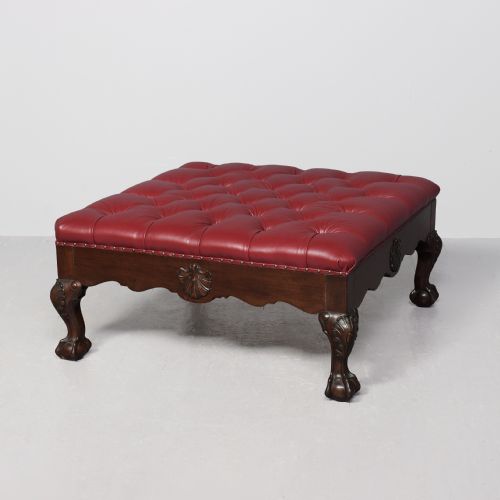


Chippendale Upholstered Ottoman
Chippendale upholstered ottoman pieces bring robust mahogany frames and classical carving into a room, offering both traditional seating and enduring utility.
Chippendale Upholstered Ottoman
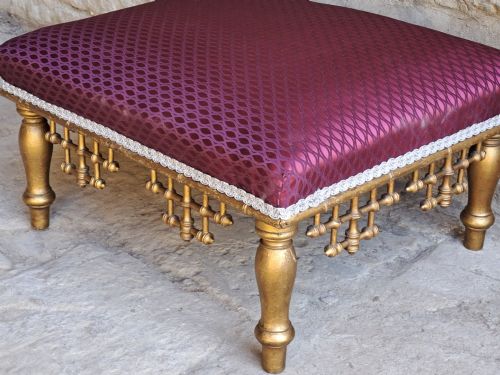
When you search for chippendale upholstered ottoman items, you are looking at substantial stools, footstools, and benches configured for domestic utility and formal seating. The selection ranges from eighteenth-century originals to revival pieces spanning the Victorian era and the early twentieth century.
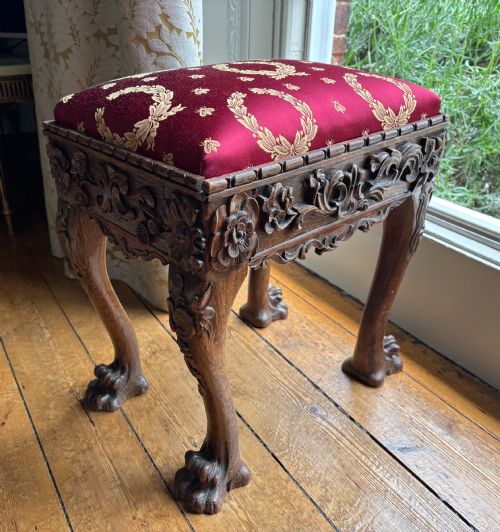
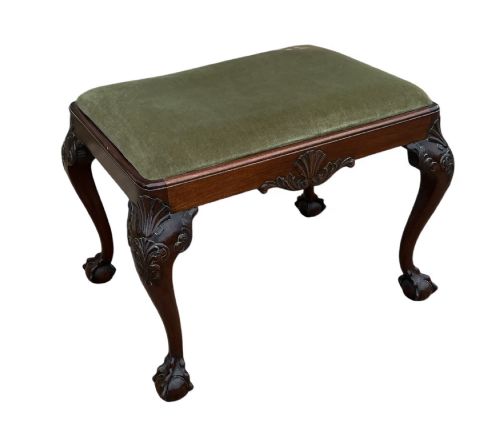
Mahogany frames dominate the available forms, often featuring carved details such as ball and claw feet. You will most frequently encounter nineteenth-century revival interpretations alongside George III style centre stools rather than true period pieces from the seventeen-fifties.
Construction and materials
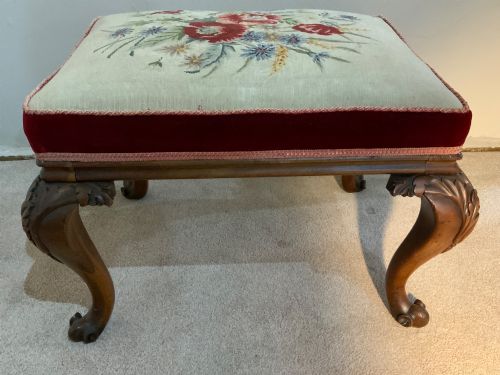
The top surfaces received padding secured with various traditional coverings including leather, velvet, wool, needlework, and damask fabrics. Brass accents occasionally appear as structural or decorative finish details on specific examples.
Chippendale Upholstered Ottoman Retail Price Guide 2026
Typical asking prices for chippendale upholstered ottoman among the pieces listed under this phrase on Sellingantiques today, from the lower quarter to the upper quarter. They describe what is for sale here now, not the wider market.
Listings span multiple centuries of production, recording pieces from seventeen-fifty up to nineteen-twenty alongside Victorian and Georgian revival eras.
Judging quality in these stools
Quality rests upon the crispness of the timber carving and the architectural proportions of the frame. Higher-grade examples exhibit deeply undercut relief work on the legs and solid, heavy mahogany construction without structural compromises.
The choice of upholstery materials and the fidelity to historical revival styles further distinguish standard production from exceptional pieces. Superior items combine substantial scale with refined detailing across both woodwork and textile work.
The Chippendale Upholstered Ottoman Glossary
- Chippendale Style
- A decorative design idiom drawing on the eighteenth-century pattern books associated with Thomas Chippendale. It typically employs carved mahogany, ornate legs, and classical motifs.
- Centre Stool
- A large freestanding stool designed to sit in the middle of a room rather than against a wall. These pieces function as decorative seating or large footrests.
- Ball and Claw
- A furniture foot carved to resemble a bird's talon gripping a ball. This classical detail frequently terminates the cabriole legs of mahogany seating.
- Damask
- A reversible figured fabric traditionally woven on a jacquard loom. It provides a formal patterned textile finish for period upholstery.
Chippendale Upholstered Ottoman: Frequently Asked Questions
How do I date a Chippendale style stool?
Dating relies on examining the timber species, tool marks, and construction methods visible beneath the frame. Eighteenth-century pieces display different joinery and timber patina compared to Victorian or twentieth-century revivals.
Style nomenclature in listings often distinguishes between genuine period items and later revival interpretations made during the nineteenth or twentieth centuries.
Where were these stools placed in a home?
These pieces served as moveable seating in reception rooms, dressing rooms, and parlours. Large centre stools functioned as flexible seating options or auxiliary surfaces.
Footstools were positioned beside armchairs to provide comfort, while dressing stools accompanied vanity tables in larger bedrooms.
What is the difference between an ottoman and a stool?
In historical terminology, these listings primarily comprise stools and footstools rather than enclosed box ottomans. They feature open frames raised on legs rather than upholstered storage compartments.
Many large stools function practically as ottomans when paired with armchairs or placed centrally in a room.
How should I care for mahogany and leather?
Mahogany frames benefit from occasional dusting with a dry cloth and minimal application of traditional wax polish to maintain the timber finish. Avoid placing timber furniture in direct sunlight or near heat sources.
Leather upholstery requires regular conditioning to prevent drying, while fabric coverings depend on professional cleaning suited to the specific textile type.