





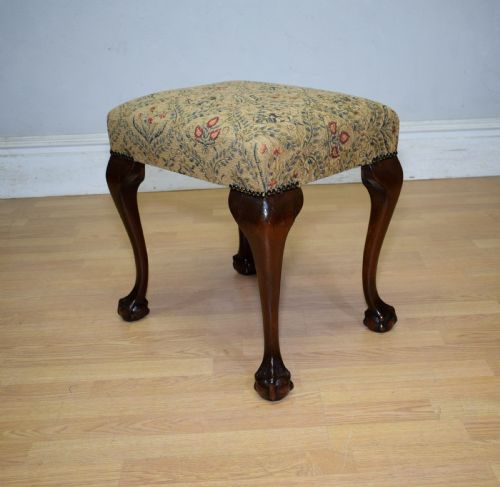
Chippendale Style Footstool
A chippendale style footstool brings classic proportion and sturdy timber into a room, offering both practical comfort and historic presence.

Chippendale Style Footstool
A chippendale style footstool represents a form designed to support the feet or serve as a low seat, drawing upon eighteenth-century vocabulary. Pieces appearing on this page span several eras, reaching from eighteenth-century originals to nineteenth-century interpretations and twentieth-century revivals.
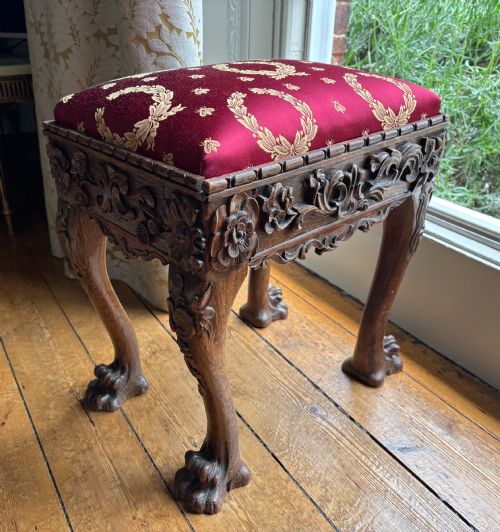
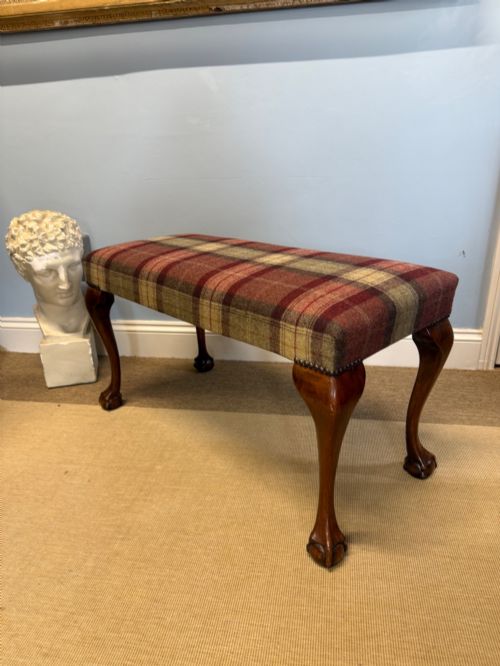
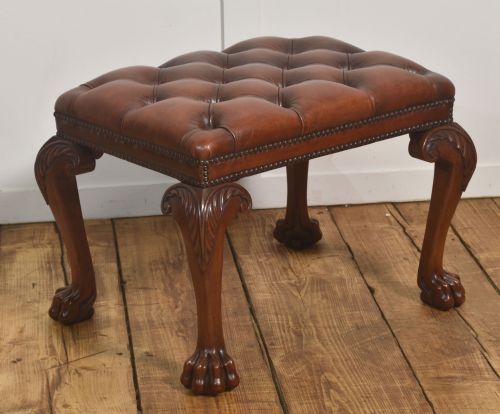
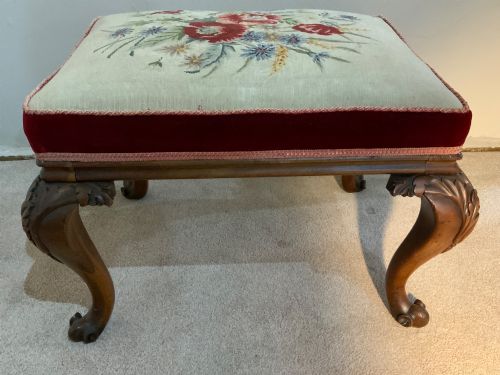
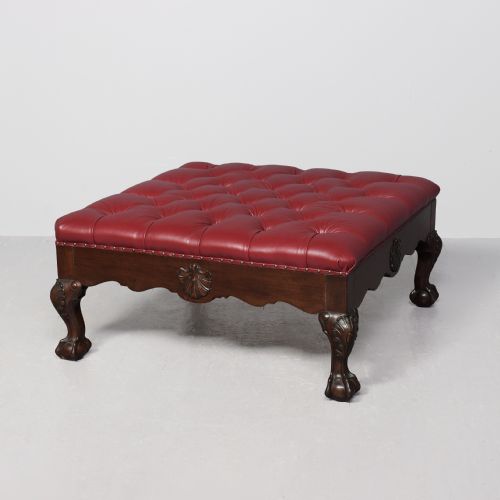
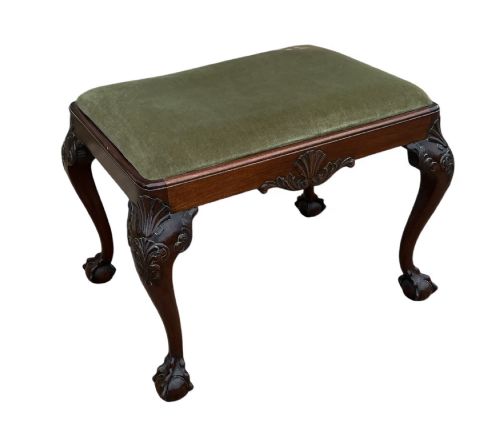
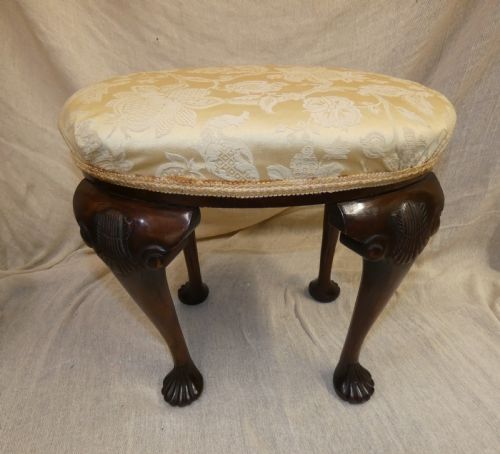
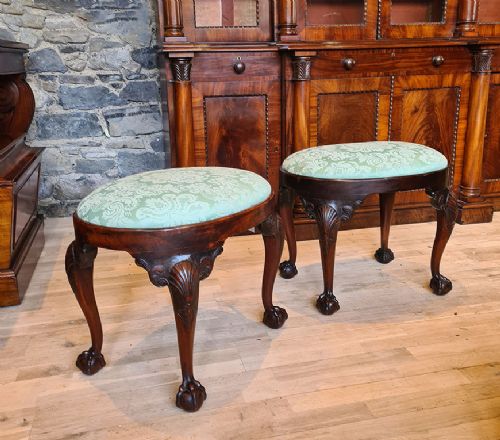
Most examples you encounter here are constructed from mahogany or walnut, taking the shape of footstools, long benches, or dressing stools. The silhouettes frequently incorporate carved wooden details and traditional upholstered tops covered in leather, velvet, fabric, or needlework.
Materials and construction methods
Carpenters relied primarily on solid mahogany and walnut to build the structural frames, shaping the timber to form carved cabriole legs and ball and claw terminals. Joints were joined securely to withstand regular weight and daily use.
Upholstered elements involved stretching fabric, leather, wool, or damask over internal stuffing, secured with brass tacks or traditional webbing. Needlework surfaces also appear, worked by hand to fit the specific dimensions of the wooden frame.
Chippendale Style Footstool Retail Price Guide 2026
Typical asking prices for chippendale style footstool among the pieces listed under this phrase on Sellingantiques today, from the lower quarter to the upper quarter. They describe what is for sale here now, not the wider market.
Several footstools hide sturdy claw feet beneath elaborate upholstery, as if preparing to walk away across the carpet.
Factors that distinguish individual examples
The depth and crispness of the wood carving dictate the visual success of the frame, separating sharply defined motifs from softer, more rounded execution. Pierced splats, carved knees, and well-proportioned ball and claw feet demand a high level of joiner skill.
The choice of upholstery materials and the integrity of the underlying stuffing influence the longevity and tactile appeal of the top. Original hides, heavy damask, and detailed needlework sit at a different level from simple replacement textiles.
The Chippendale Style Footstool Glossary
- Ball and claw
- A foot motif where carved talons grasp a spherical ball, commonly seen on eighteenth-century and revival seating.
- Cabriole leg
- A furniture leg that curves outward at the knee and tapers inward toward the foot, mimicking animal limbs.
- Damask
- A reversible figured fabric woven on a jacquard loom, frequently utilised for formal upholstery.
- Serpentine
- A furniture line that curves outward at the centre and inward at the sides, creating a gentle wave effect.
- Needlework
- Hand-stitched textile work executed in yarn over canvas, often applied to historic footstool tops.
Chippendale Style Footstool: Frequently Asked Questions
How do I date a footstool?
Dating relies on examining the timber species, tool marks left by saws or chisels, and the ageing of the internal frame construction. Eighteenth-century pieces display hand-cut joinery and period wear, whereas revival pieces from later centuries utilise slightly different manufacturing techniques.
Secondary indicators include the style of the carved details and the nature of any underlying upholstery webbing. Comparing these physical traits with known period examples helps establish the decade or century of origin.
Where should I place a stool?
These pieces function well in front of armchairs or sofas as traditional footrests, or positioned near a fireplace for occasional seating. Long benches and centre stools also suit the foot of a bed or a spacious dressing room.
Because the dimensions vary from compact square footstools to long benches, measuring the available floor space ensures the piece fits comfortably within the room layout.
Are leather or fabric tops better?
Leather offers a durable, wipeable surface that patinates gracefully with age and suits a study or library setting. Fabric, velvet, and damask provide softer textures and introduce colour or pattern into drawing rooms and bedrooms.
Selection depends entirely on the intended room usage and personal preference for tactile surfaces. Both materials appear historically across the recorded periods.
What is the difference between revival periods?
Revival periods refer to later eras when cabinetmakers deliberately copied earlier historic designs, such as the Georgian or Chippendale manners. Pieces from the nineteenth and twentieth centuries adopt these classic outlines while reflecting the production methods of their own time.
Recognising a revival piece involves looking at timber seasoning, secondary woods, and hardware that point to a later manufacturing date despite the older stylistic inspiration.