
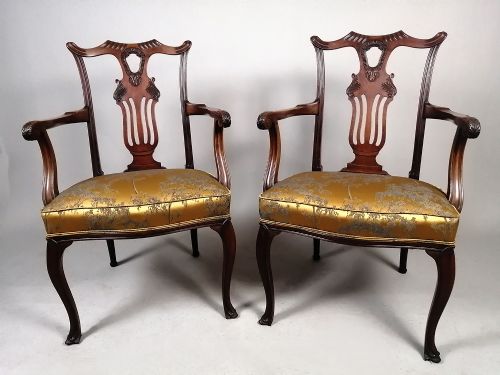
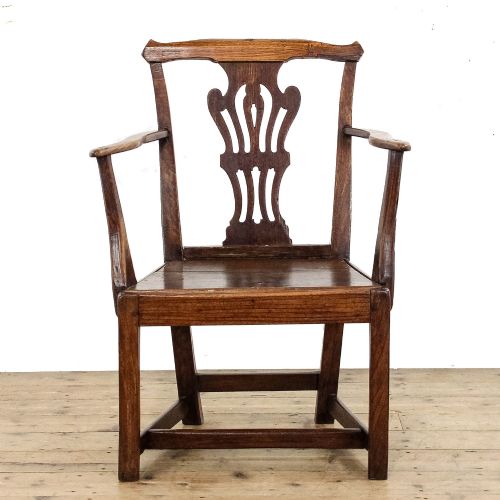
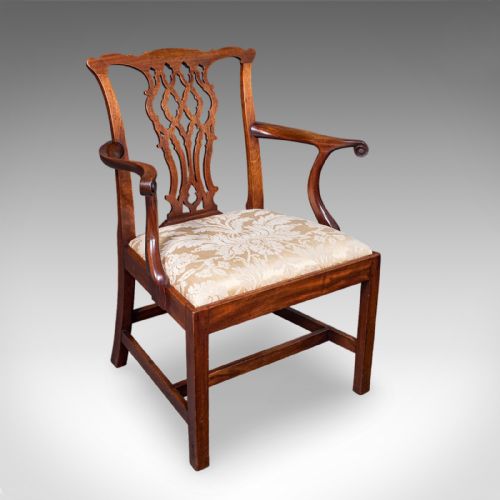
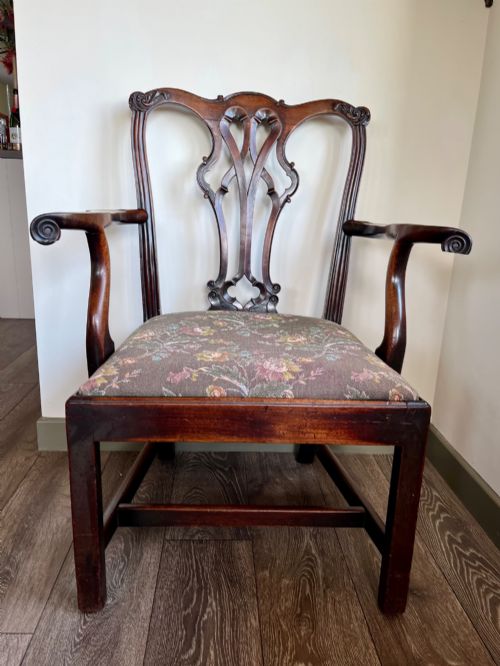
Chippendale Elbow Chair
A chippendale elbow chair brings sculptural timber and solid historic form to a room, offering both seating and presence.
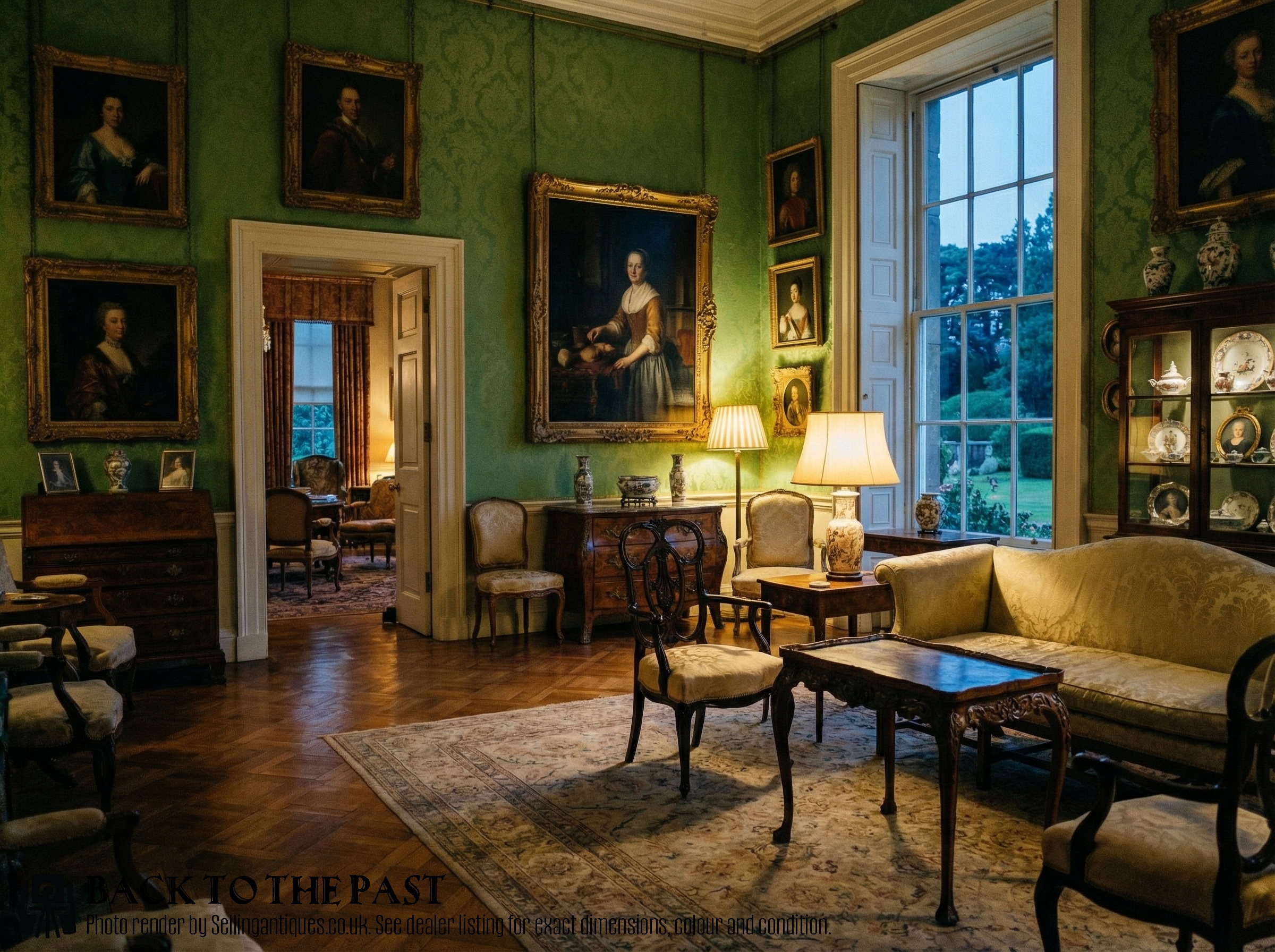
Chippendale Elbow Chair
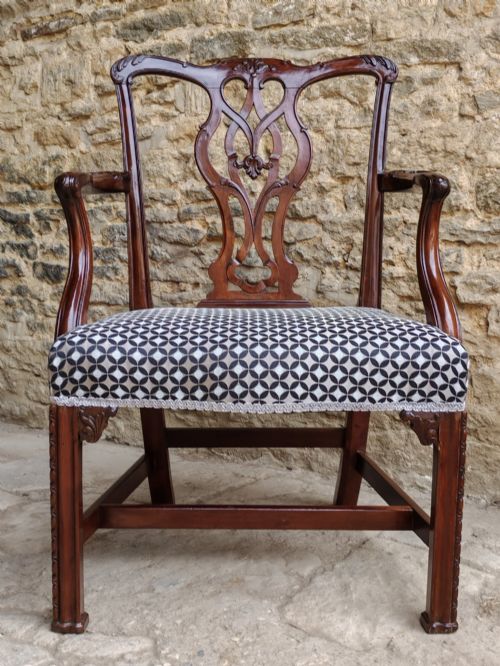
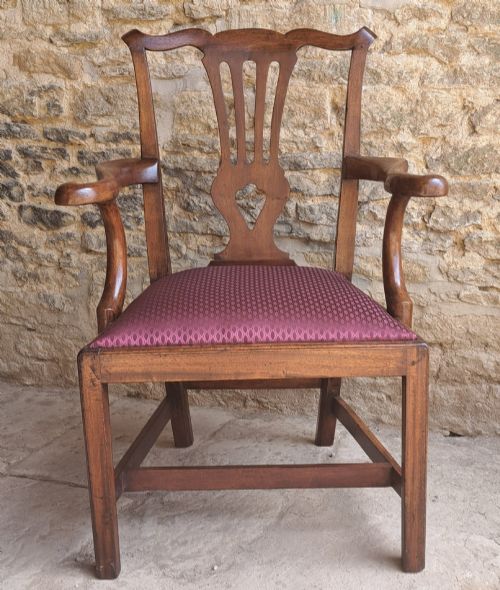
A chippendale elbow chair is a seating form defined by its supportive armrests, originating in the 18th century and enduring through later revival periods. These seats function as library chairs, desk seats or dining carvers within domestic interiors.
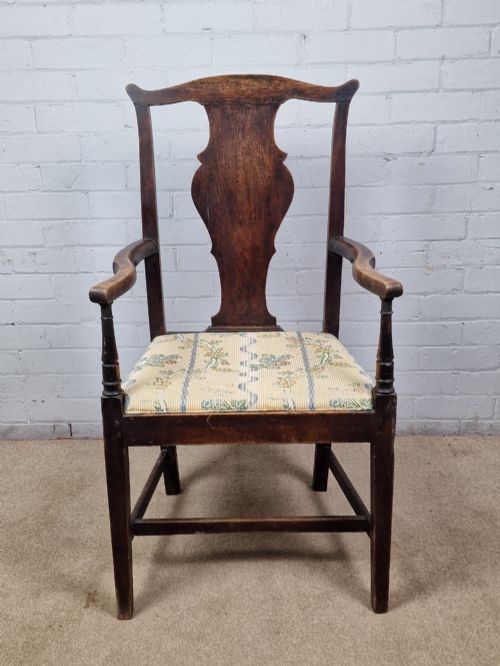
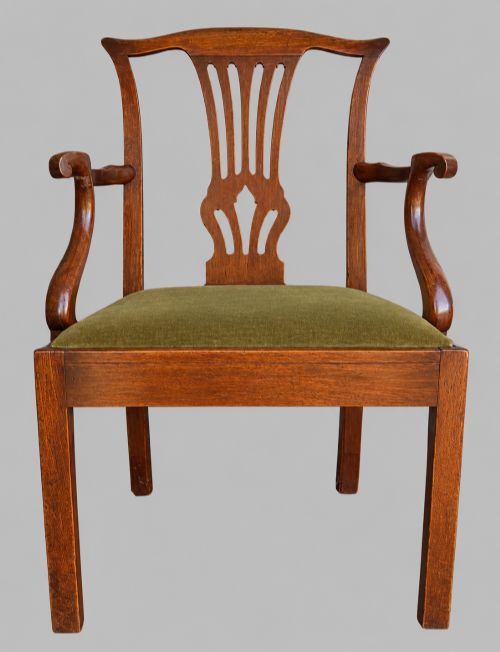
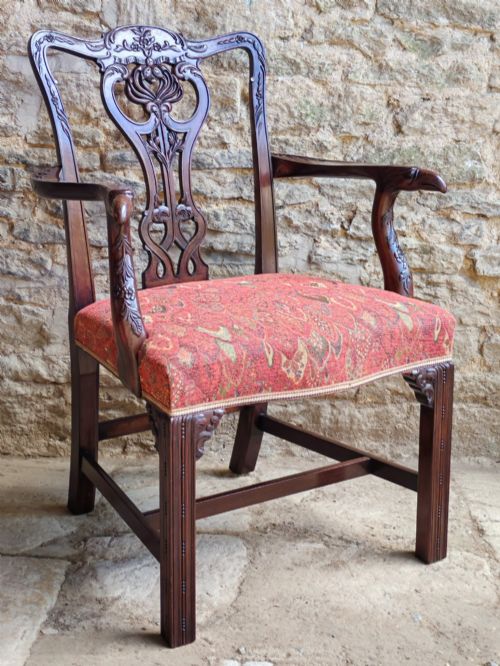
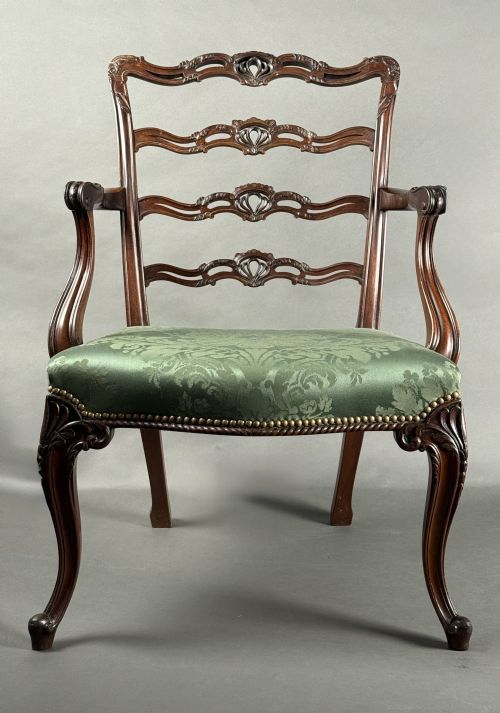
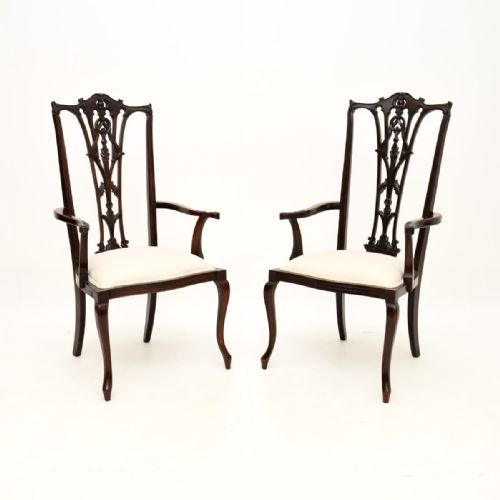
The pieces appearing on this page span from original Georgian examples made during the 18th century to later Chippendale revival interpretations created in the 19th and early 20th centuries. Mahogany dominates the selection, accompanied by occasional examples in walnut, elm, fruitwood or oak.
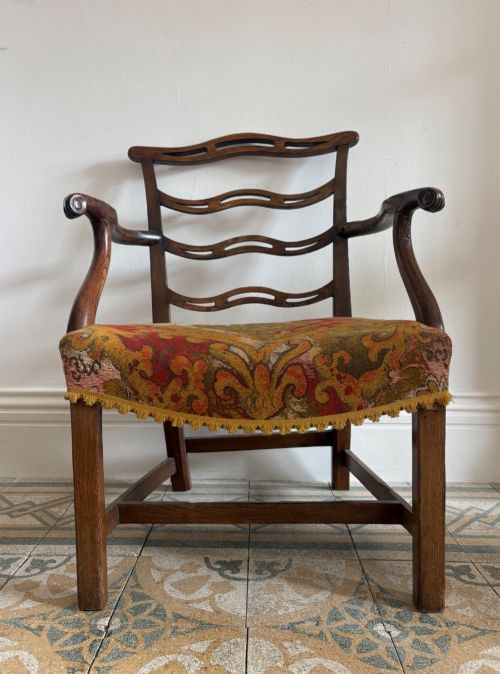
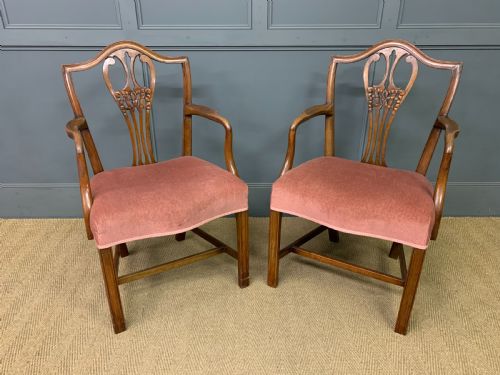
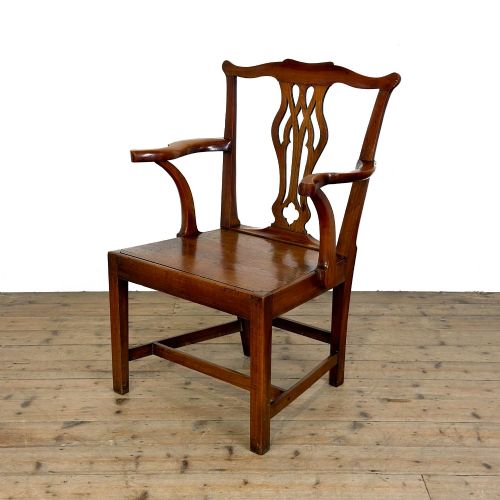
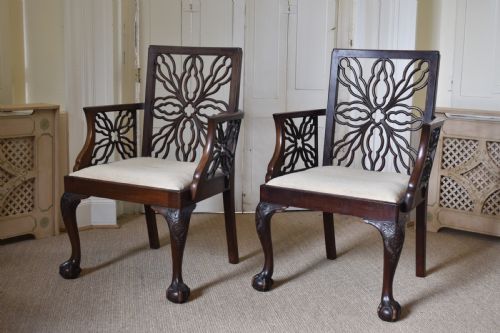
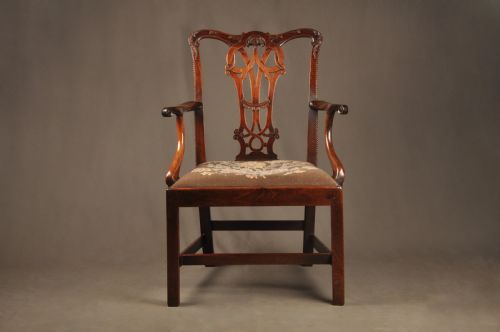
Most entries present open arms, carved splats and upholstered seats covered in fabric, leather, needlepoint or tapestry. Forms range from straightforward country ladderbacks to sophisticated urban carvers featuring elaborate piercing and carved details.
How they were made
Cabinetmakers constructed these chairs primarily using solid mahogany, walnut and regional hardwoods like fruitwood and elm, selected for grain strength and density. Timber was hand-sawn, joined with mortise and tenon techniques, and shaped using gouges and chisels for the characteristic interlaced splats.
Upholstery methods varied from drop-in rush or timber frames to padded seats secured with brass tacks and finished in wool tapestry, hand-dyed leather, velvet or woven textile.
Chippendale Elbow Chair Retail Price Guide 2026
Typical asking prices for chippendale elbow chair among the pieces listed under this phrase on Sellingantiques today, from the lower quarter to the upper quarter. They describe what is for sale here now, not the wider market.
Several early chairs retain traces of green dye on their leather seats, whispering of quiet Georgian rooms and long-forgotten correspondence.
What varies in quality
The depth and crispness of the carving distinguish a superior chair from a standard production piece, particularly along the crest rail, arm terminals and front cabriole legs. Superior examples display fluent hand-chiselled detailing where lesser pieces rely on shallow stamping or plain profiles.
Structural integrity and timber selection dictate the longevity of the frame, with dense, figured mahogany holding joints tighter than softer secondary woods. The quality of the secondary timbers used beneath the seat and the retention of original blocking provide further indication of workshop standards.
Howard and Sons
The Chippendale Elbow Chair Glossary
- Carver
- An armchair, typically designed for the head of a dining table or as a desk seat, featuring supporting armrests. These pieces match standard dining chairs while offering greater width and presence.
- Splat
- The vertical wooden strip positioned centrally in the backrest of a chair. In these designs, it is frequently pierced, interlaced or carved in ribbon-back or vase-shaped configurations.
- Drop-in seat
- A removable timber frame upholstered independently before being dropped into a rebate in the chair seat rail. This construction method allows for straightforward reupholstering without dismantling the main frame.
- Cabriole leg
- A furniture leg that curves outward at the knee and tapers inward toward the foot, mimicking animal limbs. It often terminates in a claw and ball foot.
- Elbow chair
- An alternative term for an open armchair, referencing the prominent armrests designed to support the arms. They function across morning rooms, studies and drawing rooms.
Chippendale Elbow Chair: Frequently Asked Questions
What is a chippendale elbow chair?
A chippendale elbow chair is an upholstered or drop-in seated armchair featuring distinctive armrests and a carved wooden backrest. These forms follow the design vocabulary associated with 18th-century cabinet making traditions.
Such chairs were built for multiple domestic settings including writing desks, libraries and dining tables. Their sturdy arm construction provided comfort for extended periods of seated work or dining.
How do I date a chippendale chair?
Dating relies upon examining timber species, tool marks, construction methods and the wear patterns on the frame. Original 18th-century examples show hand-cut joinery and period patina that differ from later revival pieces.
Revival pieces from the Victorian and Edwardian eras often utilise machine-sawn timber and tighter, more uniform grain structures. Comparing the secondary woods beneath the seat helps confirm the period of manufacture.
Where were these chairs used?
These chairs served as principal seating in formal dining rooms, studies, morning rooms and bedrooms. Their sturdy construction suited daily use in affluent households.
Carver chairs typically stood at the heads of dining tables or beside partners desks. Single elbow chairs frequently flanked fireplaces or stood against hallway walls.
Are revival chairs collectible?
Chippendale revival chairs produced during the 19th and early 20th centuries are collected for their craftsmanship and adherence to historic forms. Makers such as Howard and Sons created high-status pieces that command strong interest today.
Quality revival furniture offers an accessible alternative to 18th-century originals while maintaining traditional cabinet-making standards. Their robust construction ensures they remain practical for modern interiors.