
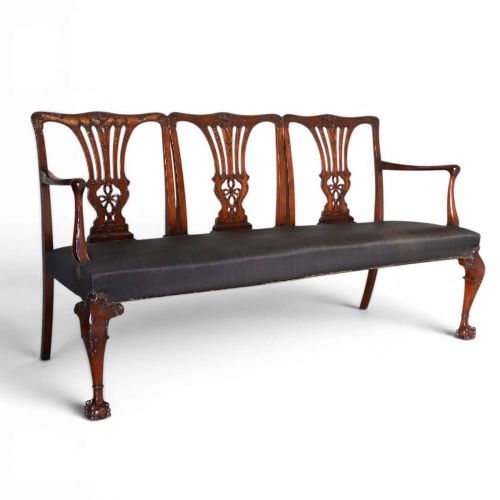


Chippendale Double Chair Back
Chippendale double chair back settees are mahogany seats with interlaced splats that bring immediate architectural elegance to a room.
Chippendale Double Chair Back
When you search for chippendale double chair back, you are looking at multi-seat settees designed to mimic the look of two or three conjoined dining chairs. The pieces on this page span the eighteenth century as well as later revival periods including Edwardian Chippendale revival and George II style.
The most common forms you will meet are two-seat and three-seat settees constructed primarily from mahogany. These include double-back and triple-back sofas featuring carved backrests and various fabric upholstery options.
Materials and construction
Makers built these settees using solid mahogany, relying on its dense grain to support intricate carved details on the back splats and frames. Woodworkers shaped the timber to form distinct chair-back profiles united into a single seating frame.
Settees received fabric, velvet, or general fabric upholstery for the drop-in or padded seats. These textile elements completed the functional seating surface while contrasting with the dark polished wood.
Upholstery options across the current inventory include velvet, standard fabric, and traditional textile coverings.
Judging quality in these settees
Quality rests primarily in the crispness and depth of the carved woodwork along the backrest and rails. Finer examples show deeply undercut carving on the splats and stiles rather than shallow, mechanical indentation.
Proportion and structural harmony also separate standard furniture from superior pieces. The transition where multiple chair backs merge into a unified settee frame demands careful joinery to look intentional rather than assembled.
The Chippendale Double Chair Back Glossary
- Chippendale style
- A furniture design style originating in the eighteenth century, characterised by carved mahogany, ribbon-back or ladder-back motifs, and cabriole legs. It remains popular through various revival periods.
- Double chair back
- A settee configuration where the backrest mirrors two conjoined chair backs placed side by side. This layout creates an extended seating bench with distinct vertical divisions.
- Mahogany
- A durable tropical hardwood with a reddish-brown colour that takes a fine polish. It served as the primary material for high-status eighteenth-century seating and later revivals.
- Settee
- A long wooden or upholstered seat for more than one person, often featuring a back and arms. In this category, it specifically denotes multi-back designs.
- Splat
- The vertical wooden strip down the centre of a chair back or settee backrest. Carved splats define the aesthetic of Chippendale furniture.
Chippendale Double Chair Back: Frequently Asked Questions
What is a double chair back settee?
A double chair back settee is a long seat whose backrest is constructed to look like two conjoined chairs placed side by side. This design creates a unified piece of furniture that retains the individual carved splats of standard dining chairs.
These pieces typically seat two people and serve as decorative yet functional items in hallways, drawing rooms, or bedrooms.
Are these settees eighteenth century or later?
The pieces available span both authentic eighteenth-century examples and later revival periods from the nineteenth and early twentieth centuries. Revival pieces often date from the Edwardian era or the George II revival period.
Examining the secondary woods, tool marks, and wear patterns helps determine whether a settee is an original period piece or a later interpretation.
What materials were used for the upholstery?
Original and replacement upholstery on these settees typically includes fabric, fabric upholstery, or velvet. The padding supports comfortable seating while matching the formal character of the mahogany frame.
Many pieces allow for straightforward reupholstery so buyers can match their existing interior colour schemes.
How do I style a chair back sofa?
A chair back sofa works well placed flat against a wall or positioned at the foot of a large bed. Its open back design prevents it from visually blocking light or space in a room.
Pair the settee with antique side tables or position it beneath traditional oil paintings to complement its classical proportions.