

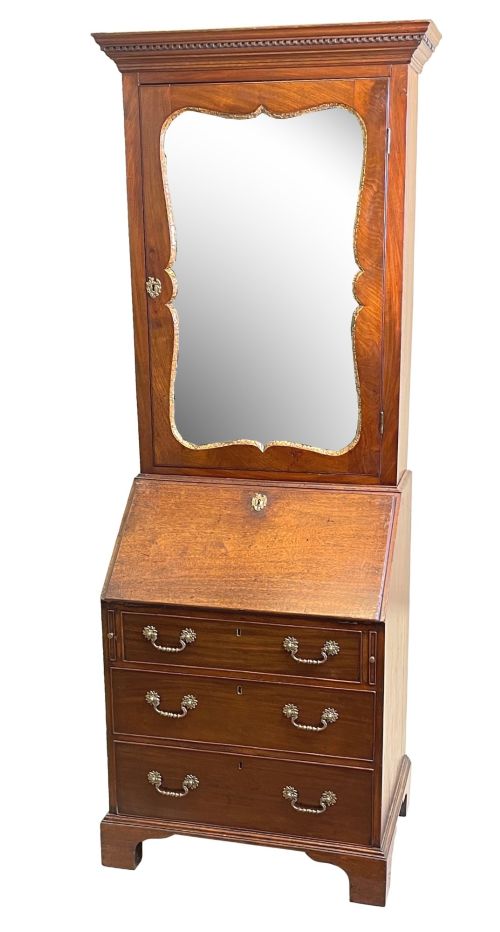
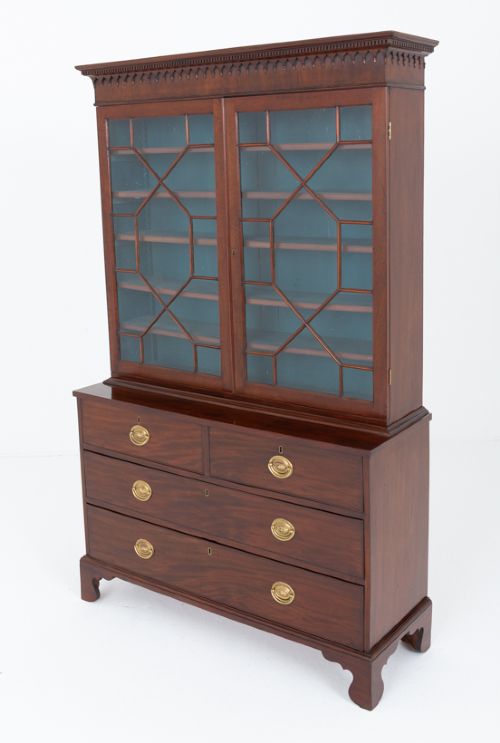
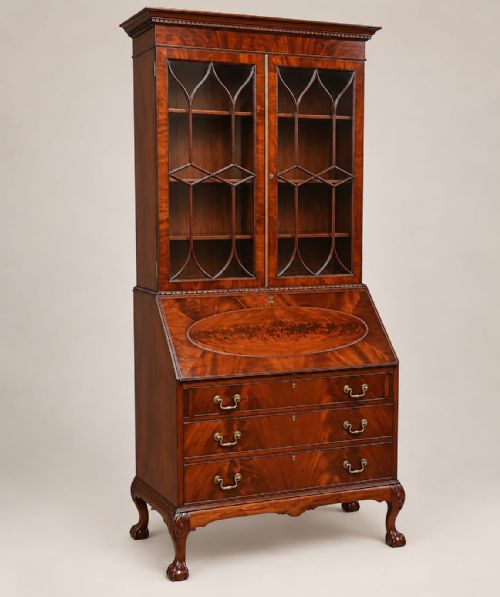
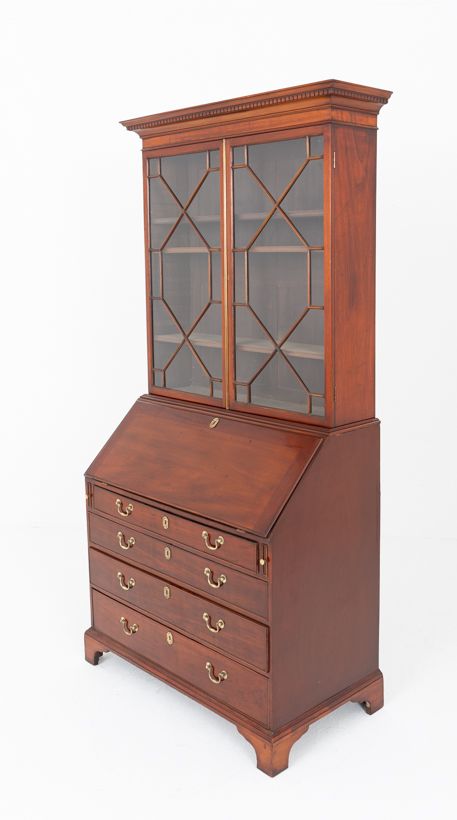
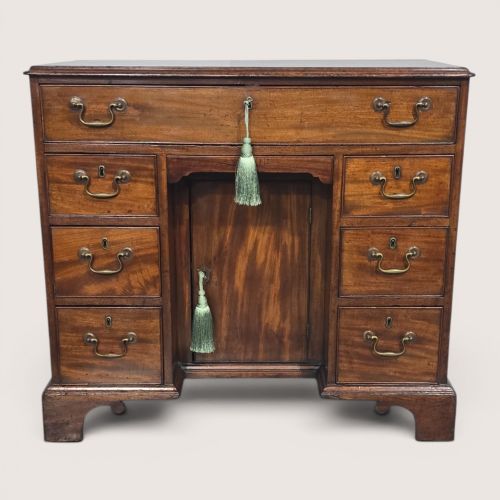
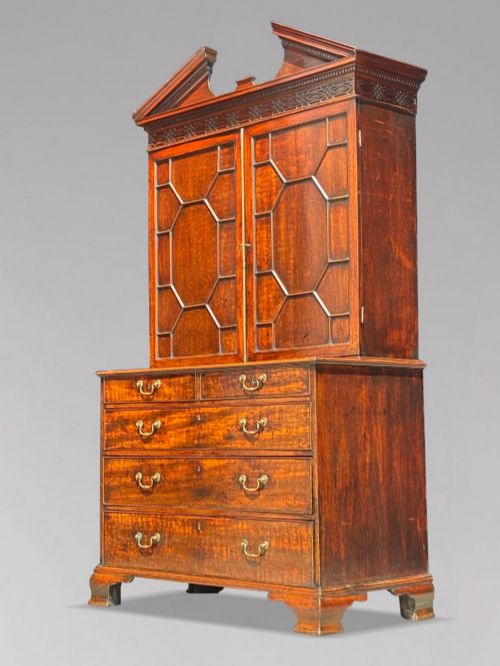
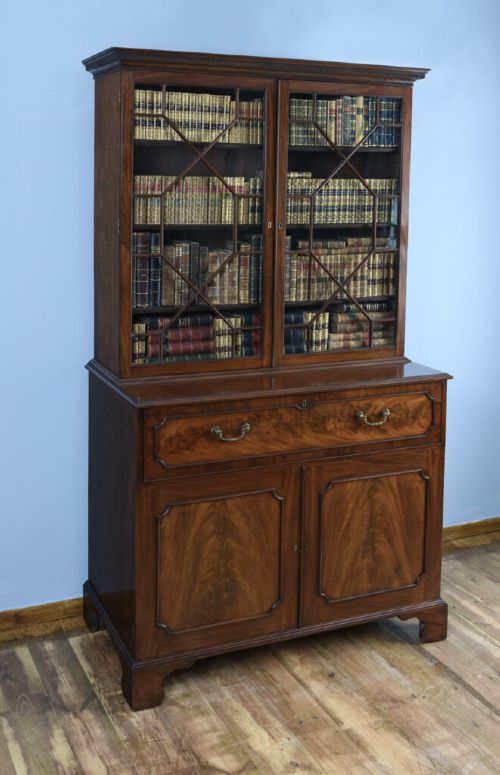


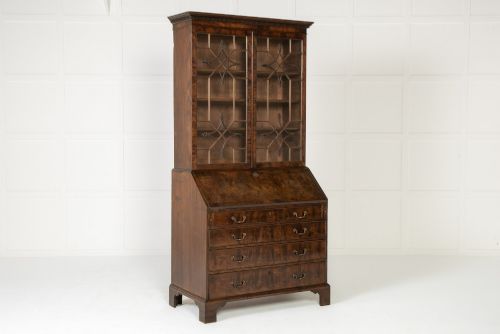


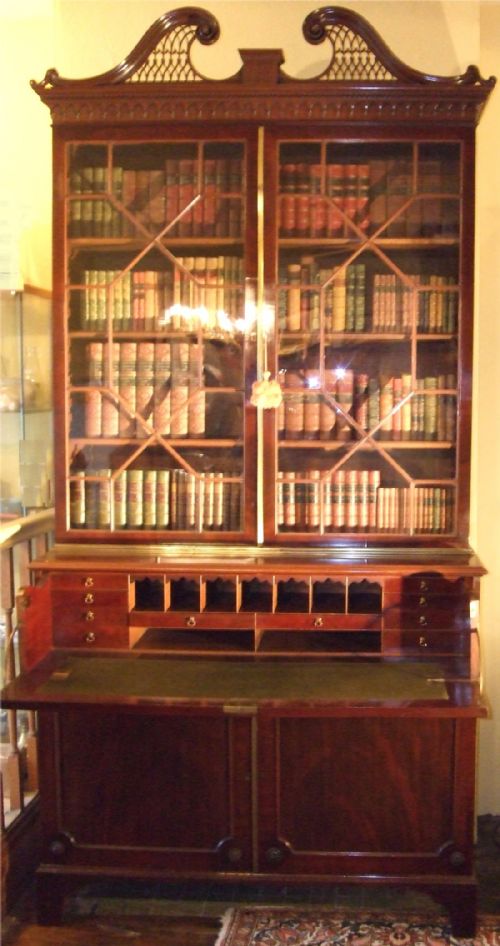
Chippendale Bureau Cabinet
A chippendale bureau cabinet is a substantial mahogany writing piece combining a fitted desk and upper bookcase, prized for refined cabinetwork.
Chippendale Bureau Cabinet
A chippendale bureau cabinet unites a lower fall-front desk section with an upper glazed bookcase, serving as a commanding study or library focal point. These architectural case pieces emerge principally from the eighteenth century, spanning the Georgian era and George III periods alongside later revival interpretations.
Forms vary from tall bureau bookcases and tallboys to secretaire cabinets and bureau cabinets on stand, frequently constructed in rich mahogany or oak. The structural layout prioritises partitioned pigeonholes and concealed drawers behind the sloping fall-front, surmounted by panelled or mirror-door shelving.
What varies in quality
The standard of timber selection and figuration distinguishes standard examples from exceptional pieces, particularly in the grain continuity across drawer fronts and fall-front panels. Richness of colour and patination achieved through age dictate the visual presence of the mahogany.
Interior complexity and the intricacy of the cabinetwork define the upper tier of execution. Masterful carving on cornices, pediments and bracket feet elevates the architectural gravity of the piece.
Chippendale Bureau Cabinet Retail Price Guide 2026
Typical asking prices for chippendale bureau cabinet among the pieces listed under this phrase on Sellingantiques today, from the lower quarter to the upper quarter. They describe what is for sale here now, not the wider market.
Concealed secret compartments inside bureau cabinets reward curious owners with hidden drawers behind sliding pigeonhole partitions.
Thomas Chippendale·Giles Grendy
The Chippendale Bureau Cabinet Glossary
- Bureau bookcase
- A dual-purpose furniture form featuring a sloping writing flap above drawers, topped by a glazed shelving cabinet. This combines library storage with a functional writing surface.
- Secretaire
- A desk compartment disguised as a standard drawer that drops down to reveal writing drawers and pigeonholes. It offers a cleaner exterior line than a traditional sloping fall-front.
- Tallboy
- A tall chest of drawers stacked one above another, sometimes incorporating a bureau or secretaire section within the upper portions. This vertical configuration maximises storage capacity while minimising floor space.
- Swan neck pediment
- A decorative broken arch top moulding terminating in outward-curling scrolls, frequently centered on eighteenth-century bookcases. It adds height and architectural drama to the upper cornice.
- Marquetry inlay
- Decorative patterns formed by fitting contrasting veneers into timber surfaces to create geometric or floral motifs. This technique highlights the decorative ambition of the cabinet maker.
Chippendale Bureau Cabinet: Frequently Asked Questions
How do I use a bureau cabinet daily?
Lower the fall-front flap to reveal the internal writing surface and pigeonholes for correspondence. Keep everyday stationery inside the fitted compartments and utilise the upper glass doors to display library volumes.
Ensure the fall-front rests securely on its support laths before writing. Close and lock the flap when not in use to protect the fitted interior.
Where should I place a bureau cabinet?
Position the piece against a sturdy interior wall away from direct sunlight and heat sources to protect the mahogany timber. Allow adequate floor clearance in front of the cabinet to lower the fall-front comfortably.
Ensure the room humidity remains stable to prevent timber shrinkage or veneer lifting. A study, library or principal reception room suits the substantial scale of these cabinets.
How do I tell an 18th-century piece from a revival?
Examine the secondary timbers inside the drawers and carcass construction for period-appropriate oak or pine. Eighteenth-century pieces display hand-cut dovetails and timber shrinkage consistent with age.
Revival pieces from the early twentieth century often show machine-sawn elements and standardised fixings. Check the patination and wear patterns around the primary handles and fall-front edges.
How do I care for antique mahogany?
Dust the exterior regularly with a soft, dry cloth to prevent particle accumulation on the polish. Apply high-quality beeswax sparingly to nourish the timber and maintain the natural lustre.
Avoid liquid polishes containing silicone which damage the historic finish. Maintain consistent indoor temperatures to preserve the structural stability of the veneer.