


Chinoiserie Tall Case Clock
A chinoiserie tall case clock brings striking painted scenes and dependable timekeeping into a room, offering historic character for daily life.
Chinoiserie Tall Case Clock
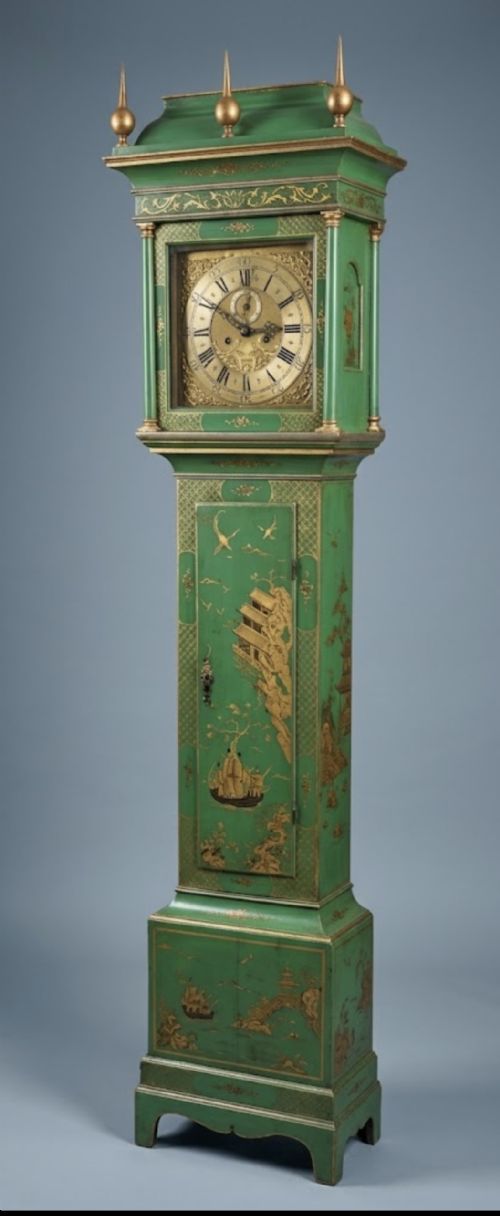
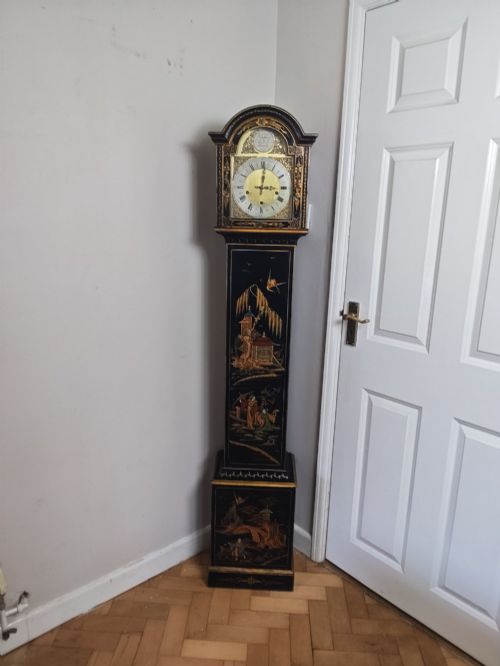
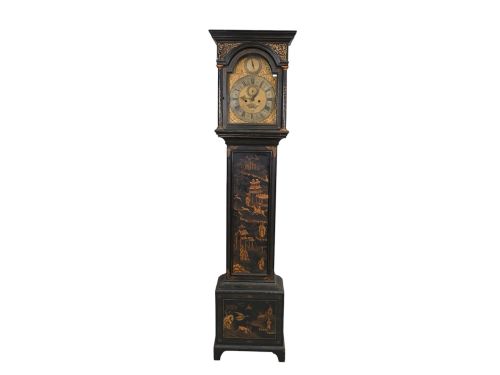
A chinoiserie tall case clock stands as a prominent vertical timekeeper decorated with orientalist motifs, taking the form of longcase or grandmother clocks. Most examples appearing here date from the Georgian era or the eighteenth century, alongside later twentieth-century interpretations from 1920 and 1930.
Makers such as John Fielder of Alton and William Kipling of London produced these longcase clocks during the eighteenth century, incorporating brass movements and traditional weights. Buyers will also encounter regional pieces from Edinburgh and smaller grandmother clocks featuring musical chimes or automata.
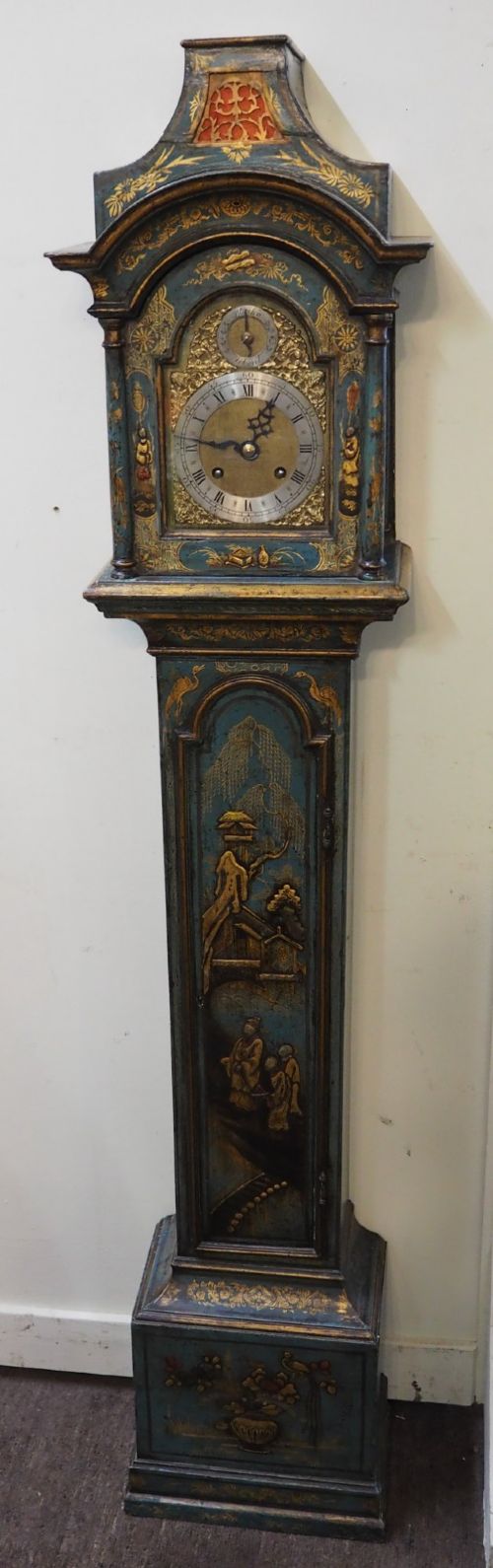
The aesthetic bridges domestic utility with decorative lacquerwork, presenting figures, landscapes, and pavilions rendered in gilt and pigment. These pieces range from grand floor-standing proportions down to more compact scaled variations.
Materials and construction
The physical structure relies on wooden carcases finished with specialist lacquer, japanned wood, and applied gold leaf. Craftsmen built these cabinets to house intricate brass clock movements and protective glass dial doors.
Surface decoration involves building up layers of lacquer and gilt to depict narrative scenes in the manner associated with chinoiserie. The combination of timber substrates and metal mechanical components demanded distinct skills from cabinetmakers and horologists alike.
Listings span the Georgian period, eighteenth century, nineteenth century, and twentieth-century dates including 1920, 1930, and 1750.
Distinctions in craftsmanship
Quality reveals itself in the crispness of the lacquered and gilt decoration, where finer specimens display greater depth and detail in their hand-painted orientalist scenes. The execution of the woodwork and the reliability of the brass movement also define the upper tier of these timekeepers.
Proportion and scale distinguish standard longcase clocks from smaller grandmother versions, while the presence of specialised mechanisms like automata or musical chimes adds further complexity. Original maker signatures on the dial, such as those by known London or provincial horologists, elevate the standing of an individual piece.
John Fielder of Alton·William Kipling London
The Chinoiserie Tall Case Clock Glossary
- Japanned wood
- European wood finished with varnishes and paints in imitation of East Asian lacquerwork. This technique produced glossy dark surfaces adorned with raised gilt figures and landscapes.
- Longcase clock
- A tall pendulum clock enclosed in a wooden case consisting of a trunk and a base. They were commonly known as grandfather clocks in domestic settings.
- Grandmother clock
- A scaled-down version of the traditional longcase clock, typically produced in the twentieth century. These shorter timekeepers fit more easily into modern ceiling heights.
- Automaton
- A mechanical figure or moving scene integrated into the clock dial. These devices animate on the hour or alongside the movement of the clock.
- Brass movement
- The interior mechanism of the clock constructed primarily from brass plates, wheels, and gears. These assemblies powered the timekeeping and striking trains.
Chinoiserie Tall Case Clock: Frequently Asked Questions
What is a chinoiserie tall case clock?
A chinoiserie tall case clock is a weight-driven pendulum timekeeper housed in a tall wooden enclosure decorated with European interpretations of Chinese art. These pieces combine functional horology with decorative lacquerwork.
They serve as both reliable timepieces and substantial decorative furniture items for hallways or principal rooms.
How do I identify an 18th century clock?
Eighteenth-century examples often feature traditional brass movements and specific regional signatures on the dial. The materials typically include lacquered wood, gilt, and japanned finishes typical of the Georgian period.
Examining the construction of the case and the style of the hand-painted decoration helps determine the era of manufacture.
What is the difference between a longcase and a grandmother clock?
A traditional longcase clock stands at full height with substantial proportions to accommodate long pendulums and heavy weights. A grandmother clock is a smaller, shorter variant.
Grandmother clocks appeared in later periods such as 1920 and 1930, offering similar aesthetic qualities in a more compact format.
Where should I place a tall case clock?
These clocks require stable flooring and adequate vertical clearance to accommodate their tall wooden cases. Hallways, landings, and reception rooms provide suitable environments where the pendulum can swing freely.
Keeping them away from direct sunlight and drastic temperature changes helps preserve the delicate lacquer and gilt finishes.